Southern Europe
Calabrian
Also: Cucina Calabrese, Cuisine of Calabria, Southern Italian
The fire-eating toe of Italy's boot — 'nduja, Calabrian chili, and a pork-curing tradition that turns poverty into alchemy.
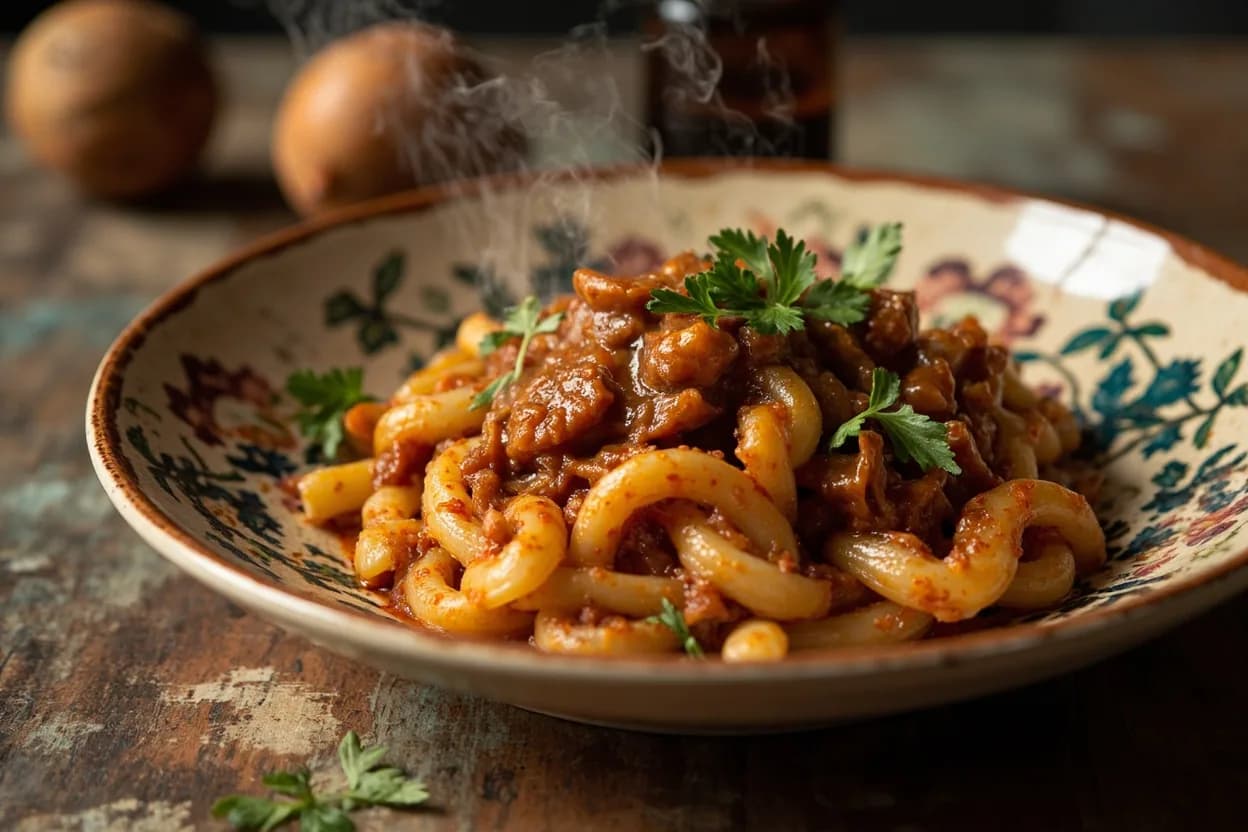
Calabrian cuisine is the most fiercely characterised of southern Italy's regional kitchens — defined above all by an embrace of heat that is unparalleled on the peninsula. The Calabrian chili (peperoncino Calabrese) is not a garnish here but a structural ingredient, appearing in almost every savoury preparation and finding its most celebrated form in 'nduja, the spreadable, incendiary cured pork sausage from Spilinga. Calabria was historically among Italy's poorest regions, and this poverty drove a mastery of pork preservation — every part of the pig is cured, dried, or aged into some form of salume. Alongside pork, the cuisine rests on durum wheat pasta in hand-shaped forms like fileja (a tightly coiled hollow pasta), abundant eggplant, and the sweet-fierce Tropea red onion whose fame has now spread across Italian cooking.
The flavour base
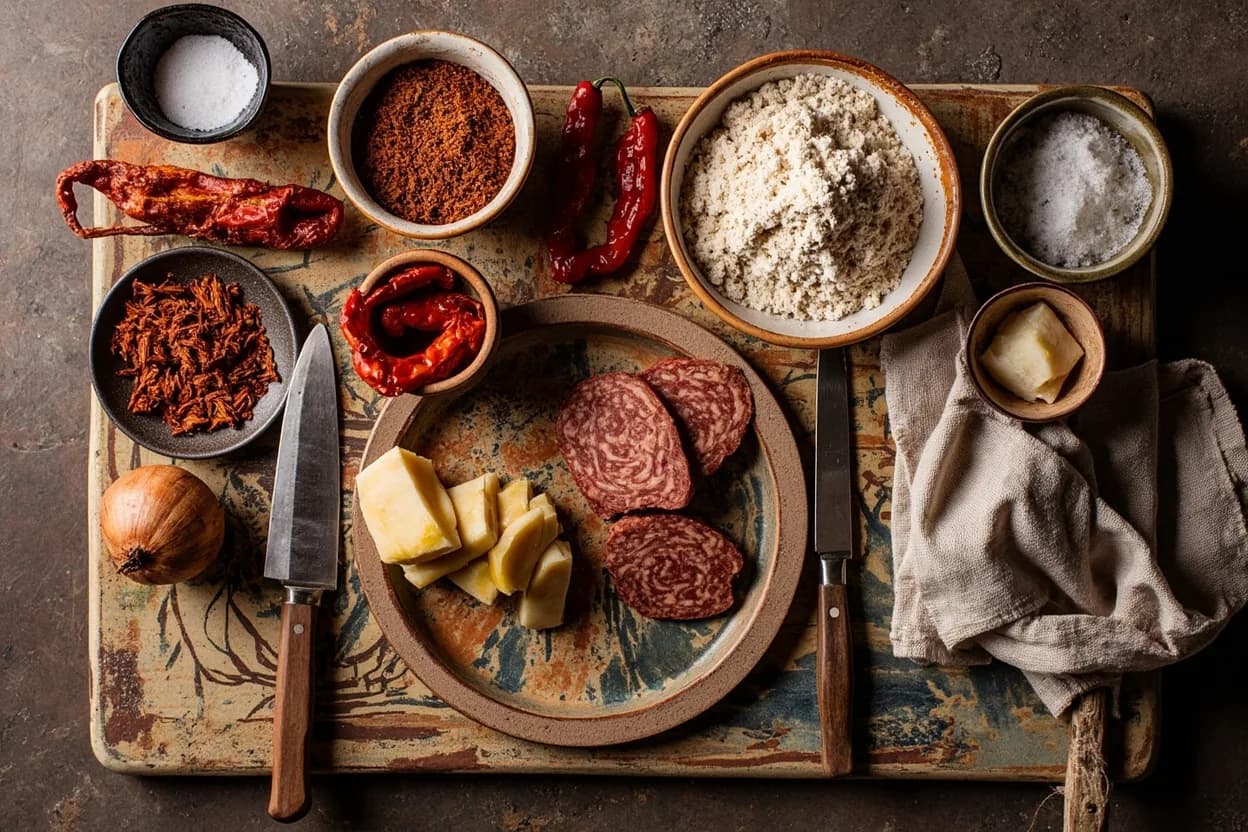
Calabrian peperoncino (fresh and dried), pork lard and guanciale, and garlic form the aromatic foundation of most preparations; tomato provides acid; 'nduja can be melted into a sauce base as a flavour bomb.
Pantry staples
Key ingredients
Signature techniques
Signature dishes
Calabrian on the table
At the table
Calabrian meals are built around the primo pasta course and a secondo of pork, goat, or (on the coast) swordfish and tuna. The antipasto is an explosion of preserved things: 'nduja spread on bread, soppressata, mushrooms and eggplant under oil, olives. A Calabrian table is never without peperoncino in some form. Sunday lunch is the week's event: a long-cooked meat ragù (often goat or pork) that first dresses the pasta, then becomes the secondo. Desserts range from pitta 'mpigliata (pastry coils with honey, figs, and nuts) to turdilli (fried pastry in honey).
History & context
Calabria was the heart of Magna Graecia — the Greek colonial world — and its food bears ancient traces of that civilisation: flat breads, olive oil, legumes, and the bitter herb traditions. Roman Calabria was a major grain producer. The Norman and Aragonese periods introduced more pork culture and a stronger charcuterie tradition. The chili pepper arrived from the Americas via Spanish colonial routes in the 16th–17th century and rapidly became so integrated that Calabrian cooking is now inconceivable without it. Centuries of extreme poverty under the Bourbon Kingdom of the Two Sicilies created the resourceful cucina povera that puts 'nduja on the world's charcuterie boards today. Massive emigration to northern Italy, the Americas, and Australia spread Calabrian food culture far beyond the region.
Regional variations
- Aspromonte (south)
The toe of the boot; fiercest mountain poverty tradition; goat is more common than pork; wild herbs intensify; bergamot is cultivated exclusively on this coast.
- Vibo Valentia and Spilinga
Home of 'nduja; the coastal strip around Spilinga is where the DOP-quality 'nduja originates; also the centre of Tropea onion cultivation.
- Cosenza (north)
More influence from Campania and Basilicata; slightly less chili heat; the lagane e cicciari (pasta with chickpeas) is a distinct northern Calabrian first course.
- Tyrrhenian coast
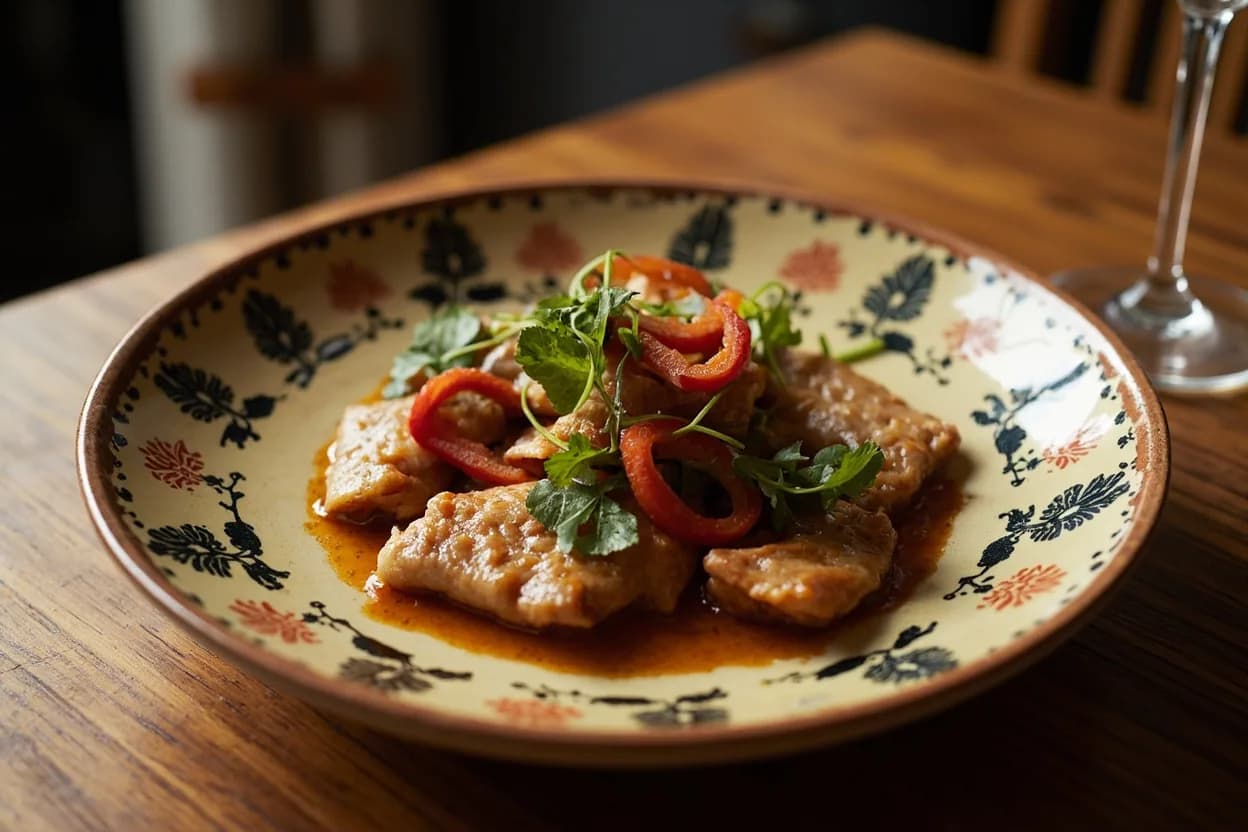
Swordfish (pesce spada) in summer is the defining ingredient; swordfish rolls (involtini di pesce spada) braised in tomato and herb are a Calabrian coastal classic distinct from Sicilian versions.
Related cuisines
Shared Greek colonial past, Arab influence, swordfish, eggplant, and a sweet-sour agrodolce tradition; Calabria is fierier and less sweet.
Both are cucina povera traditions built on legumes, preserved pork, and durum wheat pasta; Puglia is bitter-herbaceous, Calabria is fiery-smoky.
- Basilicatan
Immediately neighbouring inland region; shared poverty, shared charcuterie traditions, and the common use of soppressata and dried chili; Basilicata's peperone crusco (sweet dried pepper) is a gentler relative of Calabrian chili culture.
References
- 1.Southern Italian Cooking, Jo Bettoja, Bantam Books
- 2.Gastronomy of Italy, Anna del Conte, Pavilion Books
- 3.The Food of Italy, Waverley Root, Vintage Books
- 4.Italy in Small Bites, Carol Field, William Morrow
Confidence: high
Notes
'Nduja
'Nduja (pronounced 'en-DOO-ya') is a soft, spreadable salume made from pork fat, offal scraps, and a very high proportion of Calabrian chili — the chili constitutes up to 30% of the mass, acting as both flavour and natural preservative. It originated as a way to use the less marketable parts of the pig after the premium cuts were sold or cured. Today it is Calabria's most globally exported ingredient, appearing on pizzas and in pasta sauces worldwide.
Bergamot
The bergamot orange (Citrus bergamia) is grown almost exclusively on the Ionian coast between Reggio Calabria and Locri — over 80% of world production comes from this strip. Its essential oil flavours Earl Grey tea; in Calabrian cooking the rind appears in desserts (especially with chocolate), and bergamot syrup and preserve are local specialities. The fruit is too sour and bitter to eat fresh.