Proteins
Soppressata
Coarsely-ground Italian dry salami, often pressed flat and dotted with peppercorns or chili. Slice thin for antipasto and pizza; firmer and chunkier than fine-grind salami.
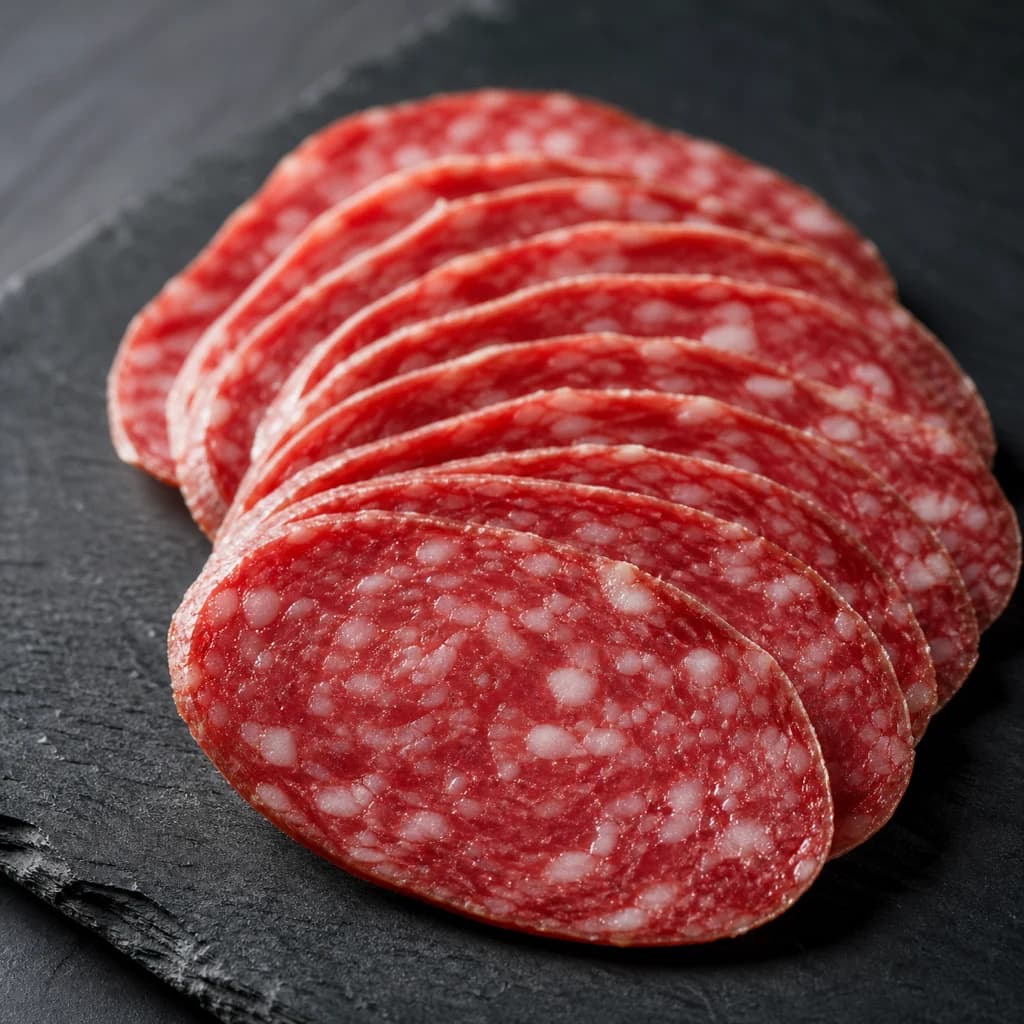
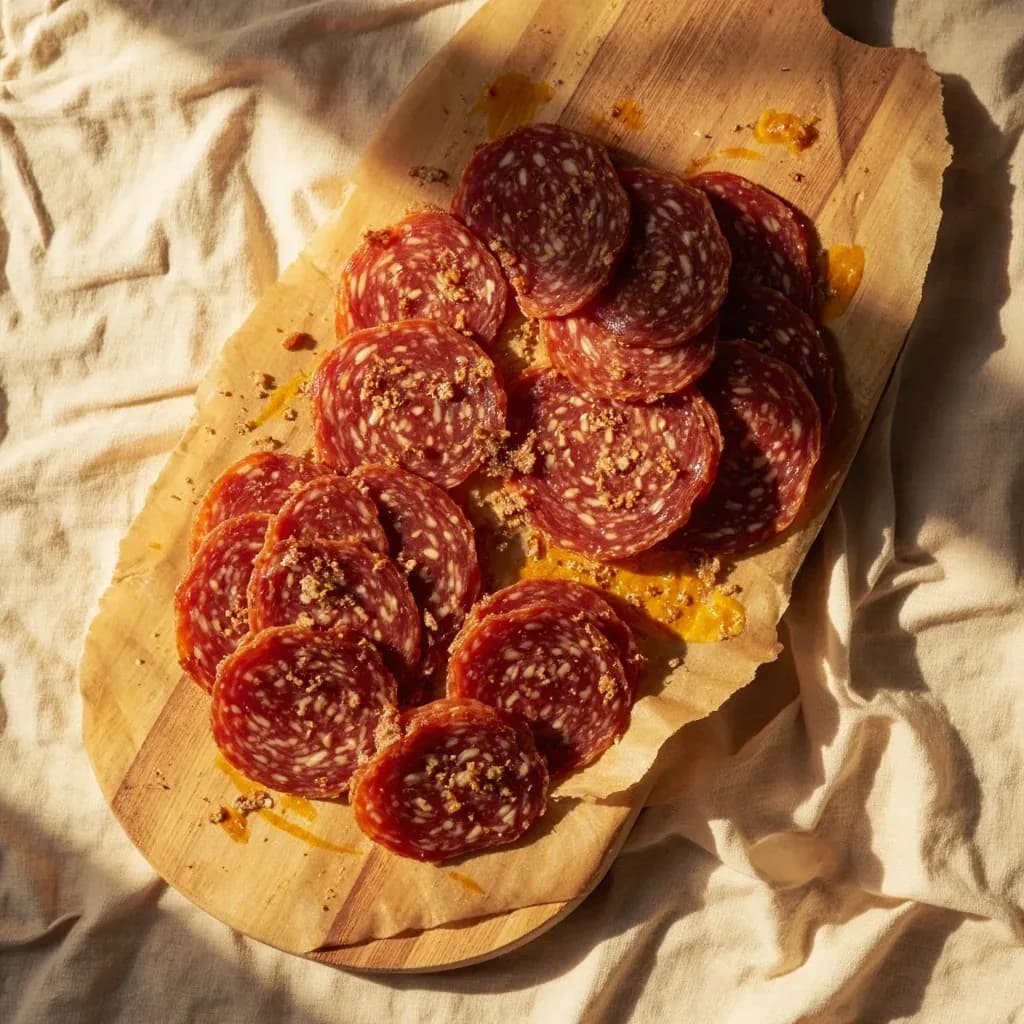
Soppressata is a family of pressed, coarse-ground Italian dry salami, distinguished less by a single recipe than by a technique: after stuffing, the cured mass is weighted between boards during early curing, which flattens the sausage into its characteristic oval or rectangular shape and gives it the dense, tightly bound texture you slice into on a board. The grind is visibly chunky — distinct pieces of lean pork and clean ivory-white fat — never the fine pink emulsion of a Milanese or Genoa-style salame, and that chunkiness is the first thing to look for when buying.
Flavor runs from mellow and garlicky to fiercely spicy depending on region. The Calabrian DOP version, tinted red and loaded with peperoncino, is the benchmark for heat; Tuscan, Venetian, and Basilicata versions lean toward black pepper, garlic, and sometimes wine or fennel. Aged from about a month for small formats to several months for larger pieces, soppressata is a finishing ingredient: its rendered fat carries flavor beautifully, but long heat toughens the lean and dulls the aromatics.
- Measured in
- g
- Storage
- Refrigerate
Find it in
Types & varieties
DOP; seasoned with hot peperoncino and sometimes sweet paprika — the benchmark spicy version with a reddish tint.
PDO Veneto style; coarser and softer than southern versions, typically with garlic and black pepper.
Aged longer, often studded with whole black peppercorns; milder and more aromatic than Calabrian.
Coarse grind, often with red wine and fennel seed; sometimes sold as soppressata molfettese.
Tuscan style with garlic, pepper, and sometimes wild fennel; usually larger format.
Slow-aged in Campanian limestone caves; recognized by a local Slow Food presidium.
Friulian Alpine version; often lightly smoked and made with leaner cuts.
Made in Tuscany, Sardinia, and Maremma; leaner and gamier, often seasoned with juniper and bay.
Reading a piece at the counter
Soppressata rewards a quick visual and tactile check before you buy. A good whole piece should feel uniformly dense with no soft or spongy spots — softness usually means under-curing, which won't improve at home. The casing should be tight, dry, and slightly dusty with benign white or grayish surface mold (rinse or wipe it off before slicing); green or black fuzzy mold is a warning sign. Inside, look for clear color contrast: deep ruby lean against clean white fat, with the fat distributed in visible pieces rather than smeared into the meat. In Calabrian versions, a reddish tint throughout the lean is normal and comes from the peperoncino, not dye. Finally, smell the cut face — you want clean lactic tang, pepper, and meat, not sourness or ammonia.
- A truly dense, uniformly firm feel signals proper curing; soft spots mean under-aged.
- Tight, dry casing with white surface mold is normal and benign.
- Visible chunks of lean and fat — not a uniform pink emulsion — confirm coarse grind.
- Reddish lean in Calabrian soppressata comes from chili, not artificial color.
Slicing and serving
Pull the piece from the fridge 20–30 minutes before serving; cold mutes both aroma and flavor, and the fat stays unpleasantly firm. Use a long, very sharp knife — a dull blade smears the fat across the lean and tears the casing. Slice against the grain of the visible muscle fibers, on a slight bias, to a thickness of about 1–2 mm for antipasto and pizza. Wipe the blade between cuts when the fat starts to drag, and lay slices flat rather than folded so the texture shows.
- 20–30 minutes at room temperature (18–20 °C) brings out full aroma.
- Slice 1–2 mm on the bias, against the grain of the lean.
- Wipe the knife between cuts to keep slices clean and intact.
- A short, sharp knife works for small pieces; a long slicer is better for whole sausages.
Common uses
Tips & pitfalls
- Take it out of the fridge 20–30 minutes before serving — cold suppresses both the aroma and the fat's suppleness.
- Use a sharp, long knife and wipe it between cuts; a dull blade smears the fat and tears the casing.
- Add soppressata late in cooking — its rendered fat is full of flavor, but long heat hardens the lean and dries the meat out.
- Reserve trimmed rinds and end pieces to fry with onions as a base for soups, beans, or quick pasta sauces.
- Don't substitute a generic mild soppressata for the Calabrian DOP version when heat is the point of the dish — they behave and taste like different products.
- Press a whole piece gently at the counter: any soft or spongy spots suggest under-curing, and the piece won't improve at home.
- A small drizzle of good olive oil, a squeeze of lemon, or a few drops of aged balsamic lifts the salt and fat without masking the meat.
- Look for visible fat marbling and a natural casing; an overly dry, crumbly piece is past its prime for eating raw but is still excellent cooked.
Nutrition
Energy
1464 kJ · per 100 g
Where the calories come from
Protein
21.8g
44% DV
Carbs
6.4g
2% DV
Fat
26.4g
34% DV
Fiber
0g
0% DV
Sugars
0g
of which
Sodium
936mg
41% DV
Source · USDA FoodData Central · approx. Salami, Italian, pork and beef, dry, sliced, 50% less sodium
View on FDC →In the shops
Matched grocery products
No matched grocery products for Soppressata yet.
Good to know
- Origin
- Southern and central Italy, with strong traditions in Calabria, Basilicata, Puglia, Campania, Molise, Tuscany, and Sicily; distinct northern versions exist in Veneto and Friuli
- Primary meat
- Pork shoulder and belly with back fat; wild boar (cinghiale) used in Tuscan and Sardinian versions
- Grind
- Coarse to medium — visibly chunky lean and distinct fat pieces, never emulsified
- Curing
- Dry-cured and aged 1–3 months for small formats, longer for larger pieces
- Shape
- Flattened or oval from being pressed between weighted boards during early curing — the defining visual tell
- Casing
- Natural pork casing, sometimes beef bung for larger formats
- Protected status
- Soppressata di Calabria is DOP (EU); Sopressa Vicentina is PDO; other regional versions are traditional but unprotected
- Signature seasoning
- Salt, black pepper, garlic; Calabrian versions add hot peperoncino; some regions add wine or fennel seed
- Storage
- Whole piece keeps for weeks in a cool, humid cellar; once sliced, wrap and refrigerate for up to 2–3 weeks
Substitutes
- Finocchiona — Tuscan salami with fennel seed; similar coarse texture but milder and aromatic rather than peppery.
- 'Nduja — Spicy Calabrian spreadable salami; swap when you want heat and a soft, melting texture, especially in sauces.
- Spanish chorizo (curado) — Dry-cured and paprika-forward; good on a charcuterie board, but the smoky-sweet flavor is distinctly different.
- Capocollo / Capicola — Cured pork shoulder sliced thin; leaner and more delicate, but works in the same antipasto context.
- American pepperoni — Finer grind and sharper paprika edge; acceptable on pizza but lacks soppressata's coarse, rustic bite.
Pairs with
Also called
sopressata · soppressata calabrese · Italian dry salami