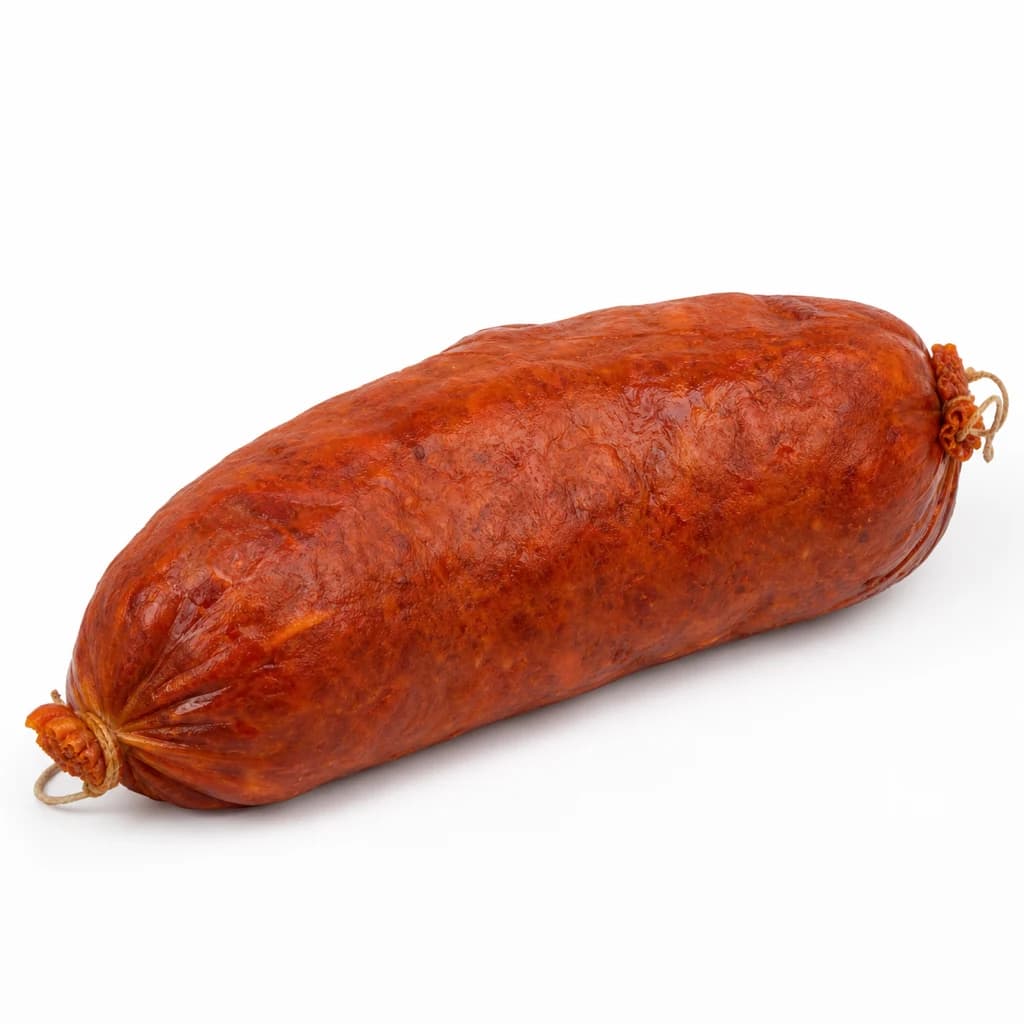
Natural form
Nduja in its cured sausage casing: a soft, bright orange-red log ready to slice.
Shows the product's distinctive cured form, vivid red-orange color from chili, and soft pliable texture before preparation.
Proteins
Nduja
Spicy, spreadable Calabrian pork salami loaded with hot chili peppers.
Nduja is a soft, spreadable salami from Calabria, Italy, made from fatty pork blended with a heavy dose of Calabrian chili peppers and cured. It melts easily, so it is spread on bread, stirred into pasta sauces and pizza, or used to spike stews. The flavor is intensely spicy, fatty and savory.
Nduja is a uniquely soft, spreadable pork salami from Calabria, most famously produced in the town of Spilinga. Unlike conventional dry-cured salamis, nduja is a cooked product (cotto) that achieves its signature paste-like consistency through an extremely high fat content—typically 40–50% fat by weight—and an exceptionally fine grind of pork shoulder and pork fatback. The deep red-to-orange color comes from Calabrian chili peppers (peperoncino di Calabria, also called diavolilli or "little devils"), which lend not just searing heat but a distinctive fruity, slightly smoky character unlike generic chili flakes. When gently warmed, nduja renders into a rich, saucy paste that melts into dishes rather than crisping. This behavior defines its culinary purpose: it is an ingredient for cooking and spreading, not a sliced cured meat meant to be eaten raw. Traditional nduja is stuffed into natural hog casings or packed into jars submerged in olive oil, then aged a minimum of three months to develop flavor while retaining its soft texture.
- Measured in
- g
- Storage
- Fridge
Types & varieties
The most recognized traditional variety; PGI-protected since 2009; made in and around Spilinga with strict production parameters
Understanding Nduja's Unique Texture
The spreadable nature of nduja distinguishes it from virtually every other Italian salami. This comes from two factors working together: the extraordinarily high proportion of finely rendered pork fat, and the complete emulsification of that fat with leaner ground pork. Where soppressata and other dry-cured sausages rely on fermentation and extended aging to develop flavor while maintaining a sliceable texture, nduja uses heat and fat to create something closer to a condiment or sauce base. When you place nduja in a warm pan, it does not brown or crisp—it melts, releasing a vibrant red fat that carries all the chili's heat and fruitiness. This is the starting point for most preparations.
- The fine grinding breaks down fat cells completely, allowing fat to render at lower temperatures
- High fat content means nduja acts as both seasoning and cooking medium
- The product is technically cooked (cotto), not fermented or dry-cured like traditional salamis
- The chili peppers are cooked into the sausage during production, not just added as dried flakes
Regional Authenticity
Calabrian producers insist that true nduja must use pork from Calabria and the distinctive local peperoncino to carry the Protected Geographical Indication seal. The PGI designation for Nduja di Spilinga, granted in 2009, sets specific parameters for production area, ingredients, and manufacturing method. Outside Calabria, producers have adopted the technique with varying degrees of fidelity—some using locally raised pork and authentic Calabrian peppers, others making approximations with different chili varieties. When authenticity matters for a traditional recipe, look for the PGI seal or verify that the product specifies Calabrian peppers and, ideally, Calabrian pork. Mass-market versions can range from rubbery in texture to excessively fatty, lacking the balanced flavor of traditional production.
- PGI "Nduja di Spilinga" is the most regulated designation—seek it for traditional preparations
- Outside Calabria, check ingredient lists for Calabrian peperoncino specifically
- Avoid products that merely list "chili pepper" without regional specificity if authenticity is the goal
- Jarred nduja packed in olive oil is common for export and typically of good quality
Storage and Handling
Unopened nduja keeps for several months in a cool, dark place—the natural casing or sealed jar provides adequate protection. Once opened, however, exposure to air and temperature fluctuation means the product will begin to oxidize and the fat can turn rancid. The standard practice is to press the nduja down firmly into a clean jar and cover it completely with olive oil or its own rendered fat before refrigerating. This creates a seal that preserves quality for two to three weeks. For longer storage, the rendered fat can be spooned off and used for cooking (it keeps well frozen), and the remaining nduja consumed more quickly. Never leave nduja uncovered in the refrigerator—the exposed surface will dry, darken, and develop off flavors.
- Submerge opened nduja completely in oil or its own fat to prevent oxidation
- Use opened nduja within 2–3 weeks for best quality
- The rendered cooking fat is precious—save it for frying eggs or potatoes
- Freeze small portions of rendered nduja fat for extended storage
Common uses
Tips & pitfalls
- Always cook nduja slowly over medium-low heat; it should gently melt and render into a saucy paste rather than crisping
- Let nduja bloom: cook it alone first in a dry pan until it releases its fats, then add other aromatics—this concentrates its flavor
- Save the cooking fat; the spicy pork fat is excellent for frying eggs, potatoes, or finishing dishes
- Taste before adding salt to any dish—nduja is already quite salty, and salt levels vary by producer
- For pasta, toss cooked pasta directly into the pan with rendered nduja and a splash of pasta water to emulsify into a sauce
- If the dish becomes too spicy, a splash of wine or vinegar cuts through the heat; starchy pasta water also balances it
- When buying, check for the PGI seal for authentic Nduja di Spilinga; mass-market versions can be rubbery or overly fatty
- Common mistake: using nduja raw as a sliced salami—its texture and flavor are meant for cooking or spreading when warmed
Nutrition
Energy
1778 kJ · per 100 g
Where the calories come from
Protein
21.7g
43% DV
Carbs
1.2g
0% DV
Fat
37g
47% DV
Fiber
0g
0% DV
Sugars
1.2g
of which
Sodium
1890mg
82% DV
Source · USDA FoodData Central · approx. Salami, Italian, pork
View on FDC →In the shops
Matched grocery products
No matched grocery products for Nduja yet.
Good to know
- Origin
- Calabria, Italy; specifically associated with the town of Spilinga
- Main Ingredients
- Pork shoulder, pork fatback, Calabrian chili peppers (diavolilli), salt
- Texture
- Soft, spreadable, almost paste-like; the fat renders to a saucy consistency when heated
- Color
- Deep red to orange-red from the chili peppers
- Fat Content
- High; typically 40–50% fat by weight
- Aging
- 3–6 months minimum for traditional versions
- Protection Status
- PGI (Protected Geographical Indication) "Nduja di Spilinga" granted 2009
- Heat Level
- Very hot (significantly spicier than most Italian salamis)
- Storage (unopened)
- Cool, dark place; will keep for several months
- Storage (opened)
- Refrigerate submerged in olive oil or its own fat; use within 2–3 weeks
- Typical Presentation
- Stuffed into natural casings (hog casings) or packed into jars submerged in olive oil
Substitutes
- Sopressata piccante — Coarsely chopped or minced fine; less spicy and spreadable but similar flavor profile; not a perfect substitute due to texture differences
- Homemade blend — Mix finely ground pork fat, ground pork shoulder, and Calabrian chili paste or peperoncino; must be cooked before using as nduja replacement
Pairs with
Also called
Spreadable Calabrian Salami
Related

Egg
The kitchen's everything ingredient — bind, leaven, enrich, or fry

Chicken Breast
Lean, quick-cooking white meat for everyday dinners

Ground Beef
Versatile minced beef for burgers, ragù, tacos, and meatballs

Pork Loin
Lean, tender roasting cut that stays juicy with care

Salmon
Rich, rosy fish that roasts, grills, or cures beautifully

Egg White
Pure protein that whips to airy peaks for meringue and more

Egg Yolk
Rich, golden yolk for custards, mayonnaise, and pasta

Quail Egg
Tiny, speckled eggs for garnishing and elegant bites