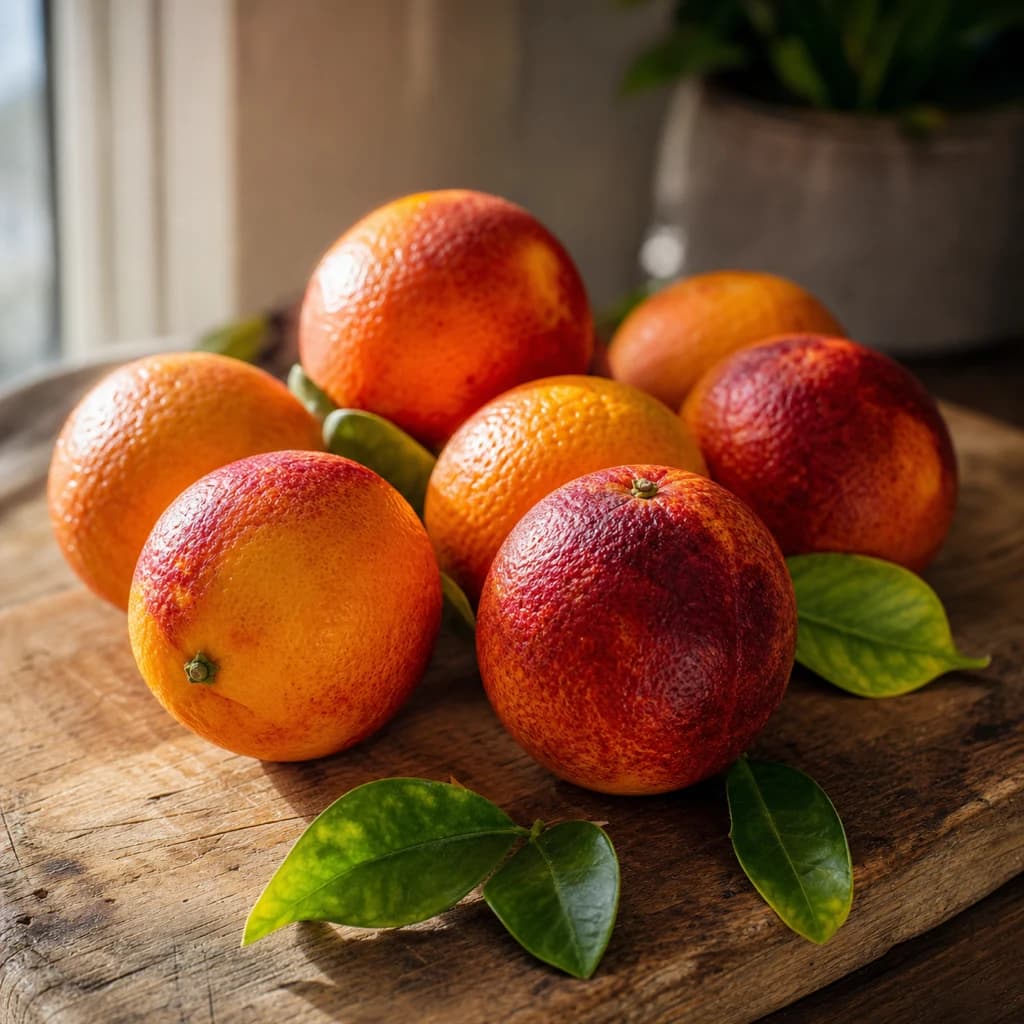
Natural form
Whole blood oranges show their deep reddish-orange rind and compact citrus shape.
Shows the reader exactly what blood oranges look like before any preparation, including the characteristic rind coloration.
Produce
Blood Orange
Crimson-fleshed citrus with sweet-tart, berry-tinged flavor, prized in Sicily.
Blood oranges are citrus fruits with deep crimson flesh, owing their color to anthocyanins, and a sweet-tart flavor with raspberry-like undertones. The Sicilian Arancia Rossa is famed for its intensity; the fruit is juiced, segmented into salads, and used in desserts, cocktails, and sauces. The striking color makes it a favorite garnish.
Blood oranges are a natural mutation of pigmented citrus—not a crossbreed—distinguished by their crimson to deep purple-red flesh and a flavor profile that goes well beyond ordinary orange. The berry-like notes, hints of raspberry and cherry, and a sweet-tart acidity make them more complex and versatile than standard oranges. The color comes from anthocyanins, pigments common in blueberries and grapes but rare in citrus; they develop in response to cool nighttime temperatures during ripening. This is why fruits grown in consistently warm climates may show minimal red coloration. The three principal commercial varieties—Moro, Tarocco, and Sanguinello—all descend from the ancient Sanguinello di Moscato discovered near Lentini, Sicily in the 17th century. Beyond their striking appearance, blood oranges carry a higher natural acidity (pH 3.0–3.5) than many navel oranges, making them sharper and more useful in savory preparations, while their juice yield of 40–50% by weight makes them economical for sauces, dressings, and reductions.
- Measured in
- piece
- Storage
- Fridge
Types & varieties
Darkest flesh; intense berry flavor; originated in Sicily; slight raspberry finish at its peak
Sweetest variety; medium red pigmentation; most popular in Italy; virtually seedless
Spanish variety; reddish skin and flesh; sweet with mild acidity; later season than Moro
Growing and Ripening
The anthocyanin development that gives blood oranges their characteristic color is temperature-dependent. Nighttime temperatures below 15°C (59°F) during the final stage of ripening trigger anthocyanin production in the flesh. This is why the finest blood oranges come from Sicily's volcanic slopes and Spain's interior valleys, where dramatic day-night temperature swings are normal. Fruits grown in Florida or California in warmer winters often display muted pigmentation—sometimes barely any red at all—while the same varieties grown in Sicily produce deeply colored flesh. If you are sourcing for a dish where color is essential, ask your supplier about the growing region and, when possible, taste a cut sample before purchasing in bulk.
- Cool nights are essential for full color development
- Same variety can vary dramatically in pigmentation by growing region
- Climate change is affecting traditional Sicilian growing conditions—some producers report earlier harvests and less consistent color
Common uses
Tips & pitfalls
- Choose fruits that feel heavy for their size—signals high juice content. A light blood orange will be dry and disappointing.
- Exterior rind color does not reliably predict flesh color. A fully orange-skinned fruit may have deeply crimson flesh, and vice versa. When color matters, cut one open before committing to a batch.
- The anthocyanin pigment is heat-sensitive and fades with prolonged cooking. Add blood orange juice or segments to finished dishes rather than cooking it for extended periods when you want the color to show.
- Blood orange juice oxidizes and browns faster than regular orange juice due to its pigment profile. Use juice immediately, or add a squeeze of lemon to slow oxidation for 15–20 minutes.
- When segmenting for salads, remove all bitter white pith using the suprême technique—a sharp knife and patient work produce clean, elegant sections that showcase the color.
- Wash the rind thoroughly before zesting, or purchase organically grown fruit. The zest carries fragrant, floral notes that complement both sweet and savory preparations.
- Substitute 1:1 for regular oranges in most recipes, but account for slightly higher acidity—you may want to reduce any added acid in a recipe.
- Common mistake: assuming all blood oranges are identical. The three varieties differ meaningfully in sweetness and intensity. Tarocco is best for eating out of hand; Moro is preferred for sauces and reductions where concentrated berry flavor is desired.
Nutrition
Energy
406 kJ · per 100 g
Where the calories come from
Protein
1.5g
3% DV
Carbs
25g
9% DV
Fat
0.2g
0% DV
Fiber
10.6g
38% DV
Sodium
3mg
0% DV
Source · USDA FoodData Central · approx. Orange peel, raw
View on FDC →In the shops
Matched grocery products
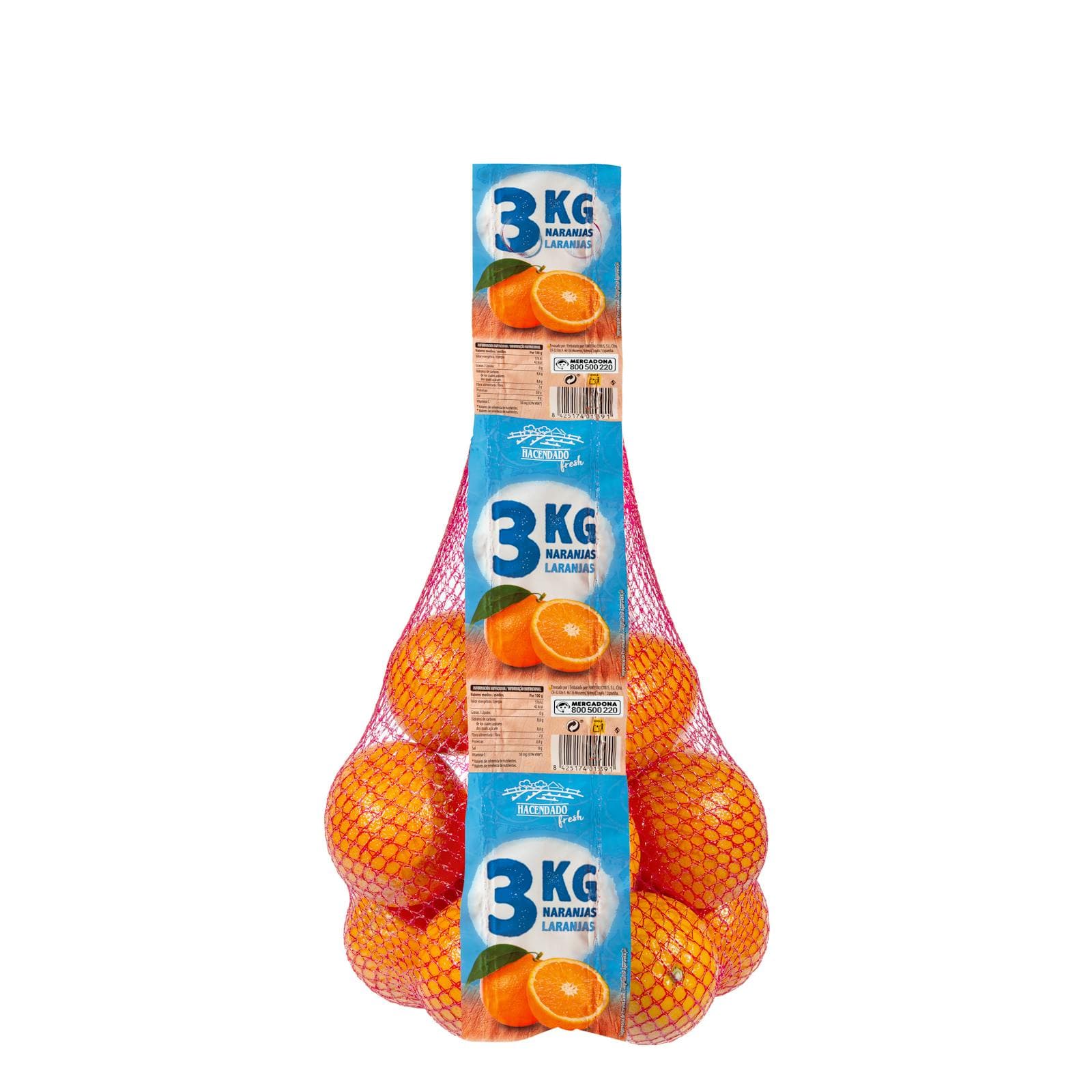 €3.75
€3.75Oranges
3 kg · Mercadona
 €4.75
€4.75Oranges
5 kg · Mercadona
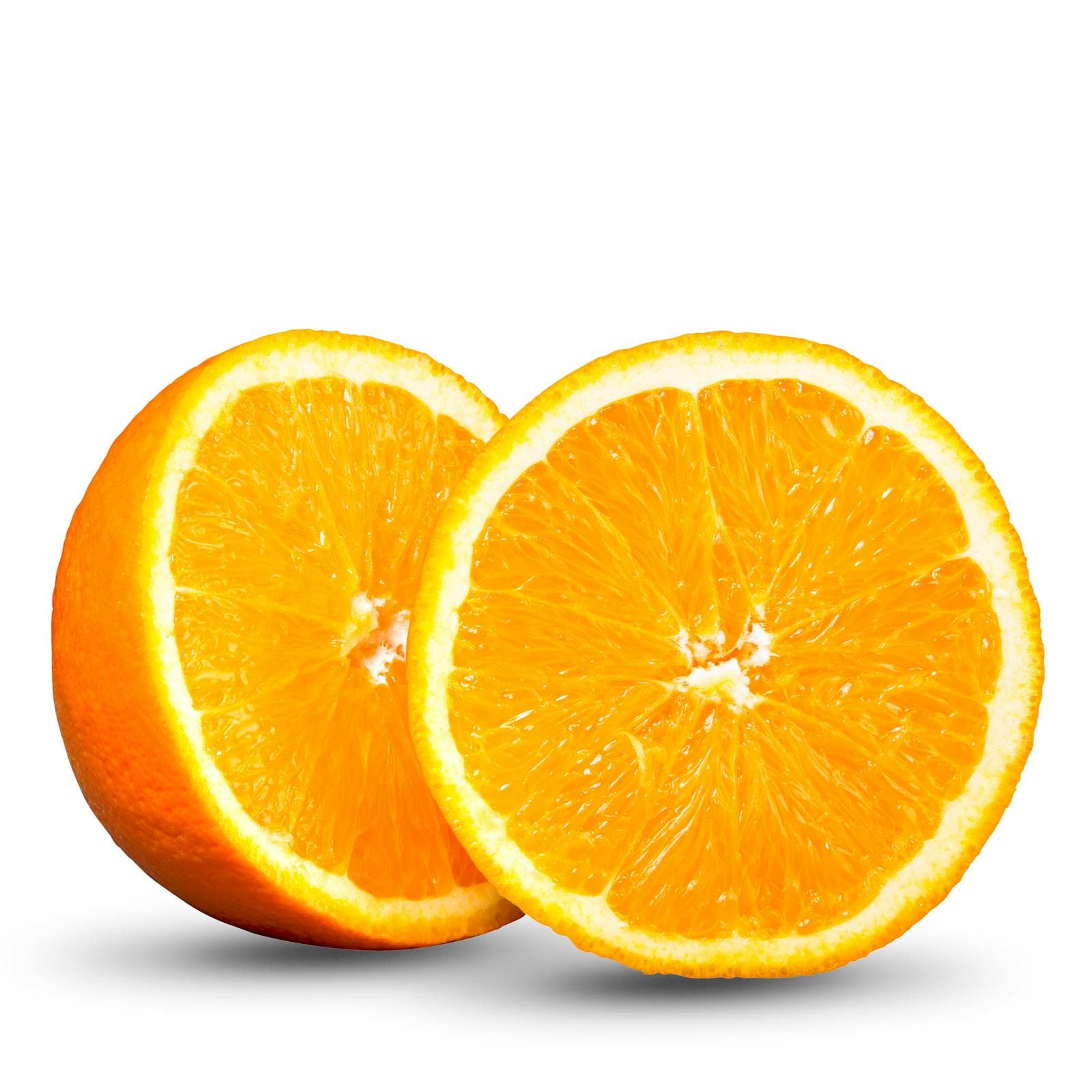 €0.57
€0.57Table Oranges
310 g · Mercadona
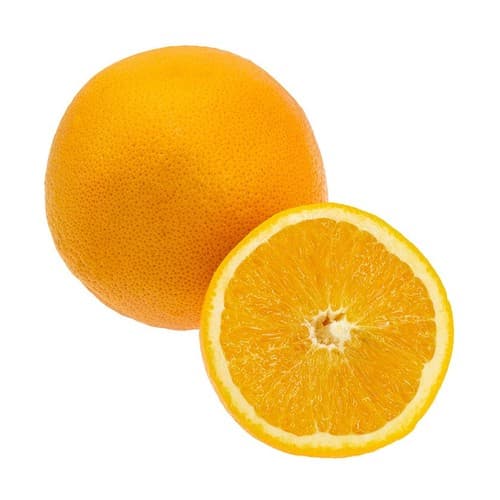 €0.58
€0.58Orange 1 unit
ud · Bonpreu
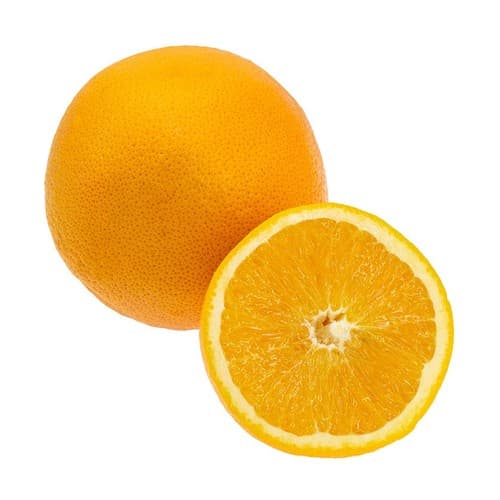 €0.65
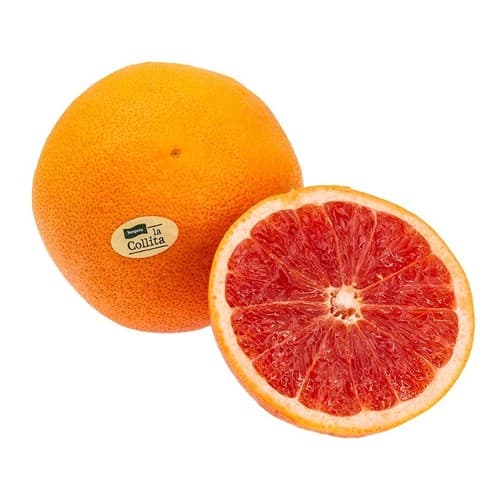
€0.65Orange 1 unit
Bonpreu
 €0.98
€0.98Orange 1 unit
ud · Bonpreu
Good to know
- Scientific name
- Citrus × sinensis (pigmented hybrid)
- Origin
- Mediterranean region, especially Sicily; also China and Spain
- Peak season
- January–March; available December through April
- Color
- Crimson to deep purple-red flesh; exterior rind ranges from orange to near-black-tinged
- Flavor
- Sweet-tart with berry-like, raspberry and cherry notes; more complex than standard oranges
- pH
- 3.0–3.5 (more acidic than many navel oranges)
- Color cause
- Anthocyanins, rare in citrus; develop in response to cool nights during ripening
- Storage
- Room temperature 2–3 days; refrigerate up to 2 weeks
- Juice yield
- Approximately 40–50% by weight
Substitutes
- Moro or Tarocco orange — Direct substitute when available; closest flavor and color match
- Cara cara orange — Similar sweetness and visual appeal in sliced presentations; lacks berry notes and anthocyanin color
- Navel orange with pomegranate juice — For color in dressings or sauces; add a splash of pomegranate juice to approximate berry notes
- Tangelo — Comparable tartness and juice yield; different citrus flavor; no red coloration
Pairs with
Also called
Arancia Rossa di Sicilia · Blood Oranges
Related
Tomato
Juicy, sun-sweet fruit for sauces, salads, and slow-cooked depth
Yellow Onion
The aromatic backbone of soups, sofritos, and braises
Garlic
Pungent cloves that perfume nearly every savory dish
Lemon
Bright, acidic citrus that wakes up almost any dish
Potato
Humble, hearty staple — roast, mash, fry, or boil
Carrot
Sweet, crunchy root — raw, roasted, or the base of a sofrito
Cucumber
Cool, crisp, and watery — for salads, pickles, and tzatziki

Lettuce
Crisp leaves for salads, wraps, and a fresh crunch