Baking
Bread
Baked leavened dough of flour and water, eaten as a staple worldwide in countless forms.
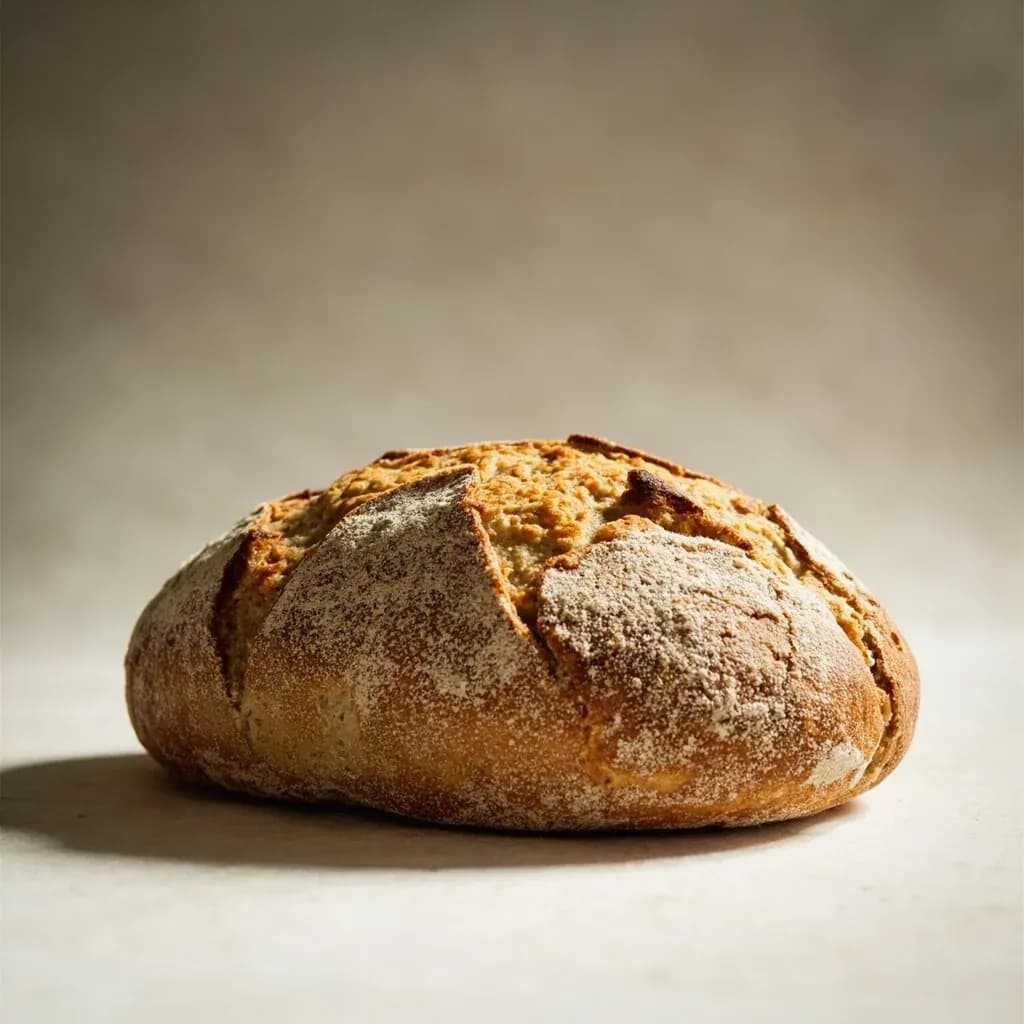
Bread is baked from a dough of flour, water, and usually a leavening agent like yeast or sourdough culture. It ranges from crusty European loaves to soft sandwich bread and serves as a staple eaten alongside meals, used for sandwiches, or torn to scoop sauces. Crusty bread in particular is favored for soaking up soups, stews, and olive oil.
Bread is a baked mixture of flour, water, and a leavening agent, forming a cohesive dough that transforms during heat into a stable, sliceable structure. The defining characteristic of bread is gluten—the network of proteins formed when wheat flour's glutenin and gliadin hydrate and develop through mixing and kneading. This elastic network traps the carbon dioxide produced by yeast or chemical leaveners, creating the characteristic airy crumb while providing the structural framework that holds the loaf together.
Bread's importance in global cuisine stems from its remarkable versatility and its role as an efficient delivery system for fats, proteins, and flavors. Whether served as sandwich bread, rustic boule, or flatbread, bread's neutral starch base allows it to carry both sweet and savory toppings while its crumb structure excels at absorbing sauces, gravies, and liquids. The Maillard reaction during baking creates the distinctive brown crust that signals doneness and adds flavor complexity.
The fermentation process—whether using commercial yeast, wild sourdough cultures, or chemical leaveners—fundamentally shapes bread's flavor, texture, and digestibility. Sourdough's long, slow fermentation produces lactic and acetic acids that create the characteristic tang while partially breaking down gluten proteins and phytic acid, improving digestibility. Commercial yeast breads rise faster but lack this depth of flavor development. Understanding these fundamentals allows home bakers to choose the right bread style for their purpose and skill level.
- Measured in
- piece
- Storage
- Pantry
Allergens
Types & varieties
Refined flour; soft, airy crumb; standard sliced bread
Uses whole grain flour with bran and germ; denser, nuttier; often mixed with white flour for better rise
Leavened by wild yeast culture rather than commercial yeast; tangy flavor from lactic and acetic acids; long fermentation develops complex taste and improves digestibility
Long, thin loaf; crisp crust; open, airy crumb; minimal ingredients (flour, water, salt, yeast)
Italian white bread; flat, elongated; very open, holey crumb; olive oil in dough; ideal for sandwiches and panini
Round flatbread of Middle Eastern origin; develops steam pocket when baked at high heat; splits to form pocket for filling
Indian flatbread; leavened with yogurt or yogurt-and-yeast dough; typically cooked on a very hot surface (tandoor or skillet); brushed with butter or ghee
Italian flatbread; dimpled top dotted with olive oil and salt; often topped with herbs, vegetables, or olives before baking
Made with rye flour (partial or full); denser than wheat bread; caraway seeds common; Jewish deli-style often includes some wheat flour for better rise
Dense, dark German bread; traditionally made with whole rye flour and long, slow baking; sweet, intensely earthy flavor from Maillard reaction products
French enriched bread; rich with butter and eggs; tender, almost pastry-like crumb; golden color; used for hamburger buns and French toast
Jewish braided bread; enriched with eggs and oil; slightly sweet; golden glazed crust; used for Shabbat and holidays
Made from sprouted wheat, barley, beans, lentils, millet, and spelt; fermentation during sprouting may reduce phytic acid and improve nutrient availability
Contains multiple grains and seeds (oats, sunflower, flax, quinoa, etc.); added for nutrition and texture variety
American Southern bread; made with cornmeal; leavened with baking powder or sourdough; ranges from crumbly to cake-like depending on recipe
Ethiopian flatbread; made from teff flour; fermented 2–3 days with wild yeast; spongy, slightly sour, bubbly surface; used as plate and utensil
Unleavened Jewish bread; no fermentation; only flour and water; baked rapidly to prevent any rise; required for Passover
Understanding Gluten Development
Gluten formation is the structural backbone of bread. When wheat flour meets water, glutenin (a large, elastic protein) and gliadin (a sticky, extensible protein) hydrate and link together, forming a viscoelastic network. This network has two essential properties: elasticity (the ability to spring back when stretched) and plasticity (the ability to hold a shape under pressure). Kneading aligns these gluten strands, strengthening the network and allowing the dough to trap gas bubbles from fermentation. The windowpane test—stretching dough until it forms a thin, translucent membrane—indicates sufficient gluten development. Under-kneaded dough tears easily; over-kneaded dough becomes tight and tears when over-stretched. Autolyse, a rest period of 20–30 minutes after initial mixing, allows flour to hydrate fully and gluten to begin forming without effort, making subsequent kneading more efficient.
- Higher-protein bread flour (12–14% protein) develops stronger gluten than all-purpose flour (10–12%)
- Fat (butter, oil) coats gluten strands, tenderizing crumb but reducing structural development—use in enriched breads only
- Salt tightens gluten structure; add it after initial mixing to prevent it from interfering with hydration
Staling, Retrogradation, and Storage
Bread staling is caused by retrogradation: as bread cools and loses moisture, starch molecules recrystallize, making the crumb firm and dry. This process is irreversible at room temperature—once starch retrogrades, it cannot be restored. Refrigeration accelerates staling dramatically (cold air is dry air), so never refrigerate bread unless you intend to freeze it. Freezing halts retrogradation entirely, preserving bread for up to three months. To use frozen bread, thaw at room temperature or toast directly from frozen for best texture. For room-temperature storage, place the cut side down on a cutting board, or use a paper bag or breathable bread box. Plastic bags trap moisture, creating a damp environment that accelerates both staling and mold growth. Sourdough stales more slowly than commercial-yeast bread due to its acidity, which interferes with starch recrystallization.
- Store crusty breads (baguettes, sourdough) unwrapped on a rack to preserve crust; the crust acts as a moisture regulator
- Soft sandwich breads stay fresher in plastic bags because they lack a crust to protect the crumb
- Reheat stale bread briefly in a 350°F oven to temporarily restore some softness; the moisture in the crumb rehydrates the starch crystals
Regional and Traditional Breads
Bread traditions vary enormously based on available grains, climate, and cultural practices. The ancient Egyptians discovered leavening around 3000 BCE, likely by accident when wild yeast from the air colonized a forgotten dough. This discovery spread throughout the Mediterranean and beyond. In the Middle East, flatbreads like pita developed because they cook quickly on hot stones, using less fuel than thick loaves—practical for nomadic cultures. The high heat of a tandoor or stone oven creates steam inside the pita, causing it to puff and form a pocket. Ethiopian injera uses teff flour and a multi-day fermentation with wild yeast, producing a spongy, sour flatbread that doubles as plate and utensil. Jewish matzo demonstrates the opposite extreme: deliberately preventing fermentation by using only flour and water and baking at high heat for minimal time, creating the bread required for Passover. German pumpernickel's dense, dark character comes not from color additives but from long, slow baking at low temperature (sometimes 16–24 hours), which produces intense Maillard reaction products and a sweet, earthy flavor.
- Gluten-free breads (rice, almond, cassava-based) behave fundamentally differently and are a distinct category with separate techniques
- High-altitude baking requires adjustments: lower pressure reduces yeast activity and moisture evaporation, so increase leavening slightly and reduce sugar
- Old-world bread traditions often used whole grains out of necessity; modern white flour is a relatively recent luxury
Common uses
Tips & pitfalls
- Measure flour by weight (grams) rather than volume (cups); flour compresses easily, causing hydration inconsistency that ruins crumb texture
- Salt strengthens gluten, enhances flavor, and controls yeast activity; never omit it from yeasted breads
- Water temperature for activating dry yeast: 105–115°F (41–46°C); above 120°F (49°C) kills yeast
- Knead until dough passes the windowpane test—it should stretch thin enough to transmit light without tearing
- A long, slow rise (cold retardation in refrigerator 12–24 hours) develops complex flavor and improves texture in yeasted breads
- Score dough before baking with a lame, sharp knife, or razor blade; cuts control oven spring and define crust pattern
- Create steam in the first 15–20 minutes of baking by spraying water on oven walls, using a Dutch oven, or placing a pan of boiling water inside
- Never open the oven door during the first 20 minutes; temperature fluctuation causes collapsed, dense loaves
- Bread continues cooking after removal; internal temperature should reach 190–200°F (88–93°C) for fully cooked crumb
- Store bread cut-side down on a cutting board, or in a paper bag at room temperature; plastic bags trap moisture and accelerate mold
- Sourdough stales more slowly than commercial-yeast bread due to acidity and lower glycemic response
- For crusty bread, cool on a wire rack completely; storing in a closed container softens crust
- Freeze fully cooled bread in airtight bags for up to 3 months; thaw at room temperature or toast directly from frozen
- Overproofing (dough more than doubled, sluggish) causes dense, flat bread; err on underproofed rather than overproofed
- Common mistake: not using a thermometer for water temperature; yeast is sensitive to exact conditions
- Gluten development requires rest; after initial kneading, let dough autolyse (rest) 20–30 minutes before further shaping
Nutrition
Energy
1113 kJ · per 100 g
Where the calories come from
Protein
12.5g
25% DV
Carbs
47.1g
17% DV
Fat
3.1g
4% DV
Fiber
6.3g
23% DV
Sugars
9.4g
of which
Sodium
375mg
16% DV
Source · USDA FoodData Central · Bread, potato
View on FDC →In the shops
Matched grocery products
No matched grocery products for Bread yet.
Good to know
- Main ingredients
- Flour (usually wheat), water, leavening agent (yeast, baking powder, or sourdough starter), salt
- Origin
- One of the oldest prepared foods; evidence of flatbread dates to over 14,000 years ago in Natufian Jordan; first leavened bread developed in ancient Egypt (~3000 BCE)
- Leavening agents
- Commercial yeast (Saccharomyces cerevisiae), wild yeast sourdough cultures, or chemical leaveners like baking powder/soda
- Typical baking temperature
- 350–475°F (175–245°C), depending on type and desired crust
- Primary protein
- Gluten (formed when glutenin and gliadin in wheat flour combine with water); provides structure and elasticity
- Shelf life
- 3–7 days at room temperature in a bread box or paper bag; longer in airtight container but stales faster
- Staling mechanism
- Retrogradation: starch molecules recrystallize as bread loses moisture; accelerated by refrigeration, slowed by freezing
- Crust formation
- Maillard reaction and caramelization at bread surface above 320°F (160°C)
- Typical yield
- One standard loaf (about 1.5 lb / 680g) from ~500g flour and 300–350ml water
- Equipment needed
- Mixing bowls, bench scraper, rising vessel (bowl or banneton), baking vessel (loaf pan, Dutch oven, or baking stone/steel), oven
Substitutes
- Tortillas (flour or corn) — For wraps and soft tacos; similar structure and neutral flavor; functionally interchangeable for many applications
- Pita bread — For sandwiches and wraps; can be split or used whole; different flavor but similar function
- English muffins — Split horizontally for small sandwiches or toasting; denser texture but usable in a pinch
- Crackers (water crackers, matzo) — For simple open-faced appetizers; more brittle, not a true substitute but a practical alternative for canapés
- Rice cakes — For low-carb or gluten-free applications; very different texture and neutral flavor; best for toppings rather than sandwiches
- Polenta or cornmeal cakes — For serving with soups or stews; completely different preparation but similar sopping function
- Lettuce wraps — For low-carb or grain-free meals; completely different but serves as a vehicle for fillings
- Toast points — Thinly sliced, toasted bread for appetizers; not a substitute but an alternative presentation
Pairs with
Also called
Bukë · Psomi · Mkate · Crusty Bread · Loaf
Appears in these dishes
Related

All-Purpose Flour
The do-anything flour for bread, cakes, sauces, and dredging

Bread Flour
High-protein flour for chewy, well-risen breads
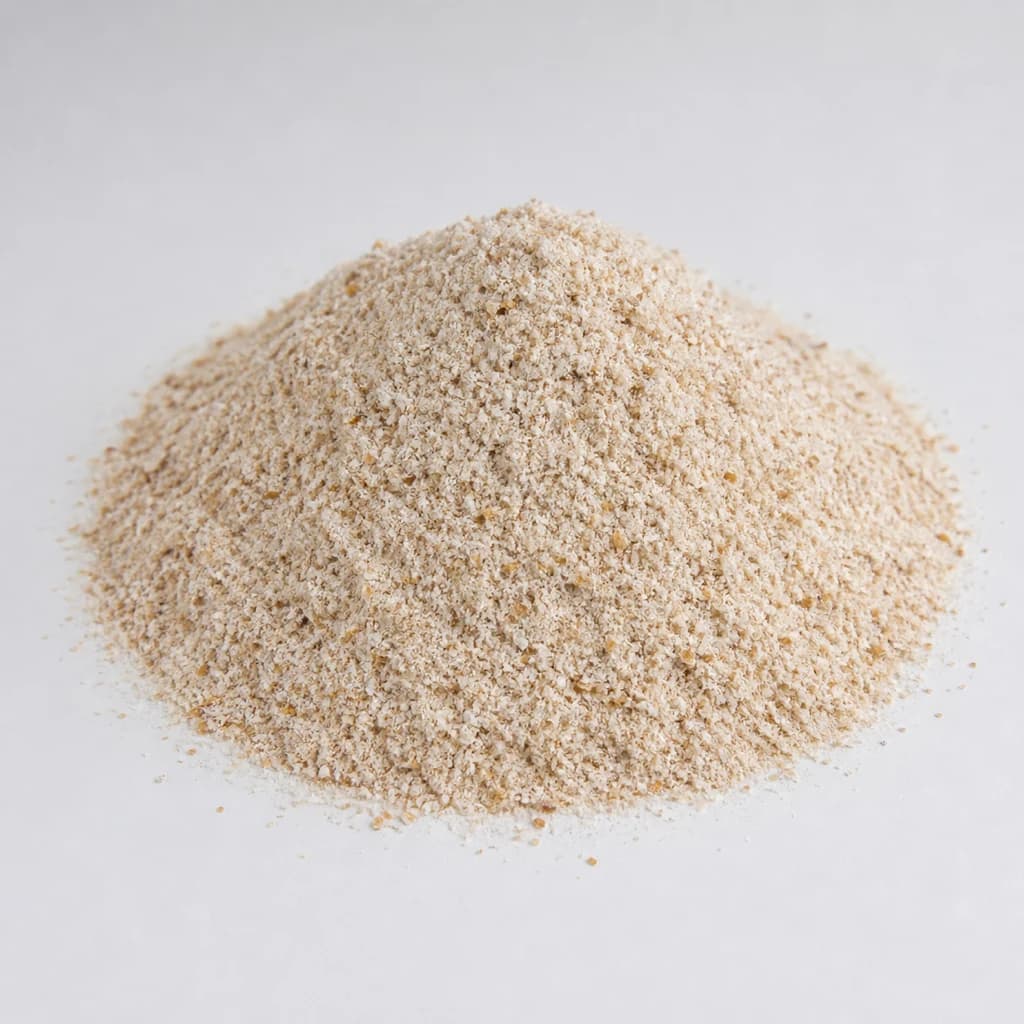
Whole Wheat Flour
Nutty, whole-grain flour for hearty breads and bakes
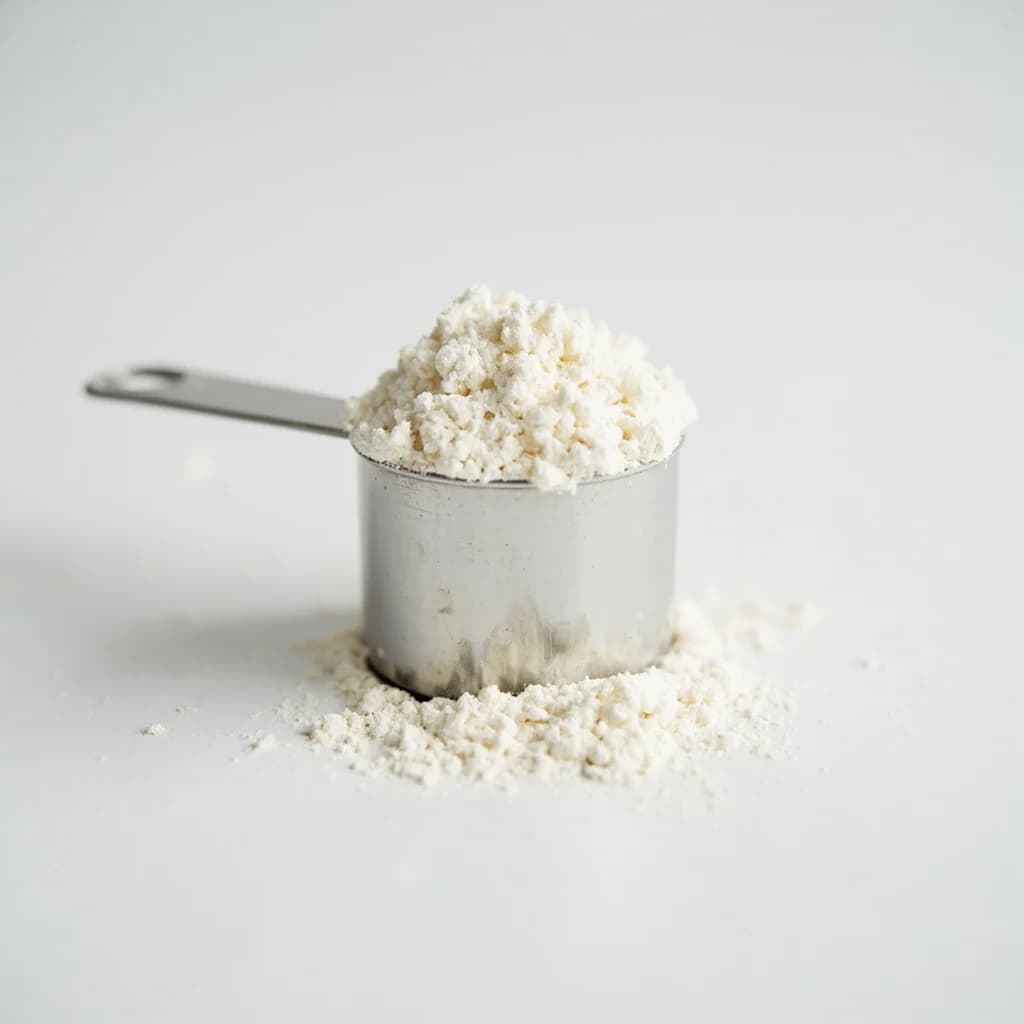
Cake Flour
Fine, low-protein flour for tender, delicate cakes
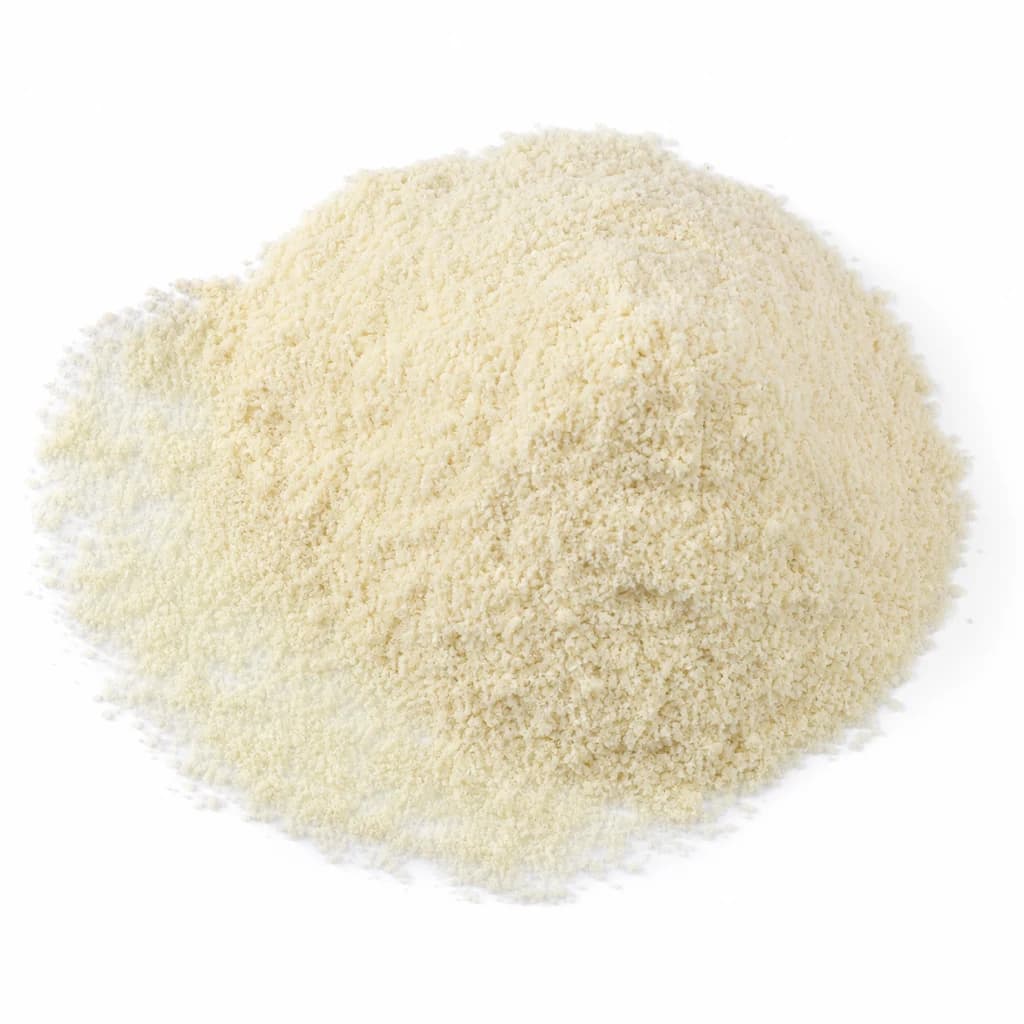
Almond Flour
Nutty, gluten-free flour for macarons and tender bakes

Baking Powder
All-in-one leavener for fluffy cakes, pancakes, and biscuits

Baking Soda
Pure leavener that needs acid to lift — and tenderize
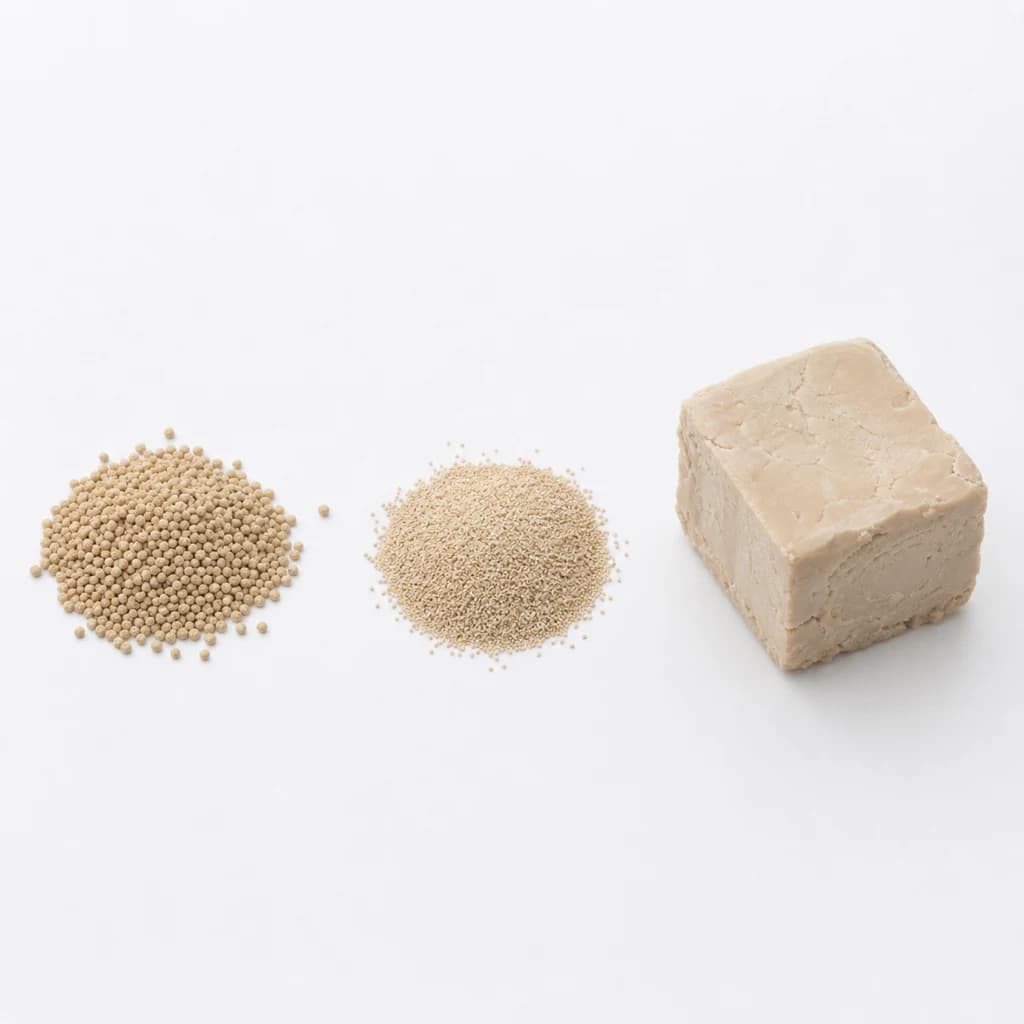
Yeast
Living leaven that makes bread rise and dough come alive