Varieties
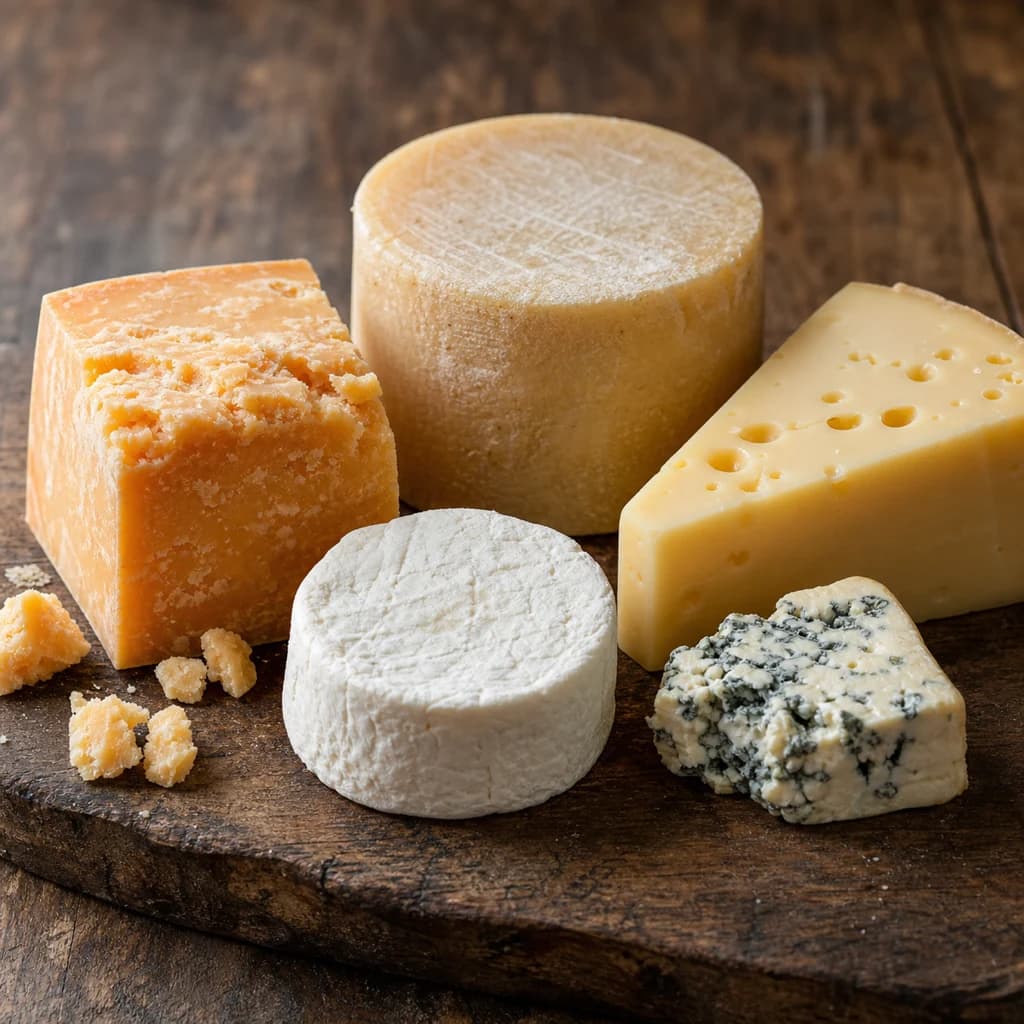
Several distinct cheese styles — hard, semi-soft, and fresh — grouped together on a wooden board.
Showing multiple cheese types side by side in one natural scene communicates the breadth of the category and teaches readers to recognize different forms.
Dairy & Eggs
Cheese (Generic)
Curdled, pressed milk cheese in countless styles, from hard aged blocks to soft fresh wheels.
Cheese is a broad category of dairy made by curdling milk and pressing or aging the curds, ranging from soft and fresh to hard and matured. It is eaten on its own, melted into dishes, grated over food, and baked into countless recipes worldwide. Texture and flavor depend on the milk, culture, and aging time.
Cheese is a fermented dairy product made by coagulating milk into curds, which are then drained, pressed, and often aged. The coagulation occurs through rennet (animal, microbial, or vegetable) or through acidification with lemon juice or vinegar. This ancient preservation technique, developed independently across cultures for at least 8,000 years in the Middle East, transformed perishable milk into a more stable food with concentrated protein, fat, calcium, and phosphorus. The earliest forms were likely accidental—milk left to sour in warm storage containers produced the first curd-like products, a happy accident that launched one of humanity's most versatile culinary ingredients.
The enormous diversity of cheese stems from four primary variables: the species of mammal providing the milk, the moisture content and resulting texture, the bacterial cultures and fermentation processes, and the aging conditions. These factors interact to create styles ranging from fresh, high-moisture cottage cheese and cream cheese to rock-hard, aged Parmigiano-Reggiano. The primary classification system organizes cheeses by water content and texture: fresh (unaged), soft-ripened (bloomy-rind), washed-rind, semi-soft, semi-hard, hard, and blue-veined. Within each category, milk type (cow, goat, sheep, buffalo), specific cultures, and production methods create thousands of distinct varieties—over 1,800 named cheeses worldwide according to the International Dairy Federation, with many carrying protected designation of origin such as Parmigiano-Reggiano, Roquefort, and Manchego.
Cheese is not interchangeable in cooking. The key variables determining suitability are melt behavior (does the dish require smooth melting?), moisture content (is it fresh or aged?), intensity (is it a primary component or a finishing garnish?), and flavor profile (sharp, mild, tangy, nutty, pungent?). Grating cheeses like Parmigiano-Reggiano cannot replicate melting cheeses like Gruyère; soft-ripened cheeses cannot substitute for hard grating cheeses. Always match the specific role the cheese plays: a cheese sauce demands a reliable melter; a finishing cheese requires concentrated flavor; a spread needs low viscosity; a crumble needs a crumbly texture.
- Measured in
- g
- Storage
- Fridge
Allergens
Types & varieties
Semi-hard; ranges from mild to sharp; melts smoothly; originated in Somerset, England
Hard, granular; aged 12–36+ months; produced in Emilia-Romagna; the only true Parmesan
Hard, tangy, salty; made from sheep's milk; Roman origin; excellent for grating
Semi-hard; nutty, slightly sweet; Swiss origin; melts without breaking
Soft, elastic; traditionally from water buffalo milk in Campania; high moisture content (52–60%); becomes rubbery when melted rather than achieving smooth melt
Soft-ripened; creamy interior when ripe; bloomy rind; AOC-protected
Soft-ripened; smaller, more pungent than Brie; must be made from raw milk in Normandy
Blue-veined; sheep's milk; aged in Combalou caves of Aveyron; PDO protected
Blue-veined; soft, creamy; cow's milk; aged 40–60 days; milder than Piccante
Whey cheese; soft, grainy; mild; made from leftover whey; perishable within days
Fresh; soft, spreadable; high moisture; mild; not a melting cheese
Brined; crumbly; sheep's milk (or blend); Greek origin; tangy, salty
Range of styles from fresh log to aged crottin; tangy, earthy; often rind-ripened
Semi-hard; ranges from young (buttery) to aged (caramel, crystallized); Dutch origin
Semi-hard; sheep's milk; firm, buttery; distinctive herringbone rind; Spanish La Mancha
Semi-hard; pale, mild; large characteristic holes from propionic bacteria fermentation
Semi-soft; buttery, nutty; Italian Alpine; excellent for fondue
Semi-soft; washed-rind; pungent aroma, fruity interior; Lombardy origin
Fresh; thick cream cheese; made by acidifying cream; mild, rich; key to tiramisu
Fresh; curd format; mild; lower fat options common; moist, lumpy
Understanding Melt Behavior
The ability to melt smoothly depends on balance between fat and protein, and the degree of proteolysis (breakdown by enzymes). High-moisture, young cheeses melt easily because the fat can escape and coat the protein strands. Aged hard cheeses have less moisture and more tightly bound proteins, so they melt poorly on their own but contribute intense flavor and superior texture when combined with a melter.
- Young, high-moisture cheeses (Gruyère, Fontina, young Gouda, Mozzarella) melt smoothly
- Aged hard cheeses (Parmigiano-Reggiano, Pecorino Romano) melt poorly alone but excel when combined with melters
- Washed-rind cheeses (Taleggio, Époisses) melt readily due to high moisture
- Blue cheeses tend to remain chunky or become grainy and separate rather than melting smoothly—use as garnish or crumble, not as a melting base
Storing Cheese Correctly
Proper storage maintains texture and flavor while preventing premature spoilage. The enemy of cheese is both excessive moisture (promoting mold) and excessive dryness (causing hardness and cracks).
- Wrap in wax paper or cheese paper, not plastic wrap—cheese needs to breathe
- Place wrapped cheese in a sealed container with a damp paper towel (not touching the cheese) for hard cheeses
- Store fresh cheeses in their original packaging, tightly sealed
- Inspect weekly; trim any mold from hard cheeses (mold does not penetrate deeply in firm cheeses)
- Never freeze fresh or soft-ripened cheeses; hard cheeses freeze acceptably for cooking use only
Aged vs. Fresh: When to Use Which
The aging process concentrates flavor while reducing moisture, making aged and fresh cheeses suitable for entirely different culinary roles. Using the wrong type is a common mistake that compromises dishes.
- Fresh cheeses (Ricotta, Mascarpone, fresh Mozzarella, cream cheese) are mild, high-moisture, and perishable—use within days of opening
- Aged cheeses (Parmigiano-Reggiano, Pecorino Romano, aged Cheddar) are intensely flavored, dry, and shelf-stable for months—use as finishing agents and grating cheeses
- Semi-firm cheeses (Gruyère, young Gouda, Emmental) occupy the middle ground—good for melting and slicing
- Match the cheese's intensity to its role: assertive cheeses (blue, washed-rind, aged goat) work best as accents, not bulk ingredients
Common uses
Tips & pitfalls
- Always bring cheese to room temperature (45–60 minutes) before serving or cooking; cold cheese has muted flavor and poor melting
- Use a microplane or fine grater for hard cheeses to maximize surface area and flavor release
- Wrap cheese in wax paper or cheese paper (not plastic wrap) to allow breathability; plastic traps moisture and promotes mold
- For firm grating cheeses, freeze 20–30 minutes before shredding to get clean, even pieces
- Do not overheat melted cheese; temperatures above 150°F (65°C) cause fat separation and a rubbery texture
- Combine a high-moisture cheese with a dry, aged cheese for optimal melt (e.g., Mozzarella + Parmigiano-Reggiano on pizza)
- Add cheese to dishes in the last 2–3 minutes of cooking to prevent toughness and maintain texture
- Season cheese carefully; aged and hard cheeses (Pecorino, Parmesan) are inherently very salty
- When a recipe calls for 'Parmesan,' true Parmigiano-Reggiano is the standard; grocery store 'Parmesan' is often inferior pre-grated product
- Store hard cheese in a sealed container with a damp paper towel (not touching the cheese) to prevent drying out
- Freeze cheese only for cooking uses; texture degrades significantly for raw serving but is fine for sauces and baked dishes
- Taste before using in a recipe; cheese should be at its best, not 'good enough'—cooking does not improve inferior cheese
- When making cheese sauce, add acid (lemon juice or white wine) to prevent graininess and improve smoothness
- Scrape blue cheese veins with a skewer or knife rather than cutting, to distribute spores evenly
- Serve strong-flavored cheeses (blue, washed-rind, aged goat) in small portions; they are assertive and meant as accents
Nutrition
Energy
1628 kJ · per 100 g
Where the calories come from
Protein
25.6g
51% DV
Carbs
1.6g
1% DV
Fat
31.1g
40% DV
Fiber
0g
0% DV
Sugars
1.6g
of which
Sodium
800mg
35% DV
Source · USDA FoodData Central · Cheese, fontina
View on FDC →In the shops
Matched grocery products
No matched grocery products for Cheese (Generic) yet.
Good to know
- Base material
- Milk (cow, goat, sheep, buffalo, yak, or other mammal)
- Primary coagulant
- Rennet (animal-derived, microbial, or vegetable) or acid (lemon juice, vinegar)
- Core process
- Milk acidification or rennet addition → curd formation → drainage → (optional) aging
- Water content
- Primary determinant of texture; inversely related to aging time and hardness
- Fat content
- Ranges from 0% (fat-free cottage cheese) to 60%+ (double and triple crèmes)
- Shelf life
- Fresh cheeses: 1–2 weeks; hard aged cheeses: several months sealed and refrigerated
- Refrigeration temp
- 36–45°F (2–7°C); temperatures below 36°F degrade texture
- Number of varieties
- Over 1,800 named cheeses worldwide
Substitutes
- Parmigiano-Reggiano — Pecorino Romano (saltier, more pungent); Grana Padano (milder, less complex); aged Asiago
- Pecorino Romano — Parmigiano-Reggiano (less salty); a blend of Parmesan and salt
- Ricotta — Cottage cheese (similar texture, slightly grainier); farmer's cheese; paneer (for Indian dishes)
- Cream cheese — Mascarpone (richer, no tang); a blend of 8 oz butter + 1 cup milk (cooked down); quark
- Fresh Mozzarella — Low-moisture part-skim mozzarella (better melting but less mild); Provolone fresco
- Cheddar (sharp) — Gruyère (nuttier, melts well); aged Gouda (caramel notes); Colby (milder)
- Feta — Cotija (Mexican aged cheese; saltier, crumbly); Bulgarian feta; goat cheese (less salty)
- Goat cheese (fresh log) — Cream cheese (milder, no tang); ricotta with lemon zest
- Blue cheese — Any other blue (Roquefort, Stilton, Danablu, Cabrales); Gorgonzola Dolce for milder applications
- Brie — Camembert (more pungent); Coulommiers (similar, slightly smaller)
Pairs with
Also called
Juusto · Hard Cheese · Soft Cheese · Juust
Appears in these dishes


Related

Whole Milk
Rich, full-fat milk for drinking, coffee, sauces, and baking
Butter
Golden fat for searing, baking, and finishing a sauce
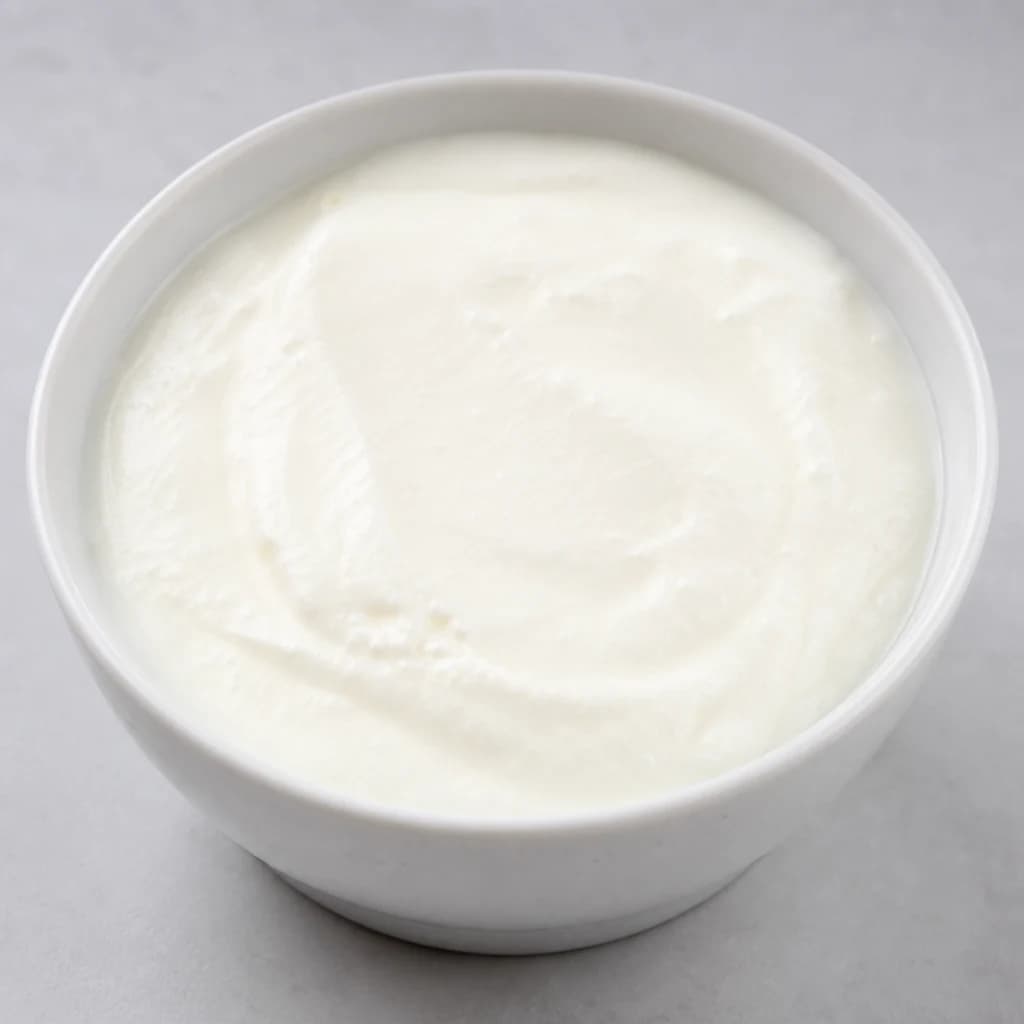
Yogurt
Tangy, creamy culture for breakfast, sauces, and marinades
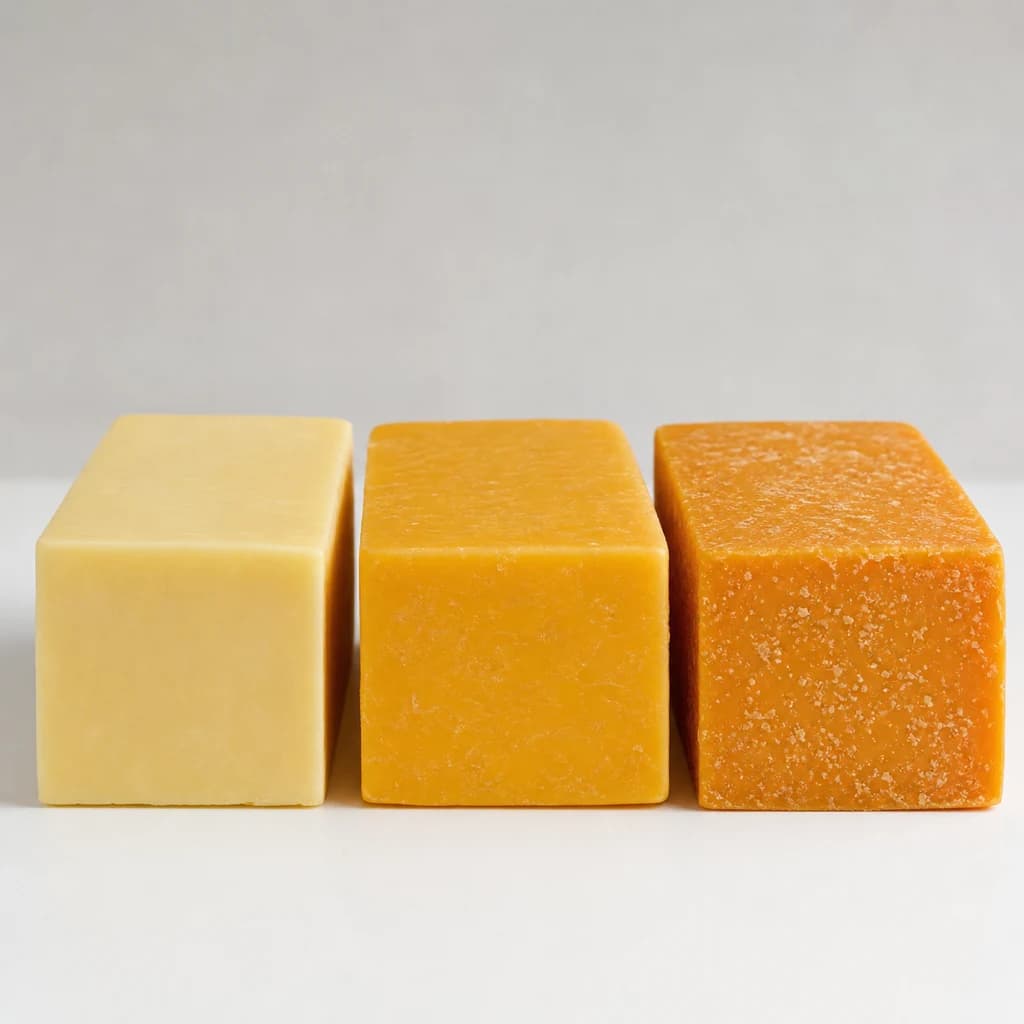
Cheddar Cheese
Sharp, melty cheese for sandwiches, gratins, and grating
Skim Milk
Fat-free milk for lighter drinking, coffee, and cooking
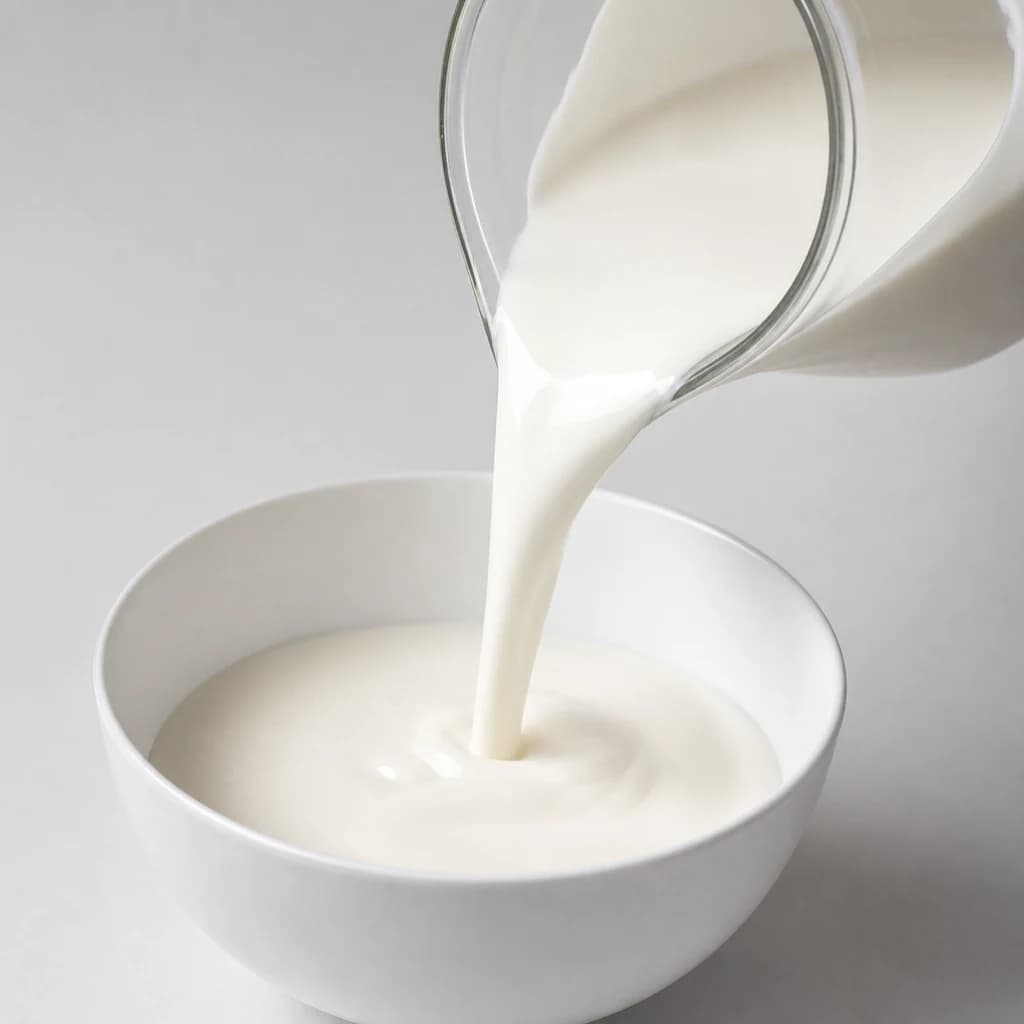
Heavy Cream
Rich cream that whips, enriches sauces, and sets ganache

Sour Cream
Tangy, thick cream for dolloping, baking, and dips
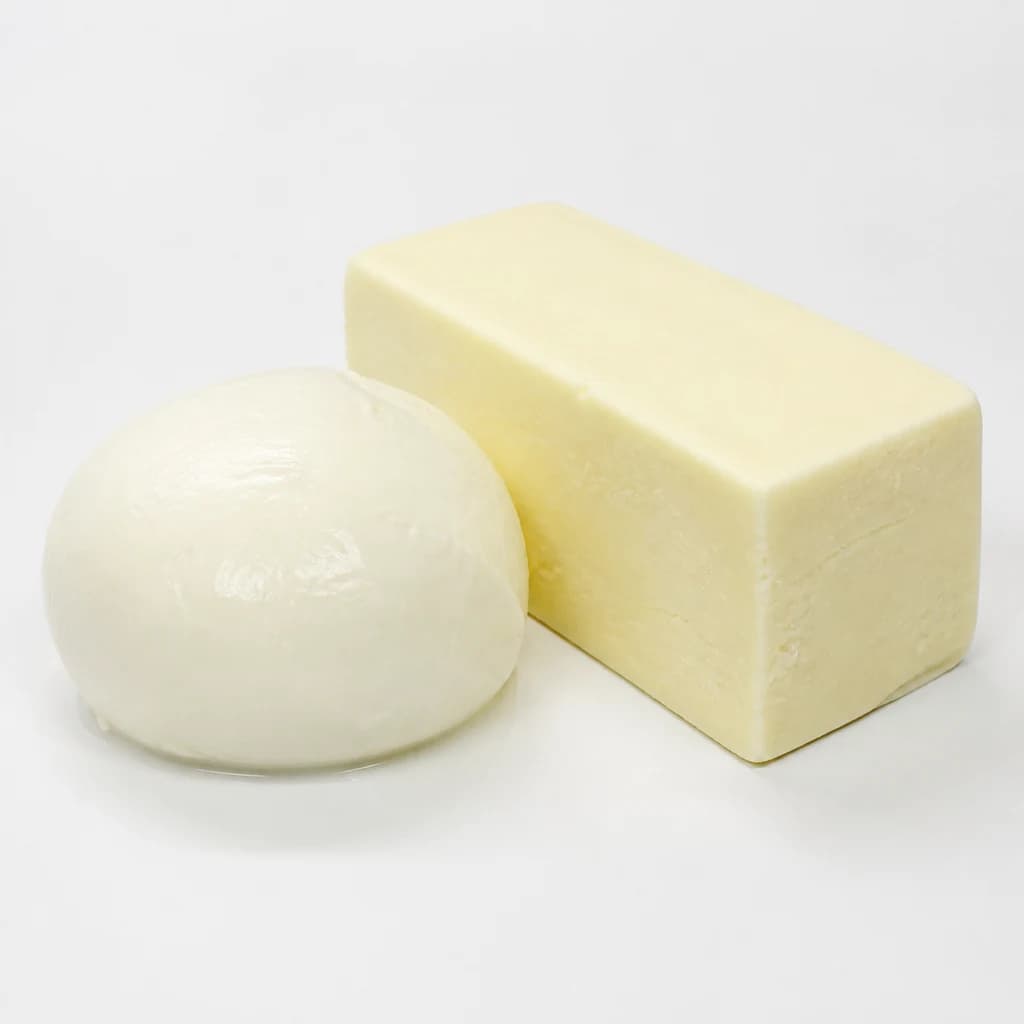
Mozzarella
Soft, milky cheese that melts into stretchy pizza pulls