Varieties
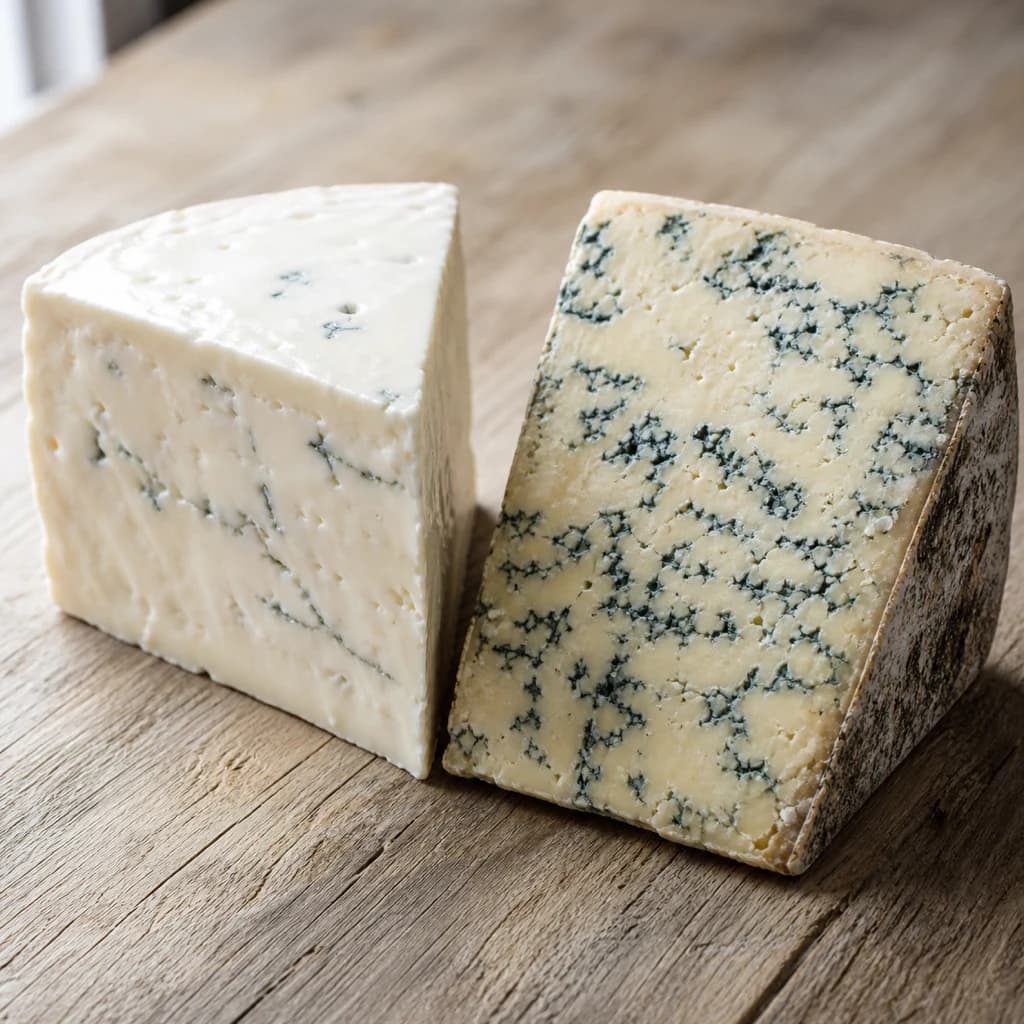
Gorgonzola dolce (left, soft pale) and piccante (right, firm crumbly) side by side on a wooden board.
Showing both styles teaches the reader that Gorgonzola spans a wide texture and intensity range within one name.
Dairy & Eggs
Gorgonzola
Italian blue cheese, creamy and mild (dolce) or firm and sharp (piccante), melted into sauces.
Gorgonzola is an Italian blue cow's-milk cheese veined with blue-green mold, ranging from the soft, mild, spreadable dolce to the firmer, sharper piccante. It is crumbled into salads, melted into creamy pasta and risotto sauces, and paired with pears, honey, and walnuts. Its tangy, salty, slightly funky bite is a hallmark of Italian cheese boards.
Gorgonzola is one of Italy's oldest and most celebrated blue cheeses, produced in the region surrounding Milan since at least the 10th century—some historical references suggest it may have been made as early as 879 AD. In 1996, it received Protected Designation of Origin (PDO) status from the European Union, meaning true Gorgonzola can only be made in specific provinces of Lombardy and Piedmont using pasteurized cow's milk. The cheese wheels are needle-punched during aging to introduce oxygen into the paste, which encourages the development of the characteristic greenish-blue veining that gives the cheese its distinctive character and flavor complexity.
What makes Gorgonzola unique among Italian cheeses is that it exists in two clearly defined styles: the soft, creamy Dolce and the firm, sharp Piccante. This distinction is official—the Italian consortium recognizes only these two types. Dolce is supplemented with cream and aged a minimum of 60 days, resulting in a spreadable, buttery cheese with gentle blue notes. Piccante is aged at least 80 days (often 12 to 18 months), developing a firm, crumbly texture and an assertively savory, pungent flavor that commands attention on a cheese board or crumbled over a salad.
For the cook, understanding which style to use is essential. Dolce melts smoothly and evenly, making it the natural choice for sauces, risottos, and pasta dishes where you want the cheese to integrate seamlessly into the dish. Piccante holds its shape when crumbled and can turn rubbery and grainy when subjected to prolonged heat in liquid applications—it's better reserved for finishing dishes, cold salads, or cheese boards where its texture and intensity can shine.
- Measured in
- g
- Storage
- Fridge
Allergens
Types & varieties
Soft, creamy, mild and sweet; minimum 60 days aging; spreads easily; melts smoothly for sauces and pasta
Firm, crumbly, sharp and pungent; aged 80+ days (often 12–18 months); holds shape when crumbled; ideal for cheese boards, salads, and finishing
Choosing the Right Style for Your Dish
The single most common mistake home cooks make with Gorgonzola is using the wrong variety for the application. Dolce and Piccante behave very differently under heat. When melted into a sauce, Dolce becomes silky and incorporates evenly. Piccante, subjected to the same treatment, will seize up into rubbery, grainy clumps—the proteins and fat separate under prolonged liquid heat, leaving you with an unpleasant texture and uneven flavor distribution. Reserve Piccante for dishes where it is added at the end, off the heat, or used raw.
- Use Dolce for: creamy pasta sauces, risotto, pizza, mashed potatoes, soups, polenta, and any cooked application where you want the cheese to melt smoothly
- Use Piccante for: crumbling over salads, cheese boards, sandwiches, pasta added off-heat at the end, or finishing a dish where a splash of sharp flavor is desired
- If a recipe simply says 'Gorgonzola' without specifying, default to Dolce for cooking and Piccante for raw applications
Mastering the Melting Process
Gorgonzola Dolce is forgiving, but it still requires technique. The enemy of a smooth blue cheese sauce is direct high heat and overcooking. When the fat in blue cheese breaks down from excessive heat, the sauce turns grainy and the cheese becomes chalky. Work off direct heat when possible, and always add the cheese to already-hot liquid, never the other way around.
- Bring Dolce to room temperature 20–30 minutes before using—this ensures even melting
- Add cheese off the flame or at the very end of cooking
- Use starchy pasta cooking water when making pasta sauces—the starch helps emulsify the cheese into a creamy coating
- For risotto, stir in crumbled Dolce just before plating, allowing residual heat to melt it without overcooking
- In béchamel or cream-based sauces, fold in the cheese at the end, off heat
Common uses
Tips & pitfalls
- Bring Gorgonzola to room temperature 20–30 minutes before serving or cooking—cold cheese has muted flavor and won't melt properly
- For smooth sauces, always use Dolce—it melts evenly without turning grainy; Piccante will seize and become rubbery in liquid
- When cooking with Piccante, crumble it into already-hot dishes off direct heat or fold it into béchamel at the end, off the flame
- To crumble Piccante cleanly, use your fingers or a fork; cold cheese crumbles better than room-temperature cheese
- When adding Gorgonzola to pasta, reserve starchy cooking water and toss the pasta with cheese off the flame, adding water gradually for a silky sauce
- Never overcook blue cheeses—excessive heat breaks down the fat and makes it separate and grainy
- Store in the coldest part of the refrigerator (not the door) to minimize temperature fluctuations that cause drying
- Wrap in wax paper first, then plastic wrap, to prevent both drying and excess moisture
- Gorgonzola Dolce can be frozen briefly for cooking use but will not slice cleanly after thawing—use only for cooked applications
- A little goes a long way—its flavor is assertive; start with less than you think and season accordingly
Nutrition
Nutrition
No USDA FoodData Central match for Gorgonzola yet. We surface a per-100 g profile once a generic whole-food entry is matched and verified.
In the shops
Matched grocery products
No matched grocery products for Gorgonzola yet.
Good to know
- Origin
- Gorgonzola, near Milan, Lombardy, Italy (PDO protected since 1996)
- Milk
- Pasteurized cow's milk (Dolce supplemented with cream)
- Aging
- Dolce: minimum 60 days; Piccante: minimum 80 days (often 12–18 months)
- Texture
- Dolce: soft, creamy, spreadable; Piccante: firm, crumbly
- Flavor
- Dolce: sweet, buttery, mild blue; Piccante: sharp, pungent, intensely savory
- Fat Content
- 23–28%
- Color
- Ivory to pale yellow paste with greenish-blue veining
- Shape
- Cylindrical wheels, typically 10–12 kg, with consortio stamp on rind
- Storage
- Tightly wrapped in wax paper then plastic, refrigerate at 4°C, use within 2–3 weeks
- First Documented
- 10th century (possibly as early as 879 AD)
Substitutes
- Stilton — British blue cheese with similar pungency and crumbly texture; use Stilton for sharp applications in place of Piccante
- Danish Blue — Sharper and saltier than Gorgonzola; crumbles well; similar melting behavior to Piccante, so use cautiously
- Cambozola — German blue-veined cheese; milder than Piccante, creamier than Dolce; decent all-purpose substitute for sauces
- Fourme d'Ambert — French blue cheese; milder and less crumbly; closer to Dolce in intensity; better for melting than crumbling
- Roquefort — Sheep's milk blue; more pungent and tangy than Gorgonzola; not a direct substitute but works in strong-flavor dishes
Pairs with
Also called
Gorgonzola Dolce · Gorgonzola Piccante
Related

Whole Milk
Rich, full-fat milk for drinking, coffee, sauces, and baking
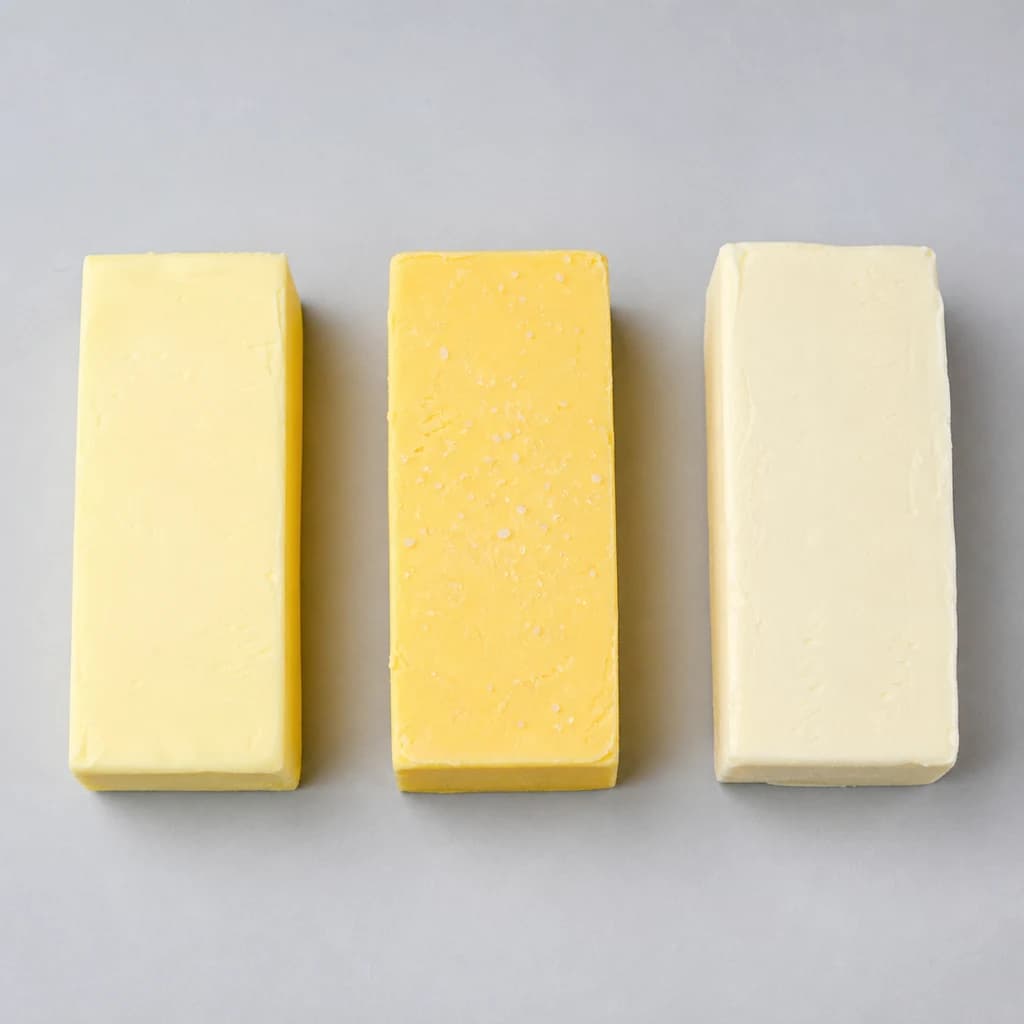
Butter
Golden fat for searing, baking, and finishing a sauce
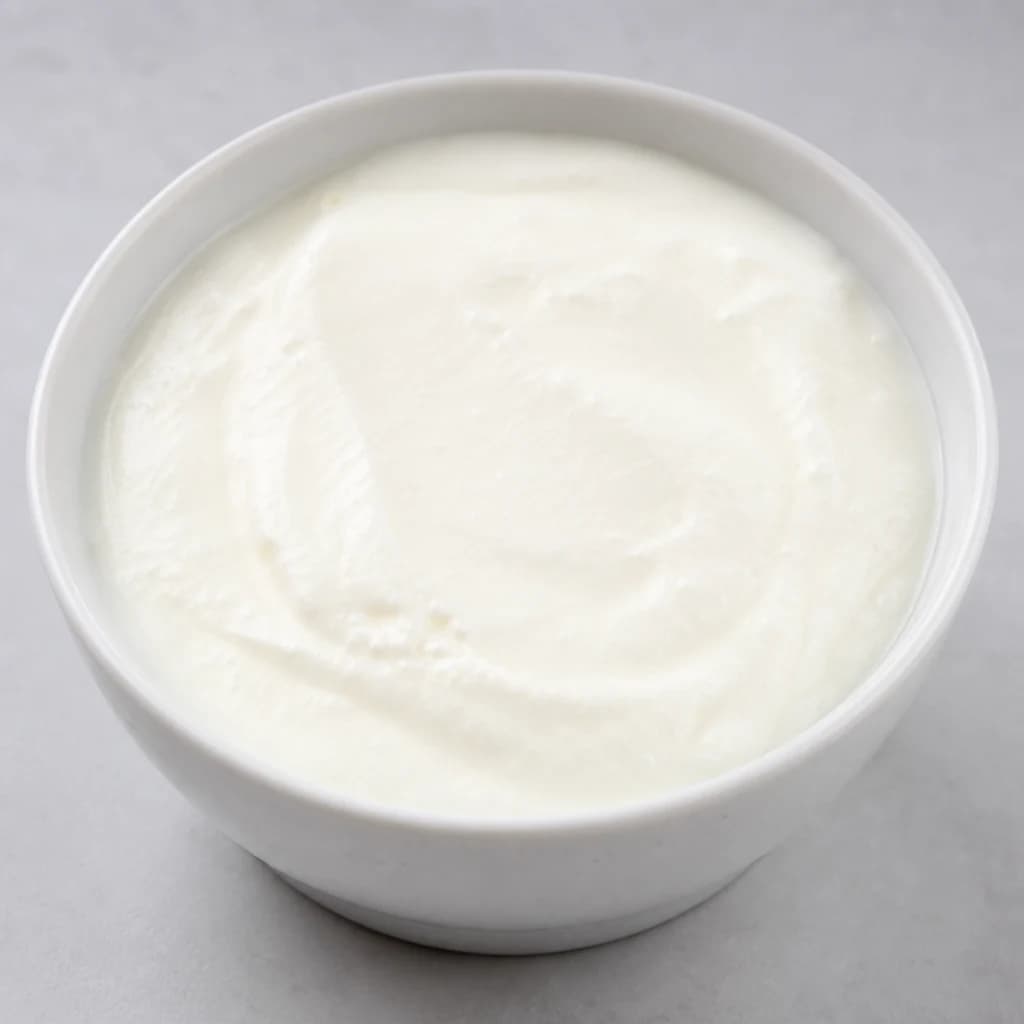
Yogurt
Tangy, creamy culture for breakfast, sauces, and marinades
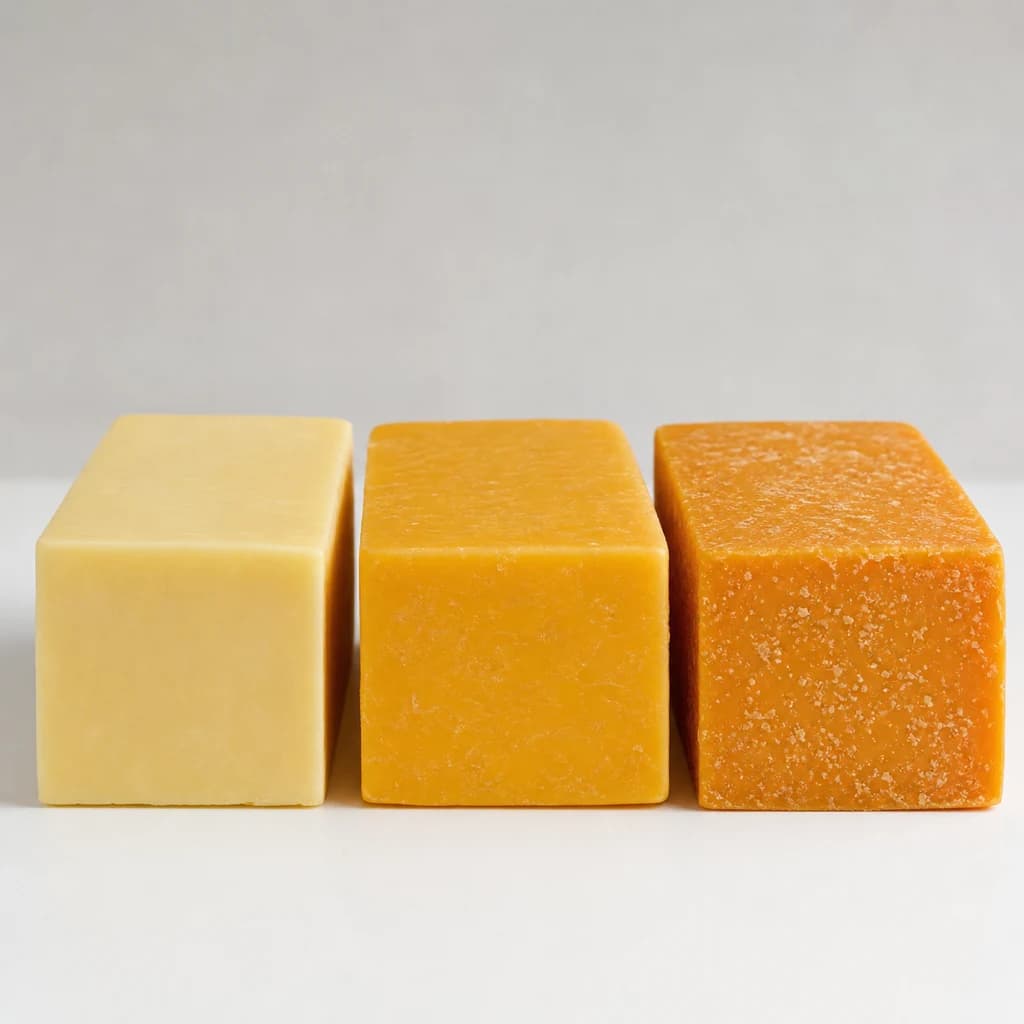
Cheddar Cheese
Sharp, melty cheese for sandwiches, gratins, and grating

Skim Milk
Fat-free milk for lighter drinking, coffee, and cooking
Heavy Cream
Rich cream that whips, enriches sauces, and sets ganache

Sour Cream
Tangy, thick cream for dolloping, baking, and dips
Mozzarella
Soft, milky cheese that melts into stretchy pizza pulls