Dairy & Eggs
Blue Cheese
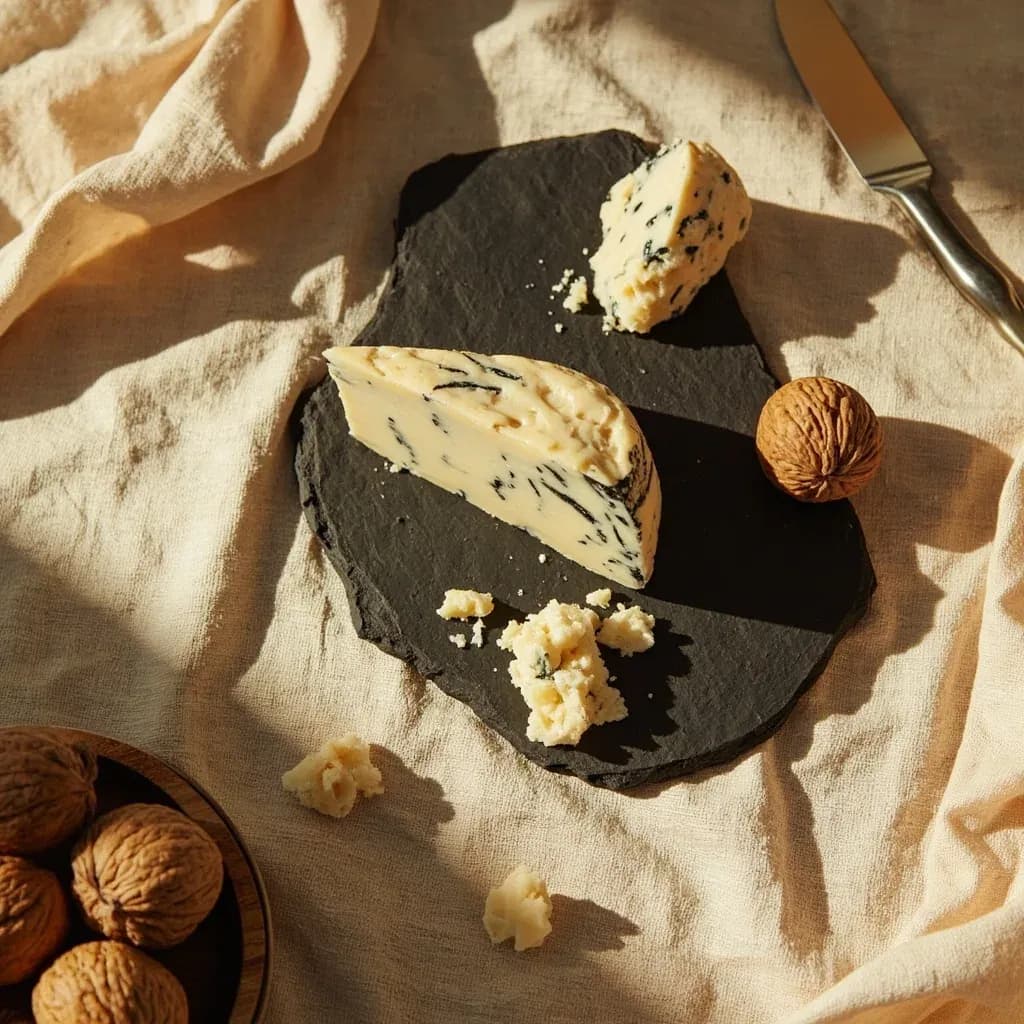
Cheese veined with Penicillium mold — pungent, salty and creamy-to-crumbly; melts into a sharp sauce or crumbles cold over salads and steak.
Blue cheeses are a family defined less by the milk they come from than by the blue-green veins of Penicillium roqueforti (or related strains) that marble their interior. Wheels are pierced with needles during aging to admit oxygen, which wakes the dormant mold and lets it colonize the paste from inside out. The result spans everything from soft and spoonable to semi-hard and crumbly, with flavor that runs from milky-tangy to sharply pungent as the cheese ages.
In the kitchen, blue cheese behaves as both a condiment and an ingredient: crumbled cold, it delivers a salt-and-umami punch that anchors a wedge salad or a steak, and warmed gently with cream it melts into one of the most satisfying sauces in Western cooking. Because the cheese is naturally high in salt and assertive in flavor, a little goes a long way — taste the dish before reaching for the salt shaker. Bringing it to room temperature before serving is the single biggest improvement most home cooks can make.
The category runs from raw sheep's-milk Roquefort aged in limestone caves to mild cow's-milk Gorgonzola Dolce aged only a couple of months, and includes protected names such as Stilton, Cabrales, and Fourme d'Ambert. Outside Europe, Danish Blue, Maytag, and Point Reyes have become everyday workhorses for their balance of character and approachability.
- Measured in
- g
- Storage
- Refrigerate
Allergens
Find it in
Suits
Types & varieties
French AOC, raw sheep's milk (Lacaune), aged in the natural limestone caves of Roquefort-sur-Soulzon; dense, crumbly, intensely salty and sharp.
Italian DOP, cow's milk, soft and creamy with a mild, slightly sweet tang; aged about 2 months.
Italian DOP, cow's milk, firmer and more pungent; aged 3–4 months or longer.
English PDO, pasteurized cow's milk; crumbly but moist, balanced and nutty. Made only in Derbyshire, Leicestershire, and Nottinghamshire.
Spanish DOP from Asturias, traditionally a blend of cow, goat, and sheep milks; aged in mountain caves wrapped in sycamore leaves, very sharp.
French AOP, cow's milk from the Massif Central; creamy, moist, robust but slightly less sharp than Roquefort.
French AOP, cow's milk, tall cylindrical shape (fourme); mild, mellow, slightly sweet — a good gateway blue.
French AOP, cow's milk, aged in the limestone caves of the Causses; close cousin of Roquefort in style.
Danish, cow's milk, semi-soft and creamy with a salty bite; affordable everyday cooking blue.
American, cow's milk, made by Maytag Dairy Farms in Iowa since 1941; dense, crumbly, peppery.
American, cow's milk from California; creamy, mild, slightly sweet.
Irish, cow's milk from County Tipperary; mild, creamy, well-balanced.
French, cow's milk, double-cream style; very creamy, mild, popular on cheese boards.
German (Bergader), cow's milk; a Camembert–Gorgonzola hybrid with a soft bloomy white rind.
Spanish DOP, traditionally a mix of cow and goat milk; wrapped in maple or chestnut leaves, intense and moist.
English, cow's milk, dyed orange with annatto; smooth and creamy with a sharp finish.
Safety and dietary notes
Two points are worth flagging before service. First, aged blue cheeses have been linked to reactions in people with severe penicillin allergy — trace compounds can persist through aging, and the FDA removed a required warning label in 1989 only because residual levels were deemed low, not because reactions have stopped. Treat an aged wheel as risky for anyone with a serious allergy. Second, several flagship blues (Roquefort, some Cabrales) are made from raw milk; standard food-safety guidance is to avoid them during pregnancy and to keep them away from young children and anyone immunocompromised.
Common uses
Tips & pitfalls
- Always bring blue cheese to room temperature before serving — cold mutes both flavor and aroma.
- Use a dedicated cheese knife, or warm a blade in hot water and wipe it dry between cuts, to avoid streaking the paste black.
- Wrap loosely in parchment or aluminum foil with a few small holes; airtight plastic suffocates the cheese and accelerates ammonia notes.
- Store on a shelf above other foods — its aroma migrates, and its mold will cross-contaminate soft cheeses if they touch.
- For sauces, crumble into warm cream off the heat and whisk gently; overheating makes the cheese grainy and bitter.
- If a wheel smells strongly of ammonia, slice off the outer 5 mm and discard; the paste beneath is usually fine.
- Crumble over finished dishes rather than baking for long where possible — prolonged dry heat overpowers the live-funky aromatics.
- Freeze only for cooked applications (sauces, dressings, baked dishes); thawed texture is grainy and unsuitable for cheese boards.
- Taste before salting any dish containing blue cheese — its sodium content is high.
Nutrition
Energy
1477 kJ · per 100 g
Where the calories come from
Protein
21.4g
43% DV
Carbs
2.3g
1% DV
Fat
28.7g
37% DV
Fiber
0g
0% DV
Sugars
0.5g
of which
Sodium
1146mg
50% DV
Source · USDA FoodData Central · Cheese, blue
View on FDC →In the shops
Matched grocery products
No matched grocery products for Blue Cheese yet.
Good to know
- Curd culture
- Penicillium roqueforti or related Penicillium strains, introduced into milk or curds and activated by oxygen — which is why wheels are pierced with needles during aging.
- Milk base
- Cow (most common), sheep (Roquefort and other sheep's-milk blues), goat (sometimes in Cabrales), or buffalo (rare).
- Texture range
- From creamy and spoonable (Gorgonzola Dolce, Saint-Agur) to semi-hard and crumbly (aged Roquefort, Gorgonzola Piccante).
- Fat and calories
- Typically 45–60% fat in dry matter; a 30 g serving delivers roughly 100 kcal.
- Flavor profile
- Sharp, salty, pungent, sometimes grassy or metallic; pungency rises steadily with age.
- Protected status
- Roquefort, Gorgonzola, Stilton, Cabrales, Bleu des Causses, Bleu d'Auvergne, Fourme d'Ambert, and Picón Bejes-Tresviso all carry PDO/AOP protection in the EU.
- Storage
- Wrap loosely in foil or parchment (never airtight); refrigerate 1–4 °C; best within 2–3 weeks of opening; can be frozen up to 3 months though texture suffers.
- Service
- Bring to room temperature 30–60 minutes before serving for fullest flavor and aroma.
Substitutes
- Gorgonzola (Dolce or Piccante) — Best all-purpose substitute for most blue cheeses; creamier Dolce works for sauces, firmer Piccante stands in for Roquefort.
- Stilton — Nuttier and slightly less aggressive than Roquefort; good on cheese boards and salads.
- Danish Blue (Danablu) — Affordable, accessible choice for dressings, dips, and burger toppings.
- Feta — Not a blue but crumbly and salty; works for cold salads when a non-blue alternative is needed.
- Goat cheese mixed with crumbled feta and a pinch of salt — Rough approximation for mild blue flavor in recipes where mold is undesirable.
- Vegan blue-style cheese (cashew- or tofu-based) — Use when serving vegans or those allergic to penicillin molds.
- Cream cheese with a few drops of blue cheese flavoring — Last-resort mimic for sauces and dips; lacks the genuine funk.
Pairs with
Also called
bleu cheese · Roquefort · Gorgonzola · Stilton · blue-veined cheese
Appears in these dishes

Related

Whole Milk
Rich, full-fat milk for drinking, coffee, sauces, and baking
Butter
Golden fat for searing, baking, and finishing a sauce
Yogurt
Tangy, creamy culture for breakfast, sauces, and marinades
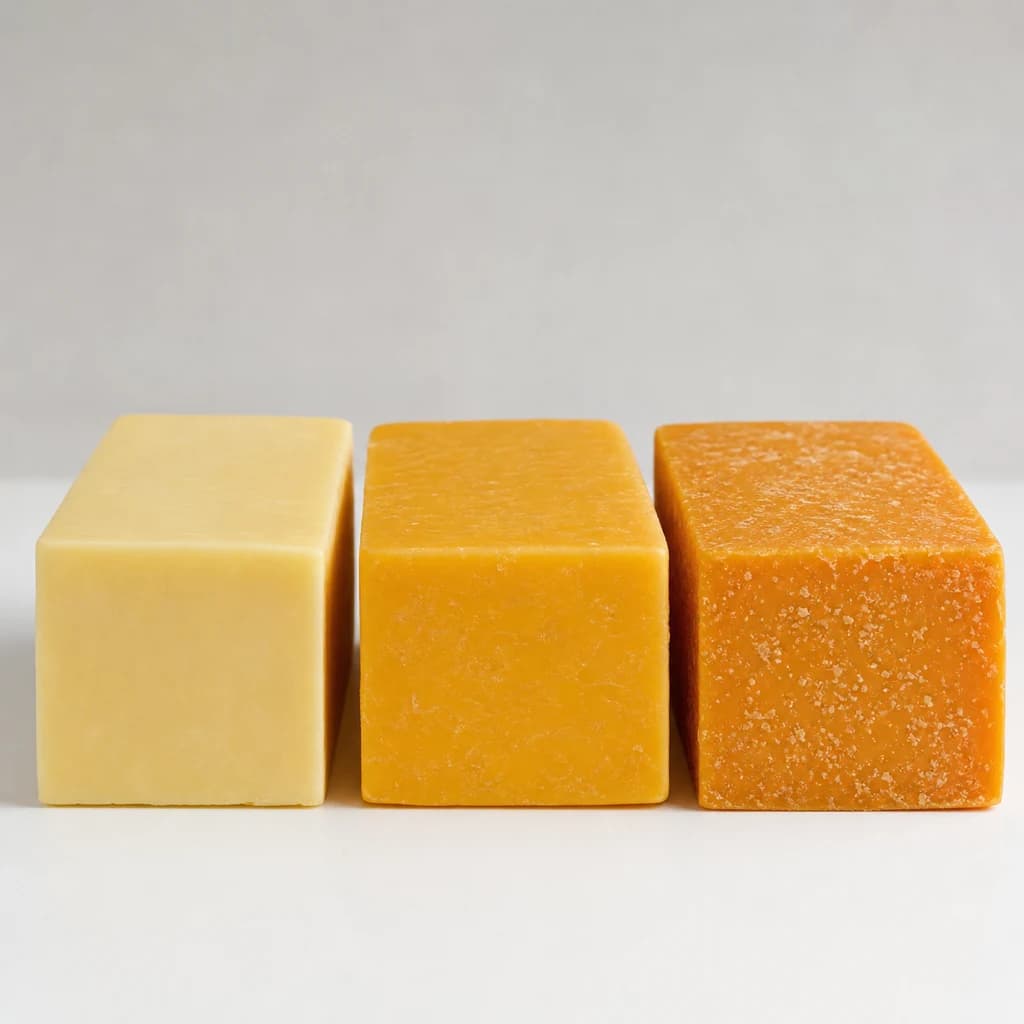
Cheddar Cheese
Sharp, melty cheese for sandwiches, gratins, and grating
Skim Milk
Fat-free milk for lighter drinking, coffee, and cooking
Heavy Cream
Rich cream that whips, enriches sauces, and sets ganache

Sour Cream
Tangy, thick cream for dolloping, baking, and dips
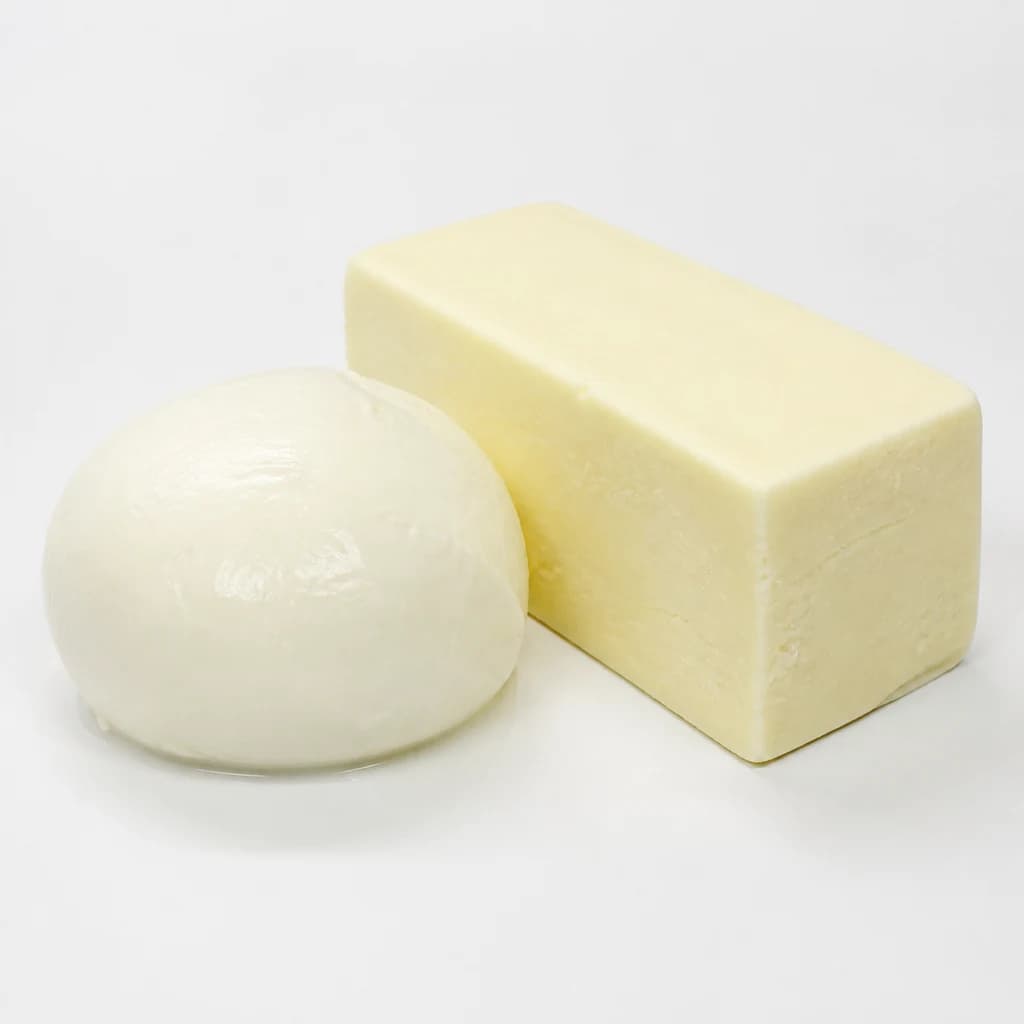
Mozzarella
Soft, milky cheese that melts into stretchy pizza pulls