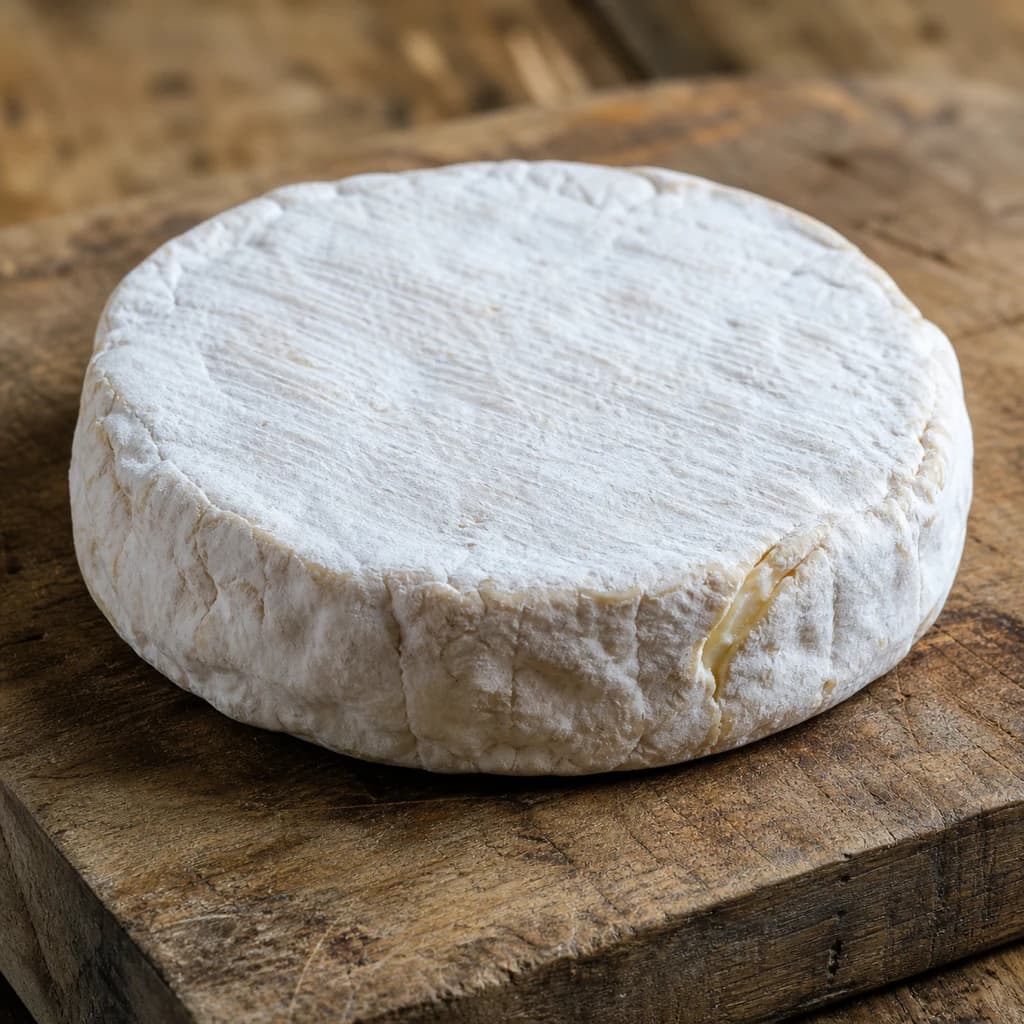
Natural form
A whole Cambozola wheel showing its white bloomy rind and soft, yielding form.
The exterior rind is the first thing a shopper or reader encounters — showing the intact wheel teaches recognition at purchase.
Dairy & Eggs
Cambozola
German triple-cream blue cheese blending Camembert softness with Gorgonzola veins.
Cambozola is a German cow's-milk cheese that combines a soft, bloomy Camembert-style rind with the blue veins of Gorgonzola. The added cream gives it a rich, buttery, mild flavor with a gentle blue tang. It spreads easily and is popular on cheese boards, with fruit, or melted into sauces.
Cambozola is a German triple-cream blue cheese that occupies a singular position in the cheese world: it looks like a Brie, it spreads like a Camembert, yet carries the blue veining of an Italian Gorgonzola. Developed in Bavaria in the 1970s by Champignon Käsereien, it blurs the line between soft-ripened and blue cheeses. The name itself—a portmanteau alluding to Camembert and Gorgonzola—is purely a German invention. The cheese is made from cow's milk enriched to a high butterfat content in dry matter, giving it a rich, unctuous paste that becomes almost molten when ripe. The Penicillium roqueforti culture is introduced either by injecting the young cheese or adding it directly to the milk, creating characteristic blue-green veins throughout the ivory paste. After only four to six weeks of aging under a white bloomed rind, it is ready to sell, making it one of the mildest and freshest blue cheeses available. In cooking, Cambozola melts smoothly into sauces and becomes wonderfully gooey when baked, making it exceptionally versatile beyond the cheese board. In German cuisine it appears on Brotzeit and is sometimes baked as a sharing dish, where its buttery fat and gentle blue notes suit straightforward preparations without competition.
- Measured in
- g
- Storage
- Fridge
Allergens
Types & varieties
Original version; creamy, mild blue with Brie-like character and spreadable interior
Aged longer than the Classic; more concentrated flavor, firmer texture, and deeper blue veining throughout the paste
Cooking Behavior
Cambozola's exceptionally high fat content—triple that of standard blue cheese—makes it behave differently from other blues in the kitchen. When heated, it melts completely and smoothly without seizing or becoming grainy, making it ideal for sauces, soups, and pasta dishes where you want seamless incorporation. The bloomed rind caramelizes beautifully when baked, developing slightly sweet, nutty notes at the edges while the interior becomes liquid. This baking behavior makes it a reliable sharing dish that looks dramatic and requires no skill to execute. Unlike firm blues that hold their shape, Cambozola will not remain structural at high heat—it is a pourable, spreadable cheese by design.
- Melts completely at low temperatures due to high butterfat content
- Rind caramelizes and darkens when baked, adding visual appeal
- Does not hold shape when heated—plan accordingly for recipes requiring structure
Assessing Ripeness
Unlike aged blues where pungency indicates quality, Cambozola's character is intentionally mild. A fresh, buttery aroma signals the cheese is properly ripened and ready to use. Ammonia smell indicates age or improper storage and should be avoided. The cheese should yield slightly to gentle pressure when ripe—a completely firm wheel is underripe and will lack the characteristic creaminess, while excessive softness with weeping liquid indicates it has passed its prime. When buying whole, check that the rind is intact and free from dark spots, which can indicate uneven aging.
- Buttery aroma: properly ripe and ready to serve
- Ammonia smell: aged, poorly stored, or too old
- Firm to touch: underripe, lacking full creaminess
- Weeping or very soft: overripe, declining quality
Common uses
Tips & pitfalls
- Bring to room temperature for at least 20–30 minutes before serving or cooking—the difference in spreadability and aroma is substantial
- The white rind is edible and contributes mild earthy notes; include it when slicing or spreading rather than discarding
- When purchasing, ensure the rind is intact and the cheese has a fresh, buttery smell rather than any ammonia
- Once cut, surface oxidation accelerates; consume cut pieces within three to four days for best quality
- To bake: score the top rind in a crosshatch pattern, drizzle with honey or a splash of port, and bake at 200°C/400°F for 10–12 minutes until bubbling and golden
- Store loosely wrapped in cheese paper or wax paper inside a plastic bag—too tight wrapping traps moisture and promotes unwanted mold
- Do not expect the sharp bite of Gorgonzola—Cambozola's balanced sweetness and buttery character is intentional, not a sign of underdeveloped flavor
Nutrition
Nutrition
No USDA FoodData Central match for Cambozola yet. We surface a per-100 g profile once a generic whole-food entry is matched and verified.
In the shops
Matched grocery products
No matched grocery products for Cambozola yet.
Good to know
- Origin
- Bavaria, Germany; produced by Champignon Käsereien since the 1970s
- Milk
- Cow's milk
- Type
- Triple-cream soft blue cheese (high butterfat content)
- Rind
- White bloomed rind, similar to Brie and Camembert; fully edible
- Veining
- Penicillium roqueforti injected or added to milk; blue-green throughout paste
- Aging
- Approximately 4–6 weeks
- Texture
- Creamy and spreadable when ripe; firmer and less yielding when cold
- Flavor
- Mild, buttery, slightly sweet; tangy blue notes without sharpness or ammonia
- Shape
- Small rounds, typically 500 g (1.1 lbs)
- Storage
- Refrigerate wrapped in cheese paper; best within 2 weeks of purchase
Substitutes
- Saint Agur — French triple-cream blue with similar richness and mildness; slightly more pungent, so use sparingly if adjusting a recipe
- Dolcelatte — Italian soft blue cheese; less creamy texture than Cambozola but comparable mildness and melting behavior
- Fourme d'Ambert — Milder French blue with denser paste; acceptable one-to-one substitute for both raw and cooked applications
- Mild Brie + crumbled Gorgonzola combined — Rough approximation: use mild double-cream Brie as the base and add crumbled Gorgonzola to taste, blending thoroughly
Pairs with
Also called
Blue Brie
Related

Whole Milk
Rich, full-fat milk for drinking, coffee, sauces, and baking
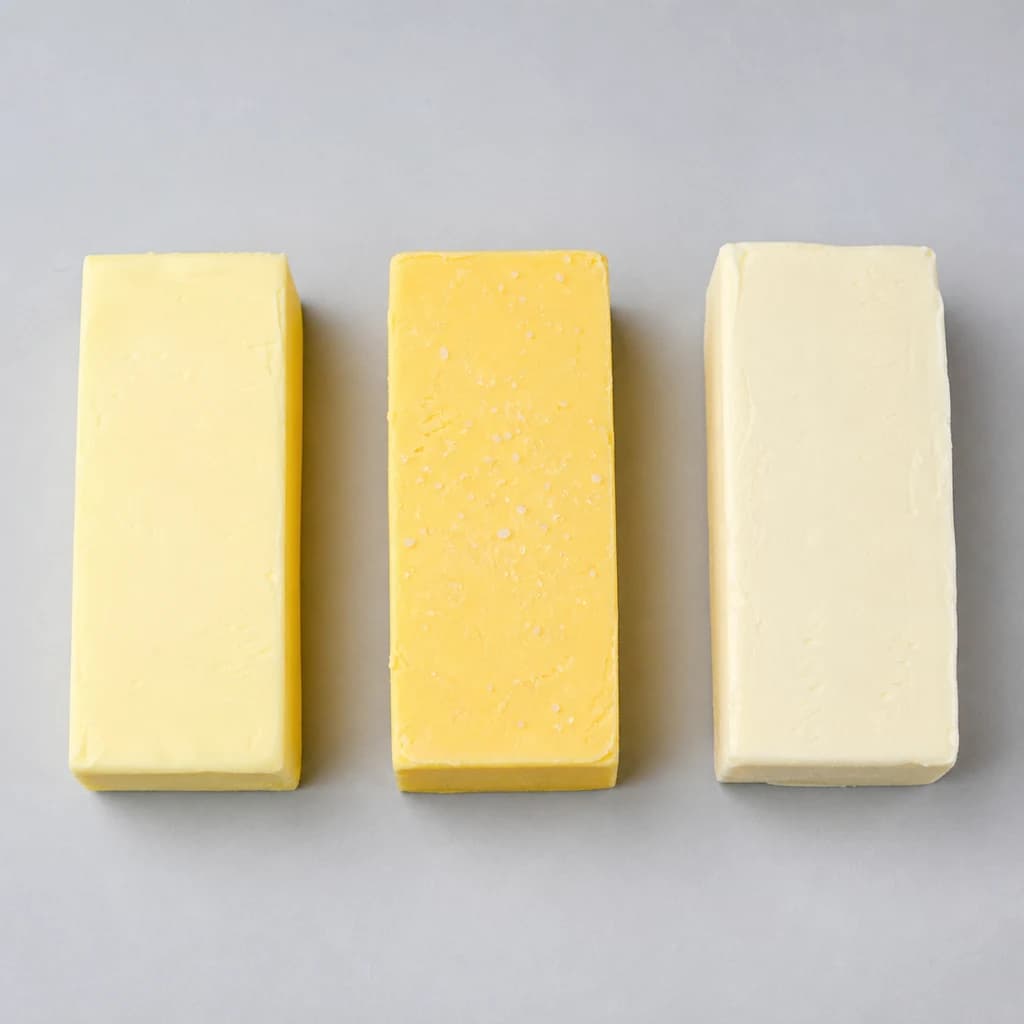
Butter
Golden fat for searing, baking, and finishing a sauce
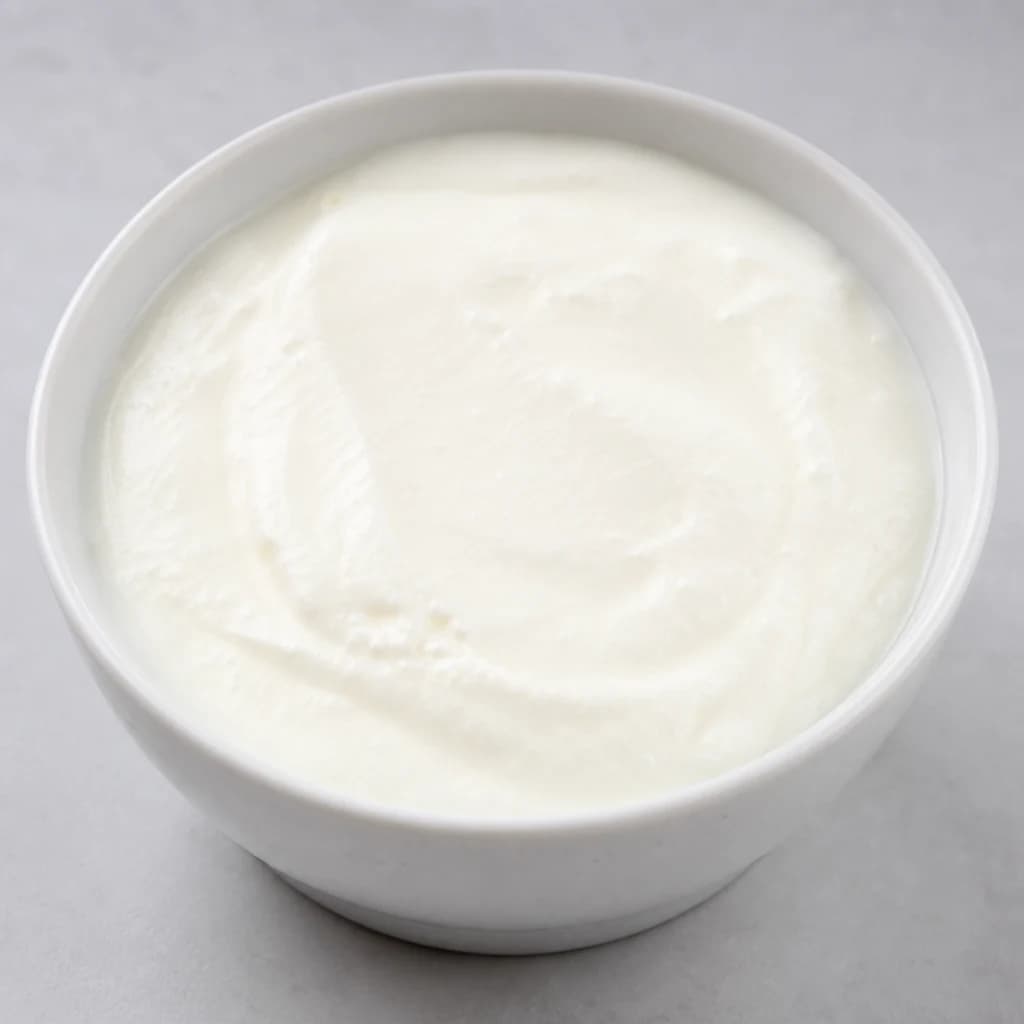
Yogurt
Tangy, creamy culture for breakfast, sauces, and marinades
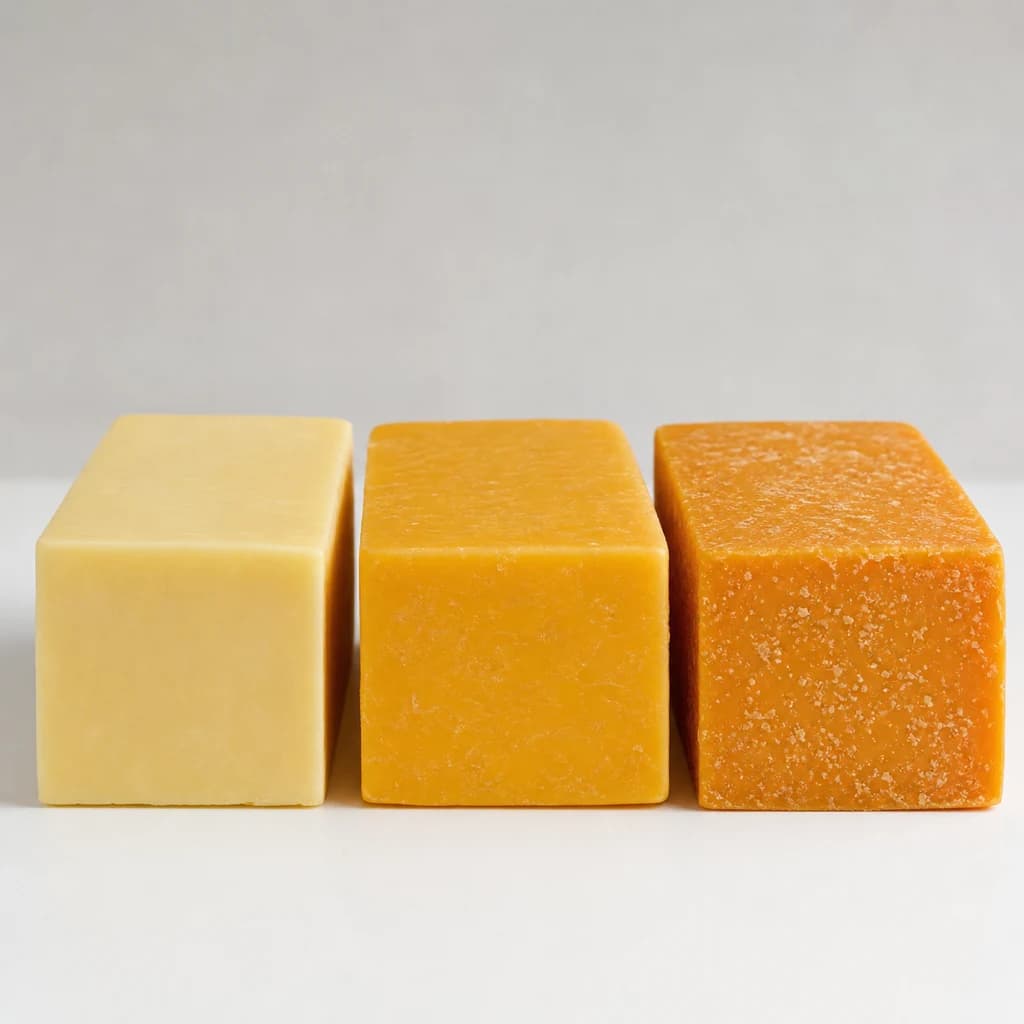
Cheddar Cheese
Sharp, melty cheese for sandwiches, gratins, and grating
Skim Milk
Fat-free milk for lighter drinking, coffee, and cooking
Heavy Cream
Rich cream that whips, enriches sauces, and sets ganache

Sour Cream
Tangy, thick cream for dolloping, baking, and dips
Mozzarella
Soft, milky cheese that melts into stretchy pizza pulls