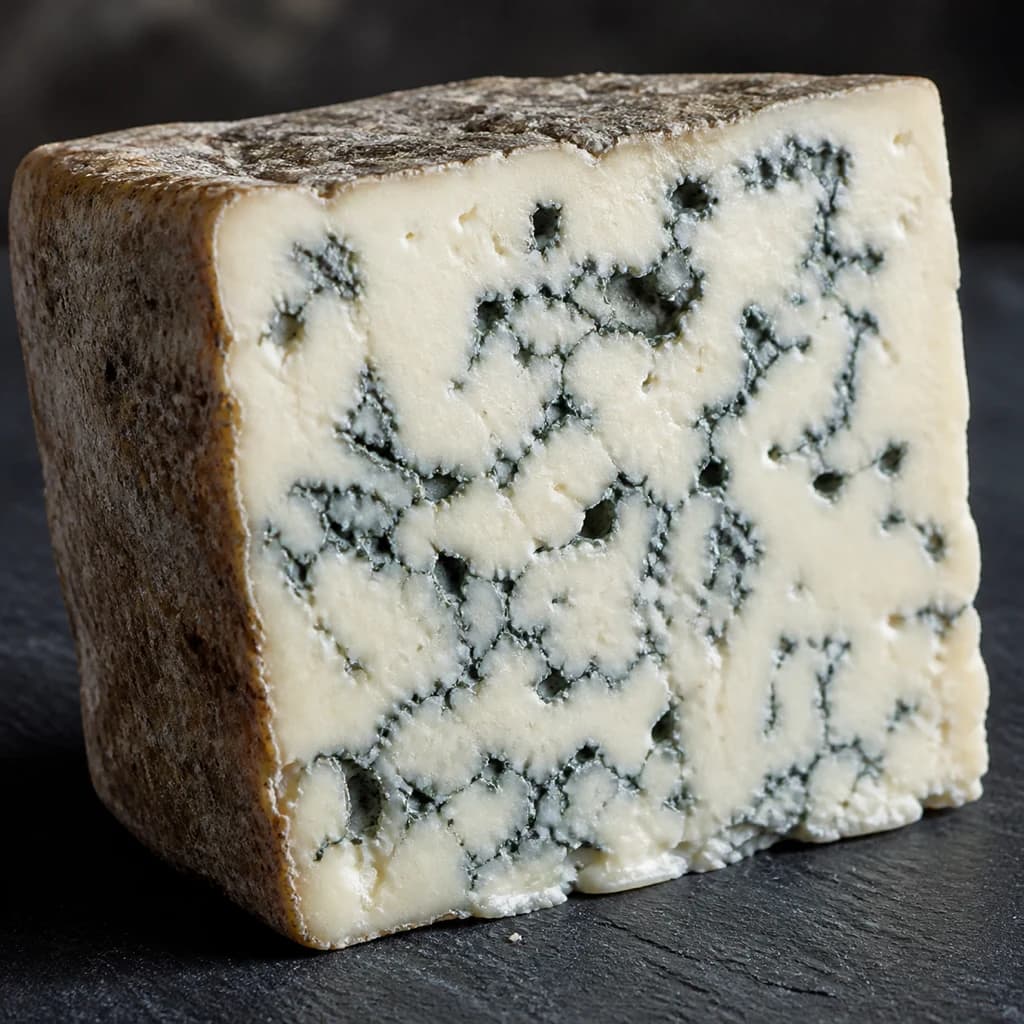
Natural form
A wedge of Stilton showing its ivory paste threaded with blue-green veins.
Shows the defining visual identity of Stilton — its crumbly ivory body and characteristic blue-green veining — so a reader can recognize it immediately.
Dairy & Eggs
Stilton Cheese
English blue-veined cow's-milk cheese, rich and crumbly with a tangy bite.
Stilton is a protected English blue cheese made from cow's milk, with creamy ivory paste streaked by blue-green veins. It has a rich, tangy, slightly mineral flavor and a crumbly yet creamy texture. It is classic on cheese boards with port, crumbled into salads, or melted into soups and sauces.
Stilton is England's only cylindrical blue cheese and one of just two British cheeses protected by Protected Designation of Origin status, the other being West Country Cheddar. Despite its name, it was never actually made in Stilton, Cambridgeshire — the town served as a coaching stop on the Great North Road where the cheese was sold and gained fame from around 1720. Today it is produced by six licensed dairies in a strict PDO region covering Derbyshire, Nottinghamshire, Leicestershire, and parts of several neighboring counties.
The cheese is made exclusively from pasteurized cow's milk and aged for a minimum of four weeks, typically reaching four to five months. During aging, the characteristic blue-green veins develop naturally through enzymatic activity — unlike most other blue cheeses, Stilton is never pierced with needles. This process also creates the distinctive hollow or slightly sunken center visible when looking at the end of a wheel, a reliable indicator of proper aging and moisture distribution. The result is a firm, crumbly, moist cheese with an ivory-to-pale-yellow paste and a natural dry rind.
Flavor-wise, Stilton occupies a unique position among blue cheeses: rich, creamy, and buttery with a sharp, tangy bite from the veins, underpinned by nutty notes. It is distinctly savory without being aggressively salty. This balance makes it versatile for both simple cheese boards and cooked applications, though it truly shines when given room to speak — served at room temperature with a glass of vintage port, the canonical British ending to a meal.
- Measured in
- g
- Storage
- Fridge
Allergens
Types & varieties
The standard and dominant variety. Blue-green veins run through the paste; flavor intensifies with age. The classic Stilton experience.
Unveined; made without added Penicillium. Mild, smooth, creamy, and slightly sweet. Sold plain or flavored with fruits (apricot, mango), herbs, or honey. Not aged as long. Technically a different product but often discussed alongside Stilton.
Why the Shape Matters
Stilton's cylindrical form is not merely aesthetic — it directly affects how the cheese ages and how the veins develop. The wheels are traditionally stood on their sides during aging, which influences the horizontal spread of the blue-green Penicillium roqueforti. When you cut a wheel, you should see the veins running roughly parallel across the cut face. The hollow center develops through enzymatic breakdown of the curd and is a hallmark of a properly aged Stilton; a solid center suggests insufficient aging.
- Look for a wheel with a visible hollow center when viewed from the end
- Veins should appear greenish-blue, not gray or brown
- A properly aged wheel will feel heavy for its size, indicating good moisture content
Storing Stilton Correctly
The most common mistake is wrapping Stilton too tightly in plastic film, which traps moisture and accelerates spoilage. Always use waxed or cheese paper, which allows the cheese to breathe while preventing it from drying out. The refrigerator temperature matters too — aim for 5–8 °C. Below this range, the fats congeal and the aromatic compounds become suppressed, flattening the flavor. If you have cut into a wheel, use it within one to two weeks for best quality, as the exposed surface continues to age and dry.
- Never wrap tightly in plastic film
- Use within 1–2 weeks of cutting for optimal flavor
- Bring to room temperature 30–60 minutes before serving
Common uses
Tips & pitfalls
- Always bring to room temperature before serving — cold suppresses the aromatic compounds and the crumbly texture firms up significantly below 15 °C
- Unlike most other blue cheeses, Stilton is never pierced with needles during production — the blue veining develops naturally through enzymatic activity as the cheese ages; do not confuse this process with the natural crumbly structure
- A wheel should have a hollow or slightly sunken center when viewed from the end — this is a sign of proper aging and moisture distribution
- To crumble cleanly, use a cold knife or break with your fingers; avoid sawing motions which smear the paste
- If freezing for cooking use (not for eating as is), grate or crumble portions on a tray in the freezer, then transfer to airtight bags — this prevents clumping and allows portioning
- Wrap loosely in cheese paper or wax paper, not plastic film sealed tightly, which causes excess moisture and accelerated spoilage
- Do not confuse with Danish Blue or Roquefort — these are saltier, softer in texture, and have a more aggressive bite; Stilton is distinctly nuttier and drier
- The rind is edible but generally avoided in recipes; scrape it off if folding into a sauce or soup
- Stilton continues to age in the refrigerator — use within 1–2 weeks of cutting for best quality
Nutrition
Energy
1628 kJ · per 100 g
Where the calories come from
Protein
25.6g
51% DV
Carbs
1.6g
1% DV
Fat
31.1g
40% DV
Fiber
0g
0% DV
Sugars
1.6g
of which
Sodium
800mg
35% DV
Source · USDA FoodData Central · approx. Cheese, fontina
View on FDC →In the shops
Matched grocery products
No matched grocery products for Stilton Cheese yet.
Good to know
- Origin
- England — PDO region covers Derbyshire, Nottinghamshire, Leicestershire, and parts of Bedfordshire, Cambridgeshire, and Norfolk
- Milk
- Pasteurized cow's milk (PDO requirement)
- Aged
- Minimum 4 weeks; typically 4–5 months
- Texture
- Firm, crumbly, moist; not dry or rubbery
- Flavor
- Rich, creamy, buttery with a sharp, tangy bite from the blue veins; hints of nuttiness; distinctly savory, not overly salty
- Rind
- Natural rind, dry and rough; cheese should not stick to it when cut
- Shape
- Cylindrical wheel; characteristic horizontal blue veining when sliced
- Storage
- Wrap loosely in waxed or cheese paper; refrigerate at 5–8 °C; bring to room temperature 30–60 minutes before serving
Substitutes
- Roquefort — French sheep's-milk blue cheese; similar crumbly texture and sharp, salty tang. More pungent and intensely savory. Drop-in for most savory applications.
- Gorgonzola Dolce — Italian cow's-milk blue; softer, creamier, and sweeter than Stilton. Works in sauces and spreads; less crumbly for salads.
- Danish Blue — Semi-soft cow's-milk blue; saltier and more aggressive. Easier to crumble. Lower fat content, so less rich. Use half the amount if substituting for flavor.
- Shropshire Blue — English blue cheese with a distinct orange hue and milder, sweeter flavor. Different texture (softer) and color; not a close match but a valid blue cheese for cooking.
- Cabrales — Spanish blue; very strong, pungent, and tangy. Use sparingly as a substitute in cooking. Richer in sheep's milk fat.
Pairs with
Also called
Stilton · Blue Stilton
Related

Whole Milk
Rich, full-fat milk for drinking, coffee, sauces, and baking
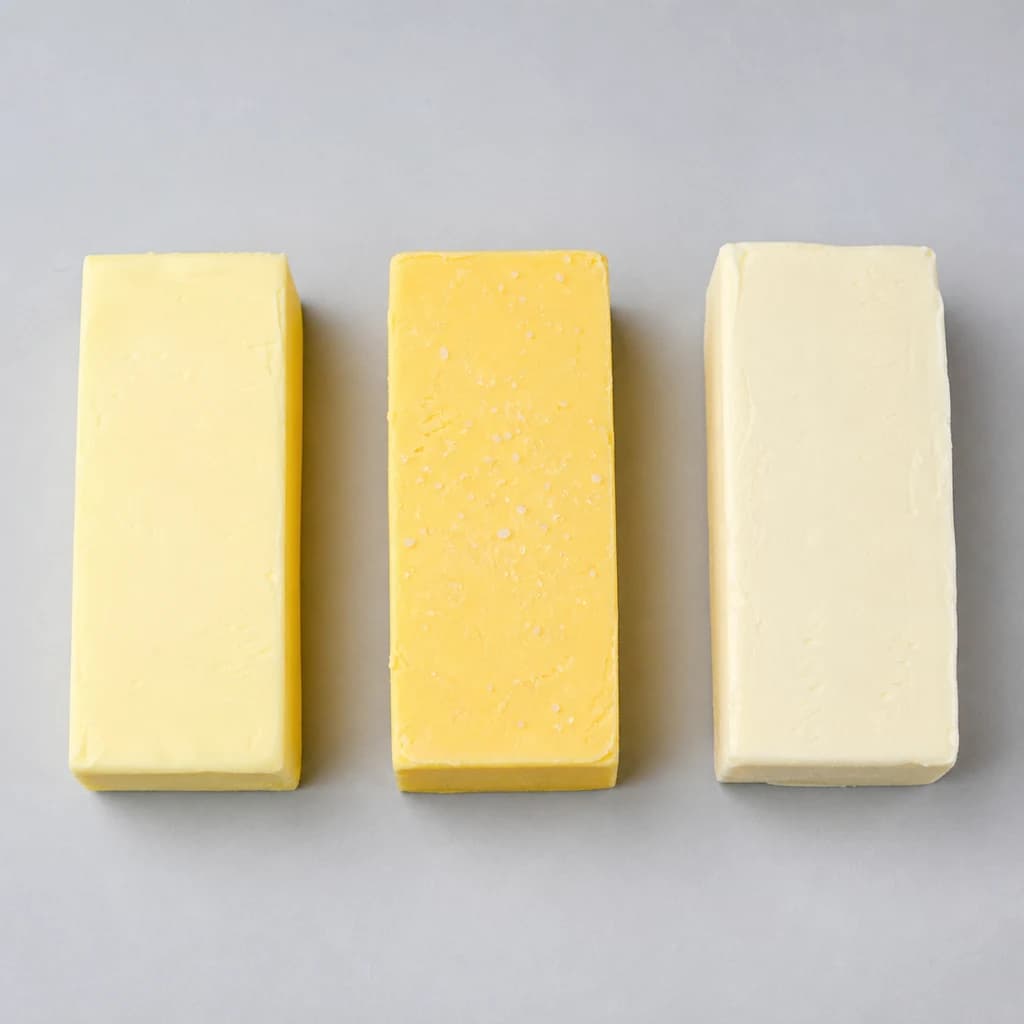
Butter
Golden fat for searing, baking, and finishing a sauce
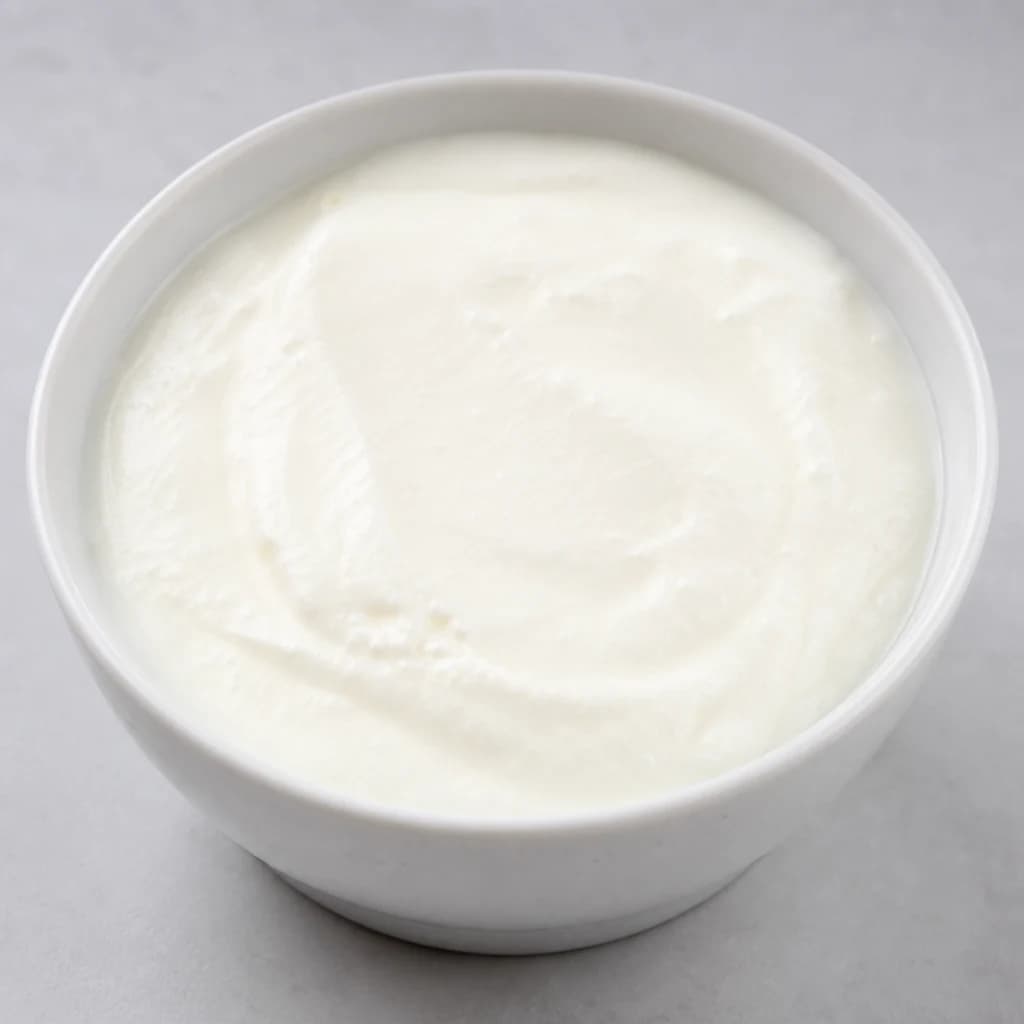
Yogurt
Tangy, creamy culture for breakfast, sauces, and marinades
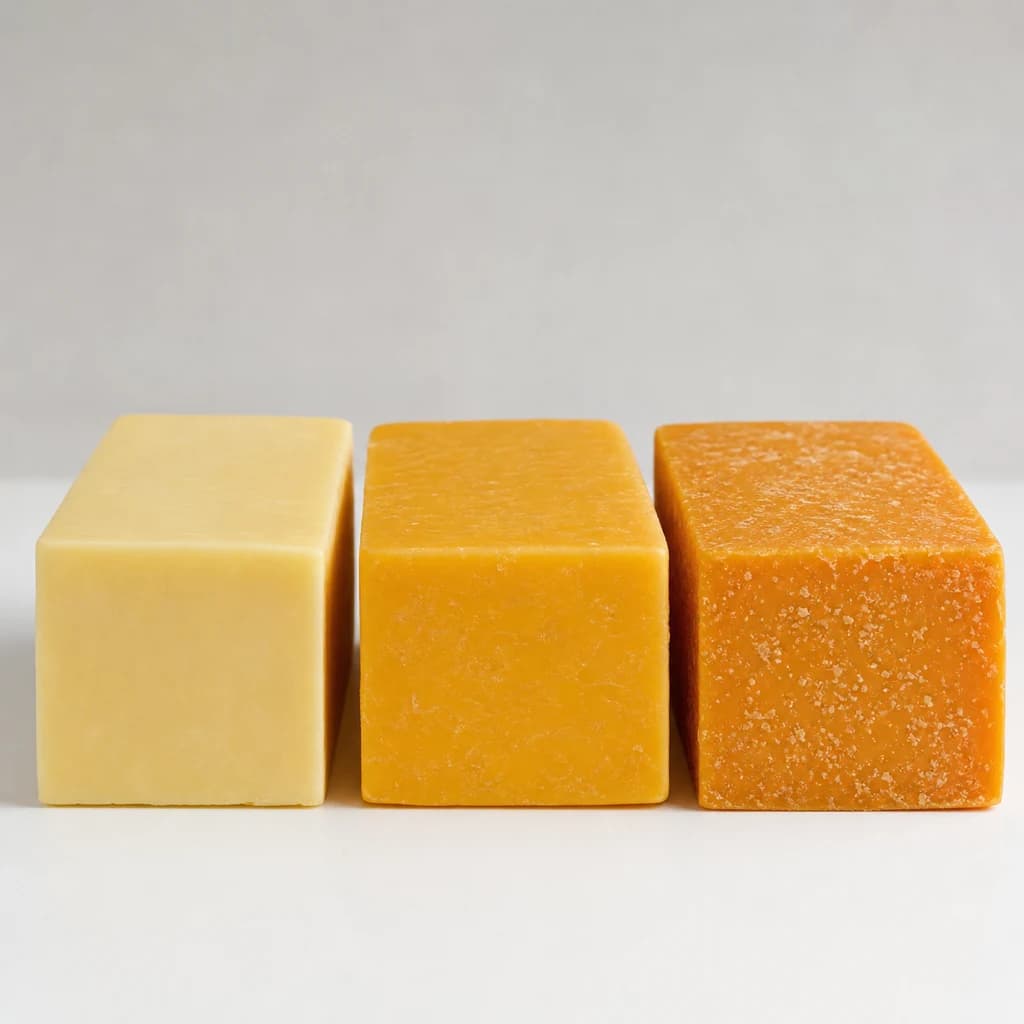
Cheddar Cheese
Sharp, melty cheese for sandwiches, gratins, and grating
Skim Milk
Fat-free milk for lighter drinking, coffee, and cooking
Heavy Cream
Rich cream that whips, enriches sauces, and sets ganache

Sour Cream
Tangy, thick cream for dolloping, baking, and dips
Mozzarella
Soft, milky cheese that melts into stretchy pizza pulls