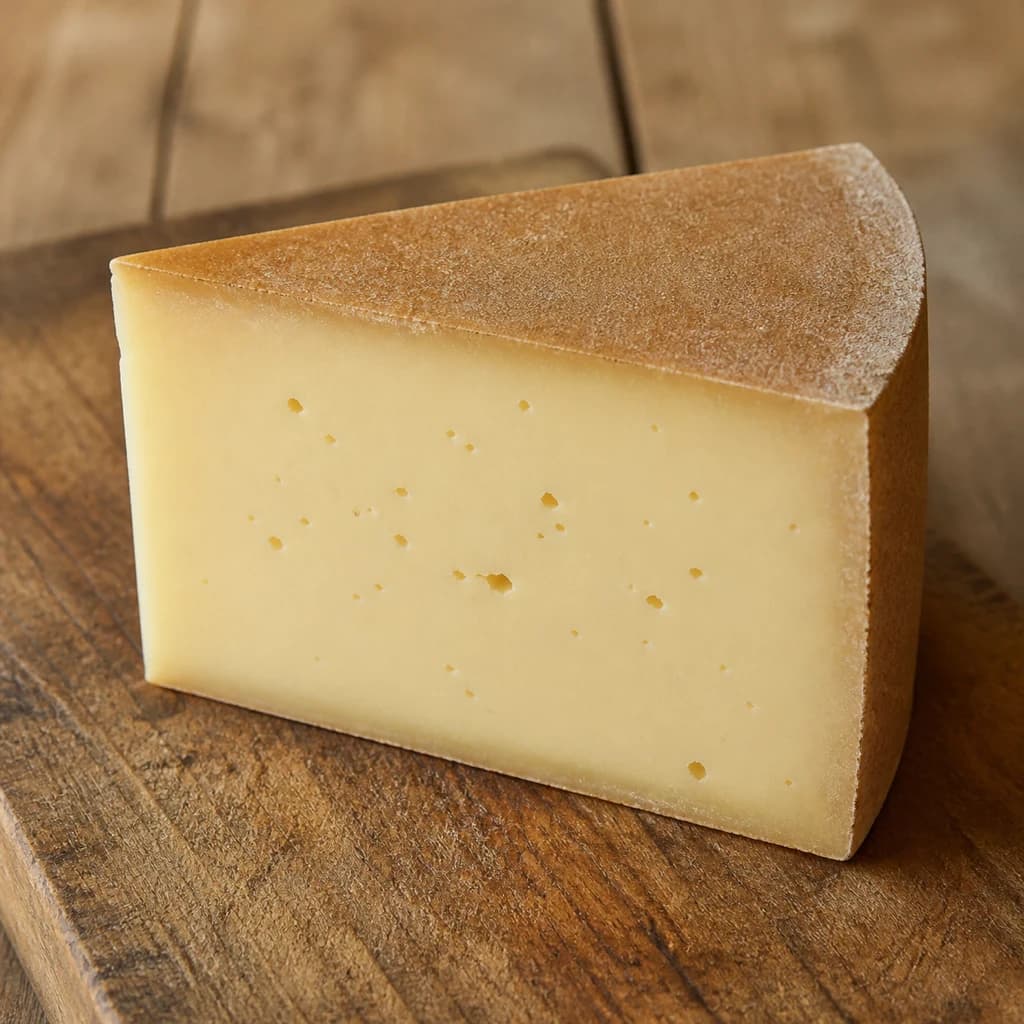
Natural form
A wedge of aged Gruyère showing its pale golden rind and smooth ivory interior.
Shows the reader the intact cheese's characteristic color, rind, and firm texture so they can identify it at the counter.
Dairy & Eggs
Gruyère
Firm Swiss cheese with a rich, nutty, slightly sweet flavor; the classic melting cheese for fondue and gratins.
Gruyère is a firm, aged Swiss cow's-milk cheese with a complex nutty, earthy, slightly sweet flavor. It melts exceptionally well, making it essential for fondue, French onion soup, and gratins. Longer aging deepens its flavor and introduces a faint salty crunch.
Gruyère is a firm, medium-hard cow's-milk cheese produced in the Alpine region around the Swiss town of Gruyères, in the canton of Fribourg. It has been documented since at least 1557 and is now protected under Swiss AOP designation, meaning every wheel must be made in specified Swiss cantons using milk from local herds. The cheese is characterized by a brownish-orange natural rind and a pale ivory interior with small, irregular holes (eyes). During aging—a minimum of ten months under AOP standards—the curds develop a dense, slightly grainy texture and the flavor deepens from mild and creamy at ten months to richly nutty and complex with crystalline tyrosine pockets at fourteen months or longer. This aging process is what makes Gruyère exceptional in the kitchen: it melts smoothly without turning greasy or stringy, a property derived from its specific fat content (minimum 45% of dry matter) and the washed-curd production method, which keeps acidity low. For cooking purposes, Gruyère occupies a singular role as the reference melting cheese—the one against which all others are measured—particularly for fondue, where its emulsification properties prevent the mixture from breaking.
The distinction between Swiss Gruyère AOP and French Gruyère (Gruyère de Savoie) matters in practice. The Swiss version carries the stricter AOP certification and delivers the deepest, most complex nutty flavor. The French counterpart follows a similar Alpine tradition but produces a milder, slightly sweeter cheese made in the Savoie region under its own designation. Both are legitimate kitchen cheeses, but for traditional fondue, Swiss Gruyère is the standard—often combined with Vacherin fribourgeois in a two-cheese blend. When purchasing, always select a wedge with the natural rind intact; waxed wheels indicate lower quality and are best avoided. The cheese should smell clean and nutty, never ammonia-like, and should feel firm with slight give.
Gruyère performs three essential functions in cooking: it melts smoothly for saucy and baked preparations, it gratins with a golden crust, and it stands on its own as a table cheese. These capabilities flow directly from its texture and aging. Young Gruyère (10–12 months) melts quickly and is ideal for quick-melt applications like sauces and grilled sandwiches. Aged Gruyère (14+ months) has developed crystalline texture and intense flavor that shine when eaten out of hand or used as a finishing garnish shaved over dishes.
- Measured in
- g
- Storage
- Fridge
Allergens
Types & varieties
Aged minimum 10 months; the reference standard with rich, nutty depth and reliable melting
Aged 14+ months; richer flavor, more crystalline, fewer eyes; premium quality for table use and cooking
Extended aging, often from higher-elevation dairies; pronounced, complex flavor
Made in the French Alps; similar style but distinct from Swiss AOP; milder and slightly sweeter
Why Gruyère Melts the Way It Does
The smooth, non-greasy melt that makes Gruyère the gold standard for fondue and sauces is structural, not accidental. During production, the curd is washed, which reduces acidity compared to harder, more acidic cheeses. Lower acidity means the proteins do not tighten up aggressively when heated—they relax and release fat evenly, creating a fluid, cohesive melt rather than a clumped or stringy one. Gruyère also has a specific fat content requirement (minimum 45% of dry matter), which provides the richness and lubrication that keeps the melted cheese creamy. This is why sharper aged Cheddar, despite being an excellent melting cheese, produces a stringier result—its higher acidity changes the protein behavior at heat.
- Pre-shredded cheese in bags contains cellulose anti-caking powder that actively prevents proper emulsification—always shred from a wedge
- For sauces, add cheese off the heat and stir gently to maintain the emulsification the cheese naturally provides
- Aged Gruyère (14+ months) melts more slowly but still smoothly; its lower moisture content means you may need to reduce heat and stir more patiently
Buying and Storing Gruyère
A whole wheel of Gruyère weighs 25–40 kg (55–88 lbs), so you will almost always buy a wedge. The wedge should display the natural rind intact—a brownish-orange surface that is firm and dry. Never purchase waxed Gruyère; wax is used on lower-quality wheels and indicates the cheese has not been aged properly under AOP standards. When you get the wedge home, wrap it tightly in plastic wrap, pressing out as much air as possible, then place it inside a zip-top bag and seal it. This double protection prevents the cheese from drying out, which is the primary cause of crumbling and loss of flavor. Stored this way, a wedge keeps 3–4 weeks in the refrigerator. For longer storage, the freezer works, but expect the texture to become slightly crumbly upon thawing—acceptable for cooked applications but not ideal for table cheese.
- Bring cheese to room temperature (20–25°C / 68–77°F) for 30–60 minutes before cooking or serving
- Reject any wedge with an ammonia smell or tacky, wet surface—these are signs of age or improper storage
- Pre-shred only what you need; freezing shredded cheese and then thawing it produces a noticeably inferior melt
Common uses
Tips & pitfalls
- Always buy a wedge with natural rind intact—wax indicates lower quality and improper aging
- Bring cheese to room temperature (20–25°C / 68–77°F) for at least 30 minutes before cooking to ensure even melting
- Never use pre-shredded Gruyère for fondue or sauces—the cellulose anti-caking coating prevents proper emulsification
- For fondue, shred the cheese and let it rest 15–30 minutes before adding to the hot liquid so it dries slightly and absorbs liquid evenly, preventing clumping
- Add cheese to sauces off the heat and stir gently to avoid graininess and breaking the emulsion
- Store leftover cheese in plastic wrap plus a sealed zip-top bag to prevent drying out
- Use young Gruyère (10–12 months) for quick-melt applications like croque monsieur; use aged Gruyère (14+ months) for table cheese or as a finishing shave
- If the cheese smells of ammonia or tastes excessively sharp, it is past its prime—discard it
Nutrition
Energy
1728 kJ · per 100 g
Where the calories come from
Protein
29.8g
60% DV
Carbs
0.4g
0% DV
Fat
32.3g
41% DV
Fiber
0g
0% DV
Sugars
0.4g
of which
Sodium
714mg
31% DV
Source · USDA FoodData Central · Cheese, gruyere
View on FDC →In the shops
Matched grocery products
No matched grocery products for Gruyère yet.
Good to know
- Origin
- Gruyères, canton of Fribourg, Switzerland (documented since at least 1557)
- Type
- Firm medium-hard cow's milk cheese, mountain dairy style, natural rind
- Milk
- Raw cow's milk from local herds in specified Swiss cantons
- Interior Color
- Pale yellow to light ivory with small, irregular eyes (holes)
- Texture
- Dense, compact, slightly grainy; becomes more crystalline with extended aging
- Aging
- Minimum 10 months (AOP standard); premium grades 14+ months; exceptional wheels 18+ months
- Protection
- Swiss Gruyère AOP (2001); French Gruyère de Savoie is a distinct product
- Shelf Life
- Refrigerated: 3–4 weeks wrapped tightly in plastic wrap inside a sealed bag
- Freezer Life
- Several months, though texture may become slightly crumbly
Substitutes
- Comté — The closest substitute—similar Alpine style, nutty, excellent melting; produced in the Jura region of France
- Jarlsberg — Widely available, mild, excellent melter; Norwegian-style Swiss cheese with a sweeter character
- Emmental — Milder with fewer holes; adequate for melting but significantly less flavorful than Gruyère
- Beaufort — French Alpine cheese; richer and nuttier than Gruyère; excellent substitute for fondue and gratins
- Fontina Val d'Aosta — Italian Alpine cheese; rich and buttery when melted; good for sauces and baked pasta
- Raclette — Similar melting character with slightly more pungent flavor; works well for gratins
Pairs with
Also called
Gruyere Cheese
Appears in these dishes





Related

Whole Milk
Rich, full-fat milk for drinking, coffee, sauces, and baking
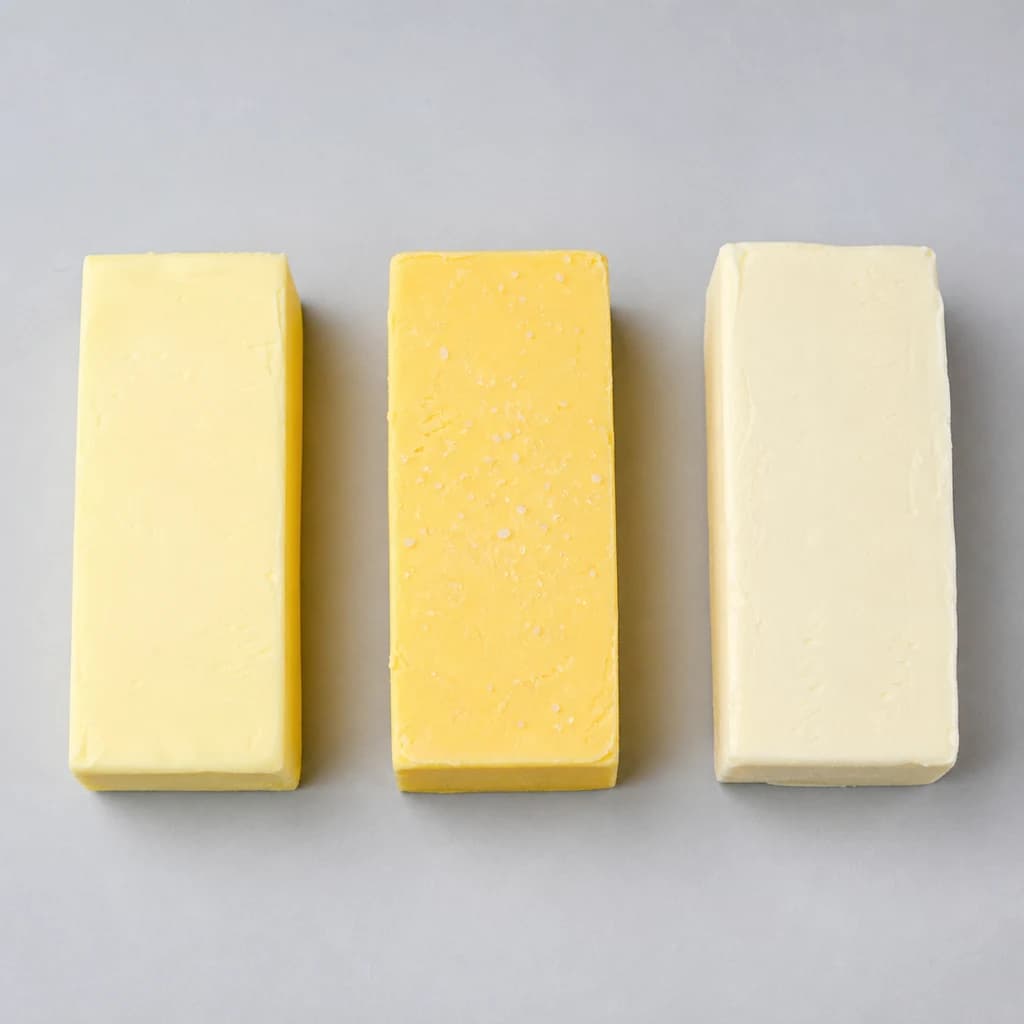
Butter
Golden fat for searing, baking, and finishing a sauce
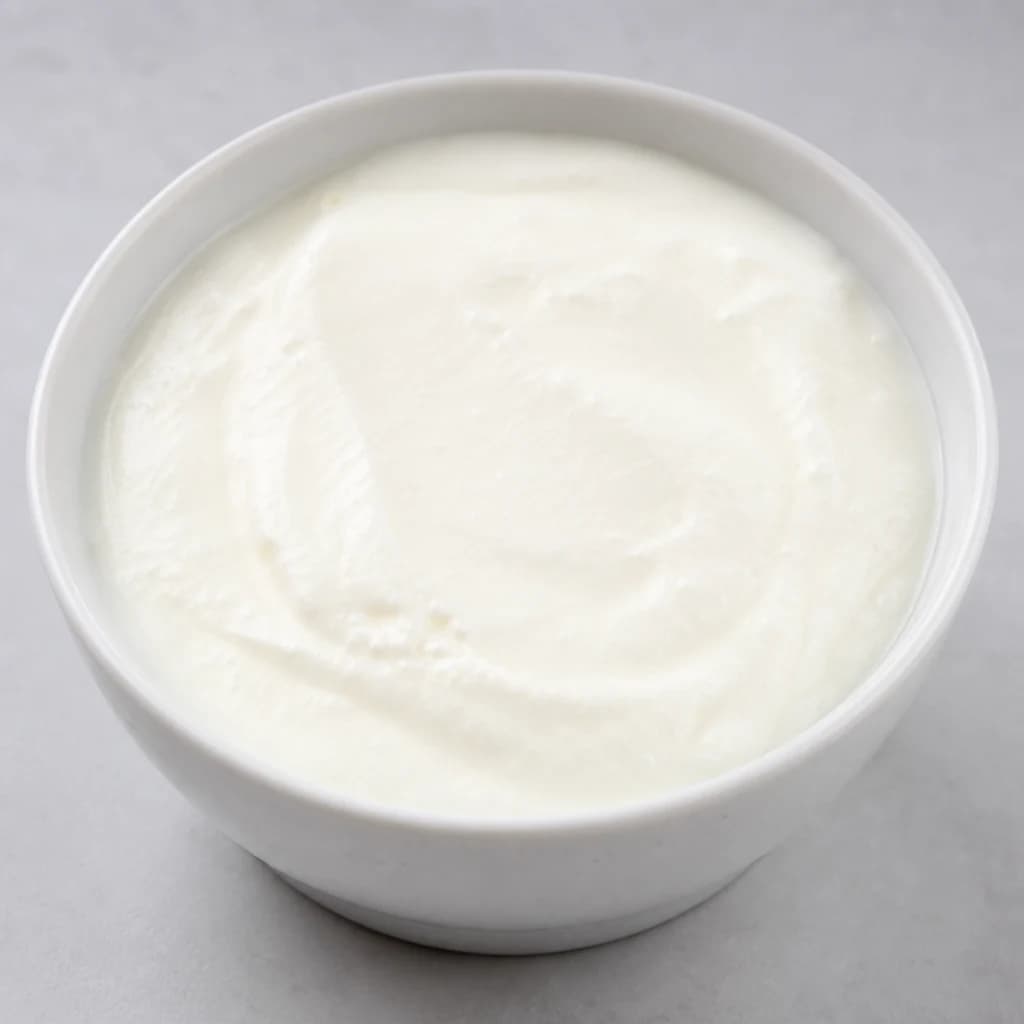
Yogurt
Tangy, creamy culture for breakfast, sauces, and marinades
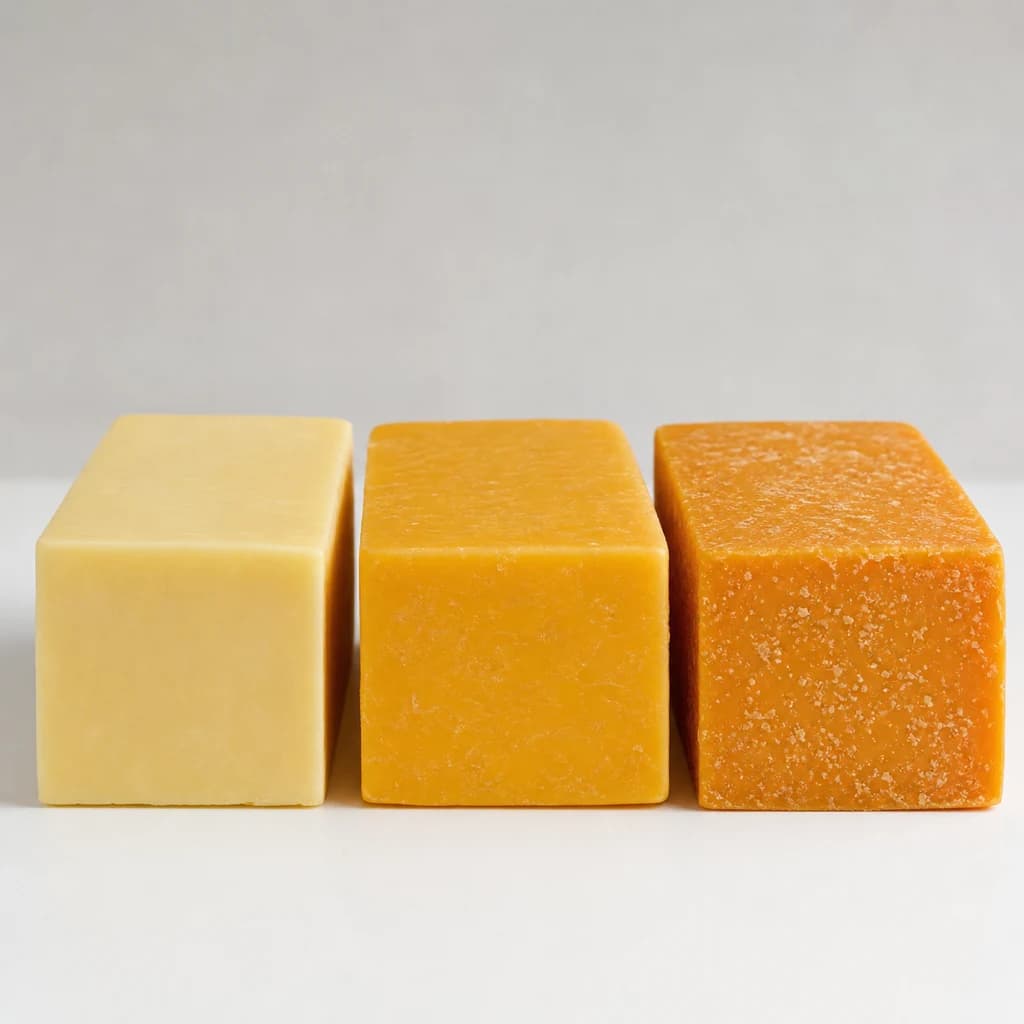
Cheddar Cheese
Sharp, melty cheese for sandwiches, gratins, and grating
Skim Milk
Fat-free milk for lighter drinking, coffee, and cooking
Heavy Cream
Rich cream that whips, enriches sauces, and sets ganache

Sour Cream
Tangy, thick cream for dolloping, baking, and dips
Mozzarella
Soft, milky cheese that melts into stretchy pizza pulls