
Natural form
A wedge of Emmental cut from the wheel, showing its pale yellow interior and large holes.
Shows the iconic large holes and characteristic pale yellow color that make Emmental immediately recognizable.
Dairy & Eggs
Emmental Cheese
Swiss hole-studded cheese with a mild, nutty flavor; melts smoothly into fondue and gratins.
Emmental is a firm Swiss cow's-milk cheese famous for its large holes and mild, nutty, slightly sweet flavor. It melts smoothly, making it a classic choice for fondue, gratins, and sandwiches. The characteristic holes form from gas released by bacteria during aging.
Emmental is the archetypal Swiss hole cheese, produced in the Emme Valley of the Canton of Bern with documented production dating back several centuries and now protected by PDO designation. What distinguishes true Emmental from the pale, rubbery "Swiss" slices found in many supermarkets is the controlled fermentation process using carefully selected bacterial cultures—primarily Propionic bacteria—that produce carbon dioxide during aging, creating the signature eyes (holes) that range from the size of a cherry to a tennis ball. The wheels are massive—75 to 120 kilograms—and aged a minimum of three months, with reserve grades reaching six to eight months and premium selections aging ten to fourteen months or longer.
In cooking, Emmental's moderate acidity, nutty sweetness, and excellent melt quality make it invaluable for fondue, gratins, and enriched sauces. The cheese contains approximately 45% fat in dry matter (about 28–30% in the finished cheese), which contributes to its smooth, non-grainy melting behavior when heated gently to 140–150°C. Older reserve wheels develop more crystalline textures and intensified flavors suited for the cheese board, while younger classic grades (three to four months) are preferable for applications where melt quality matters. The characteristic holes, incidentally, are a sign of proper fermentation—absent or very small holes in a supposed Emmental indicate rushed aging or improper culture control.
- Measured in
- g
- Storage
- Fridge
Allergens
Types & varieties
Traditional PDO variety; sold as classic (3–4 mo), reserve (6–8 mo), and Switzerland premium (10–14 mo)
German counterpart; may be made from pasteurized milk; milder character
From Alsace and Savoie; slightly more acidic and more open texture
Loosely inspired by Emmental; smaller, more regular holes; thin slicing cheese
Why the Holes Matter
The holes in Emmental—called eyes—are not merely decorative. They form during the later stages of aging when Propionic bacteria consume lactic acid and release carbon dioxide. The gas forms bubbles that become the characteristic cavities. The size of the holes correlates directly with aging time and fermentation intensity: longer-aged wheels produce larger eyes. This development is monitored by affineurs (cheese agers) who pierce wheels with a thin needle to listen for the sound of gas pockets. Holes that are absent, very small, or irregularly distributed indicate fermentation problems—often rushed aging or incorrect bacterial culture balance. For cooking, holes do not affect melt quality; they are primarily a visual and textural characteristic for the table.
- Large holes indicate extended aging and robust fermentation
- Irregular or absent holes suggest improper production methods
- Hole size does not affect melting performance
- True Emmental should never be completely hole-free
Buying and Selecting Emmental
The variety you select should match your intended use. For the cheese board, choose reserve-grade Emmentaler Switzerland AOP (six to eight months minimum), which has developed more complex nutty flavors and a firmer, more crystalline texture. For cooking—particularly fondue, gratins, or melted applications—opt for younger classic-grade wheels (three to four months), which have higher moisture content and melt more smoothly without becoming greasy. Avoid pre-shredded Emmental for any recipe where flavor or melt quality matters; it is typically cut with cellulose anti-caking agents and has already lost significant moisture.
- Reserve grades: table service and snacking
- Classic grades: cooking and melting
- Reject wheels with an ammonia smell or excessive dryness
- Purchase from a specialty shop where you can request a sample cut
Common uses
Tips & pitfalls
- Bring to room temperature 30–60 minutes before serving to fully release aromatic compounds
- Grate or slice just before use; pre-grated cheese loses moisture and flavor rapidly
- Use a cheese plane or sharp slicer, not a serrated knife, to get clean cuts without crumbling
- When melting for fondue or gratins, maintain moderate heat around 140–150°C to prevent fat separation
- Common mistake: using cold cheese straight from the refrigerator for fondue causes clumping and uneven melting—always temper first
- Common mistake: assuming all "Swiss cheese" is Emmental—North American products labeled Swiss are often unrelated
- Avoid high-moisture fresh cheese substitutes in recipes calling for Emmental; the ratio and melt behavior differ substantially
- Younger wheels (3–4 months) melt more smoothly than older reserves; use younger cheese for fondue, reserve aged for snacking
Nutrition
Energy
1644 kJ · per 100 g
Where the calories come from
Protein
27g
54% DV
Carbs
1.4g
1% DV
Fat
31g
40% DV
Fiber
0g
0% DV
Sugars
0g
of which
Sodium
187mg
8% DV
Source · USDA FoodData Central · Cheese, swiss
View on FDC →In the shops
Matched grocery products
No matched grocery products for Emmental Cheese yet.
Good to know
- Origin
- Emme Valley, Canton of Bern, Switzerland (PDO protected since 2000)
- Milk
- Cow's milk; approximately 10 liters yield 1 kg of cheese
- Fat content
- 45% fat in dry matter; ~28–30% in finished cheese
- Aging
- Minimum 3 months; 6–8 months for reserve grades; 10–14 months for premium
- Holes
- Formed by Propionic bacteria producing CO₂ during fermentation; size ranges from cherry to tennis ball
- Storage
- 4–7°C (39–45°F); wrap in cheese paper or parchment
- Shelf life
- 4–6 weeks once cut; vacuum-sealed portions last longer
- Color
- Pale ivory to light gold; darker gold indicates longer aging
Substitutes
- Gruyère — Closest in flavor and melt quality; slightly nuttier and saltier; preferred 1:1 substitute in fondues and gratins
- Comté — Similar Alpine style; slightly sweeter; excellent melt; good 1:1 substitute
- Jarlsberg — Mild, nutty, good melting; widely available; use 1:1
- Young Gouda (12–18 months) — Mild and melty; lacks the characteristic holes but works in fondues and baked dishes
- Low-moisture mozzarella — Only for baked applications; melts smoothly but contributes different, blander flavor
- Vacherin Mont d'Or — In fondue; richer, more buttery; softer texture; reduce quantity to balance intensity
Pairs with
Also called
Emmental · Swiss Cheese · Emmentaler
Appears in these dishes

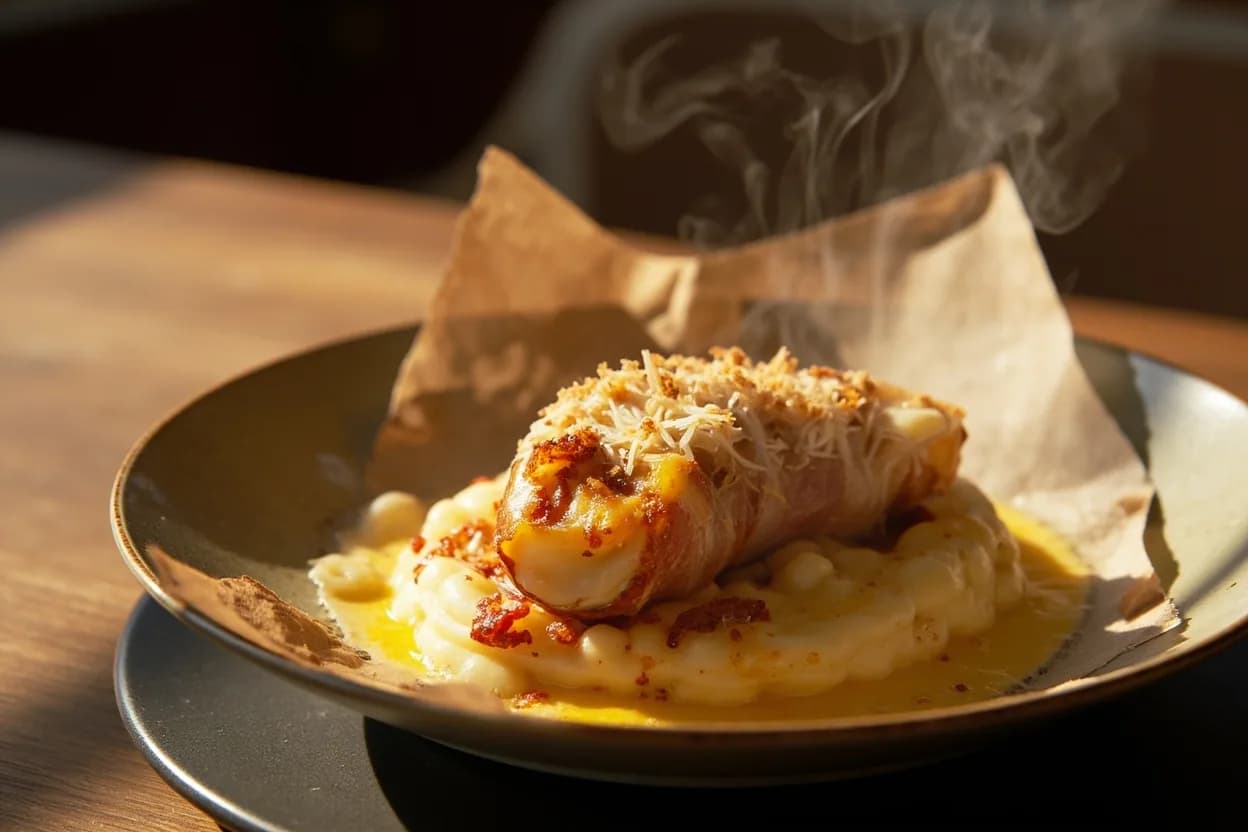


Related

Whole Milk
Rich, full-fat milk for drinking, coffee, sauces, and baking
Butter
Golden fat for searing, baking, and finishing a sauce
Yogurt
Tangy, creamy culture for breakfast, sauces, and marinades
Cheddar Cheese
Sharp, melty cheese for sandwiches, gratins, and grating
Skim Milk
Fat-free milk for lighter drinking, coffee, and cooking
Heavy Cream
Rich cream that whips, enriches sauces, and sets ganache

Sour Cream
Tangy, thick cream for dolloping, baking, and dips
Mozzarella
Soft, milky cheese that melts into stretchy pizza pulls