Natural form
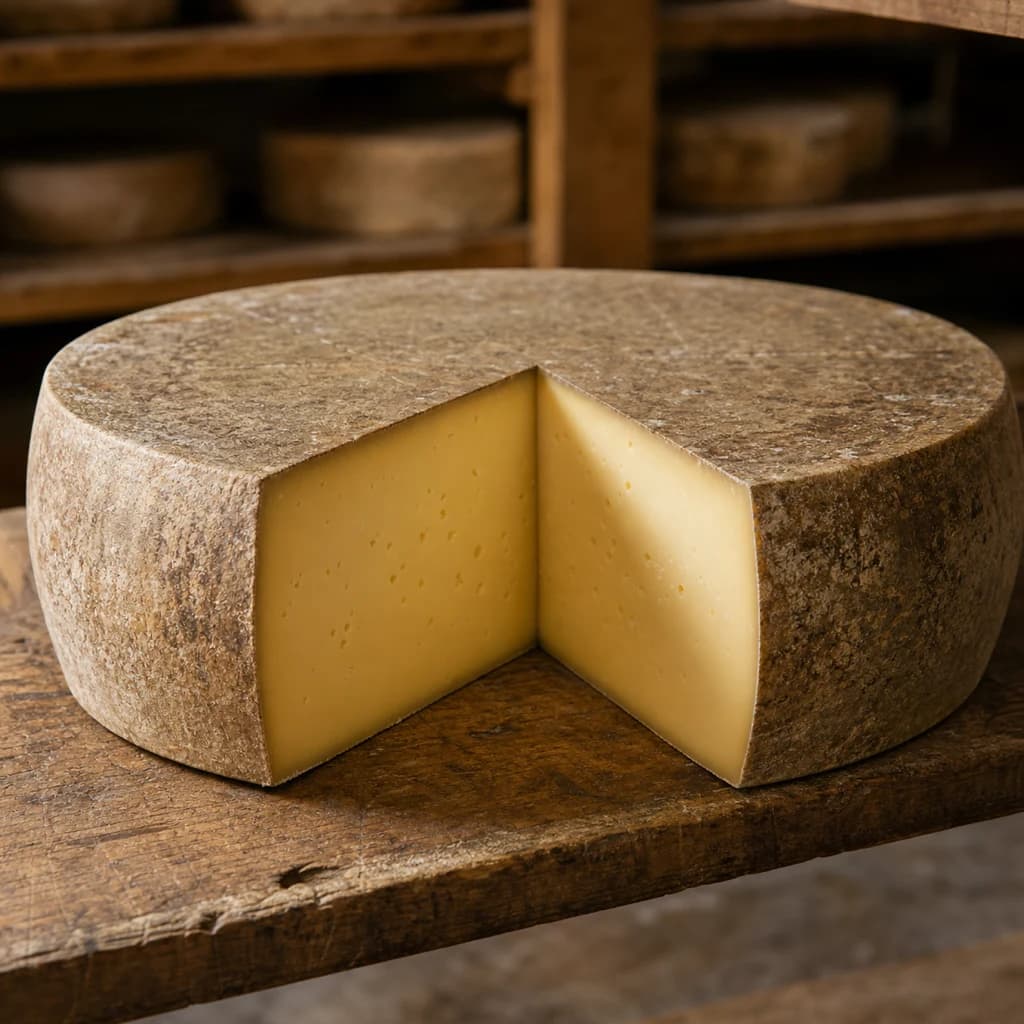
A large Comté wheel showing its characteristic brown-grey rind and stamped markings.
Teaching the wheel's massive scale, pale-golden paste color, and textured rind that distinguishes Comté from other Alpine cheeses.
Dairy & Eggs
Comté
Firm French alpine cheese with nutty, brothy depth, melted in fondue or eaten in chunks.
Comté is a firm, aged cow's-milk cheese from the Jura mountains of France, made in large wheels and matured for months to develop nutty, brown-butter, and savory brothy notes. It is eaten in chunks, shaved into gratins, and melted into fondue and croque-monsieur. Older wheels can show crunchy crystals and deep caramel flavor.
Comté is France's most widely consumed AOC/AOP cheese, a firm Alpine-style wheel produced in the Franche-Comté region since at least the 12th century through a cooperative system called fruitières, where milk from multiple farms is pooled and processed communally. The cheese wheels—massive at 35–45 kg—mature in traditional caves, often carved into converted military fortifications, where affineurs monitor humidity and turn the wheels regularly during aging. This aging process develops the cheese's characteristic golden interior, small irregular eyes, and complex flavor progression from buttery fruitiness to deep, brothy, caramelized notes. The PDO regulations require minimum 4 months aging, restrict additives, and mandate unpasteurized milk for authentic versions, ensuring a product that reflects its terroir: the hay and grasses eaten by Montbéliarde and Simmental cows directly influence the wheel's final character. Autumn and winter milks produce the most prized wheels, as cows fed on stored hay develop richer, more nuanced cheese than summer grass-fed milk. Comté's role in French cuisine is foundational—it anchors classic fondue, enriches gratins and soups, and rewards close study on a cheese board where its depth can be appreciated.
- Measured in
- g
- Storage
- Fridge
Allergens
Types & varieties
Lighter, buttery, fruity; best for melting
Deeper, brothy, caramelized notes; best for eating out of hand
Aged by specialist affineurs (e.g., Marcel Petite's Fort Saint-Jean caves); premium quality and price
Farmstead version; made entirely from single-farm milk rather than pooled collection
The Cooperative System
Comté's production model dates to the medieval period when alpine farmers formed fruitières—cooperatives that allowed small farms without cheese-making facilities to pool their milk into a single communal vat. This system persists today, ensuring consistent quality while honoring regional traditions. Milk must be delivered to the cooperative within 24 hours of milking, and modern regulations cap the number of farms per fruitière and restrict how far milk can travel, preserving freshness and terroir expression.
- Modern AOC/AOP rules govern herd size, feed, and minimum aging to protect authenticity
- The cooperative model distributes risk among farmers while maintaining shared quality standards
- Milk must be delivered to the cooperative within 24 hours of milking
Choosing and Buying Comté
Quality variance in Comté is enormous—perhaps more pronounced than any other major cheese—making sourcing critical. A fromagerie or specialty grocer with a knowledgeable affineur is preferable to supermarket offerings, where aging and handling conditions are unknown. Request to taste before purchasing; a competent fromager will cut samples from the wheel on request.
- Select wheels with a uniform golden-yellow interior; avoid pale, chalky centers indicating underripe cheese
- Steer clear of wheels with dry, crumbly edges at the rind (signs of overripening)
- When purchasing a portion, ask the fromager to cut from the center of the wheel for the most representative sample
- Specialist affineurs like Marcel Petite (Fort Saint-Jean caves, Besançon) command premium prices for consistent excellence
Common uses
Tips & pitfalls
- Buy from a fromagerie or specialty grocer where you can sample—Comté quality varies enormously by affineur and aging
- Bring to room temperature 30–60 minutes before serving; cold Comté has muted flavor and poor aroma
- When melting for fondue, use moderate indirect heat; direct high heat causes graininess and separation
- For grating, younger wheels (4–8 months) melt more smoothly; older wheels are better sliced thin
- Store in cheese paper (not plastic wrap) in the vegetable drawer; rewrap each time to control humidity
- The rind is edible and adds flavor; only trim if damaged or moldy
- When buying a whole or half wheel, ask the fromager to cut from the center—the interior is most representative
Nutrition
Energy
1628 kJ · per 100 g
Where the calories come from
Protein
25.6g
51% DV
Carbs
1.6g
1% DV
Fat
31.1g
40% DV
Fiber
0g
0% DV
Sugars
1.6g
of which
Sodium
800mg
35% DV
Source · USDA FoodData Central · approx. Cheese, fontina
View on FDC →In the shops
Matched grocery products
No matched grocery products for Comté yet.
Good to know
- Origin
- Franche-Comté region, eastern France (Jura, Doubs, Haute-Saône, Territoire de Belfort)
- Milk
- Cow's milk, traditionally from Montbéliarde or Simmental breeds; unpasteurized for AOC/AOP versions
- Type
- Firm/hard Alpine-style cheese; similar to Gruyère
- PDO
- Appellation d'Origine Protégée (AOP) since 1958, updated 2008
- Wheel size
- 35–45 kg (77–99 lbs), 50–60 cm diameter, 10–13 cm height
- Aging
- 4 months minimum; 8–12 months typical; up to 24+ months for premium selections
- Rind
- Natural rind, washed and brushed during aging; gray-brown to orange-brown
- Texture
- Dense, smooth, slightly grainy; small, irregular eyes (holes) in aged versions
- Fat content
- 45–48% fat in dry matter (~30% by weight)
- Best season
- Year-round; fall and winter milk (cows eat hay) produces richer, more complex cheese
Substitutes
- Gruyère AOP — Closest match; Swiss or French; similar nutty, firm texture; use 1:1
- Beaufort — Alpine cheese from Savoy; slightly sweeter; excellent in fondue; use 1:1
- Emmental — Milder, more elastic; acceptable for melting but lacks Comté's depth; use 1:1
- Abondance — Medium-firm Alpine cheese from Haute-Savoie; fruity notes; good for fondue blends
Pairs with
Also called
Comte Cheese · Comté Cheese
Related

Whole Milk
Rich, full-fat milk for drinking, coffee, sauces, and baking
Butter
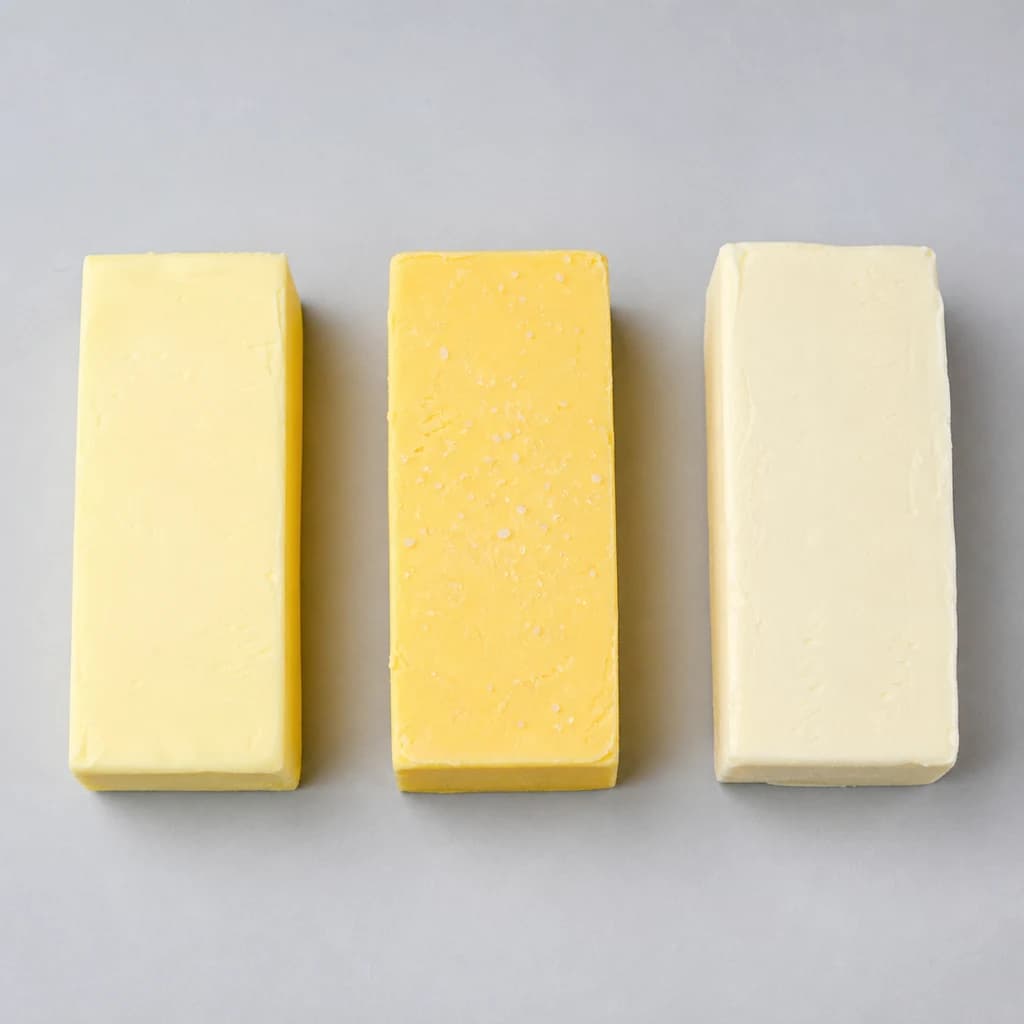
Golden fat for searing, baking, and finishing a sauce

Yogurt
Tangy, creamy culture for breakfast, sauces, and marinades
Cheddar Cheese
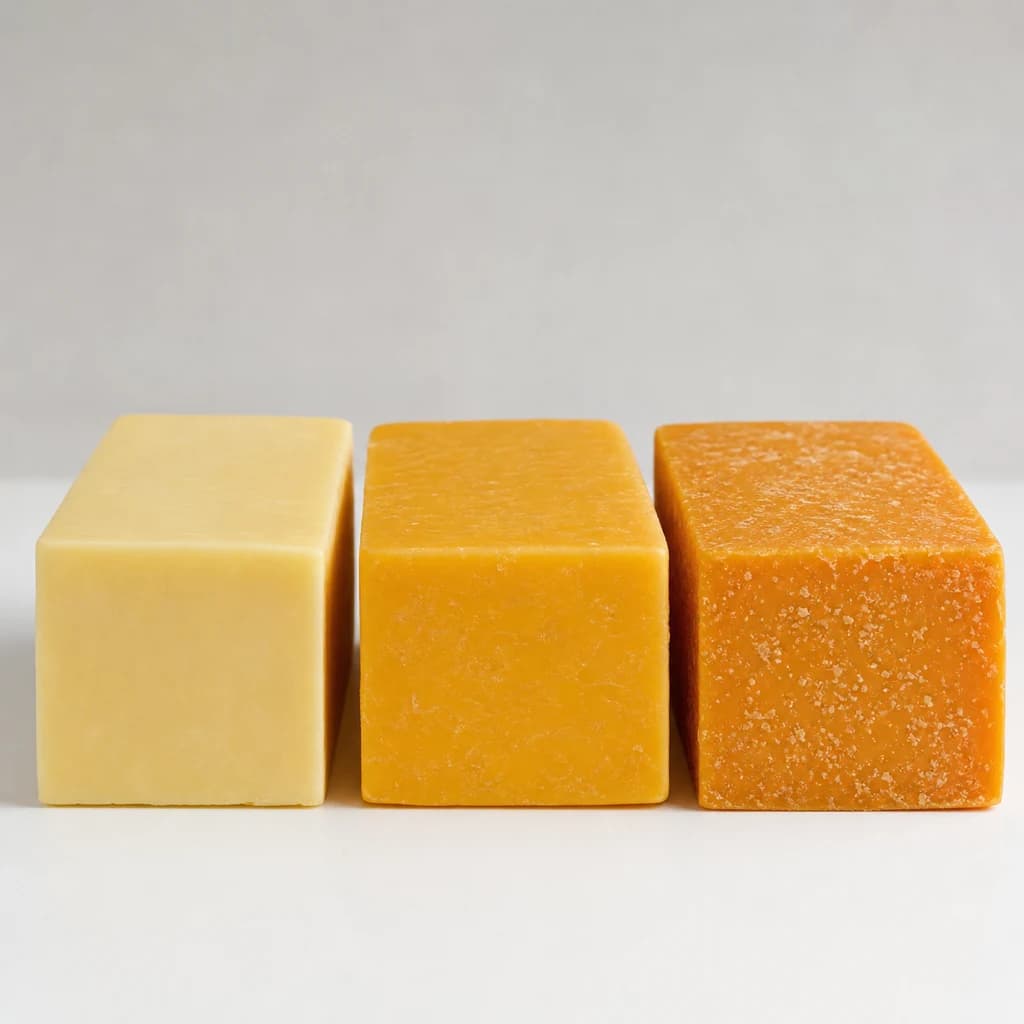
Sharp, melty cheese for sandwiches, gratins, and grating

Skim Milk
Fat-free milk for lighter drinking, coffee, and cooking
Heavy Cream
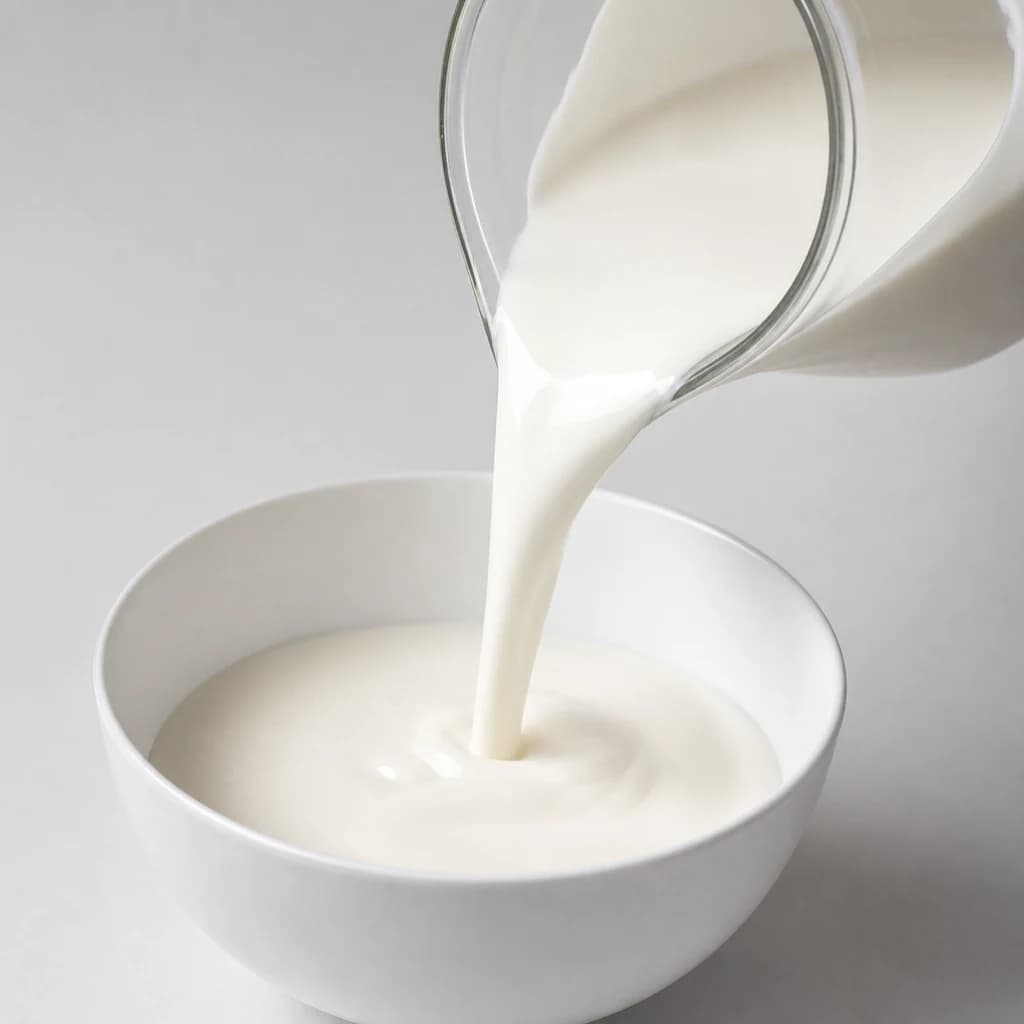
Rich cream that whips, enriches sauces, and sets ganache

Sour Cream
Tangy, thick cream for dolloping, baking, and dips
Mozzarella
Soft, milky cheese that melts into stretchy pizza pulls