Dairy & Eggs
Fontina
Semi-soft Alpine cheese that melts into a silky, nutty, slightly funky pool. The classic base for fonduta and a top melter for paninis, gratins and pizza; stronger than mozzarella.
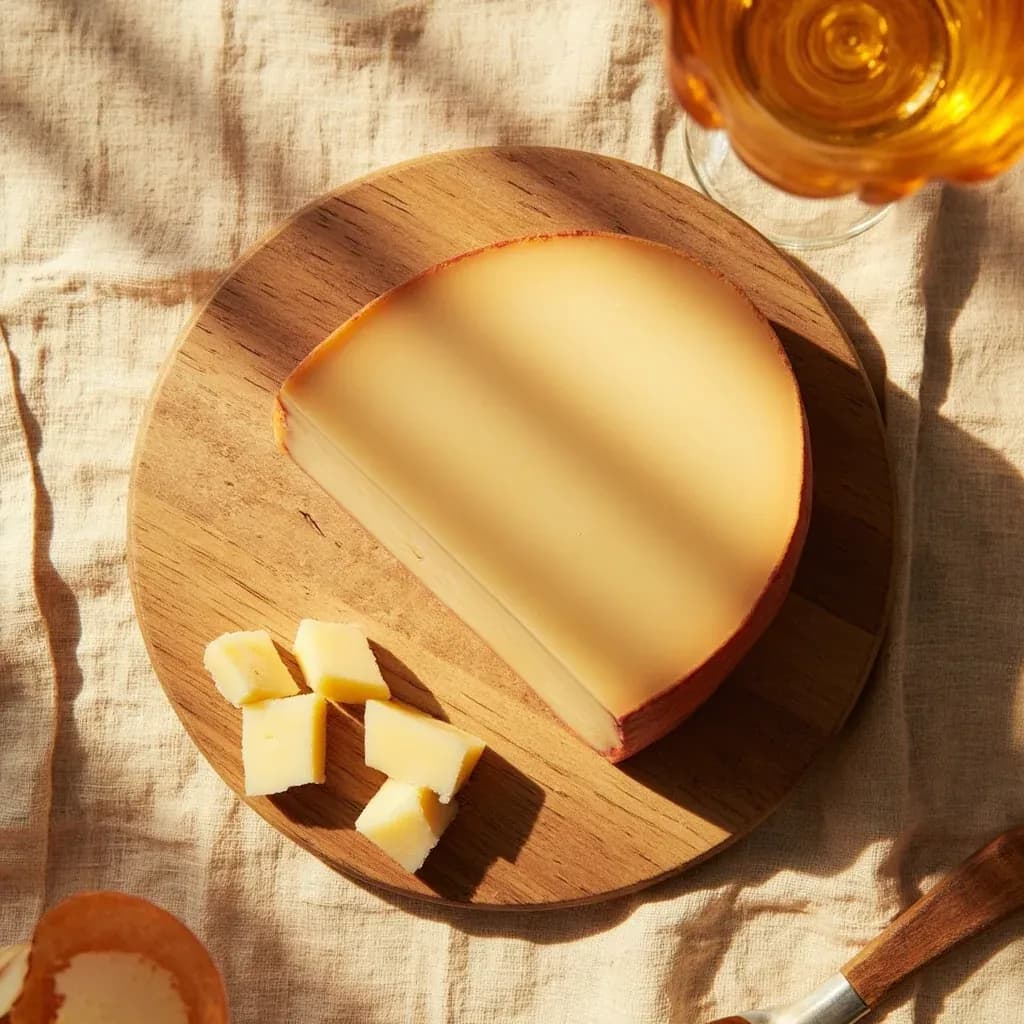
Fontina is one of Italy's oldest named cheeses, born in the high Alpine pastures of the Valle d'Aosta in the country's northwestern corner, where it has been made for centuries from raw cow's milk drawn from the indigenous Valdostana breeds. The genuine article — Fontina DOP — is aged a minimum of 80 days on wooden boards in cool, humid cellars, developing a supple, semi-soft paste dotted with small, evenly scattered eyes, covered by a thin, brushed rind that ranges from gray-brown to golden. Its flavor is layered and unmistakably Alpine: buttery and milky when young, deepening with age into roasted nuts, hay, and a savory, almost brothy pungency that grows toward the rind.
What sets Fontina apart in the kitchen is the way it melts. The high fat content (around 45% in dry matter) and the elasticity of the curd combine to produce a glossy, pourable, stretchy sauce that resists breaking — which is exactly why the Piedmontese and Valdostans built their fondue, fonduta, around it rather than around a generic Alpine cheese. It browns, it strings, it melts into cream and cheese sauces without seizing, and a thin slice laid on a hot cutlet or a flatbread will slump into a silken pool within seconds. Used at room temperature, it delivers a complexity that more familiar melters like mozzarella simply cannot match.
A word of caution: most of the cheese labeled 'Fontina' in American deli cases is a Danish, Swedish, or US-made pasteurized version — softer, sweeter, and considerably blander than the DOP original. The two are essentially different cheeses. For dishes where Fontina is the headline (fonduta, cotoletta alla valdostana, a standalone cheese course), seek out the DOP; for pizza and panini where you mainly want a clean, stretchy melt, the generic version will do honest work.
- Measured in
- g
- Storage
- Refrigerate
Allergens
Find it in
Suits
Types & varieties
The genuine Aosta Valley original, made from raw cow's milk and aged at least 80 days. Complex, pungent, aromatic — what Italian recipes actually mean when they call for fontina.
Synonym for Fontina DOP, used to underscore the Valle d'Aosta origin; the same cheese under a more regional name.
Pasteurized, milder, and sweeter; what most American shoppers find in the deli case. A different cheese in practice, though useful for neutral melting work.
A common U.S. market variant, cold-smoked over hardwood. Not DOP, but useful in grilled cheese and on pizzas where you want a built-in smoky edge.
Often confused with Fontina, but a separate, pasteurized Italian cheese (popularized by Galbani). Milder and softer, with a clean melt — a reasonable pizza and panini substitute when true Fontina isn't available.
Choosing the Right Fontina
The single most useful decision you will make with this cheese happens before you turn on the stove. Italian law reserves the name Fontina for the raw-milk DOP cheese of Valle d'Aosta; anything else on the shelf is something else, even if the label says Fontina. Read the country of origin and the words 'pasteurized' or 'raw milk' on the label, and decide accordingly.
- Reach for Fontina DOP when the cheese is the centerpiece: fonduta, cotoletta alla valdostana, a cheese course, or any baked pasta where you want the hay-and-nut aroma to come through.
- Use the generic pasteurized 'Fontina' for pizza, panini, and gratins where you mainly want a clean, stretchy melt and the background flavor of other ingredients will dominate.
- Smoked Fontina is a useful shortcut for grilled cheese, omelets, and frittatas — pair it with assertive partners like cured ham, caramelized onions, or mustard.
How to Melt Fontina Without Breaking It
Fontina's high fat and elastic curd make it forgiving, but not invincible. A few habits separate a glossy fonduta from a greasy, rubbery puddle.
- Dice the cheese small and let it sit at room temperature for 20–30 minutes before melting; cold cubes melt unevenly and clump around pockets of unmelted cheese.
- Melt over low to moderate heat, ideally in a double boiler or a heavy pan set over barely simmering water. Direct high heat seizes the proteins and squeezes out the fat.
- Add a splash of milk, cream, or starchy pasta water when you want a pourable sauce; the moisture buffers the proteins and keeps the emulsion stable.
- Grate cold, then use at room temperature: a cold grate is cleaner, and cheese closer to room temp melts into a smoother sheet on pizza and gratin.
Common uses
Tips & pitfalls
- Buy Fontina DOP whenever the recipe depends on the cheese's flavor — fonduta, cotoletta alla valdostana, or any dish where fontina is the star. The generic deli 'Fontina' is a different, blander cheese.
- For fondue and fonduta, dice the cheese and let it come to room temperature before melting; cold cubes melt unevenly and leave stubborn lumps.
- Melt gently over low to moderate heat. High heat seizes the proteins, pushes out the fat, and leaves a rubbery, greasy texture.
- Skip the pre-shredded bagged cheese. Anti-caking cellulose and starch make melted fontina grainy and prevent a glossy sauce.
- Trim the rind before cooking. It is edible but tough and slightly bitter; save it for stocks and soups if you like.
- Serve on a cheese board at room temperature — cold fontina hides the aroma and mutes the flavor.
- Store cut pieces wrapped first in parchment, then loosely in plastic; airtight wrapping suffocates the rind and produces off flavors. Use within a few weeks of cutting.
- Avoid freezing if you can. Thawed fontina turns dry and mealy; reserve it for cooked applications where texture is masked, such as a baked pasta or a gratin sauce.
Nutrition
Energy
1628 kJ · per 100 g
Where the calories come from
Protein
25.6g
51% DV
Carbs
1.6g
1% DV
Fat
31.1g
40% DV
Fiber
0g
0% DV
Sugars
1.6g
of which
Sodium
800mg
35% DV
Source · USDA FoodData Central · approx. Cheese, fontina
View on FDC →In the shops
Matched grocery products
No matched grocery products for Fontina yet.
Good to know
- Origin
- Aosta Valley (Valle d'Aosta), northwestern Italy, in the Alps near the French and Swiss borders.
- Milk
- Raw cow's milk, traditionally from Valdostana breed cows (Pezzata Rossa, Pezzata Nera, Castana).
- Texture
- Semi-soft, supple, springy; pale ivory-yellow paste with small, evenly distributed 'eyes'.
- Aging
- Minimum 80 days under DOP rules; wheels are often aged 3–4 months, sometimes longer for sharper wheels that are good for grating.
- DOP status
- Italian DOP (1996) with EU-wide name protection; only raw-milk cheese from Valle d'Aosta may legally be called Fontina in Italy.
- Wheel format
- Cylindrical, roughly 35–45 cm in diameter, 7–10 cm tall, weighing 8–18 kg.
- Fat content
- About 45% fat in dry matter (roughly 27–30% absolute), which is what gives it that glossy melt.
- Flavor at age
- Younger wheels: milky, buttery, mildly sweet, with hay notes. Aged wheels (6+ months): sharper, brothy, almost meaty; good for grating like an aged Alpine.
Substitutes
- Gruyère — The closest all-around substitute: nutty, Alpine, melts smoothly, and only slightly less pungent than aged Fontina DOP.
- Comté — Complex, long-aged Alpine flavor and an excellent melt; superb in gratins and fondue-style dishes.
- Appenzeller — Slightly stronger and spicier with a similar body; behaves well under heat.
- Raclette — Built specifically for melting; works in fonduta and gratins, though milder in flavor.
- Emmental — Milder and sweeter; reach for it when you want a softer, more neutral background.
- Taleggio — Softer, washed-rind, and more pungent; use when you want extra funk and creamy texture.
- Bel Paese — Very mild, creamy Italian semi-soft; melts cleanly but lacks Alpine depth.
Pairs with
Also called
fontina val d'aosta · fontal · italian fontina
Related

Whole Milk
Rich, full-fat milk for drinking, coffee, sauces, and baking
Butter
Golden fat for searing, baking, and finishing a sauce
Yogurt
Tangy, creamy culture for breakfast, sauces, and marinades
Cheddar Cheese
Sharp, melty cheese for sandwiches, gratins, and grating
Skim Milk
Fat-free milk for lighter drinking, coffee, and cooking
Heavy Cream
Rich cream that whips, enriches sauces, and sets ganache

Sour Cream
Tangy, thick cream for dolloping, baking, and dips
Mozzarella
Soft, milky cheese that melts into stretchy pizza pulls