
Natural form
A half-wheel of raclette cheese showing its pale yellow interior and distinctive brownish rind.
Shows the cheese's characteristic form, rind color, and interior texture so readers can identify it at market.
Dairy & Eggs
Raclette Cheese
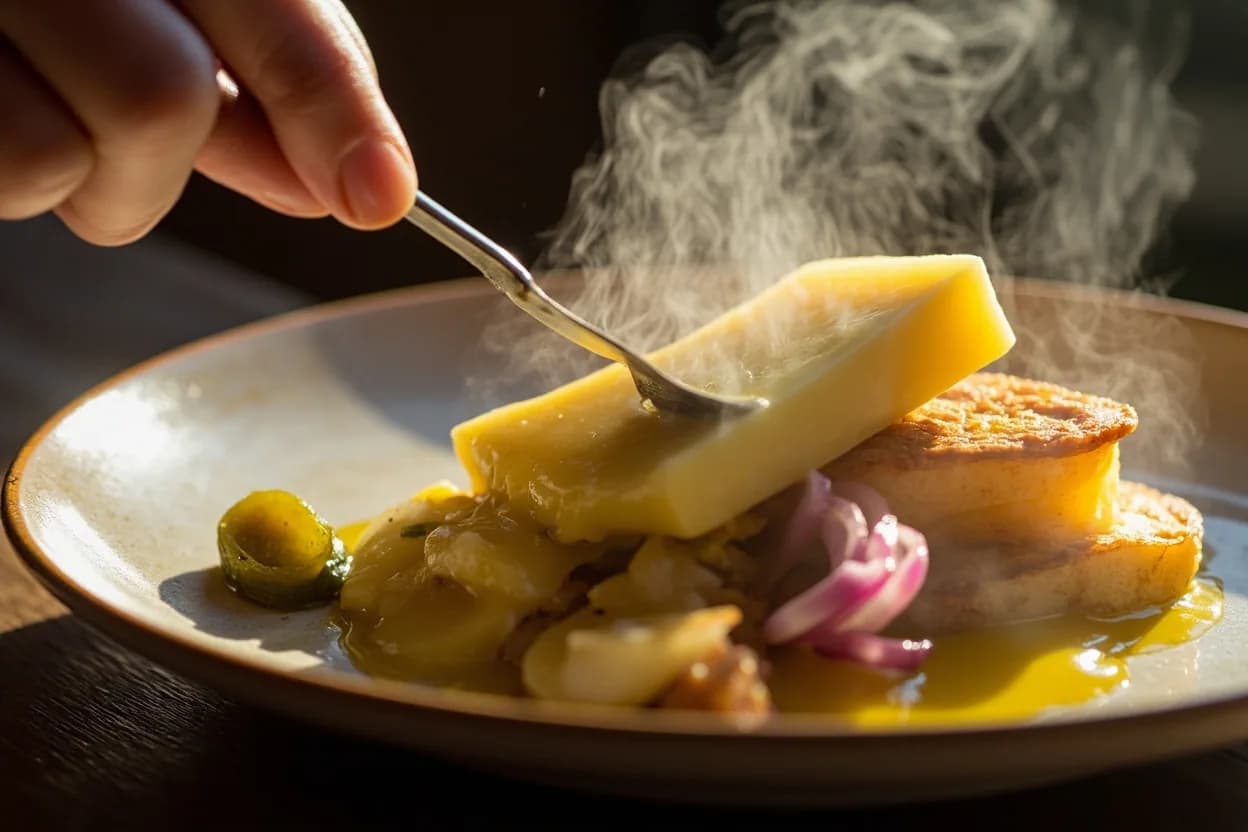
Alpine melting cheese scraped molten over potatoes, pickles, and bread.
Raclette is a semi-firm Alpine cow's-milk cheese from Switzerland and France, named for the dish where it is melted and scraped onto plates. It melts smoothly into a gooey, savory, slightly nutty pool served over boiled potatoes, cornichons, and charcuterie. The cheese has a pungent rind and a rich, milky flavor that intensifies when warm.
Raclette is a semi-hard Alpine cheese traditionally made in Switzerland's Valais canton and France's Savoie region from the milk of cows grazing on high-altitude pastures. The name derives from the French verb "racler" (to scrape), referencing the centuries-old technique of holding a half-wheel of cheese toward an open fire until the surface melts into a flowing layer, then scraping it onto plates. Modern raclette grills simulate this table-side ritual at home. The cheese is aged 2–6 months, developing a flexible, slightly tacky texture when cold that transforms into something smooth and elastic under heat. Its flavor profile is distinctly nutty with subtle sweetness and earthiness, finishing cleanly on the palate. Raclette is one of the few cheeses that browns predictably without burning—a property tied to its specific fat-to-protein ratio and moisture content—which makes it uniquely suited to the high-heat melting that defines its preparation. The Swiss Raclette du Valais carries an AOP (PDO) designation since 2003, requiring production within specific Alpine valleys using traditional methods and raw milk from designated herds. American producers in Wisconsin and Vermont have developed excellent domestic versions that follow similar techniques without claiming the protected designation.
- Measured in
- g
- Storage
- Fridge
Allergens
Types & varieties
The authentic Swiss protected designation; made in the Valais canton with traditional methods, raw Alpine milk, and production tied to specific valleys. This is the benchmark for quality and regional character.
The French Alpine counterpart from Savoie; produced under similar traditions with regional terroir influences. Comparable style with subtle national variations in flavor development.
Produced primarily in Wisconsin and Vermont; made to similar technical standards using local milk. Widely available in specialty grocery stores and excellent quality, though it lacks Alpine PDO protection.
Why Raclette Melts the Way It Does
The melting behavior of raclette is not accidental—it is engineered by centuries of cheesemaking. The 45–48% fat content provides lubrication and richness when heated, while the controlled moisture level (higher than hard grating cheeses, lower than soft cheeses) creates that characteristic smooth, flowing texture rather than a greasy puddle. The protein matrix holds together during heating, which is why raclette stretches rather than collapsing into a pool. Under a broiler or raclette grill, the surface caramelizes before the interior oils migrate—a window you want to catch. Once the oil begins to separate and pool on the surface, the cheese has passed its prime melting point and will taste rendered rather than creamy.
- Fat content (45–48%) determines richness and flow when melted
- Protein structure provides elasticity—raclette stretches rather than pools
- Moisture level is calibrated for high-heat applications
- Browns before oil separates due to controlled fat-to-protein ratio
The Authentic Raclette Dinner
The traditional Swiss raclette dinner is a communal, interactive affair. A half-wheel of raclette is placed in a specialized rack facing the heat source—traditionally an open fire, now typically an electric raclette grill with individual pans. Each diner tends their own portion as the surface melts and blisters. The melted layer is scraped onto plates lined with boiled new potatoes, accompanied by cornichons, pickled pearl onions, and sliced cured meats. The meal moves slowly by design, allowing conversation and paced consumption. Dry white wine—Swiss Chasselas or Fendant is canonical—washes everything down between bites. The entire setup should be assembled before lighting the grill: cheese at room temperature, accompaniments prepped and arranged, glasses poured. Raclette grills typically accommodate 4–8 diners comfortably with individual warming drawers for finished portions.
- Assemble all components before heating the cheese
- New potatoes should be warm but not hot when cheese is scraped over them
- Cornichons, pickled onions, and cured meats should be cold to contrast the molten cheese
- The rhythm is slow—expect 90 minutes minimum for a proper dinner
Common uses
Tips & pitfalls
- Bring cheese to room temperature for 30–60 minutes before melting to ensure even, smooth results throughout the wheel.
- Cut the cheese in thin slices or cubes to maximize surface area—this is not a time to be timid with portion sizes.
- Under a broiler or raclette grill, melt until bubbling and edges begin to brown—stop when oil begins to separate, as this indicates the cheese has lost its structure.
- Never microwave raclette; direct heat is essential for achieving the elastic, flowing texture the cheese is known for.
- Store properly by wrapping tightly in plastic wrap or beeswax wrap, or keep in an airtight container to prevent drying and flavor absorption from surrounding foods.
- For authentic raclette dinner, set out small new potatoes, cornichons, pickled pearl onions, and sliced prosciutto or Speck—these accompaniments are not optional but foundational to the experience.
- When using raclette in baked dishes like gratins, layer it beneath heavier toppings to protect it from direct browning and ensure even melting throughout.
- If buying a whole wheel, ask your fromager to cut it fresh—pre-cut wheels dry out faster and lose the flexible texture essential for proper melting.
Nutrition
Energy
1628 kJ · per 100 g
Where the calories come from
Protein
25.6g
51% DV
Carbs
1.6g
1% DV
Fat
31.1g
40% DV
Fiber
0g
0% DV
Sugars
1.6g
of which
Sodium
800mg
35% DV
Source · USDA FoodData Central · approx. Cheese, fontina
View on FDC →In the shops
Matched grocery products
No matched grocery products for Raclette Cheese yet.
Good to know
- Origin
- Switzerland (Valais canton) and France (Savoie region)
- Milk Type
- Cow's milk, typically from Alpine herds on high-altitude pastures
- Fat Content
- Approximately 45–48%
- Aging Period
- 2–6 months for standard varieties; longer for premium wheels
- Wheel Size
- Typically 6–7 kg (approximately 13–15 lbs)
- Protected Status
- Raclette du Valais AOP (PDO) in Switzerland since 2003
- Texture
- Semi-hard, flexible when cold; smooth and elastic when melted
- Flavor Profile
- Nutty, slightly sweet, with subtle earthiness and a clean finish
- Best Melting Temperature
- Grill or broiler at high heat; cheese should bubble and brown slightly before oil separates
- Shelf Life
- Refrigerated, 4–6 weeks in original wrapping; vacuum-sealed lasts considerably longer
Substitutes
- Gruyère — Closest flavor profile and melting behavior; use in equal amounts for gratins, fondue, and baked dishes.
- Comté — Similar nuttiness and excellent melting properties; slightly sweeter tone; works as a one-to-one substitute in all applications.
- Beaufort — Premium Alpine cheese with comparable melting and flavor depth; an excellent choice for authentic applications when raclette is unavailable.
- Fontina Val d'Aosta — Italian Alpine cheese with superior melting fluidity; particularly good for fondue and baked pasta dishes.
- Emmental — Milder in flavor with good melting capacity; works well in blends or for preparations where a more subtle cheese presence is desired.
Pairs with
Also called
Raclette
Appears in these dishes
Related

Whole Milk
Rich, full-fat milk for drinking, coffee, sauces, and baking
Butter
Golden fat for searing, baking, and finishing a sauce
Yogurt
Tangy, creamy culture for breakfast, sauces, and marinades
Cheddar Cheese
Sharp, melty cheese for sandwiches, gratins, and grating
Skim Milk
Fat-free milk for lighter drinking, coffee, and cooking
Heavy Cream
Rich cream that whips, enriches sauces, and sets ganache

Sour Cream
Tangy, thick cream for dolloping, baking, and dips
Mozzarella
Soft, milky cheese that melts into stretchy pizza pulls