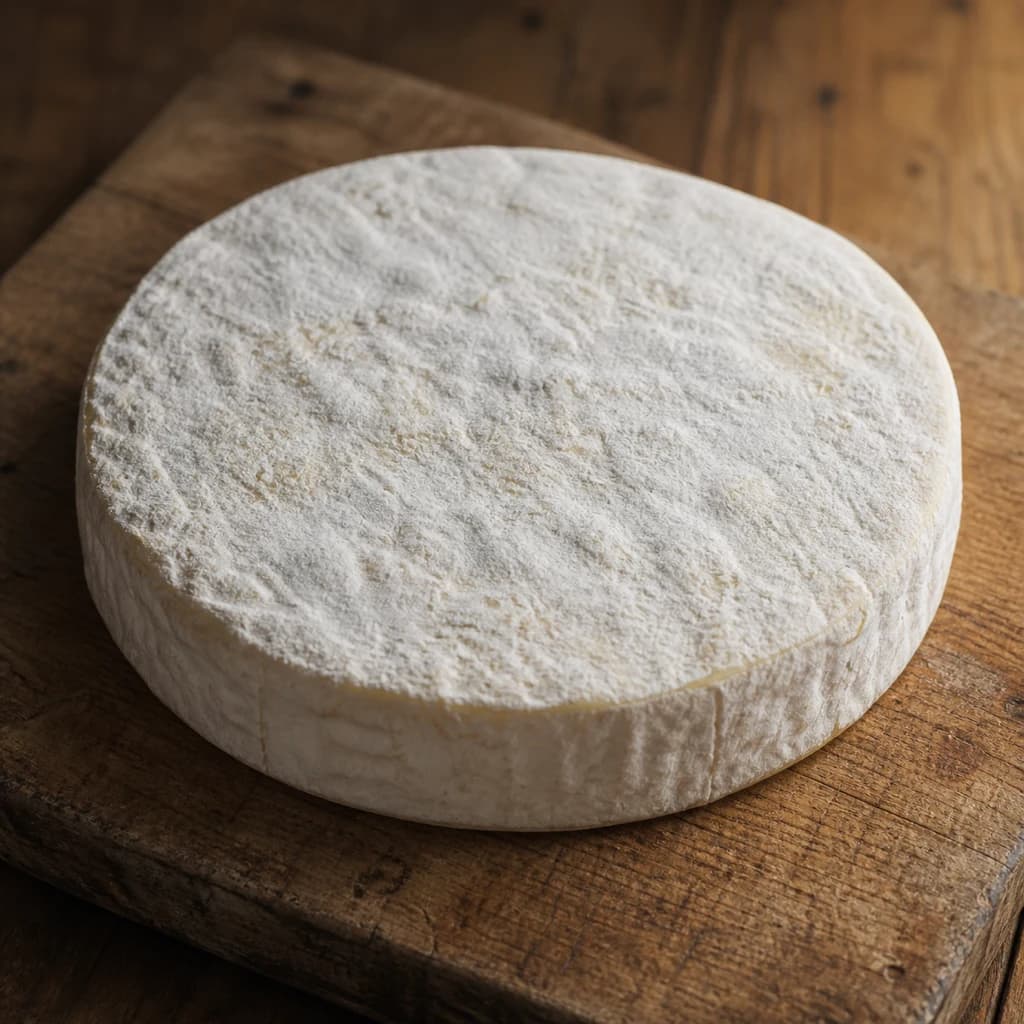
Natural form
A whole wheel of Brie showing its characteristic white bloomy rind.
Teaches the reader the unmistakable round wheel shape, thick velvety white rind, and overall scale of an uncut Brie.
Dairy & Eggs
Brie
Soft, creamy French bloomy-rind cheese that turns spreadable and buttery when ripe.
Brie is a soft cow's-milk cheese from France with an edible white bloomy rind and a smooth, buttery interior that becomes spreadable as it ripens. It is served on cheese boards, baked until molten with jam or nuts, and tucked into sandwiches. Larger and milder than its cousin Camembert, it has a gentle mushroomy, creamy flavor.
Brie is a soft-ripened French cheese made from cow's milk, distinguished by its bloomy white rind of Penicillium camemberti and a paste that progresses from firm and chalky when young to silky and spreadable at peak ripeness. Originating in the Seine-et-Marne region of Île-de-France, it has been produced since at least the 16th century and remains one of the world's most celebrated cheeses. The rind is fully edible and contributes an earthy, mushroomy character that balances the rich, buttery interior. French AOC protections exist for two specific varieties—Brie de Meaux and Brie de Melun—but the name 'Brie' is also used broadly for similar soft-ripened cheeses made elsewhere, including American-produced versions that tend to be milder and less complex. The cheese is sold as large flat wheels, typically 23–37 cm in diameter, and ripens from the outside inward, which means the edges firm up first while the center remains creamy. Understanding this ripening gradient is essential for selecting and using Brie effectively in the kitchen.
- Measured in
- g
- Storage
- Fridge
Allergens
Types & varieties
AOC-protected; the most famous variety, often called 'the queen of cheeses'; slightly nutty and earthy with a distinct mushroomy note
AOC-protected; smaller wheels, more pungent aroma, firmer paste with more pronounced ammonia notes
Smaller format (about 1 kg); same style, sometimes called 'petit Brie'
Domestic versions; typically milder, creamier, and less complex than French originals; widely available in U.S. supermarkets
A soft washed-rind Alpine cheese that melts to a silky, pungent ooze; the heart of tartiflette and any dish wanting rich, gooey nuttiness.
How to Select a Ripe Brie
The single most important skill when working with Brie is selecting one at the right stage of ripeness. A whole wheel sold in supermarkets is often uniformly firm—this is a young Brie that needs 1–3 days at room temperature to ripen fully. A wedge from a full wheel at a cheese counter may already be ripe through the center.
- Press the center gently: ripe Brie yields slightly and feels springy; underripe Brie is firm and chalky; overripe Brie feels almost liquid and smells strongly of ammonia
- Check the rind: it should be velvety white with no gray or pink patches
- If buying a whole wheel for baking, ask the cheesemonger to confirm it is ripe to the center—otherwise the center will remain chalky and won't melt evenly
Baked Brie Technique
Baking a whole wheel of Brie until molten is a classic preparation, but without proper preparation the rind can burst dramatically or the paste can overheat and turn grainy. The key is scoring the rind and controlling oven temperature.
- Preheat oven to 180°C (350°F)
- Score the top rind in a crosshatch pattern, cutting about 1 cm deep, to allow heat to penetrate and steam to escape
- Place the wheel on a parchment-lined baking sheet or in a shallow oven-safe dish
- Bake 12–18 minutes until the center is fully molten and the edges are bubbling
- Let rest 5 minutes before serving directly from the baking dish with bread or crackers for dipping
Common uses
Tips & pitfalls
- Test for ripeness by gently pressing the center: a ripe Brie yields slightly and feels springy; underripe Brie is firm and chalky; overripe Brie feels almost liquid and smells of ammonia
- Never serve cold from the refrigerator—cold Brie has muted aroma and rubbery texture that obscures its character
- Store cut Brie with the exposed side down on a wood board or cheese paper to prevent drying out and oxidation
- If Brie weeps (excess liquid pooling on the rind), it is very ripe—this is desirable for spreading but not for slicing
- Do not freeze Brie; ice crystals destroy the delicate texture and create gritty moisture pockets
- When buying a whole wheel for a crowd, choose one that is ripe through to the center; ask the cheesemonger if unsure
- For baked Brie, always score the top rind in a crosshatch pattern before baking to allow heat penetration and prevent explosive rupturing
- If a recipe calls for baked Brie, it refers to the technique of baking the wheel until molten, not a specific variety—any ripe wheel works
Nutrition
Energy
1397 kJ · per 100 g
Where the calories come from
Protein
20.8g
42% DV
Carbs
0.5g
0% DV
Fat
27.7g
35% DV
Fiber
0g
0% DV
Sugars
0.5g
of which
Sodium
629mg
27% DV
Source · USDA FoodData Central · Cheese, brie
View on FDC →In the shops
Matched grocery products
No matched grocery products for Brie yet.
Good to know
- Origin
- Seine-et-Marne region of France (Île-de-France), dating to at least the 16th century
- Milk Type
- Cow's milk; both pasteurized and raw versions available
- Fat Content
- 45–50% fat in dry matter
- Rind Type
- Bloomy rind (Penicillium camemberti); edible, white and velvety
- Shape & Size
- Large flat wheel, 23–37 cm diameter, 2.5–3.5 kg
- Aging Time
- 4–8 weeks depending on desired ripeness
- Peak Season
- Year-round; traditionally best in fall and winter when cows are on grass-based feed
- Serving Temperature
- 18–20°C (64–68°F); bring to room temperature 30–60 minutes before serving
- Refrigerator Storage
- 2–4 weeks wrapped in wax or cheese paper, cut side down on a board
Substitutes
- Camembert — Very similar flavor profile and texture; typically slightly more earthy and intense; fully interchangeable in most applications
- Coulommiers — Smaller French bloomy-rind cheese; same style, often less expensive and easier to find in smaller portions
- Brillat-Savarin (or other triple-crème) — Brie-style cheese enriched with additional cream; richer and more buttery; excellent for spreading but not ideal when a firm slice is needed
- Cambozola — German blue-soft hybrid with a similar bloomy rind exterior; has a mild blue undertone; good substitute when a subtle blue note is acceptable
Pairs with
Also called
Brie Cheese
Related

Whole Milk
Rich, full-fat milk for drinking, coffee, sauces, and baking
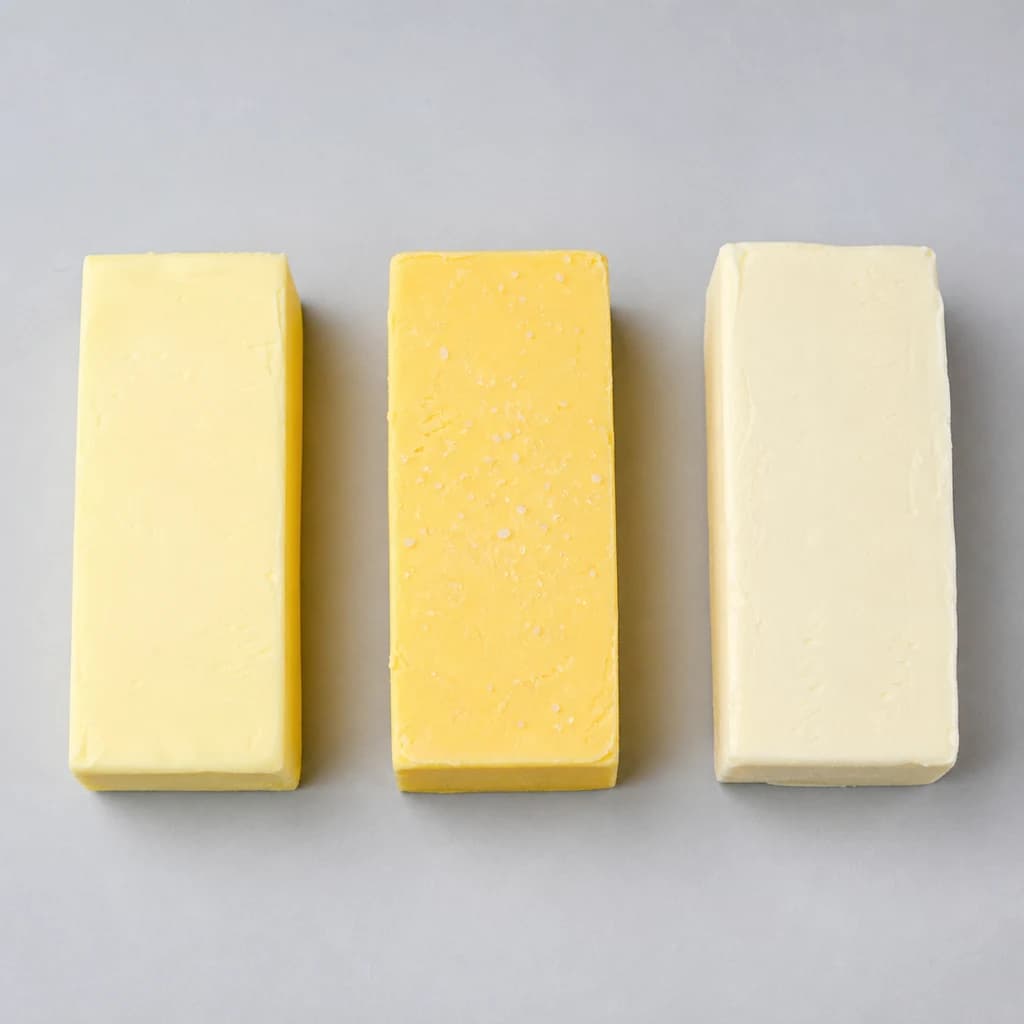
Butter
Golden fat for searing, baking, and finishing a sauce
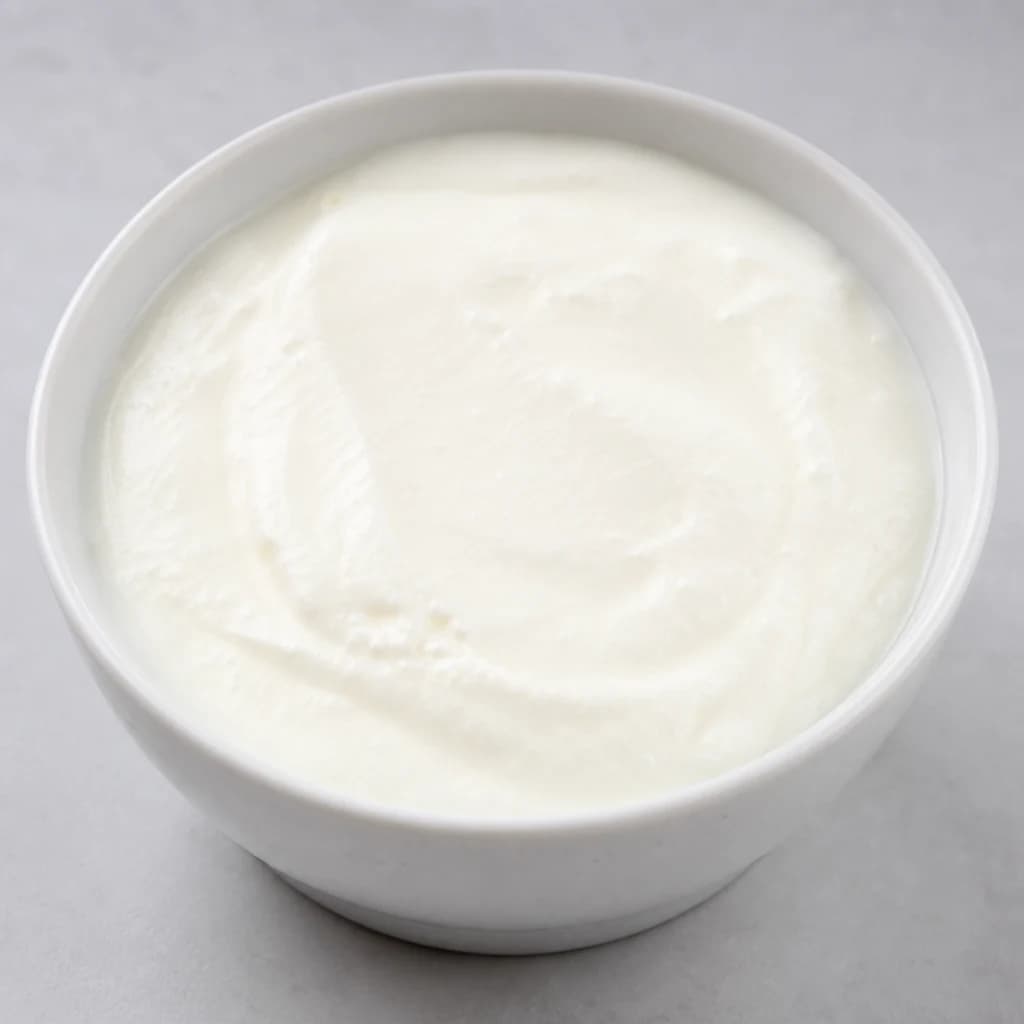
Yogurt
Tangy, creamy culture for breakfast, sauces, and marinades
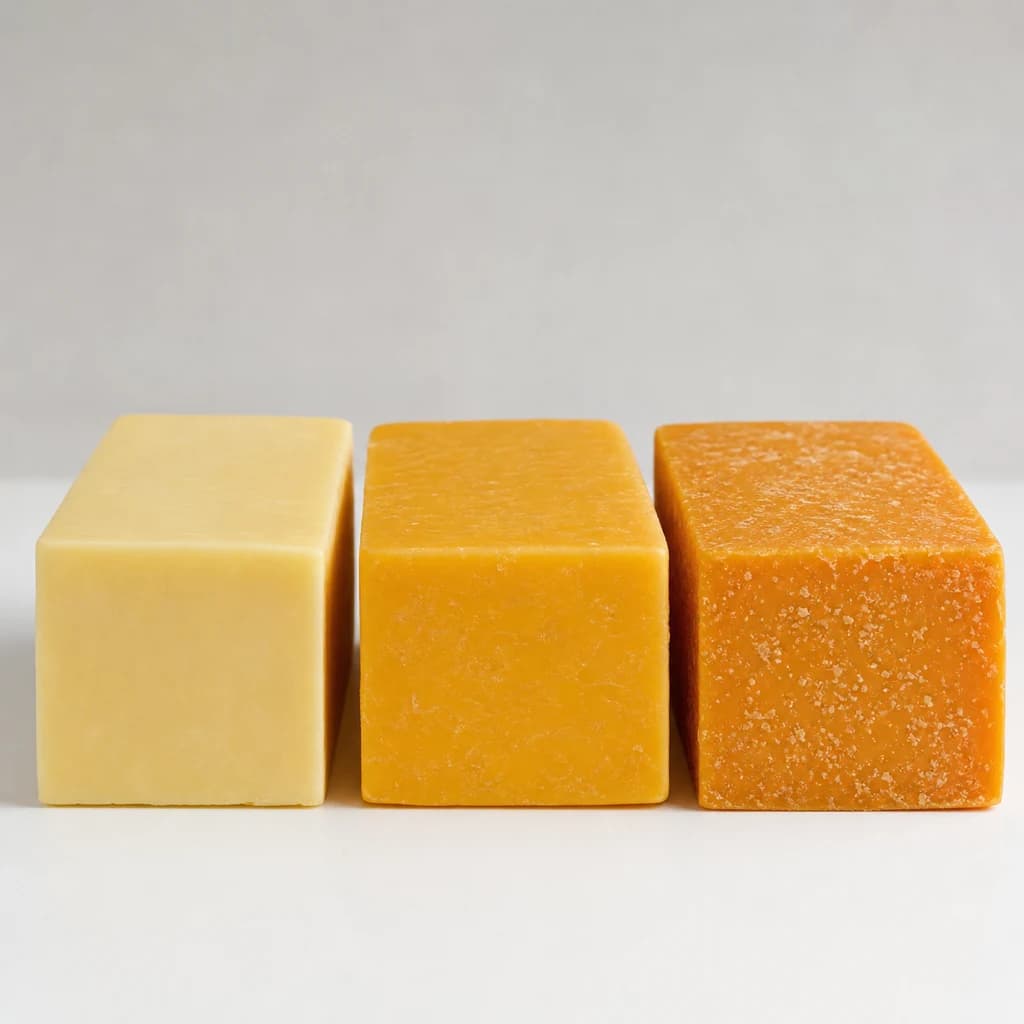
Cheddar Cheese
Sharp, melty cheese for sandwiches, gratins, and grating

Skim Milk
Fat-free milk for lighter drinking, coffee, and cooking
Heavy Cream
Rich cream that whips, enriches sauces, and sets ganache

Sour Cream
Tangy, thick cream for dolloping, baking, and dips
Mozzarella
Soft, milky cheese that melts into stretchy pizza pulls