Dairy & Eggs
Reblochon
A soft washed-rind Alpine cheese that melts to a silky, pungent ooze; the heart of tartiflette and any dish wanting rich, gooey nuttiness.
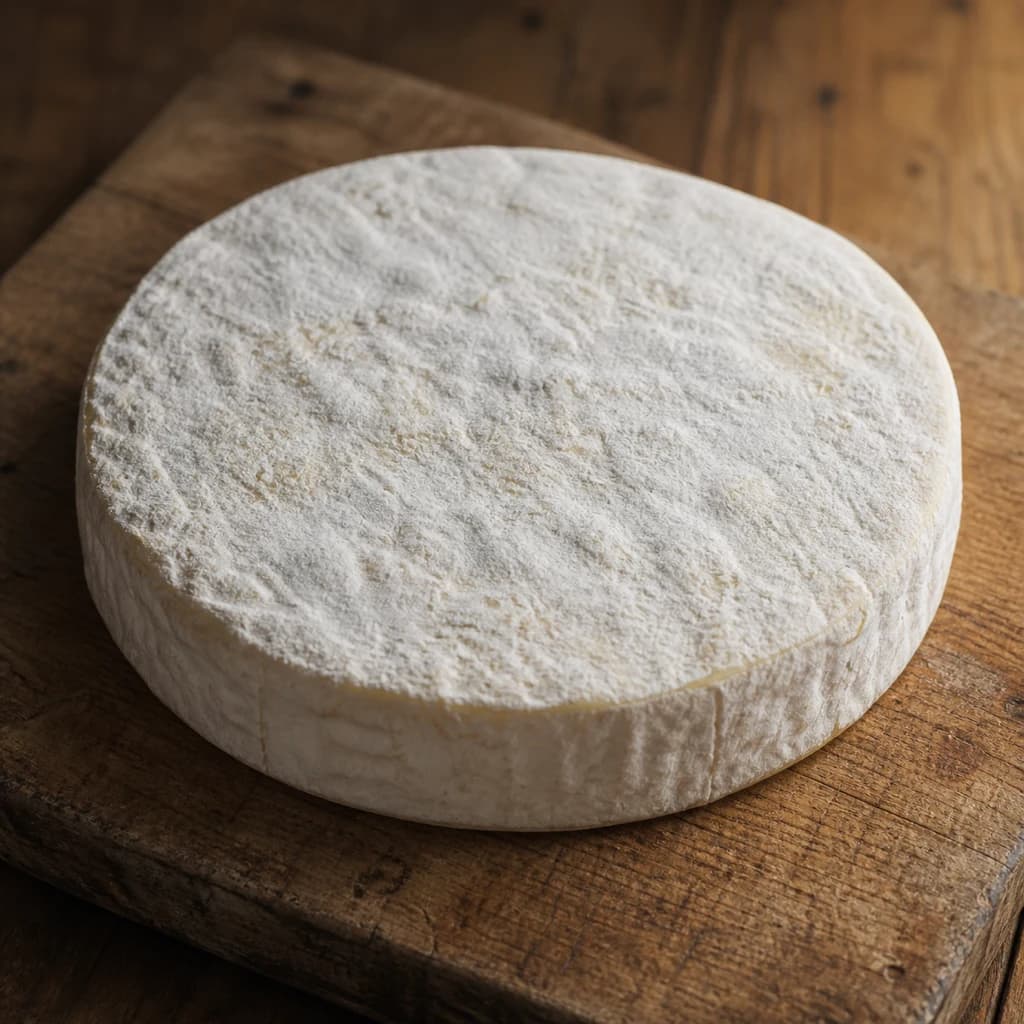
Reblochon is a soft, washed-rind cow's milk cheese from the French Alps, made in Haute-Savoie and the adjoining Savoie and Ain departments. Under its AOP seal, the milk must come raw from the Tarine, Abondance, or Montbéliarde breeds and the cheese aged within a defined zone of mountain dairies. The standard disc is roughly 14 cm across and 450–500 g — a small, dense wheel with a thin, damp, orange-pink rind and a supple ivory paste that yields gently when pressed.
The cheese is famously misunderstood on first encounter: the rind smells like a barnyard, the paste tastes of hazelnut and fresh butter. That gap between nose and palate is the first thing a cook should learn to read, because it tells you whether the wheel is young and milky or properly aged and complex. When heated, Reblochon does not stretch like mozzarella; it slumps. The fat and moisture separate cleanly into a silky, almost fluid layer that pools over whatever it is baked with — which is exactly the texture that defines tartiflette and the warm, whole-wheel starter known as Reblochon chaud.
Beyond those two signature dishes, Reblochon is one of the most useful melting cheeses in any Alpine cook's repertoire, equally happy folded into a gratin, slipped under the skin of a chicken breast, or simply rested at room temperature and eaten on bread. The protected name covers a real spectrum, from mild, cooperative wheels to pungent, single-farm fermier versions and the deeply herbaceous summer alpage cheeses that show the breed, the grass, and the season on the tongue.
- Measured in
- g
- Storage
- Wrapped & Refrigerated
Allergens
Find it in
Suits
Types & varieties
Farmhouse version; smaller wheels, more complex and pungent flavor, often from a single herd
Dairy or cooperative version; slightly milder and more consistent, broader availability
The legally protected name — raw milk from named Alpine breeds, produced within the defined zone
Summer wheels from cows on high-altitude pasture; deeper yellow paste, more herbaceous and assertive
Reading a Wheel at the Shop
A good Reblochon teaches you to trust the paste, not the nose. The rind is washed and pungent — that barnyard smell is normal and does not signal spoilage. Press the side of the wheel with your thumb: a properly aged disc gives slightly and feels heavy for its size, with a thin, even rind that is damp but not weeping, and a paste that is creamy from edge to center rather than chalky in the middle. A young wheel is fine for the cheese board; an older fermier wheel, slightly slumped at the edges with a deeper yellow paste, is what you want for baking whole or for the most assertive tartiflette. For general cooking, choose a laitier wheel in the middle of its sell-by window — nutty, soft, and reliable.
The Two Signature Dishes
Two preparations define Reblochon in Alpine cooking and are worth learning before any other use.
- Reblochon chaud (baked whole wheel): Score the top of the wheel in a cross, splash with a shot of dry white wine or marc de Savoie, and bake at 200°C/400°F for 15–20 minutes until slumped. Serve at once with boiled potatoes or country bread, and a spoon for the molten interior.
- Tartiflette: Layer sliced waxy potatoes, pre-cooked lardons, and onions in a gratin dish, season with salt and pepper, and splash in a little dry white wine. Place a whole Reblochon on top — the bottom rind acts as a natural crust, while the top rind is scored or scraped off so the paste can ooze into the potatoes. Bake until slumped, typically 25–30 minutes.
Common uses
Tips & pitfalls
- For tartiflette, leave the bottom rind on (it acts as a natural dish) but scrape or remove the top rind so the cheese melts into the potatoes rather than sitting as a skin.
- Let the wheel rest at room temperature 30–60 minutes before cooking; cheese straight from the fridge melts unevenly and tends to grease out.
- Score the top rind in a cross or grid before baking so the paste can ooze upward rather than bursting the wheel from below.
- Pair with potatoes that hold their shape — Ratte, Charlotte, BF 15, or Yukon Gold. Waxy, not floury, so they soak up the cheese without turning to mush.
- Don't over-bake: the cheese should be molten and slumped, not browned and crusty, or it turns rubbery and the fat separates.
- Whole baked Reblochon needs only 15–20 minutes in a hot oven with a splash of white wine; serve at once, since it firms up quickly as it cools.
- Store wrapped in parchment inside a partially closed container — never airtight plastic, which suffocates the rind and mutes flavor.
- Use a wheel a few days before its best-before date for maximum nutty depth on a cheese board; for cooking, slightly younger is more forgiving.
Nutrition
Energy
1628 kJ · per 100 g
Where the calories come from
Protein
25.6g
51% DV
Carbs
1.6g
1% DV
Fat
31.1g
40% DV
Fiber
0g
0% DV
Sugars
1.6g
of which
Sodium
800mg
35% DV
Source · USDA FoodData Central · approx. Cheese, fontina
View on FDC →In the shops
Matched grocery products
No matched grocery products for Reblochon yet.
Good to know
- Origin
- Haute-Savoie, French Alps — the Thônes valley and surrounding Savoie and Ain departments
- Protection
- AOC since 1958, AOP at EU level since 1996; the protected standard is the raw-milk version
- Milk
- Raw cow's milk from Tarine, Abondance, or Montbéliarde breeds grazing Alpine pasture
- Style
- Soft washed-rind (smeared) cheese with a supple ivory paste
- Wheel size
- Standard disc ~14 cm diameter, 3–4 cm thick, 450–500 g; a larger ~6 kg cutting format also exists
- Affinage
- Roughly 3–4 weeks; longer for the more pungent fermier wheels
- Fat content
- About 45% in dry matter (~28% fat i.q.f.)
- Etymology
- From Franco-Provençal 'reblocher' — to milk a second time, after the lord's first pass
Substitutes
- Raclette — The closest melting match; less aromatic but provides the same gooey texture in tartiflette
- Saint-Marcellin — Similar creamy melt but milder and without the washed-rind pungency; fine for gratins
- Tomme de Savoie — Same regional identity; softer and less smelly, works in cooked dishes but less iconic
- Vacherin Fribourgeois / Mont d'Or — Piney, soft, and runny — a luxurious substitute for baked whole-wheel preparations
- Pont-l'Évêque — Norman washed-rind with comparable richness; firmer, so grate rather than slice
- Fontina — Smooth, nutty melt; lacks the rind pungency but works well in fondues and gratins
- Oka — Canadian washed-rind semi-soft often cited as a North American stand-in
Pairs with
Also called
reblochon de savoie · reblochon cheese