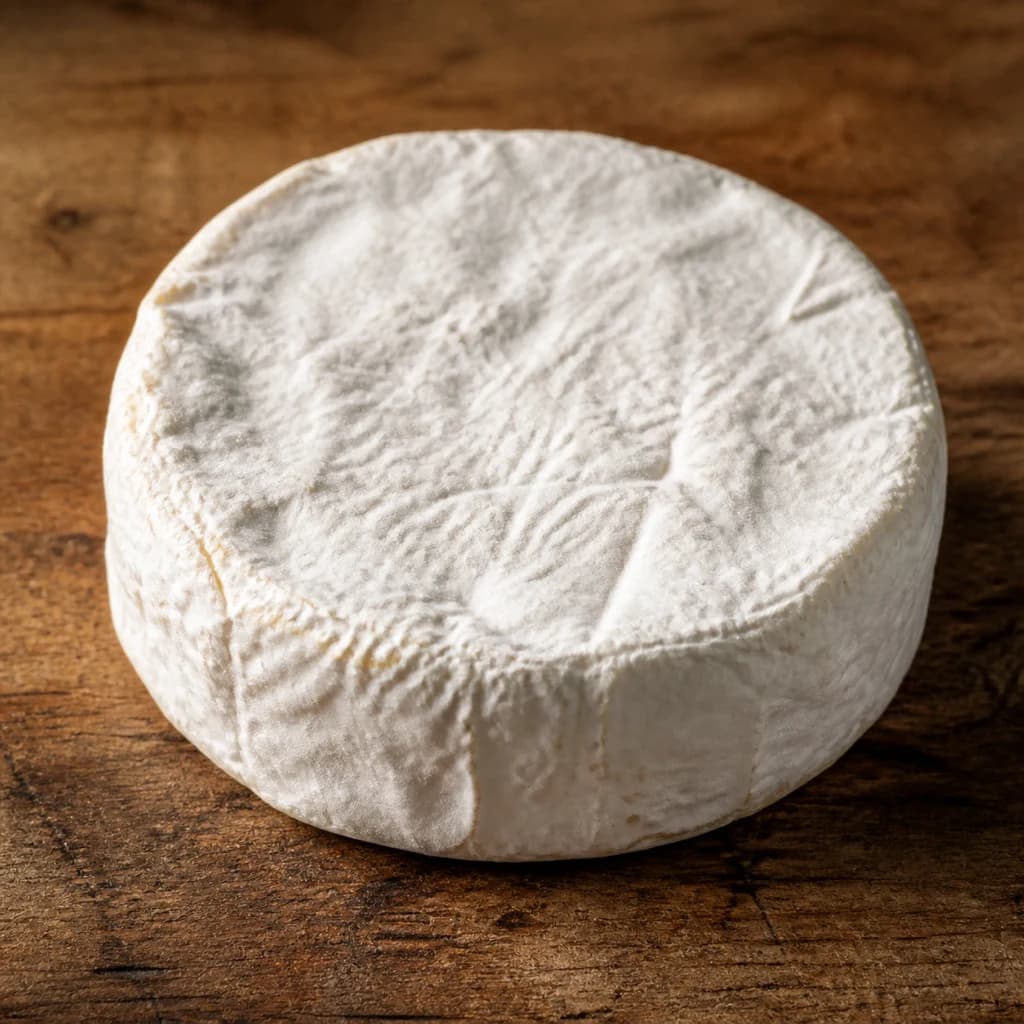
Natural form
A whole Camembert wheel shows its characteristic white bloomy rind before cutting.
Establishes the cheese's recognizable round shape, size, and downy white Penicillium rind that defines it at point of purchase.
Dairy & Eggs
Camembert
Soft French bloomy-rind cow's cheese that turns gooey and earthy as it ripens.
Camembert is a soft, surface-ripened cow's-milk cheese from Normandy with a white bloomy rind and a creamy, buttery interior that grows runny and pungent as it matures. It is served at room temperature on cheese boards, baked whole until molten, or melted into sauces. Its earthy, mushroomy aroma comes from the Penicillium mold that ripens it from the outside in.
Camembert is a soft, surface-ripened cow's milk cheese from Normandy, France, first produced in the late 18th century. Its defining characteristic is the interior-to-exterior ripening gradient created by its bloomy white rind, spray-coated with Penicillium camemberti. This Penicillium culture neutralizes acidity and facilitates proteolysis, with enzymes breaking down the cheese from the outside in and producing the signature runny core while the exterior remains intact. As the cheese ages over 3–5 weeks, enzymes transform the texture from firm and uniform to a liquid center surrounded by a yielding, edible rind—creating the characteristic gooey, earthy experience that makes Camembert unmistakable.
The distinction between industrial and farmhouse production matters enormously to the eating experience. Industrial Camembert (Camembert Industriel), made from pasteurized milk and accounting for the majority of global production, offers consistency and shelf stability but lacks complexity. True farmhouse versions—Camembert Fermier, hand-ladled and aged on the farm—develop far more nuanced ammonia and mushroom notes, with traditional production methods contributing layers that industrial processes erase. The protected Camembert de Normandie AOP designation (1983) requires both raw milk and specific Norman origin, delivering the most complex expression of the style. The traditional wooden box is not mere decoration: it absorbs excess moisture while allowing the cheese to breathe, maintaining proper rind development and preventing the off-flavors that develop in sealed plastic.
- Measured in
- g
- Storage
- Fridge
Allergens
Types & varieties
Protected designation; raw milk from Normande cows in Normandy. Most complex, pungent flavor—seek this for authentic expression.
Farmhouse-produced; traditionally unpasteurized milk, hand-ladled into molds. Stronger, more variable flavor profiles with greater depth than industrial versions.
Factory-produced; pasteurized milk. Milder, more consistent flavor. Accounts for majority of global production and most supermarket offerings.
Camembert laced with Calvados apple brandy, often with apple pieces. Sold as a specialty; the spirit amplifies Norman's apple-cheese affinity.
Understanding Ripeness
Camembert ripens from the outside inward, which means the exterior will always be softer and more pungent than the center—until the cheese is fully ripe, when the entire wheel yields to pressure like a stress ball. The exterior rind develops ammonia compounds and earthy, mushroomy notes first, while the interior remains firm and relatively mild. A properly ripe Camembert has a fluid-to-paste center that oozes when opened, with an aroma that is earthy, mushroomy, and slightly ammonia-accented. If there is no smell at all, the cheese is underripe. If the smell is pure ammonia with no other complexity, it is past its peak.
- Test ripeness by pressing gently near the rind: ripe Camembert yields without resistance
- The center should feel fluid when the wheel is gently tilted
- Underripe cheese feels solid throughout; overripe cheese smells only of ammonia
- Riper cheeses are softer and more pungent—adjust purchases accordingly
Baked Camembert Technique
Baked Camembert is a foolproof crowd-pleaser that showcases the cheese's gooey potential. Score the top rind in a cross or grid pattern without cutting through to the sides—this allows heat penetration while maintaining the cheese's structure. Add aromatics to the cuts: thin garlic slices, fresh thyme sprigs, cracked pepper, or a drizzle of honey work well. Bake at 180°C (350°F) in a small oven-safe dish for 15–20 minutes until bubbling and puffed. The rind will hold together as an edible vessel. Serve immediately with bread for dipping—timing matters, as the cheese will firm as it cools.
- Score deeply but not through the sides—preserve the containment structure
- Room-temperature cheese bakes more evenly than cold; rest 30 minutes before baking
- Add accompaniments into the scored cuts for flavor infusion
- Serve immediately in the baking dish; set it on a trivet or board for the table
- Do not attempt to remove the rind—it is edible and structurally necessary
Common uses
Tips & pitfalls
- Test ripeness by gentle thumb pressure: ripe Camembert yields to pressure without resistance, and the center feels fluid when the wheel is tilted; underripe cheese feels solid throughout
- Never serve cold from the refrigerator; 30–60 minutes at room temperature transforms texture and releases aroma compounds that remain locked when chilled
- Store in the original wooden box if present; otherwise wrap loosely in wax paper then place in a slightly open plastic bag—tight plastic causes sweating and off-flavors
- Smell before buying: genuine ripe Camembert has earthy, mushroomy, slightly ammonia-accented aroma; no smell indicates underripe; strong ammonia alone means overripe
- The rind is fully edible and provides textural contrast—serve it intact rather than scraping it off
- Avoid pre-packaged, sealed plastic containers from grocery stores: these cheeses are perpetually underripe and lack the flavor complexity that defines the style
- When baking, do not remove the rind entirely—scoring allows heat penetration while maintaining shape and creating an edible serving vessel
- Purchase from cheese shops or fromageries where turnover is high; the best Camembert is often found at specialty retailers with active sales, not sealed supermarket packages
Nutrition
Energy
1255 kJ · per 100 g
Where the calories come from
Protein
19.8g
40% DV
Carbs
0.5g
0% DV
Fat
24.3g
31% DV
Fiber
0g
0% DV
Sugars
0.5g
of which
Sodium
842mg
37% DV
Source · USDA FoodData Central · Cheese, camembert
View on FDC →In the shops
Matched grocery products
No matched grocery products for Camembert yet.
Good to know
- Origin
- Normandy, France, late 18th century (legend credits Marie Harel of Cambremer)
- Milk
- Cow's milk, typically whole (45-50% fat in dry matter)
- Rind
- White, bloomy, spray-coated with Penicillium camemberti; fully edible
- Ripening
- Exterior to interior; starts firm, develops runny center over 3–5 weeks
- Standard Size
- 250g wheels (~10–11cm diameter)
- AOC/AOP
- Camembert de Normandie (since 1983) requires raw milk and specific region
- Serving Temperature
- 18–20°C (64–68°F); never straight from refrigerator
- Storage
- Original box or wax paper; consume within 1–2 weeks
Substitutes
- Brie de Meaux — Similar bloomy-rind cow's cheese; milder and slightly larger wheels. Less earthy, more buttery. Use equal amounts as a substitute.
- Pont-l'Évêque — Norman soft cheese with washed rind rather than bloomy; stronger flavor, more pungent. One of Camembert's historical Norman neighbors.
- Münster — Strong-smelling washed-rind cheese; not a close textural match but shares regional spirit and intensity. Reduce quantity due to stronger flavor.
- Explorateur — Double or triple-cream Normand cheese; richer, less earthy, but similar texture and origin. Good substitute for baking or serving.
Pairs with
Also called
Hermelín (Camembert-style) · Camembert Cheese
Appears in these dishes

Related

Whole Milk
Rich, full-fat milk for drinking, coffee, sauces, and baking
Butter
Golden fat for searing, baking, and finishing a sauce
Yogurt
Tangy, creamy culture for breakfast, sauces, and marinades
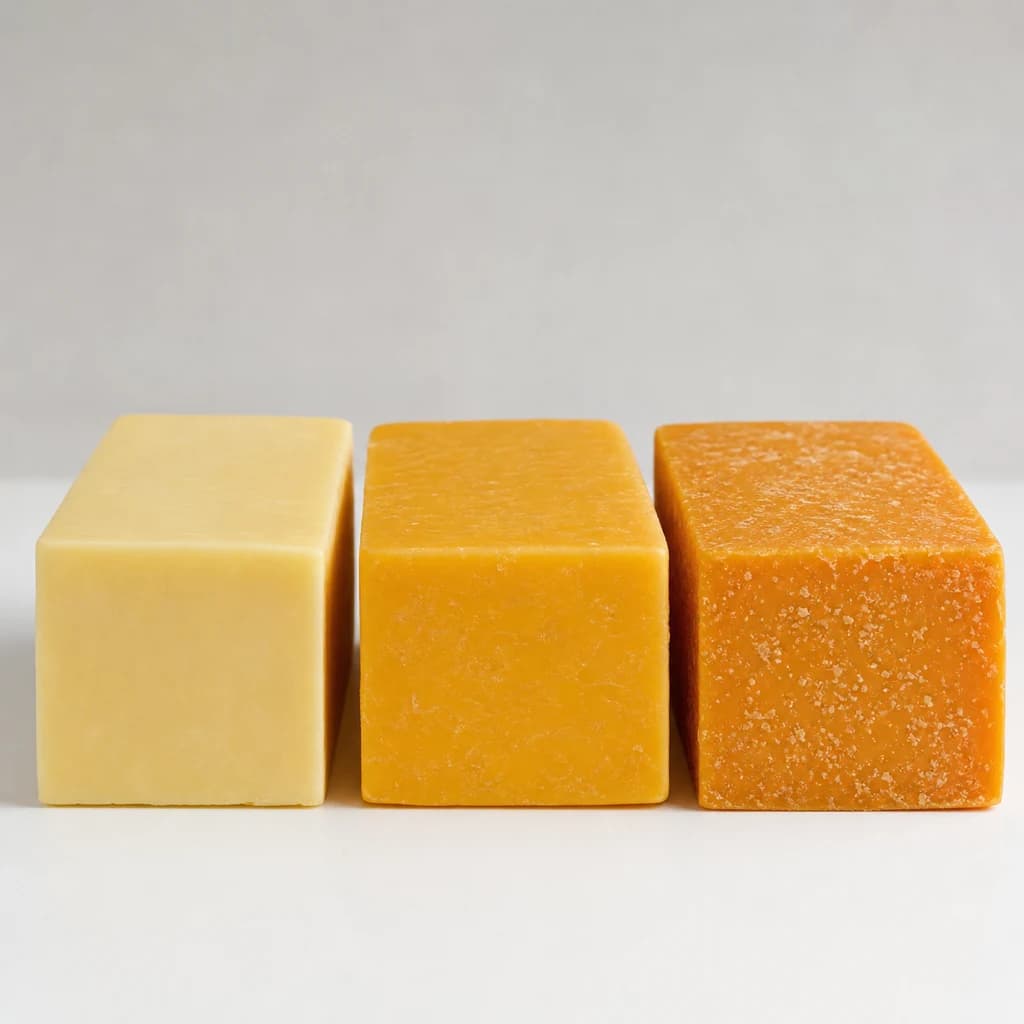
Cheddar Cheese
Sharp, melty cheese for sandwiches, gratins, and grating
Skim Milk
Fat-free milk for lighter drinking, coffee, and cooking
Heavy Cream
Rich cream that whips, enriches sauces, and sets ganache

Sour Cream
Tangy, thick cream for dolloping, baking, and dips
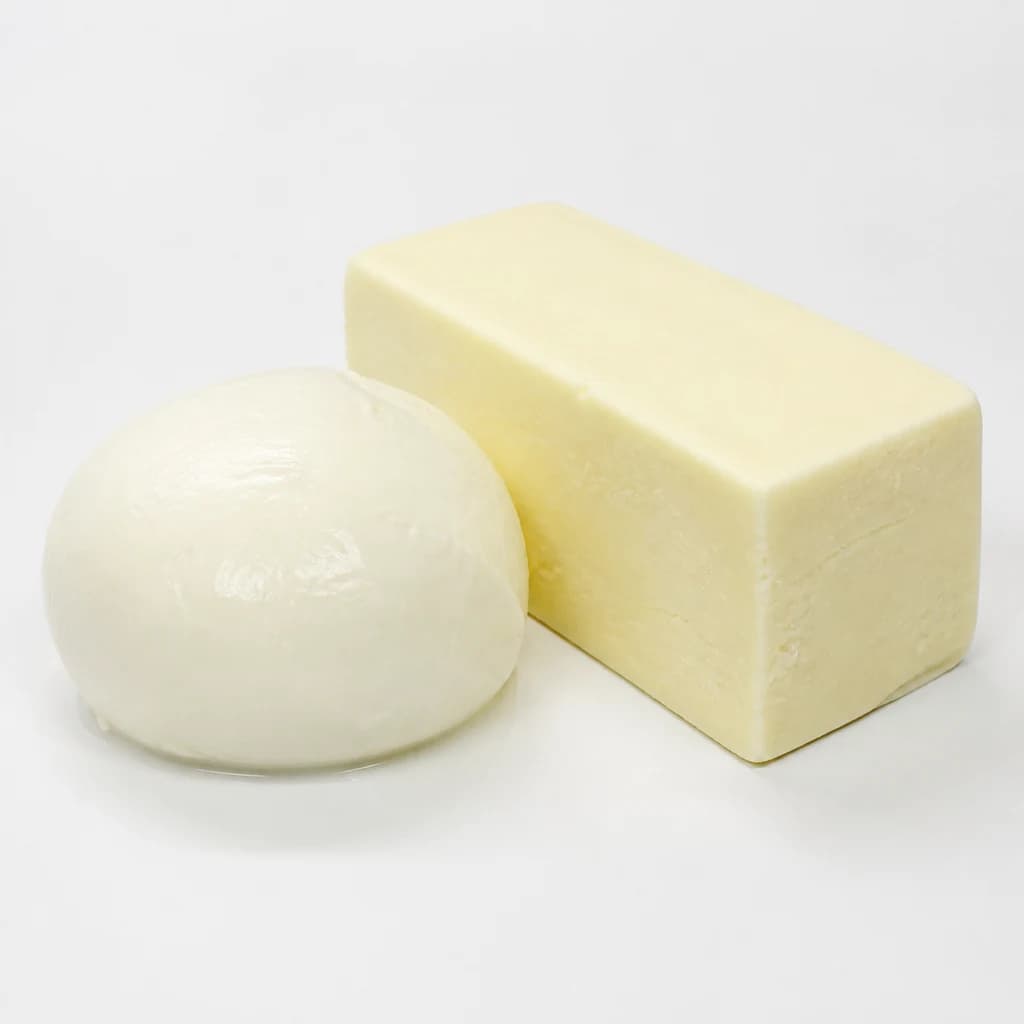
Mozzarella
Soft, milky cheese that melts into stretchy pizza pulls