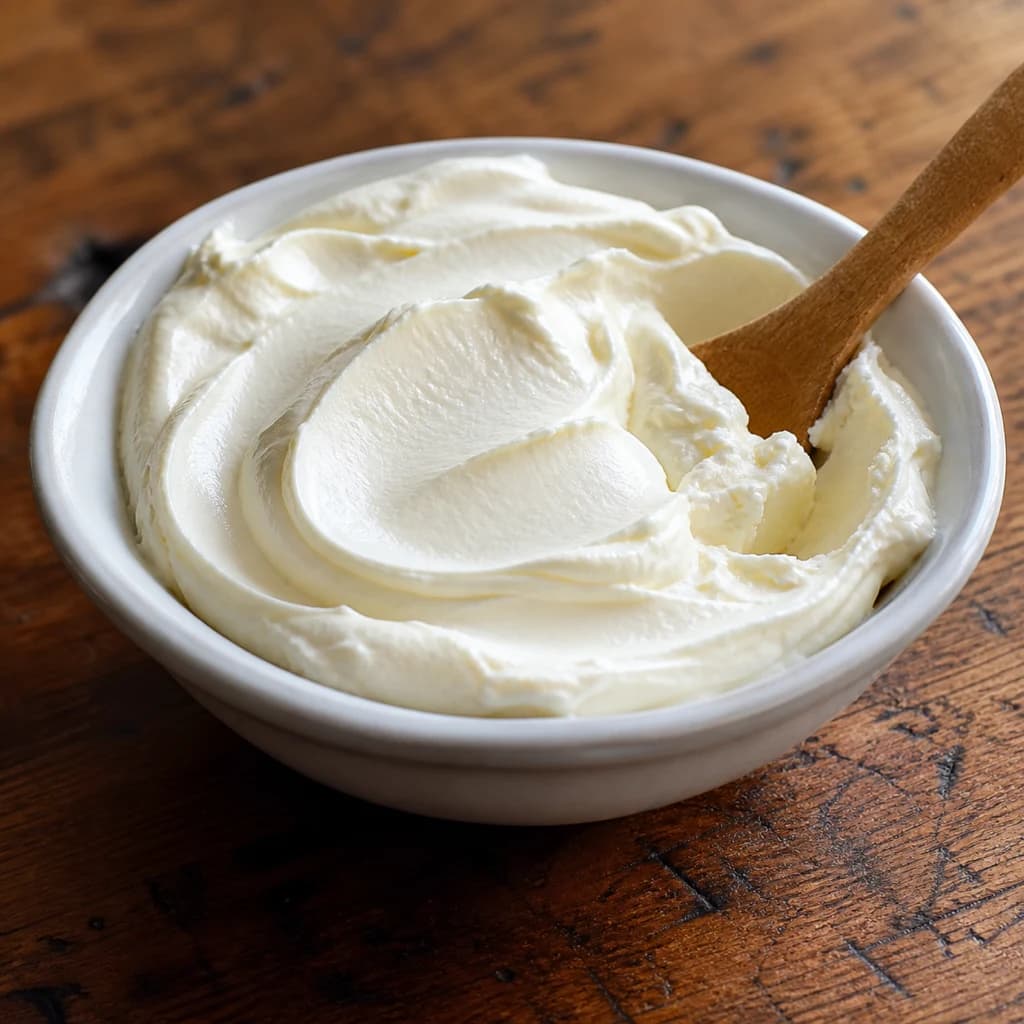
Natural form
Freshly opened mascarpone: a dense, ivory-white mass with a smooth, glossy surface.
Shows the cheese's characteristic color, ultra-smooth spreadable texture, and pure cream appearance that distinguishes it from other soft cheeses.
Dairy & Eggs
Mascarpone
Ultra-creamy Italian cream cheese, mild and slightly sweet; the heart of tiramisu and rich desserts.
Mascarpone is a soft, very rich Italian cheese made by thickening cream with acid, yielding a smooth, spreadable texture. Its mild, faintly sweet flavor makes it essential to tiramisu and other desserts, and it enriches risotto and sauces. With a high fat content it is closer to a thick cream than a traditional cheese.
Mascarpone is a fresh, Italian cream cheese distinguished by its extraordinarily high fat content—typically 40–50%—which gives it the lush, spreadable consistency that sets it apart from other soft cheeses. Unlike aged cheeses, it is a fresh, unripened product; it is made by acid-coagulating heavy cream with citric or acetic acid, a process that thickens rather than cultures the dairy. The result is a spreadable, buttery product with a mildly sweet flavor, a delicate tang, and an ivory-to-pale-cream color. Originally from the Lombardy region in northern Italy, it has become indispensable in Italian dessert-making precisely because it delivers richness without pronounced flavor—a blank canvas that absorbs and amplifies whatever it is paired with.
The high fat content is what makes mascarpone essential in its signature applications. In tiramisu, it provides the creamy binding that holds espresso-soaked ladyfingers together without becoming dense or heavy. In no-bake cheesecakes and frostings, it delivers silkiness without the tanginess of cream cheese. When stirred into hot risotto or pasta sauces off the heat, it creates a velvety emulsion that clings to every grain and noodle. The fat also means that mascarpone will break and separate under direct high heat or if overmixed, so understanding its behavior is key to using it successfully.
Because mascarpone has no legal standard of identity in most countries, quality varies considerably between brands. Traditional Italian production uses only cream and acid; commercial versions may include milk solids or different coagulation agents. Reduced-fat versions are widely available but are not recommended: they lose the signature richness and tend to become grainy, defeating the purpose of using mascarpone in the first place.
- Measured in
- g
- Storage
- Fridge
Allergens
Types & varieties
Widely available; consistent quality and standardized texture across batches
Slightly tangier profile; sometimes made with marginally lower fat content
Traditional methods from small producers; limited availability outside Italy
Not recommended — loses signature richness and may turn grainy
Buying and Storing Mascarpone
Mascarpone is perishable and degrades quickly once opened. Buy from refrigerated cases and check the best-by date. The texture should be thick but spreadable, not runny or gritty. If liquid pools on the surface of an opened container, do not discard the cheese—blot the liquid away with paper towels before using. The fat content means it absorbs odors easily; store it in its original container or wrap tightly. Freezing is possible but not ideal: thaw overnight in the refrigerator and stir to restore smoothness, though some separation is inevitable.
- Look for short ingredient lists (cream, citric or lactic acid) for a straightforward product
- Avoid reduced-fat versions — the missing fat cannot be replicated in cooking
- Sealed containers keep 2–4 weeks refrigerated; use opened containers within 3–5 days
- Freezing is possible but may result in grainy texture after thawing
The Role in Tiramisu
Mascarpone is not interchangeable in tiramisu. The high fat content creates an emulsion that binds the espresso-soaked ladyfingers without making them soggy, while the mild flavor lets coffee and cocoa dominate. When whisked with egg yolks and sugar for tiramisu filling, the goal is a smooth, cohesive mixture—not a voluminous one. Whisk just until combined; overworking introduces air that collapses during setting, leading to a loose, weeping dessert. The finished tiramisu should tremble slightly when served, not pool liquid on the plate.
- Room temperature mascarpone blends more smoothly with egg yolk and sugar
- Do not substitute cream cheese — the tanginess will overpower the espresso
- Let assembled tiramisu rest refrigerated for at least 4 hours, preferably overnight, before slicing
Common uses
Tips & pitfalls
- Always bring to room temperature before mixing — cold mascarpone incorporates poorly and stays chunky in sauces or batters
- Stir before scooping — the serum often separates to the surface during cold storage
- Fold gently into whipped cream or aerated bases — overworking deflates the mixture and can make it grainy
- For tiramisu, whisk mascarpone with egg yolks and sugar until just smooth; do not whisk aggressively or the mixture will become loose
- When using in hot applications (risotto, sauces), add off heat and stir gently; direct heat causes the fat to separate and curdle
- Season lightly — the cheese is mild and can taste flat without a pinch of salt or a squeeze of lemon juice
- Unlike ricotta, mascarpone needs no draining; use it straight from the container unless a recipe specifies otherwise
- To prevent cheesecake filling from weeping, allow it to set fully before slicing and serve well chilled
- If the surface looks wet when you open a container, blot it dry with a paper towel before using
Nutrition
Energy
1464 kJ · per 100 g
Where the calories come from
Protein
6.2g
12% DV
Carbs
5.5g
2% DV
Fat
34.4g
44% DV
Fiber
0g
0% DV
Sugars
3.8g
of which
Sodium
314mg
14% DV
Source · USDA FoodData Central · approx. Cheese, cream
View on FDC →In the shops
Matched grocery products
No matched grocery products for Mascarpone yet.
Good to know
- Origin
- Lombardy region, northern Italy, circa 17th century
- Made from
- Heavy cream (not milk), acid-coagulated with citric or acetic acid
- Fat content
- 40–50% — higher than most cheeses, the defining characteristic
- Appearance
- Ivory to pale cream; soft, spreadable, buttery consistency
- Flavor
- Mildly sweet and buttery with a delicate, subtle tang on the finish
- Shelf life (sealed)
- Refrigerate; 2–4 weeks, check best-by date
- Shelf life (opened)
- 3–5 days; pat dry any liquid that separates to the surface
- Common formats
- 250g (8.8 oz) containers or 500g (1 lb) tubs
Substitutes
- Cream cheese + heavy cream — Blend 8 oz cream cheese with 1/4 cup heavy cream until smooth. Closest in texture but will be tangier; works for frostings and cheesecakes.
- Crème fraîche — Similar richness and slight tang, but slightly thinner in consistency. Acceptable for sauces, soups, and garnishes.
- Ricotta (well-drained) — Much leaner and grainier; not a direct swap in desserts. May work in savory contexts where texture difference is acceptable.
- Double cream (UK) — Softer texture than mascarpone; acceptable for sauces and soups but not for structured fillings or frostings.
Pairs with
Also called
Italian Cream Cheese
Appears in these dishes

Related

Whole Milk
Rich, full-fat milk for drinking, coffee, sauces, and baking
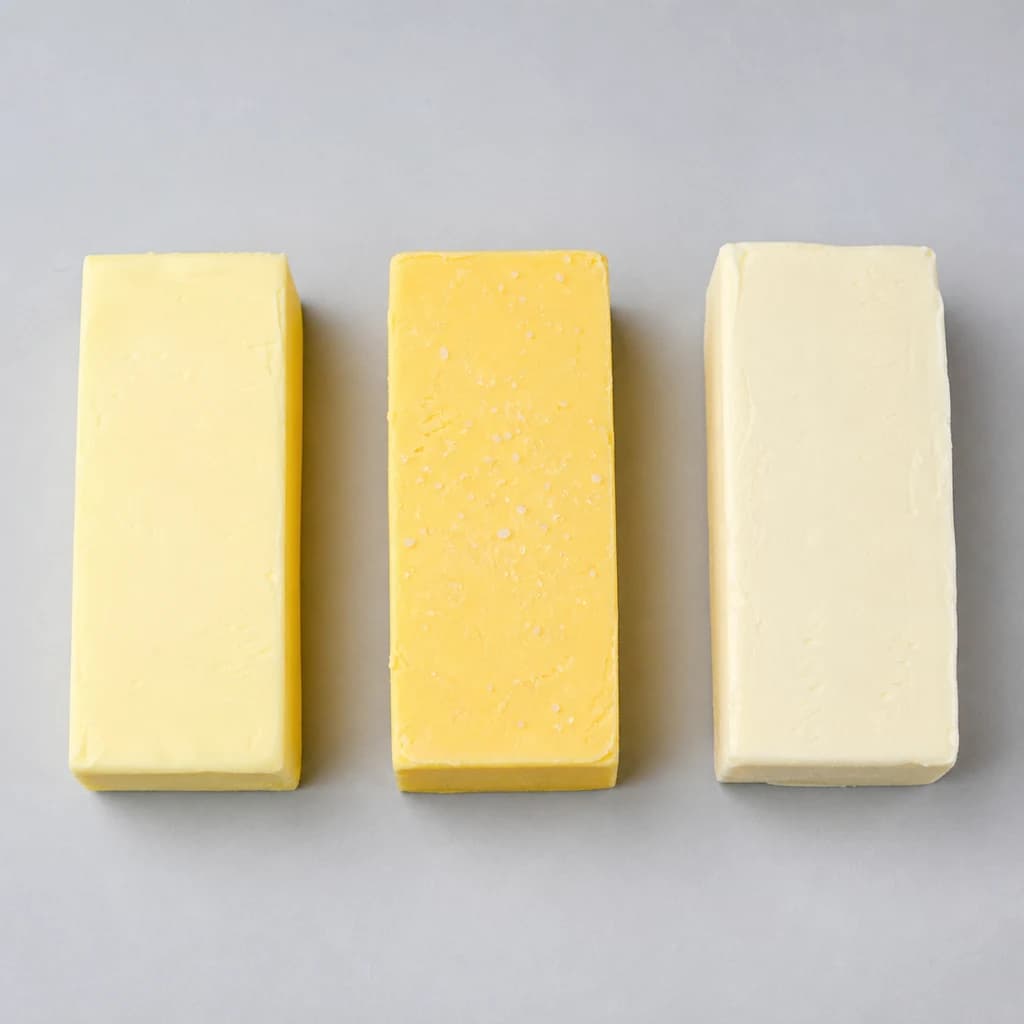
Butter
Golden fat for searing, baking, and finishing a sauce
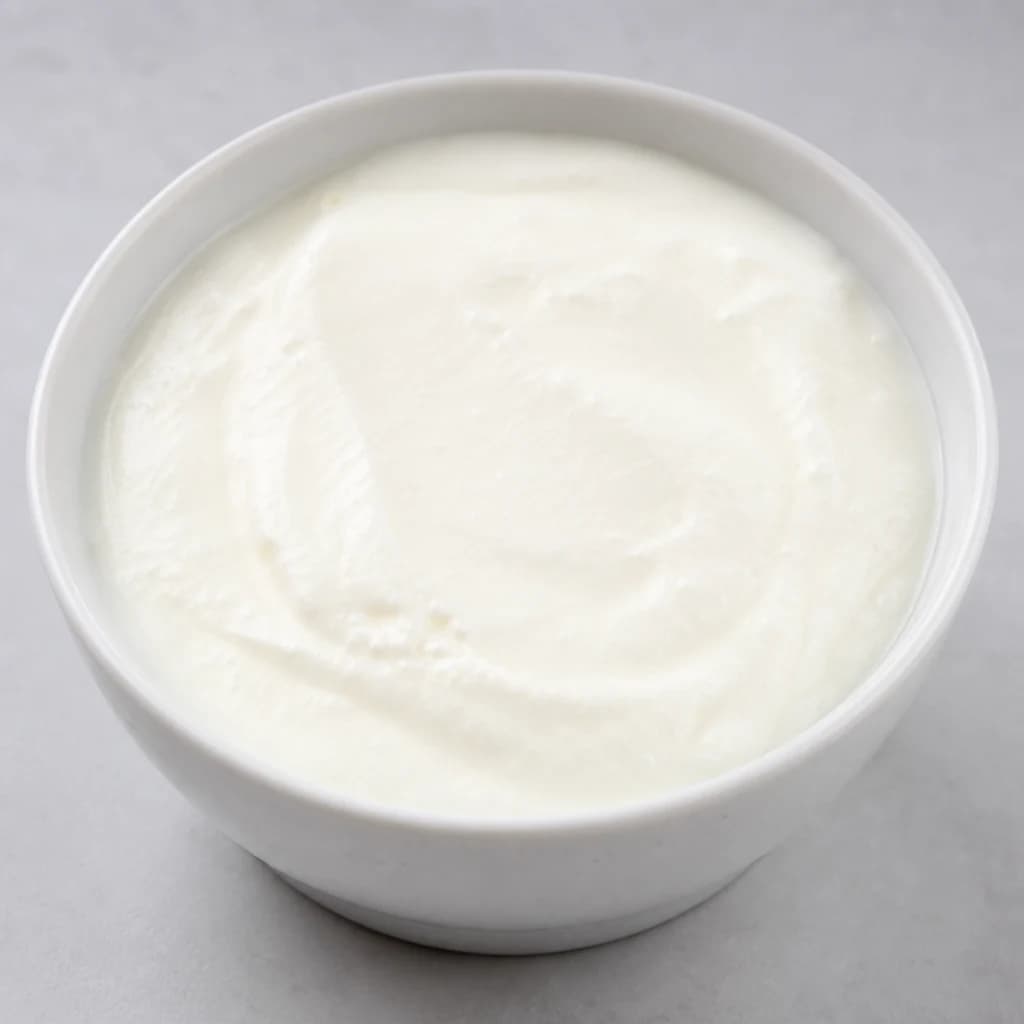
Yogurt
Tangy, creamy culture for breakfast, sauces, and marinades
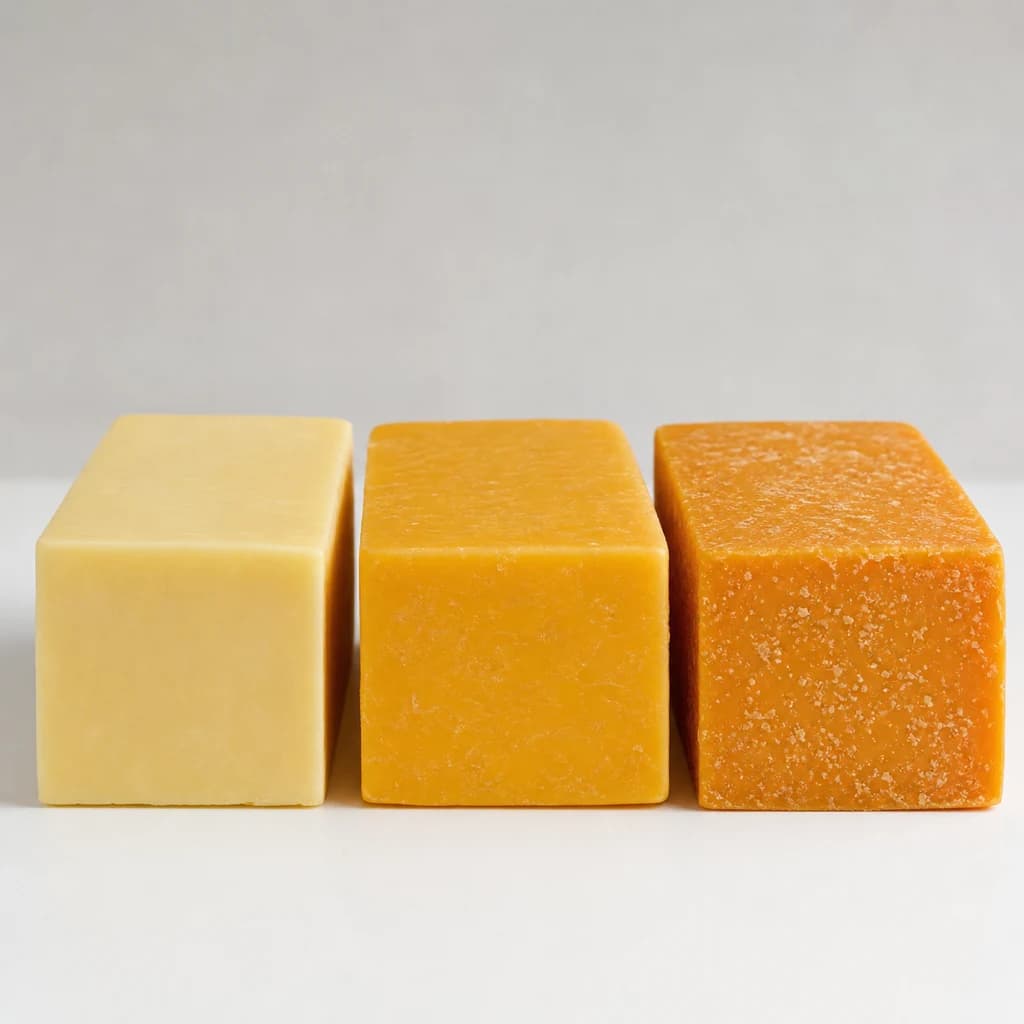
Cheddar Cheese
Sharp, melty cheese for sandwiches, gratins, and grating
Skim Milk
Fat-free milk for lighter drinking, coffee, and cooking
Heavy Cream
Rich cream that whips, enriches sauces, and sets ganache

Sour Cream
Tangy, thick cream for dolloping, baking, and dips
Mozzarella
Soft, milky cheese that melts into stretchy pizza pulls