Proteins
Saucisson Sec
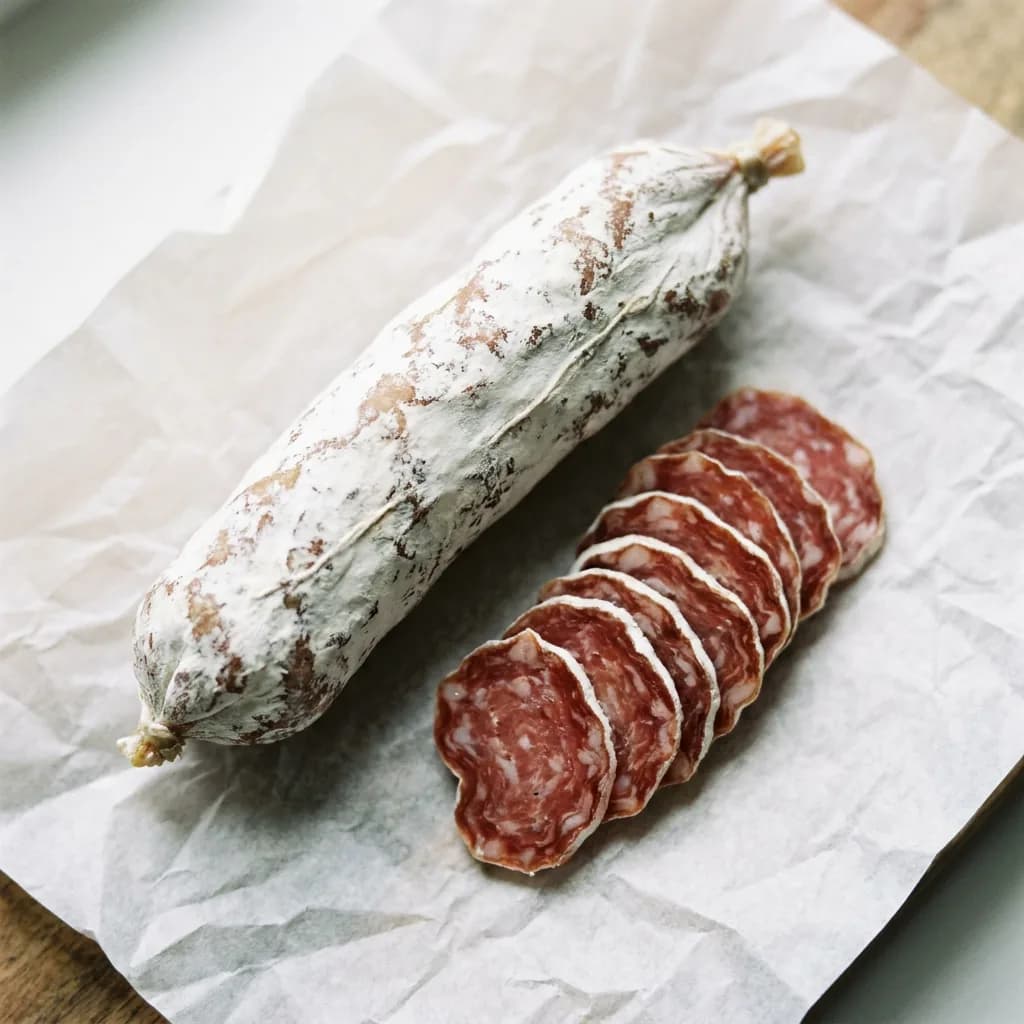
French air-dried cured pork salami sliced thin for charcuterie boards.
Saucisson sec is a French dry-cured sausage made from coarsely ground pork seasoned with garlic, pepper and spices, then air-dried. It is sliced thin and eaten as charcuterie with bread, cornichons and wine. Similar in style to Italian soppressata, it has a firm bite and deep, fermented savor.
Saucisson sec is the generic French term for air-dried, cured pork sausage — a category rather than a single recipe, covering everything from a pepper-crusted Provençal stick to a pistachio-studded Montélimar. The format dates to a pre-refrigeration era when salt, fermentation, and slow drying were the only ways to keep pork through winter. The result is a dense, sliceable sausage with a taut natural casing, a dry, slightly waxy interior, and a flavor that runs from quietly peppery and garlicky to richly nutty depending on the region's tradition.
What defines a good saucisson sec is the balance between lean pork shoulder and belly fat (usually around 70/30), a brief fermentation to drop the pH, and a long, cool drying phase that concentrates flavor and firms the texture. The fat is the point — when tempered to room temperature, it softens and carries the aromatics of garlic, pepper, and any wine or herbs the maker used. Served cold from the fridge, the same sausage can taste muted and waxy; served at 16–20°C, the fat loosens, the spices bloom, and the difference is immediate.
Practically, saucisson sec is a workhorse of the French pantry: the anchor of a charcuterie board, the filling of a buttered baguette, the protein on a composed salad. It rewards a few habits — buying whole and cutting to order, tempering before slicing, and pairing its salt-fat richness with acid, crunch, and a slightly sweet or funky counterpoint. Get those right, and a plain slice of saucisson on bread is one of the great simple pleasures of French eating.
- Measured in
- g
- Storage
- Fridge
Types & varieties
The benchmark: finely ground pork with pork fat, pepper, and a touch of wine; large diameter (8+ cm) and long drying for a refined, balanced flavor.
Provençal style rolled in cracked black pepper; smaller, denser, and assertively peppery.
Studded with pistachios; rich, slightly sweet, the French cousin of mortadella's pistachio tradition.
Robust country-style from the Massif Central, often simply seasoned with salt, pepper, and garlic.
Smaller format from Île-de-France with a dense texture, traditionally eaten sliced on bread with butter.
Garlic-forward version common across southern France; aromatic and pungent.
Jura tradition made in smaller links with a darker, more concentrated flavor.
Coated or studded with whole black, white, or mixed peppercorns for a bold, peppery bite.
Cold-smoked version (Morteau-style) from Franche-Comté; different texture and a resinous, smoky note.
Buying and storing whole
A whole, uncut saucisson sec is a living thing — it keeps improving for weeks in the right conditions and degrades quickly in the wrong ones. Treat it less like a deli item and more like a piece of cheese.
- Buy from a charcutier with a cut-to-order counter whenever possible; pre-sliced vacuum packs lose aroma and texture within days.
- Store an uncut sausage hanging or laid on a wooden rack in a cool cellar, larder, or wine fridge at 12–15°C (55–60°F).
- Avoid the refrigerator for whole pieces — cold air dries it unevenly and can cause the fat to smear and oxidize.
- Wrap the cut end in a slightly damp cloth, then plastic wrap, to prevent a hard rind from forming on the exposed face.
- A fine white or grayish bloom on the casing is normal dried-sausage mold (Penicillium nalgiovense) — leave it; it protects flavor. Wipe only if you see black or green mold.
- Once cut, consume within 2–3 weeks. Freeze only as a last resort, wrap tightly, and thaw slowly in the refrigerator; use within 24 hours of thawing.
On the board and beyond
Saucisson sec's salt-fat intensity wants contrast — acid, crunch, a touch of sweetness, and a drink with enough body to cut through. The traditional French trinity is cornichons, grainy mustard, and baguette with butter, but the sausage is more versatile than that list suggests.
- Use it as the cured-meat anchor on a charcuterie board alongside soft cheeses (Saint-Marcellin, Picodon) and firm mountain cheeses (Comté, Cantal).
- Dice and fold into a pissaladière, quiche, or savory tart where the fat renders into the dough and the pepper carries the flavor.
- Lay thin shavings over a green salad, lentil salad, or Niçoise-style composed plate — the fat loosens onto the leaves like a built-in dressing.
- Thread onto skewers with melon, fresh fig, or grapes for a no-cook canapé; the fruit sugar resets the palate between slices.
- Tuck into a buttered baguette for the classic saucisson-beurre, or layer into a pan-bagnat with tomato and salad.
- Drape onto a wood-fired pizza after baking so the fat just softens without rendering away.
Common uses
Tips & pitfalls
- Temper 30–45 minutes at room temperature before slicing — cold sausage mutes the aroma and leaves the fat too firm to release its flavor.
- Slice 2–3 mm thin with a long, thin-bladed knife (a saucisson knife or sharp chef's knife) for even rounds that read melt-in-the-mouth rather than chewy.
- Always pair salt and fat with acid and crunch: cornichons, pickled pearl onions, and grainy mustard are the classic French counterpoints.
- Do not refrigerate a whole, uncut sausage; a cool cellar or wine fridge (12–15°C) keeps the fat stable and the casing supple.
- Buy whole and cut to order rather than pre-sliced — aroma and texture collapse after a few days on a deli shaver, even under vacuum.
- Avoid the freezer unless necessary; if you must, wrap tightly to prevent freezer burn, thaw slowly, and use within 24 hours.
- A fine white bloom on the casing is normal protective mold — do not wash it off; only wipe away obvious black or green growth.
- Drink something with bite — Beaujolais, Côtes du Rhône, or dry Champagne cut through the richness far better than a heavy red.
Nutrition
Energy
1703 kJ · per 100 g
Where the calories come from
Protein
22.6g
45% DV
Carbs
1.6g
1% DV
Fat
33.7g
43% DV
Fiber
0g
0% DV
Sodium
2260mg
98% DV
Source · USDA FoodData Central · Salami, dry or hard, pork
View on FDC →In the shops
Matched grocery products
No matched grocery products for Saucisson Sec yet.
Good to know
- Origin
- France; a generic term for air-dried cured pork sausage with roots in pre-refrigeration meat preservation.
- Meat & fat ratio
- Lean pork shoulder and belly fat, typically 70/30 to 75/25 meat-to-fat, ground coarsely or finely.
- Cure & seasoning
- Sea salt, black pepper, garlic, and usually a curing salt (nitrite); sometimes wine, herbs, or additional spices.
- Fermentation
- 24–72 hours at 18–24°C (64–75°F) to drop pH and develop flavor before drying.
- Drying time
- Roughly 4–12 weeks depending on diameter; smaller formats dry faster than large.
- Form
- U-shaped or straight cylinders, 30–60 cm long, 4–8 cm diameter; also sold as half or quarter pieces.
- Shelf life
- Several months whole in a cool, dry cellar (12–18°C / 55–65°F); once cut, use within 2–3 weeks.
- Serving temperature
- Best at 16–20°C / room temperature; slice 2–3 mm thin to let the fat loosen and aromas open up.
Substitutes
- Italian salami (Genoa, Milano, soppressata) — Closest in texture and role; slightly different spice profile but works on the same board and in the same sandwiches.
- Spanish chorizo curado — Works for snacking and pizza, though the smoked paprika makes it a flavor pivot rather than a straight swap.
- Spanish lomo embuchado — Leaner, whole-muscle cured pork loin with a similar drying process; a lighter, more delicate alternative.
- German or Hungarian winter salami — Coarser grind, equally rich, with a long drying tradition; a strong stand-in for a charcuterie board.
- Saucisson à la coupe from a deli counter — Often a more rustic or regional French alternative; cut to order for the best texture and aroma.
Pairs with
Also called
Dry Salami · Soppressata Toscana · Tuscan Soppressata · French Dry Sausage
Related
Egg
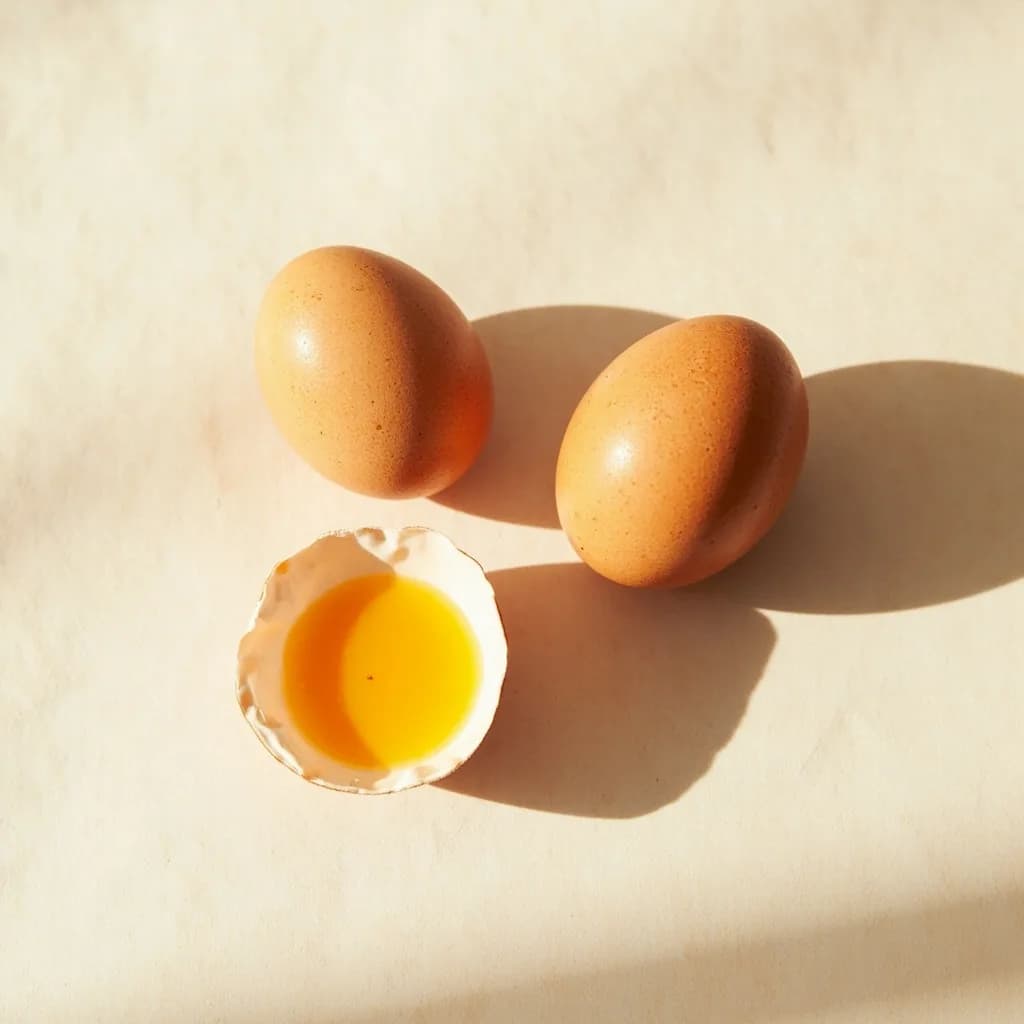
The kitchen's everything ingredient — bind, leaven, enrich, or fry
Chicken Breast
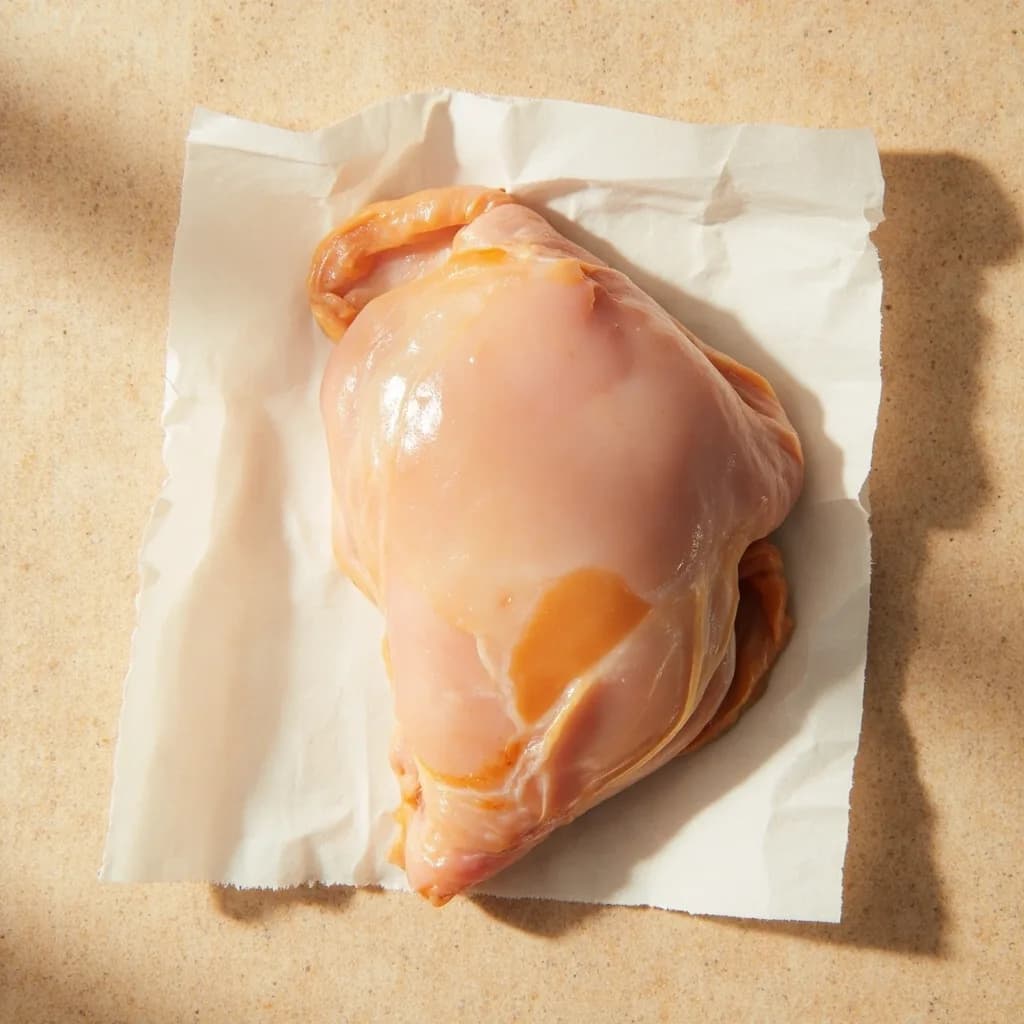
Lean, quick-cooking white meat for everyday dinners

Ground Beef
Versatile minced beef for burgers, ragù, tacos, and meatballs
Pork Loin
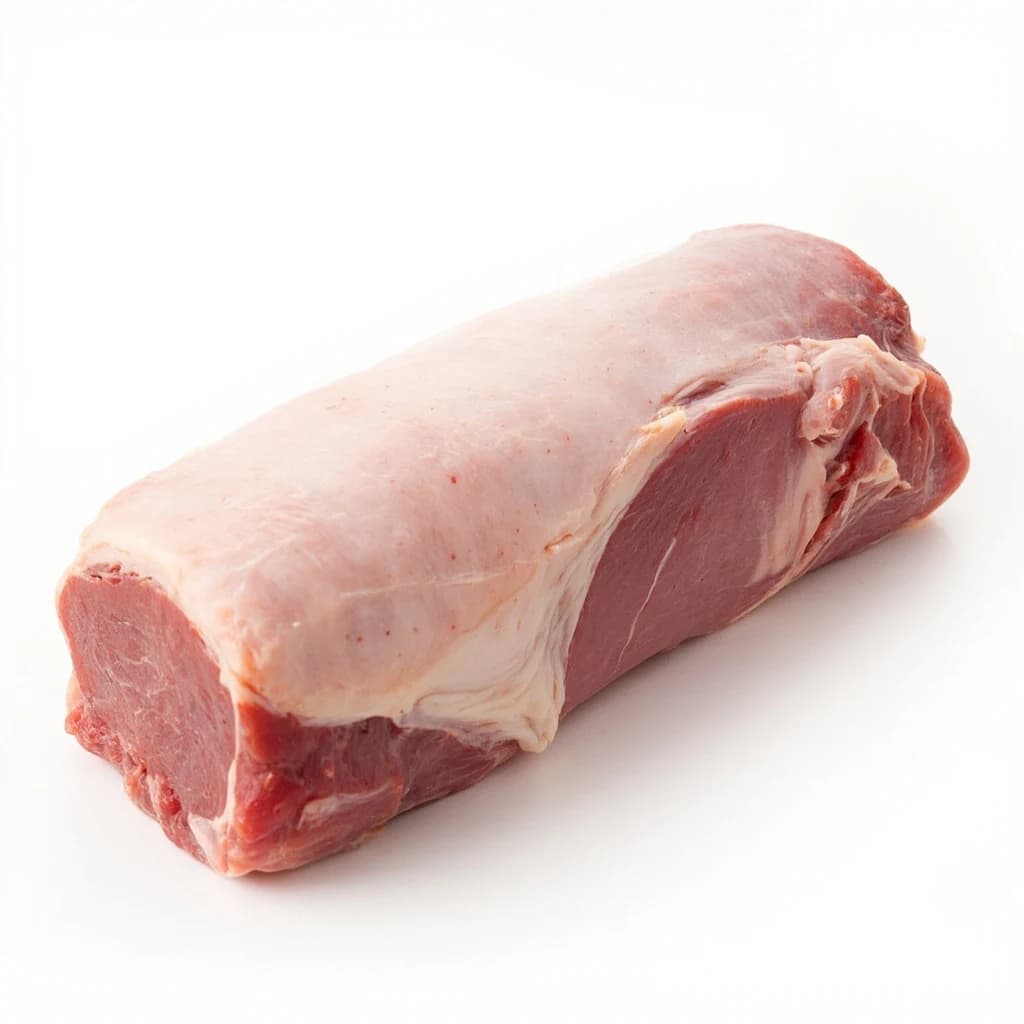
Lean, tender roasting cut that stays juicy with care

Salmon
Rich, rosy fish that roasts, grills, or cures beautifully

Egg White
Pure protein that whips to airy peaks for meringue and more

Egg Yolk
Rich, golden yolk for custards, mayonnaise, and pasta

Quail Egg
Tiny, speckled eggs for garnishing and elegant bites