Proteins
Finocchiona
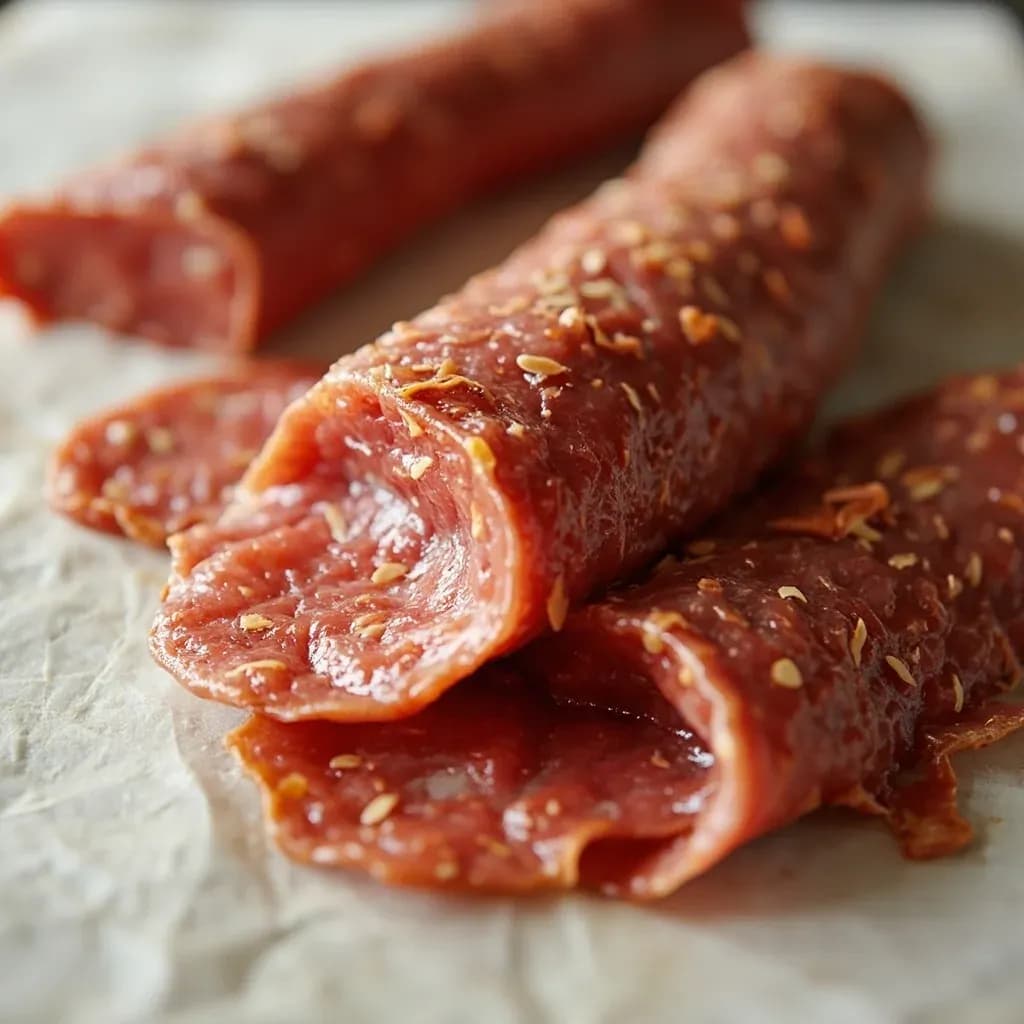
Tuscan dry-cured salami scented and speckled with fennel seed.
Finocchiona is a classic Tuscan salami made from pork seasoned with fennel seeds and sometimes fennel pollen. It is dry-cured and sliced for antipasti, where the fennel gives it a sweet, aromatic edge. Legend ties its fennel use to disguising lesser wine at market.
Finocchiona is a dry-cured pork salami from Tuscany, specifically the Florence area and surrounding region. It is distinguished by the generous use of whole or cracked fennel seed, which gives the salami its name and a characteristic flavor profile that is sweet, faintly anisic, and slightly woody. The meat is coarsely ground, typically from pork shoulder (70–80% lean) with pork fatback (20–30%), seasoned with salt and pepper, stuffed into natural casing, and hung to cure for a minimum of four to six weeks, with premium versions aging three to six months. The result is a firm but yielding salami with deep red-brown lean meat, white fat marbling, and vivid green-brown fennel seeds speckled throughout. Finocchiona differs fundamentally from other Italian salami in that fennel—not pepper—is the primary flavoring, and it differs from non-Tuscan versions that cannot carry IGP designation. The fat content (approximately 25–35%) is essential: it carries the fennel oils and provides the unctuous mouthfeel that makes thin slices melt on the tongue. When properly made and sliced thin, Finocchiona is one of the most versatile and rewarding charcuterie items in the Italian pantry, equally at home on a simple bread plate or an elaborate antipasto spread.
- Measured in
- g
- Storage
- Fridge
Types & varieties
The protected version: must contain minimum 0.5g fennel per 100g finished product, made in Tuscany per specific traditional method. Size 400g–1.2kg.
Premium variety using the native Tuscan Cinta Senese pig breed; darker color, more intense flavor, often aged longer. Higher price point.
Version with dried Calabrian chili added for heat; popular in southern Tuscany.
Smaller, softer version from the Siena area; finer grind, sometimes includes myrtle berries; darker color from added wine or vinegar in the cure.
Selecting and Slicing
When buying from a deli counter, request thin slicing (2–3mm) and ask for center cuts, which offer the most even distribution of seeds and fat. The exterior edges tend to be drier and leaner, while the center is more succulent. Reject any piece showing grayish discoloration, slimy texture, or a strong ammonia smell—these indicate over-age or improper storage.
- Look for uniform fennel seed distribution and vivid green-brown speckling throughout the cross-section
- Request center cuts for best fat-to-lean ratio
- Slice against the bias with a sharp, flexible knife using a long, steady draw
Common uses
Tips & pitfalls
- Let Finocchiona sit at room temperature 15–20 minutes before serving to soften the fats and release the aromatic fennel oils
- Slice against the bias with a long, steady draw of a sharp, flexible knife for clean, full-flavored cuts
- If the salami is too firm to slice cleanly, briefly microwave the end piece for 10 seconds to soften it just enough
- Do not cook Finocchiona extensively—it is already fully cured; brief heating only to warm through preserves its character
- Store cut side down on a flat surface to prevent air from drying the exposed flesh
- Reject pieces with grayish discoloration, slimy texture, or ammonia smell—all signs of over-age or poor storage
- For charcuterie boards, slice enough to fan out in a single layer to show off the beautiful speckled interior
- In pasta e fagioli or ribollita, add Finocchiona at the table, not during cooking, to preserve its texture and aroma
Nutrition
Energy
1778 kJ · per 100 g
Where the calories come from
Protein
21.7g
43% DV
Carbs
1.2g
0% DV
Fat
37g
47% DV
Fiber
0g
0% DV
Sugars
1.2g
of which
Sodium
1890mg
82% DV
Source · USDA FoodData Central · approx. Salami, Italian, pork
View on FDC →In the shops
Matched grocery products
No matched grocery products for Finocchiona yet.
Good to know
- Origin
- Tuscany, Italy (Florence and surrounding region)
- Type
- Dry-cured pork salami, coarse grind
- Primary Flavoring
- Fennel seed (whole and/or cracked); may include garlic, salt, pepper
- Meat Composition
- 70–80% lean pork shoulder, 20–30% pork fatback
- Aging Time
- Minimum 4–6 weeks; premium versions 3–6 months
- Texture
- Firm but yielding; visible fennel seeds throughout
- IGP Status
- Finocchiona Toscana has IGP (Indicazione Geografica Protetta) status from the European Union
- Fat Content
- Approximately 25–35%; essential for texture and flavor release
- Storage (whole)
- Hang in cool, dry place or refrigerate
- Storage (sliced)
- Wrap tightly, refrigerate, use within 2–3 weeks; freeze up to 3 months
Substitutes
- Soppressata — Italian dry salami; lacks fennel character but similar texture and intensity. Use 1:1; add a pinch of crushed fennel seed to approximate flavor.
- Genoa Salami — Milder, finer-textured; acceptable but missing the defining fennel note. Add ground fennel to taste.
- Hard Spanish Salame — Different spice profile (smoke, paprika) but similar textural contrast. Best as a last resort.
Pairs with
Also called
Fennel Salami
Related

Egg
The kitchen's everything ingredient — bind, leaven, enrich, or fry

Chicken Breast
Lean, quick-cooking white meat for everyday dinners

Ground Beef
Versatile minced beef for burgers, ragù, tacos, and meatballs

Pork Loin
Lean, tender roasting cut that stays juicy with care

Salmon
Rich, rosy fish that roasts, grills, or cures beautifully

Egg White
Pure protein that whips to airy peaks for meringue and more

Egg Yolk
Rich, golden yolk for custards, mayonnaise, and pasta

Quail Egg
Tiny, speckled eggs for garnishing and elegant bites