Southeast Asia
Burmese (Myanmar)
Also: Myanmar cuisine, Burman cuisine, Bamar food
A crossroads cuisine where India, China, and Southeast Asia converge in turmeric-stained curries, fermented tea leaf salads, and fish noodle soups that belong, unmistakably, to no one else.
Burmese cuisine is geographically and culinarily a meeting point: it shares borders with India, Bangladesh, China, Laos, and Thailand, and each has left a mark. Yet the result is not a hybrid — it is distinctly Burmese. The cooking is characterized by the liberal use of turmeric (fried raw in oil as the first step in almost every dish), dried shrimp and shrimp paste (ngapi), fish sauce, and a restrained hand with chili compared to Thai or Shan neighbors. Oil is used generously; finishing a curry until the oil separates and rises (nanthaw) is a mark of doneness and a source of pride. Fermentation is central: tea leaves, fish, beans, and garlic are all preserved and eaten. The cuisine is simultaneously mild and deeply savory.
The flavour base
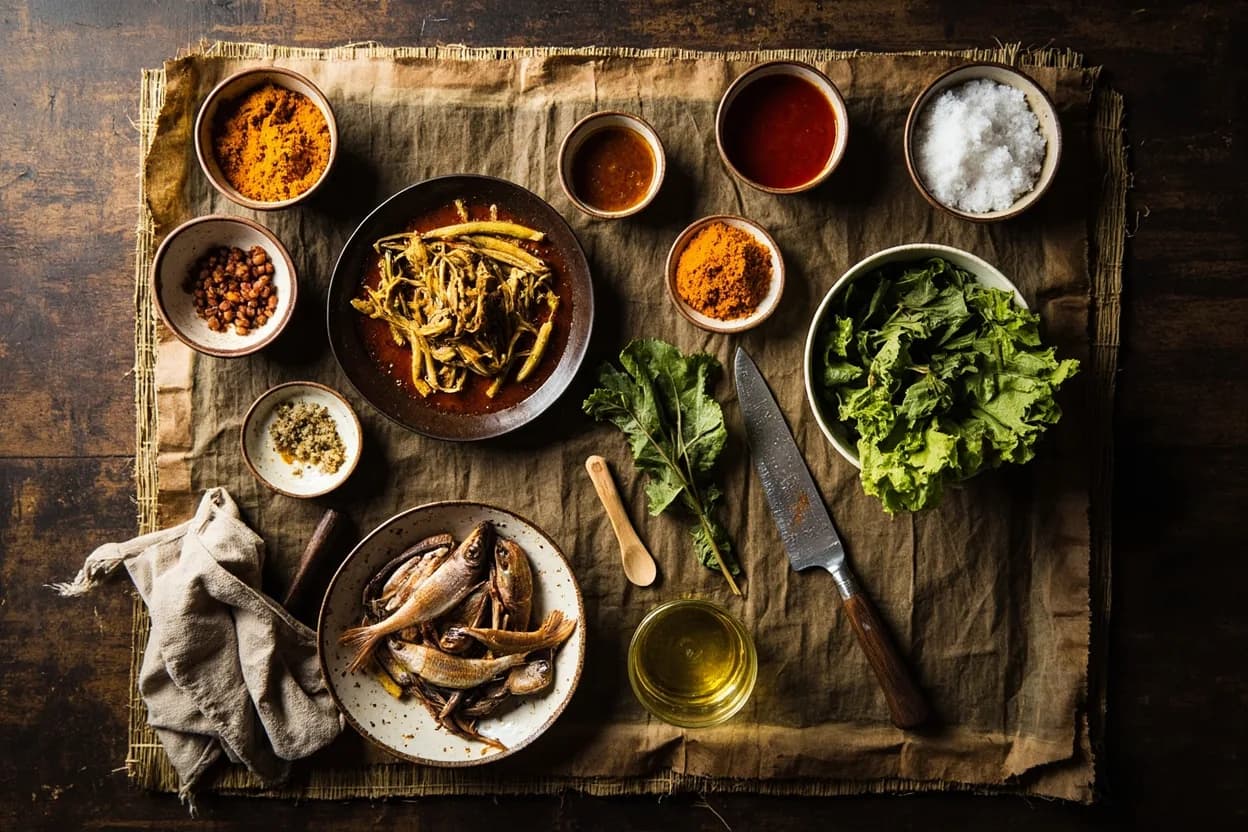
Frying raw turmeric in oil with onion and garlic until fragrant — this 'turmeric base' begins most Burmese curries and soups. Ngapi (fermented shrimp/fish paste) and dried shrimp add the umami foundation.
Pantry staples
Key ingredients
Signature techniques
Signature dishes
Burmese (Myanmar) on the table


At the table
The central meal is built around a large plate or bowl of rice, surrounded by a curry (always made in generous oil), a clear soup (hin), a sour or pickled vegetable relish, a ngapi condiment, and fresh raw herbs. All dishes are served simultaneously. Mohinga is specifically a breakfast food, sold from dawn on the street. Tea shops (lahpetye hsaing) serve as community living rooms where tea, laphet thoke, and fried snacks are consumed for hours at a time.
History & context
Burmese culinary history reflects waves of migration and empire. The Pyu city-states (1st–9th century CE) were followed by the Bagan Empire, which spread Theravada Buddhism and its attendant vegetarian and fasting food culture. Indian Muslim traders introduced spice-braising techniques; Chinese immigration from Yunnan shaped noodle dishes in the Shan State. British colonial rule (1885–1948) created an influx of Indian laborers who embedded their dhal, samosa, and biryani into the urban food landscape without displacing the Burmese core. The cuisine of Myanmar today is largely undocumented outside the country — decades of military rule and restricted tourism kept it off the global food map until the 2010s, making it one of Asia's least-written-about serious culinary traditions.
Regional variations
- Shan State
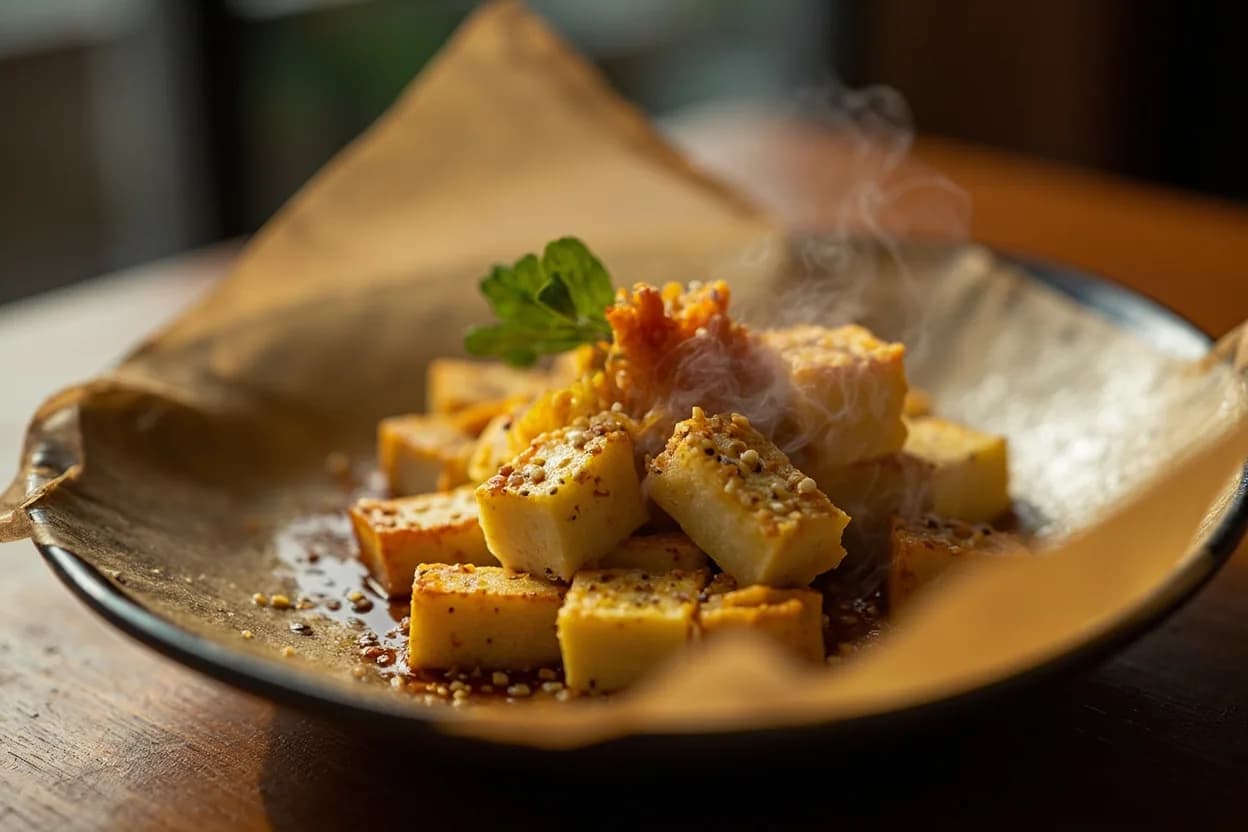
Shan cuisine is distinct: rice noodles (khauk swè) in light broth, Shan tofu, and mild, less-oily curries reflect Chinese Yunnan influence; the Shan noodle is found across the country as an export
- Rakhine (Arakan)
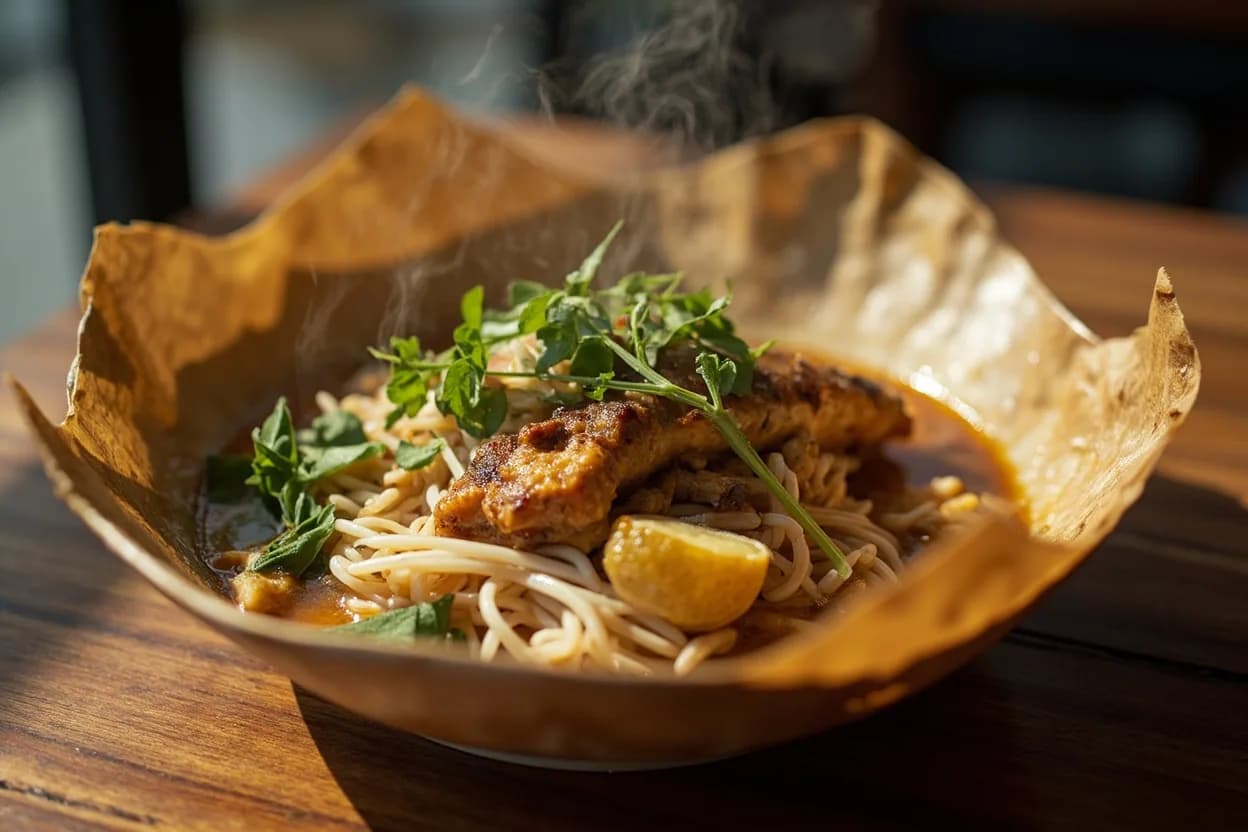
Coastal western state; hotter and sourer than central Burma; mont hin gar is the intensely spiced fish noodle soup that makes central Burmese mohinga taste mild by comparison
- Mandalay
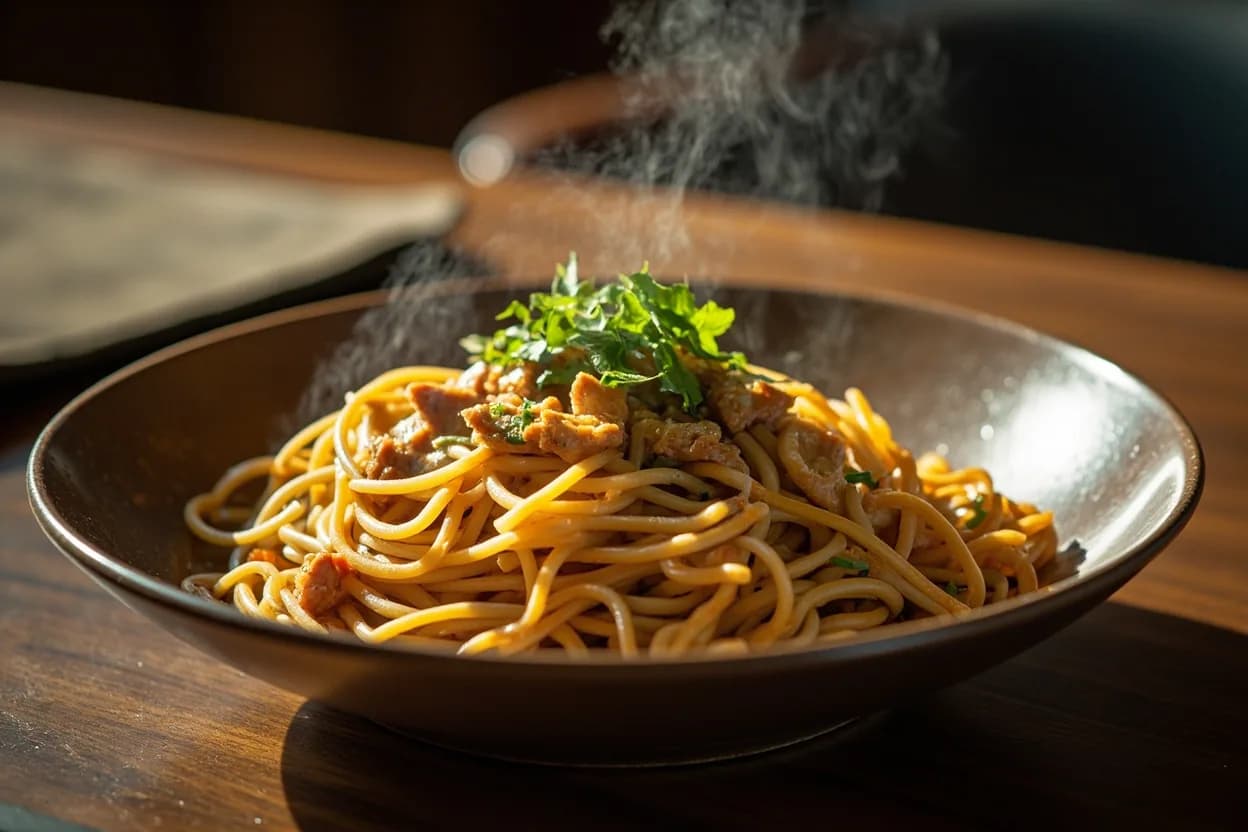
Former royal capital; known for mote ti wet (melon pudding), a-thoke (salad) culture, and dry-style noodles; slightly more refined presentation influenced by court cuisine
- Yangon (Rangoon)
Most cosmopolitan; Indian and Chinese food deeply embedded alongside Burmese staples; tea shop culture is most concentrated here
Related cuisines
- Bengali / Indian
Shared turmeric use, deep-frying techniques, dhal, and the legacy of Indian colonial migration; Burmese samosa (samusa) and biryani (danpauk) are direct Indian imports
- Yunnan (Southern Chinese)
Shan noodles, crossing-the-bridge noodles, and highland vegetable use reflect direct Yunnan influence through centuries of trade
- Thai
Shared fish sauce, lemongrass, galangal, and coconut-milk curry vocabulary; northern Thai cuisine shows significant Burmese influence via the Shan Plateau
Canonical recipes
The dishes that define Burmese (Myanmar), documented in the Canon.
References
- 1.Burma: Rivers of Flavor — Naomi Duguid (Artisan, 2012)
- 2.The Food of Burma — Claudia Saw Lwin Robert & Saw Myat Yin (Periplus, 2010)
- 3.The Flavors of Burma — Susan Chan (Hippocrene, 2007)
Confidence: high
Notes
Laphet — the only nation where tea is eaten
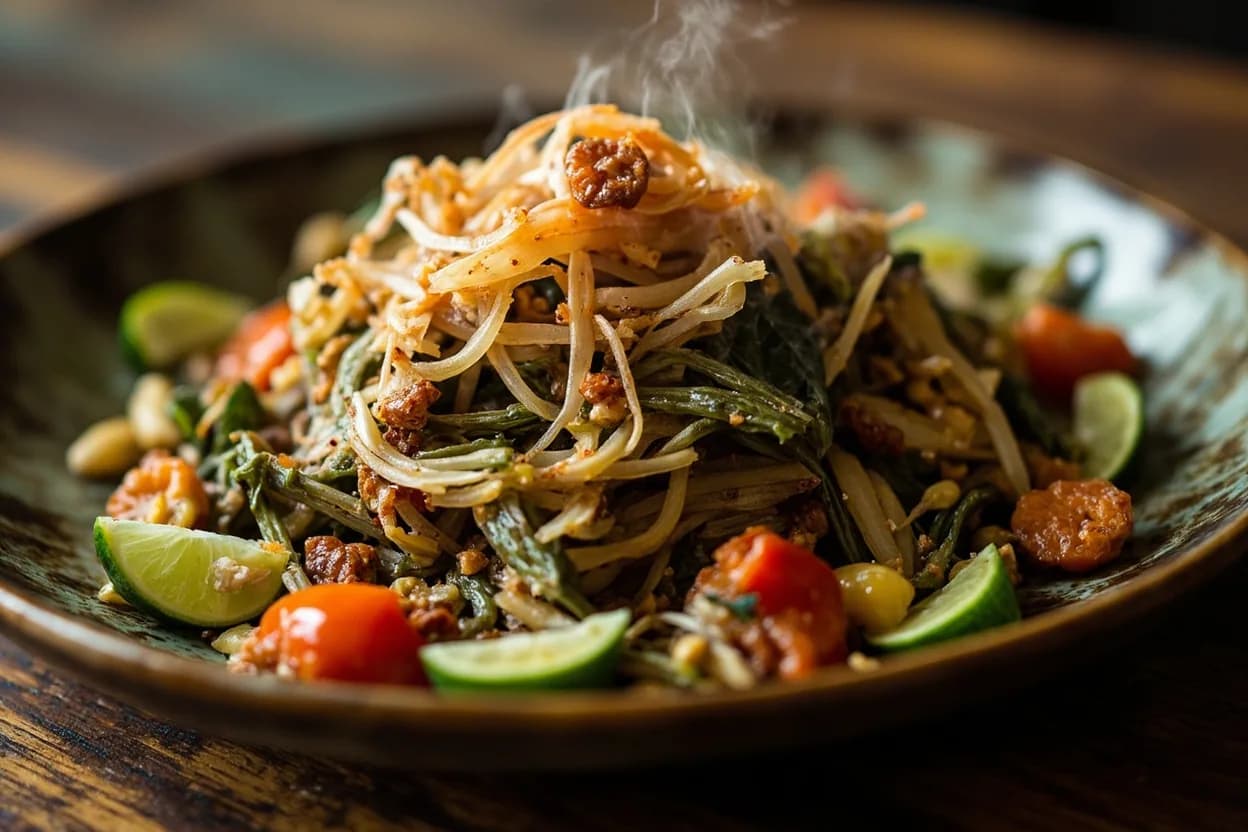
Myanmar is the only country in the world where fermented tea leaves are routinely eaten as food. Laphet thoke (tea leaf salad) combines pliant, slightly sour laphet with fried garlic, sesame seeds, roasted peanuts, fried split peas, tomato, and chili. It is served as a snack at tea shops, as a palate cleanser at formal dinners, and as a hospitality offering to guests. Its preparation — pressing fresh tea leaves with salt, then fermenting them in clay pots for months — is a distinct art form.
Oil as a marker of quality
In Burmese cooking, oil quantity is not excess — it is structure. A well-made curry finishes with a visible layer of orange-red oil on the surface, indicating the moisture has cooked off, the aromatics have rendered, and the dish has developed its full flavor. Attempting to reduce oil in a traditional Burmese curry recipe produces a dish Burmese cooks consider improperly made. This is a culinary logic that confuses the low-fat Western palate and accounts for some of the underrepresentation of Burmese food in health-conscious food writing.