Western Europe
Burgundian
Also: Bourguignon, Cuisine bourguignonne, Burgundy cuisine
A wine-centric cuisine of slow braises, wild snails, pungent washed-rind cheeses, and the irreducible partnership of Pinot Noir and Chardonnay with the table.
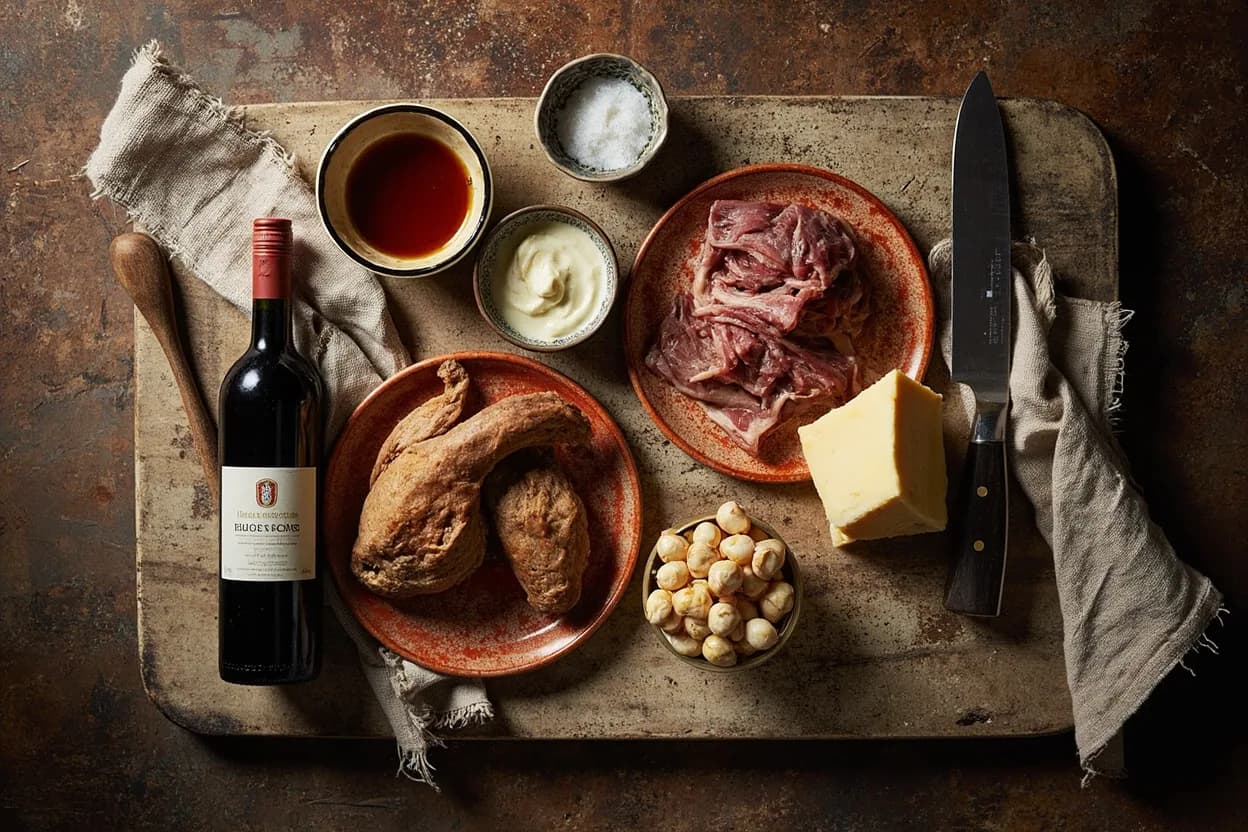
Burgundian cuisine is defined by the region's twin viticultural vocations — Pinot Noir and Chardonnay — and by the cold continental climate that produces exceptional beef (Charolais), mustard, blackcurrants, and river fish. Nearly every celebrated dish either contains wine or is designed to be eaten alongside a specific one. The cuisine is rich and deeply savory, built on long-cooked preparations that concentrate flavor, and anchored by a larder of products — époisses, Dijon mustard, marc de Bourgogne — that are specific to Burgundian terroir and practically irreplaceable by substitutes.
The flavour base
Mirepoix (carrot, onion, celery) sweated in butter, deglazed and built into wine-based braises and sauces; lardons for fat and smoke; bouquet garni; strong Dijon mustard as an emulsifier and finish
Pantry staples
Key ingredients
Signature techniques
Signature dishes
Burgundian on the table
At the table
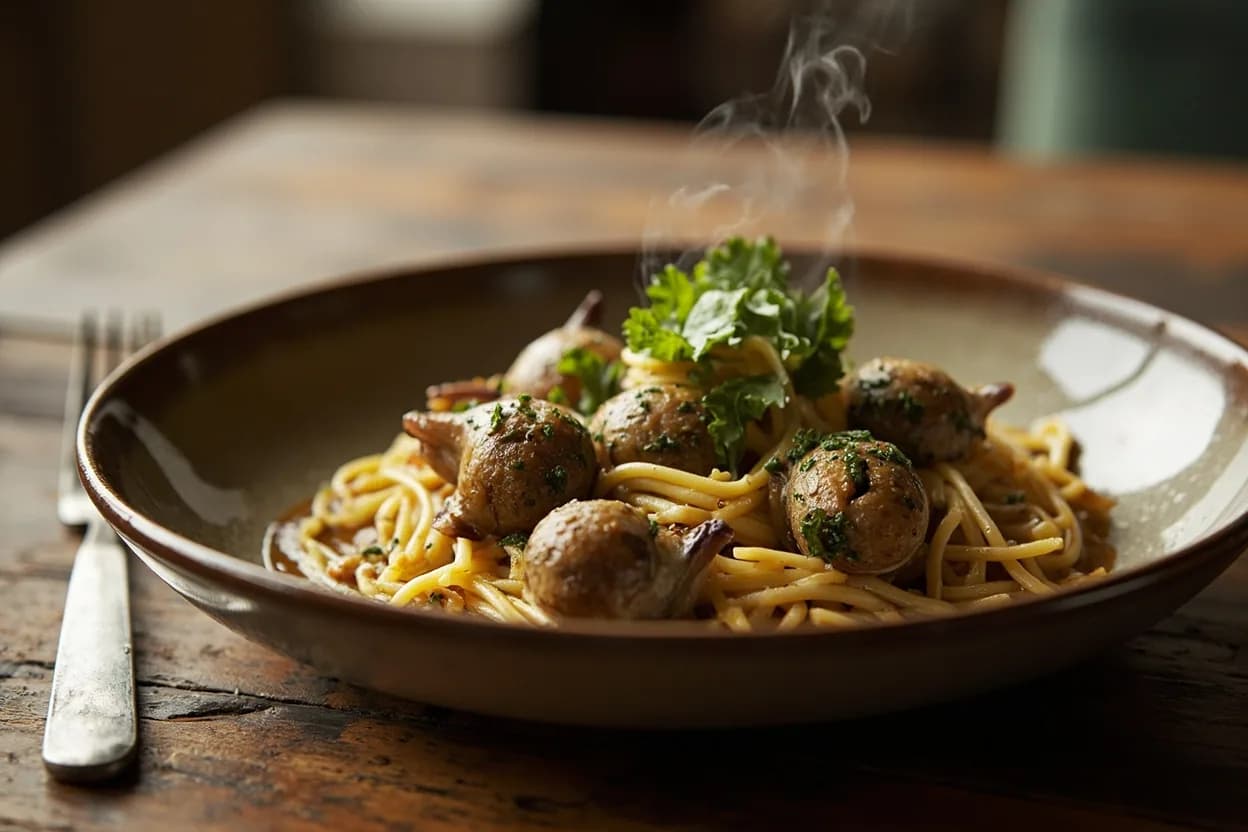
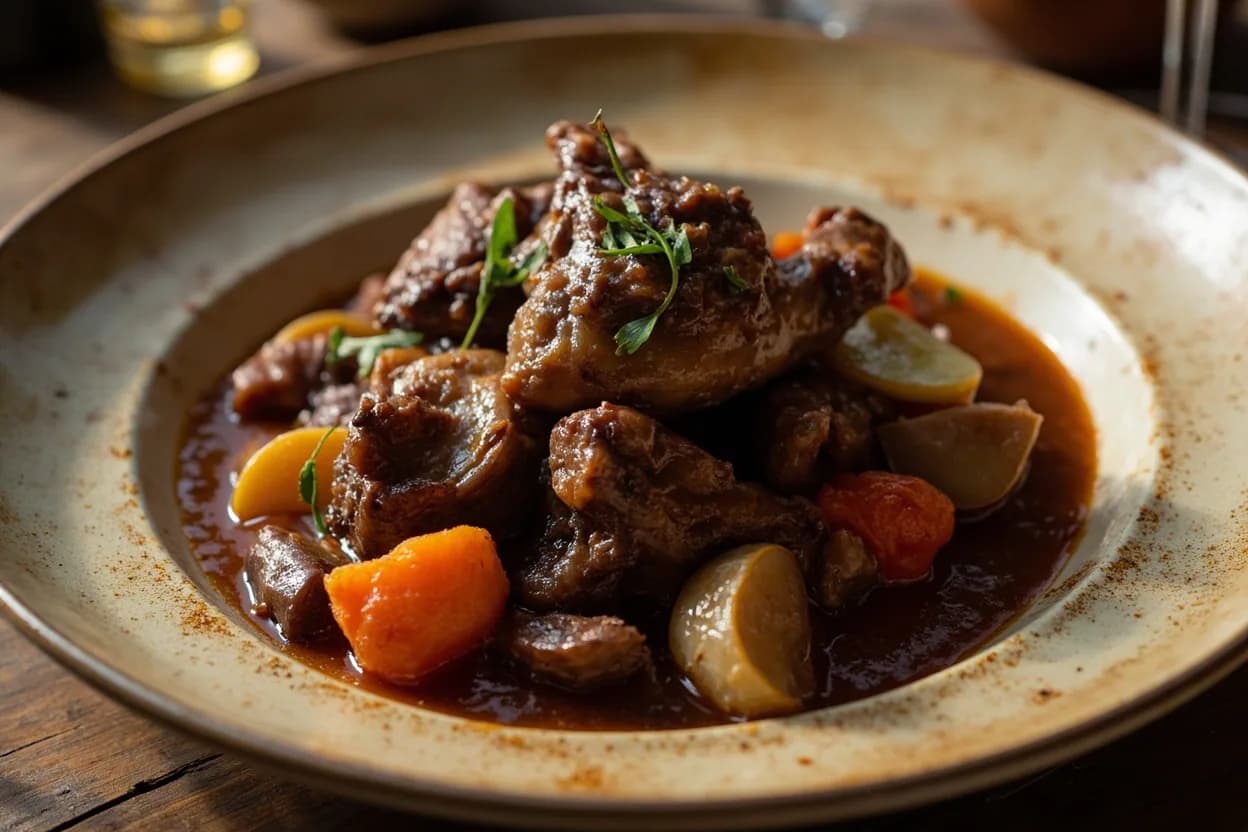
A Burgundian meal follows the classic French three-course structure — entrée, plat principal, fromage and/or dessert — but wine selection organizes the sequence as much as the food does. A meal might open with gougères and Crémant de Bourgogne, proceed through oeufs en meurette with a village Bourgogne rouge, then boeuf bourguignon with a premier cru, and close with époisses alongside the same red. Sunday lunches are leisurely affairs anchored by the long braise.
History & context
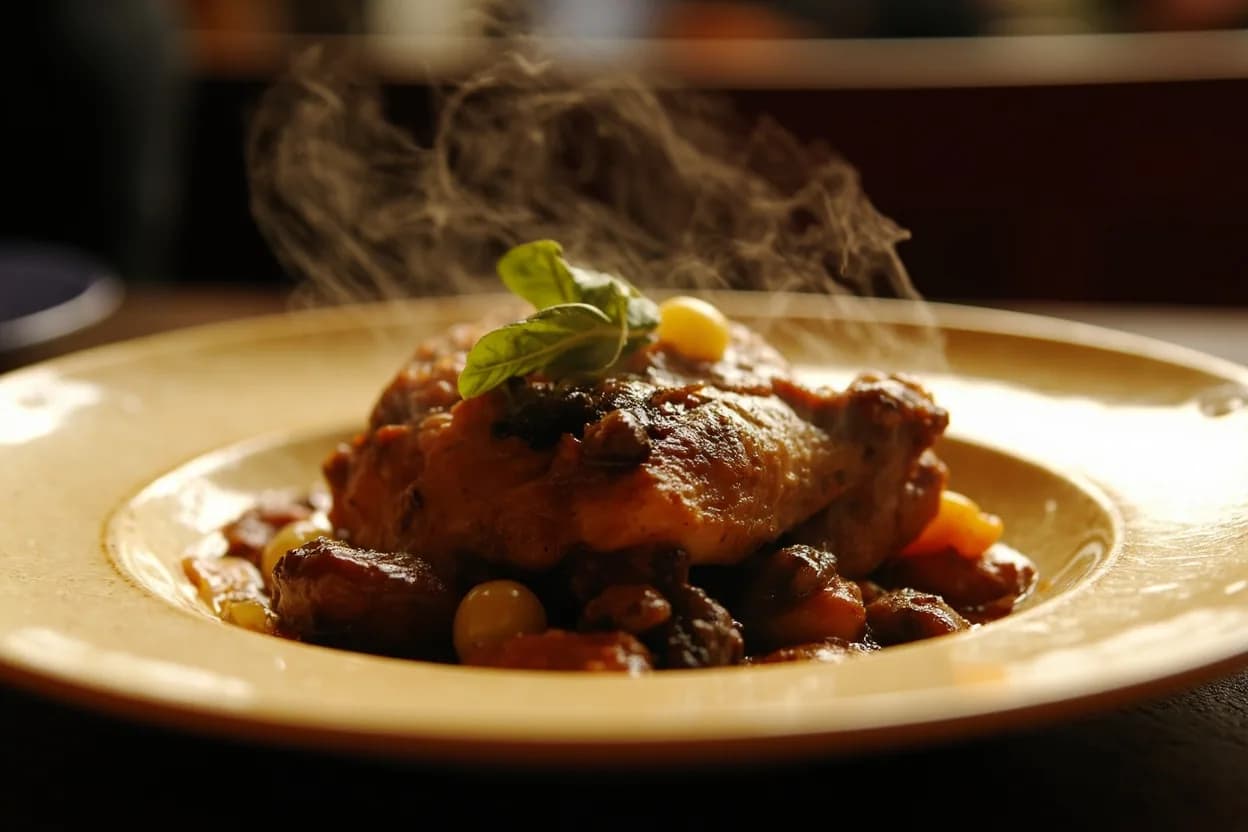
Burgundy's culinary prestige tracks its political history: the Valois Dukes of Burgundy (1363–1477) commanded one of Europe's wealthiest courts and brought Flemish and Franco-Flemish culinary refinement to Dijon. Cistercian monks at Cîteaux cultivated the Côte d'Or vineyards from the 12th century, establishing the cru system that still governs wine here. The 19th century canonized boeuf bourguignon and coq au vin as French national dishes, but they were always peasant preparations — tough cuts made tender by the wine the region had in abundance. Auguste Escoffier codified the sauce bases, and Elizabeth David and Julia Child brought Burgundian home cooking to anglophone kitchens in the 20th century.
Regional variations
- Chablis and Yonne (northern Burgundy)
Cooler and leaner; more freshwater fish (pike, perch), fewer braises; Chablis blanc dominates the table and the pot.
- Côte d'Or (heartland)
The canonical expression — Dijon mustard, escargots, Charolais beef, and the red wines of Gevrey-Chambertin and Pommard.
- Mâconnais and Chalonnais (south)
Transitional zone with influence from Lyon; Bresse chickens appear, and white wines from Mâcon supplement the reds.
Related cuisines
- Lyonnais
Immediately to the south; shares the bouchon tradition, Charolais beef, and a reverence for offal; Lyon draws Burgundian charcuterie.
Both are wine regions with Germanic terroir influence; Burgundy uses Pinot Noir where Alsace uses Riesling and Gewurztraminer as cooking bases.
Neighboring to the northeast; similarly wine-integrated cooking, though sparkling wine replaces still red as the organizing principle.
Canonical recipes
The dishes that define Burgundian, documented in the Canon.
References
- 1.Mastering the Art of French Cooking — Julia Child, Louisette Bertholle, Simone Beck (1961)
- 2.The Food of France — Waverly Root (1958)
- 3.Burgundy — Remington Norman & Charles Taylor (2010)
- 4.French Provincial Cooking — Elizabeth David (1960)
Confidence: high
Notes
The mustard question
True Dijon mustard uses brown or black mustard seeds (Brassica juncea) ground with verjuice or white wine — never turmeric or malt vinegar. Burgundy lost its mustard-seed crop to white rust fungus in the 1990s and now imports most seeds from Canada, but the production method, AOC-adjacent status, and flavor profile remain Dijonais.
Époisses handling
Époisses is washed repeatedly in marc de Bourgogne during affinage, developing an orange-pink rind and a liquefying interior. At peak ripeness it must be eaten with a spoon. It pairs counterintuitively well with a white Burgundy (Meursault or Puligny-Montrachet) rather than a red, because tannins and the cheese's pungency clash.