Western Europe
Alsatian
Also: Alsace Cuisine, Elsässische Küche, Franco-German Cuisine
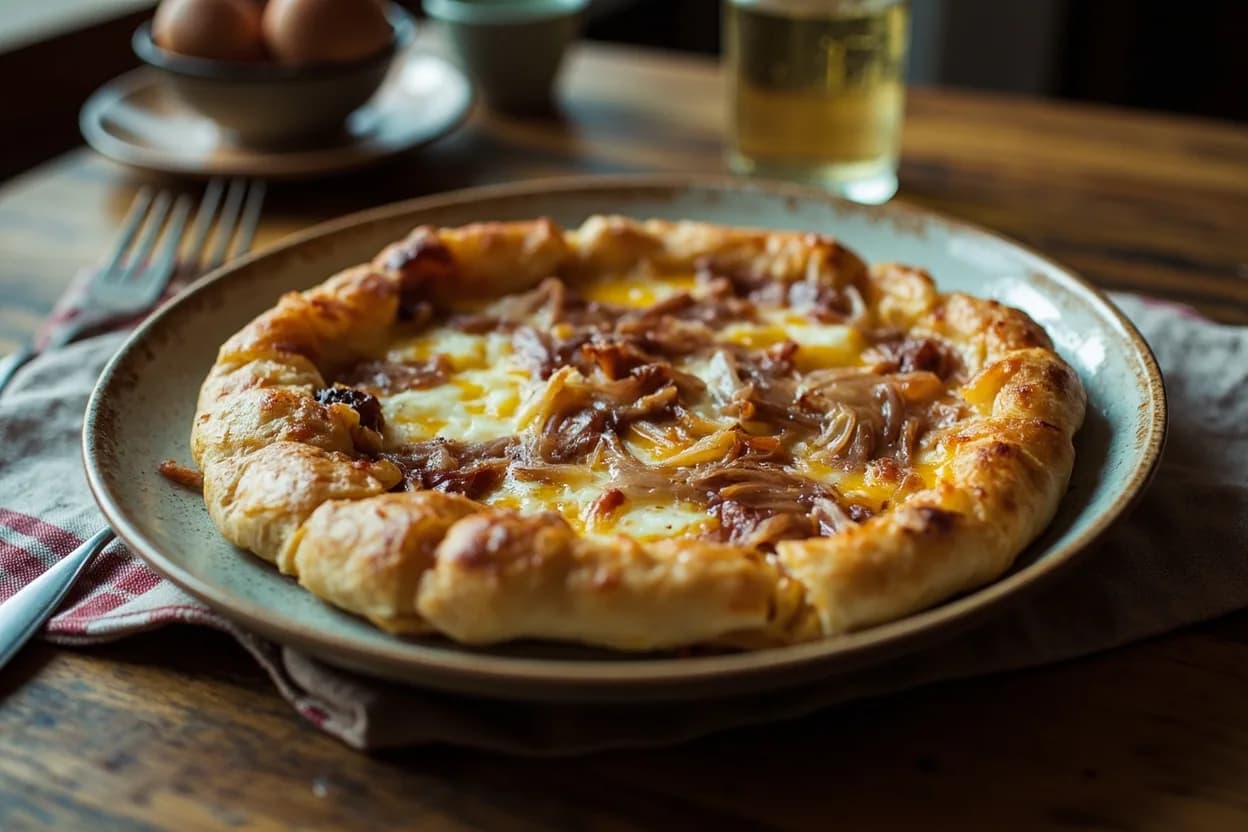
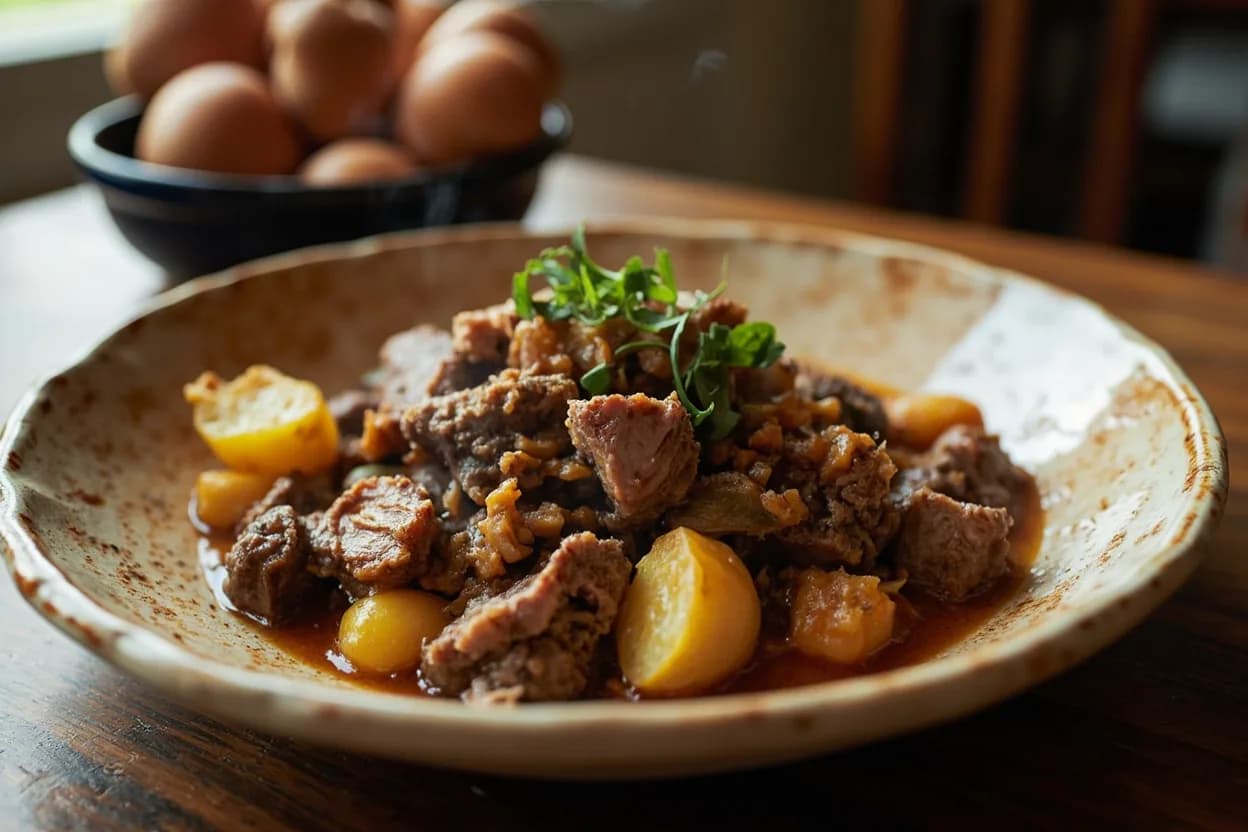
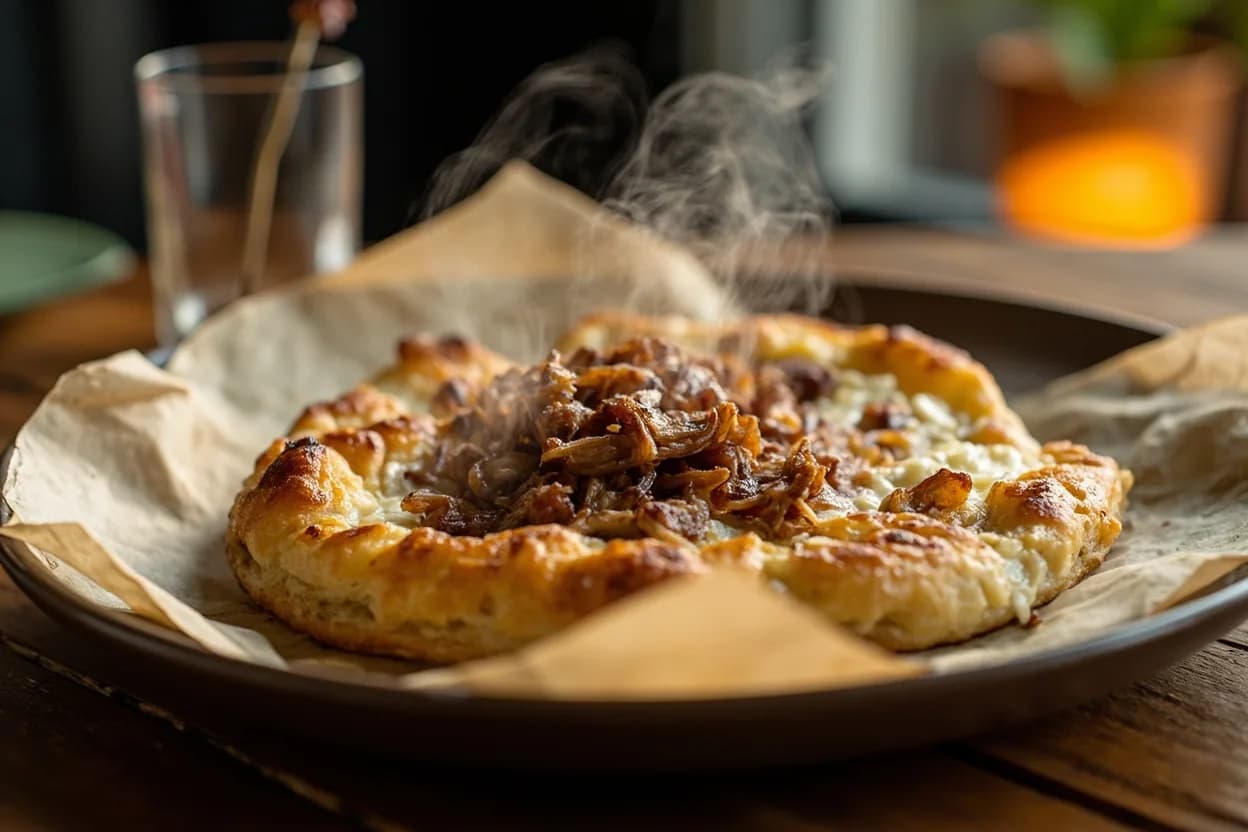
The Franco-German cuisine of Alsace — choucroute garnie, flammekueche, and baeckeoffe — shaped by eight centuries of border crossings between France and the German states, and anchored by Riesling wine and the best charcuterie in France.
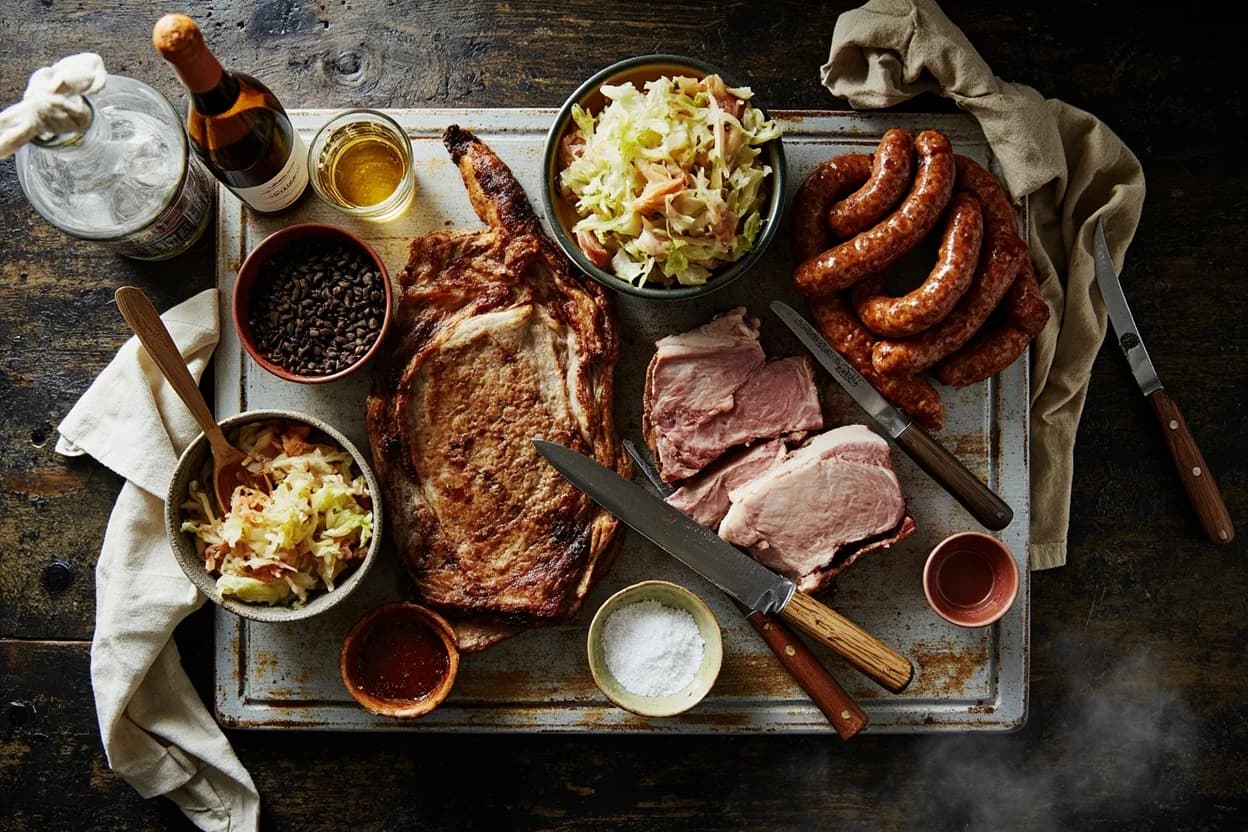
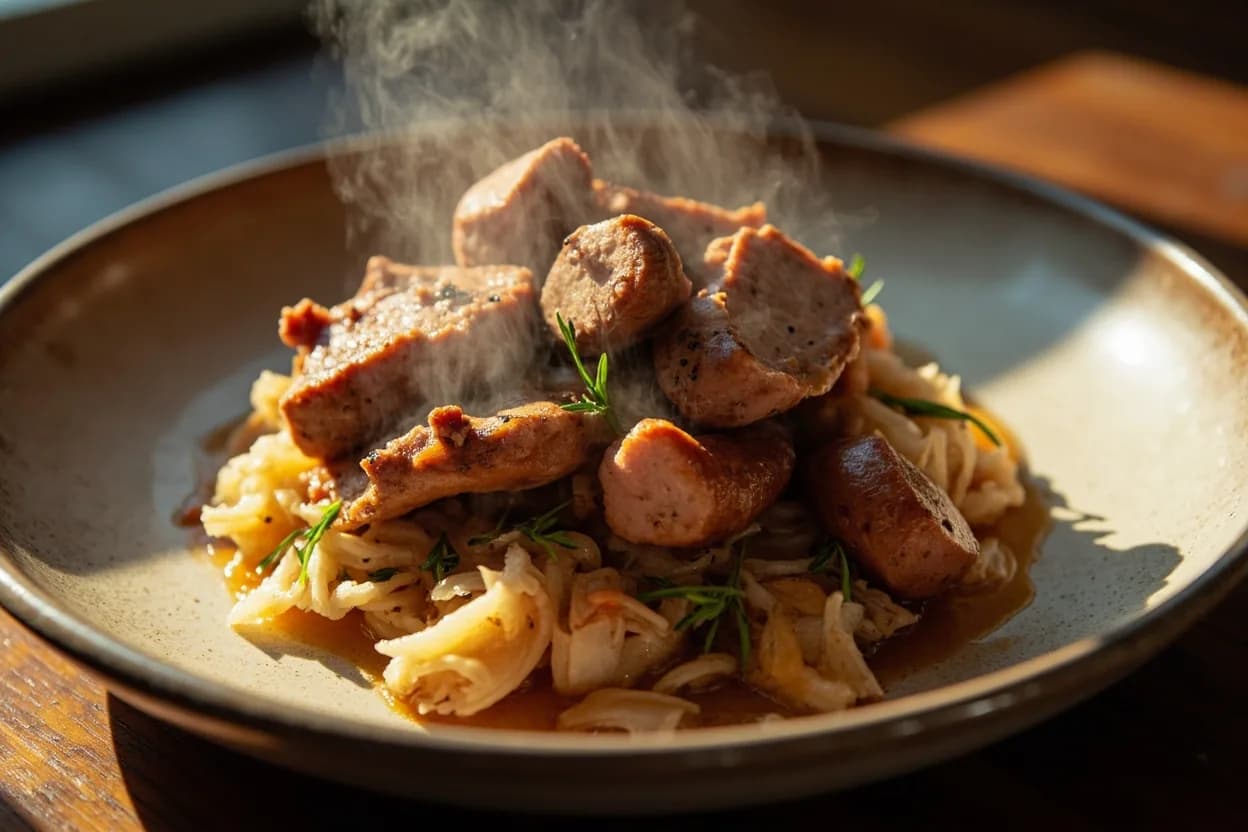
Alsatian cuisine is the regional cooking of the Alsace corridor along the Rhine, a territory that has been French, German (under the Second and Third Reichs, 1871–1918 and 1940–1944), and French again. This political oscillation produced a food culture that is genuinely neither French nor German but a synthesis with its own coherent logic: sauerkraut (choucroute) braised in Riesling with Alsatian sausages is the emblem — neither French nor German in the way it comes together on the plate. The cuisine is defined by pork in all forms, exceptional freshwater fish from the Rhine and its tributaries, dairy from the Vosges foothills, and an extraordinary range of baked goods (kougelhopf, bretzel, bredele Christmas cookies). The Alsatian wine route produces Riesling, Gewurztraminer, Pinot Gris, and Muscat, all of which appear both on the table and inside pots.
The flavour base
Lard and goose fat for cooking; Riesling or Sylvaner as the primary braising liquid. Juniper berries (genièvre) perfume choucroute and game. Cumin seeds appear with distinctive frequency in bread, cheese, and sauerkraut. The Munster-géromé cheese (washed rind, AOC) provides a funky, oxidized note in cooked applications.
Pantry staples
Key ingredients
Signature techniques
Signature dishes
Alsatian on the table
At the table
Alsatian meals are structured around a central communal pot or platter: choucroute garnie or baeckeoffe arrives at the table already assembled, with bread, mustard, and cornichons alongside. There is no minimalist plating — portions are generous and the expectation of seconds is built into the culture. Wine is poured in tall, green-stemmed Alsatian flutes. Tarte aux quetsches or kougelhopf closes the meal. In brasserie contexts (Strasbourg has some of France's greatest brasseries: Buerehiesel, Maison Kammerzell), the full sequence runs from charcuterie to fish to choucroute with cheese before dessert.
History & context
Alsace was part of the Holy Roman Empire for most of its medieval history, passing to France under the Treaty of Westphalia (1648). The Franco-Prussian War of 1870–71 annexed it to the German Empire, where it remained until 1918. The German period entrenched beer halls, Germanic sausage culture, and the word 'winstub' (wine bar in the Alsatian dialect, a German-French compound). Returned to France in 1919, re-annexed by Nazi Germany 1940–44, definitively French since 1945. This history is not incidental to the food: the charcuterie industry reflects German sausage variety; the wine production style (long-fermented, dry, aromatic varietals in tall Schlegelflasche bottles) is Alsatian-specific within the French wine world; the architecture of Strasbourg's half-timbered brasseries looks directly across the Rhine to Baden-Baden. The regional cuisine is one of the most geographically coherent in Europe precisely because of, not despite, its contested history.
Regional variations
- Bas-Rhin (north)
Strasbourg is the center — brasserie culture, sauerkraut industry, and the Christmas market traditions with bredele cookies; more Germanic in feel.
- Haut-Rhin (south)
Colmar and the southern wine villages lean more toward Burgundian influence — more cream, more game, and closer connection to Franche-Comté cheesemaking.
- Vosges foothills
The western slopes produce the Munster cheese AOC and a hunting tradition with game stews braised in Pinot Noir.
Related cuisines
Shares France's most robust charcuterie tradition and an unapologetic commitment to pork fat and richness.
- German (Baden)
The directly adjacent German region across the Rhine shares sauerkraut, bratwurst, and kugelhopf variants — the culinary exchange runs both ways.
- Lorraine
Neighboring French region sharing pork fat cooking culture and quiche Lorraine (the concept of savory egg-cream tart predates its French nationalization).
Canonical recipes
The dishes that define Alsatian, documented in the Canon.
References
- 1.The Food Lover's Companion to Alsace and Lorraine — Gilles Pudlowski (1997)
- 2.Culinaria France — André Domine, ed. (2000)
- 3.Wine and War: The French, the Nazis, and the Battle for France's Greatest Treasure — Don & Petie Kladstrup (2001)
- 4.Alsace Wines and Spirits — CIVA (Alsace Wine Board, various editions)
Confidence: high
Notes
Foie gras as contested Alsatian heritage
Alsace and Périgord contest primacy in French foie gras culture. The Alsatian tradition, documented since the 18th century, historically favored goose (oie) over duck, and foie gras en terrine with brioche over seared lobe preparations. The AOC designation covers both regions but distinguishes goose and duck production separately.