Dairy & Eggs
Munster
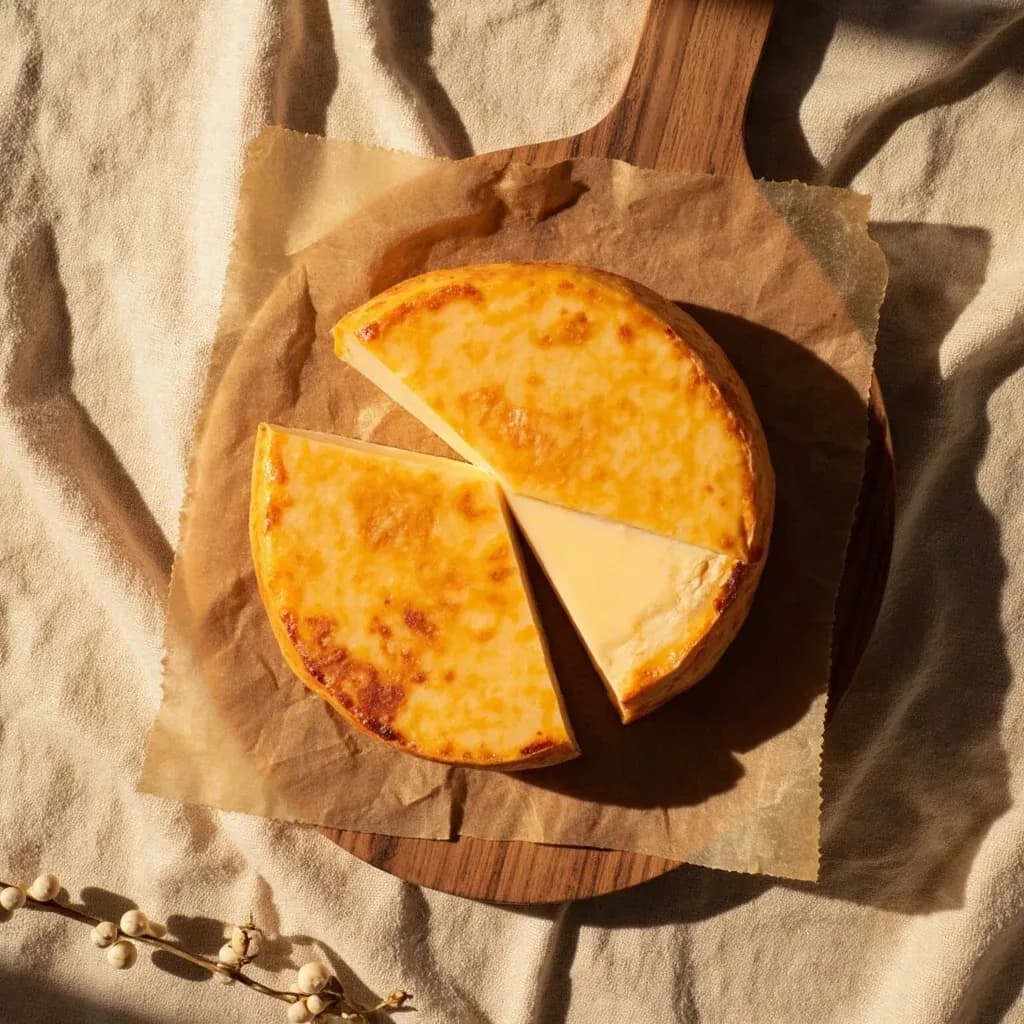
Soft washed-rind Alsatian cheese, pungent on the nose but mild and creamy inside. Melts beautifully over potatoes or tartiflette; serve at room temperature with cumin seeds, the regional pairing.
Munster is a soft, washed-rind cow's milk cheese from the Vosges mountains of Alsace, with a protected AOP identity it has held since 1969. The cheese is a study in contrasts: an orange-pink, moist rind washed repeatedly with brine (and traditionally marc or kirsch) gives off a strong, barnyard aroma, while the ivory paste beneath is mild, supple, and faintly nutty. This is the cheese that defines Alsatian cheese boards, anchors the regional version of tartiflette, and arrives at the table paired with a small dish of cumin seeds — a combination that sounds improbable and works beautifully.
What matters most in the kitchen is how Munster behaves when warmed. The fat content (around 45–50% in dry matter) and the soft, slightly elastic curd mean it melts into a creamy, flowing layer rather than turning oily or rubbery. Aged the minimum 14 days it is gentle and sliceable; pushed to 6–10 weeks it becomes runnier, more pungent, and more emphatically a melting cheese. The rind is fully edible and contributes a savoriness that ordinary soft cheeses lack, so recipes almost always use the whole wheel, rind and all.
A practical note for cooks working from American sources: the French Munster (this entry) and the American 'muenster' — a pale, mild, often rind-dyed semi-soft — are unrelated cheeses. Substituting one for the other changes a dish in both flavor and behavior.
- Measured in
- g
- Storage
- Refrigerate
Allergens
Find it in
Suits
Types & varieties
The appellation standard; the benchmark version.
Farmhouse, usually raw milk; smaller batches, more aromatic, more variable.
Dairy or cooperative production, more uniform, often pasteurized.
Smaller 80–180 g format, slightly faster ripening, more concentrated flavor per bite.
Historical name referencing the village of Géromé; same AOP today.
German version made chiefly in the Allgäu region of Bavaria; similar washed-rind character but regulated under German rather than French rules.
The Aroma Paradox: Judging a Washed Rind
Munster is the cheese that divides a room. The rind smells of damp straw, animal, and a touch of ammonia; new tasters assume the cheese has gone off. It hasn't — that aroma is the affinage talking. The real test is the paste: cut through the rind and smell the interior. A good Munster smells milky, slightly nutty, and faintly meaty. If the interior itself smells sharp, chemical, or of yogurt gone bad, the cheese is past its window.
Texture tells the second half of the story. At minimum 14 days the cheese is sliceable and mild. At 6–10 weeks the center slackens, sometimes bulging under its own weight; the cheese has lost structure but gained depth. Beyond that — fully liquid, leaking whey, the rind separating from the paste — the balance has tipped and the wheel is best melted rather than eaten raw.
- Smell the paste, not the rind, when evaluating a wheel.
- Look for a paste that is ivory to pale yellow, with no pink or gray mottling.
- Slight bulge on a well-aged wheel is normal; a collapsed or weeping wheel is old.
- A crusty, dried-out rind means the cheese was poorly stored — see Tips for recovery.
Cumin and the Alsatian Table
If you learn one thing about serving Munster, learn this: put a small dish of whole cumin seeds on the table. The spice is cumin in both French and English (Cuminum cyminum), and kümmel in Alsatian dialect. The custom is regional and old — the seeds are even kneaded into some of the rye breads served alongside. The point is functional: the herbal, slightly bitter seed cuts the lactic fat of the cheese the way a pickle cuts a fatty sausage. Bite a few seeds between slices of Munster, or scatter them over a tartiflette before baking.
Munster Is Not Muenster
American muenster (often lowercased) is a mild, pale semi-soft with a thin, sometimes orange-dyed rind. It is pleasant on a sandwich and almost odorless. French Munster is a soft washed-rind with a pungent aroma and an AOC identity. They share a name by historical accident, not by kinship, and recipes written for one rarely work as written for the other. If a recipe from an American source calls for melted muenster on potatoes, expect a polite, bland result; if a French recipe calls for Munster and you reach for American muenster, the funk and the melt will both be missing. Buy the French cheese for any dish that depends on character.
Common uses
Tips & pitfalls
- Take it out of the fridge 45–60 minutes before serving; cold mutes both the creamy texture and the sweetness in the paste
- The rind smells strong — that is the cheese working as designed. If the paste itself smells sharp, sour, or chemical, the wheel is past its window
- Store in the lower fridge wrapped in parchment and then loosely in a container; never airtight plastic, which traps moisture and intensifies the ammonia
- Eat when the rind yields slightly to pressure but the center is still sliceable; fully liquid wheels are over-aged and best reserved for melting
- Pair a small dish of whole cumin seeds alongside — the traditional balance for the cheese's richness
- For melting, grate rather than slice: more surface area means a smoother, less rubbery melt
- Do not microwave to bring to room temperature — it toughens the proteins and ruins the creamy mouthfeel
- If a stored wheel's rind dries out and cracks, wrap it in a damp cloth for a few hours to recover; do not peel the rind off
Nutrition
Energy
1628 kJ · per 100 g
Where the calories come from
Protein
25.6g
51% DV
Carbs
1.6g
1% DV
Fat
31.1g
40% DV
Fiber
0g
0% DV
Sugars
1.6g
of which
Sodium
800mg
35% DV
Source · USDA FoodData Central · approx. Cheese, fontina
View on FDC →In the shops
Matched grocery products
No matched grocery products for Munster yet.
Good to know
- Origin
- Vosges mountains of Alsace, France; tradition extends into Lorraine and into Germany, particularly the Allgäu in Bavaria and historically the Münsterland
- Protected status
- AOC Munster (1969), EU AOP; covers both fermier (farmhouse) and laitier (dairy) production
- Milk
- Cow's milk; raw for most fermier versions, pasteurized common for laitier
- Rind
- Smooth, moist, orange-to-pink washed rind, washed every 2–3 days with brine and traditionally marc or kirsch
- Texture & paste
- Soft, supple, slightly elastic; ivory to pale yellow; 45–50% fat in dry matter
- Aging
- Minimum 14 days under the AOP; 6–10 weeks common for fuller flavor; affinage caves at 10–14°C and high humidity
- Service temperature
- Room temperature, around 18–20°C; temper 45–60 minutes out of the fridge
- Not to be confused with
- American 'muenster' — a mild, low-smell semi-soft, often with a dyed rind — is an entirely different cheese
Substitutes
- Reblochon — Closest match for tartiflette-style baked dishes; slightly fattier and gentler on the nose.
- Époisses — Similar washed-rind pungency, creamier; add a splash of marc to mimic Vosges character.
- Maroilles — Same washed-rind family; squarer, sharper, and saltier.
- Limburger — Brings the same aroma; sweeter paste and softer texture.
- Pont-l'Évêque — Mellower washed rind; a good board stand-in.
- Taleggio — Italian washed rind; fruitier, less barnyard, melts beautifully.
Pairs with
Also called
munster-gerome · munster geromé · french munster
Related

Whole Milk
Rich, full-fat milk for drinking, coffee, sauces, and baking
Butter
Golden fat for searing, baking, and finishing a sauce
Yogurt
Tangy, creamy culture for breakfast, sauces, and marinades
Cheddar Cheese
Sharp, melty cheese for sandwiches, gratins, and grating
Skim Milk
Fat-free milk for lighter drinking, coffee, and cooking
Heavy Cream
Rich cream that whips, enriches sauces, and sets ganache

Sour Cream
Tangy, thick cream for dolloping, baking, and dips
Mozzarella
Soft, milky cheese that melts into stretchy pizza pulls