Spices
Cumin Seed (Whole)
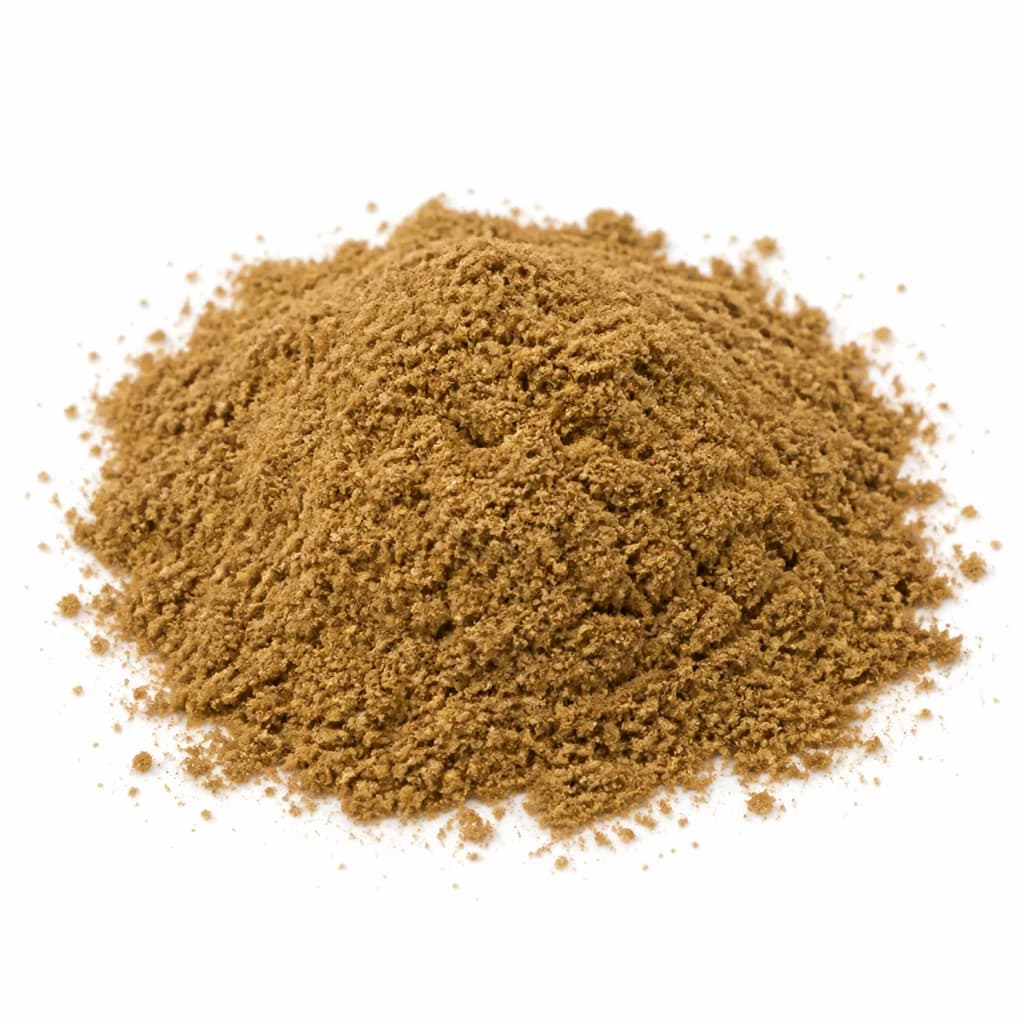
Whole ridged cumin seeds with sharper, fresher aroma than pre-ground. Dry-toast or temper in hot oil to bloom; grind fresh for curries, chili, and spice rubs.
Cumin seed (Cuminum cyminum) is the small, ridged, amber-brown seed of a slender umbellifer in the parsley family — and arguably the most globally traded spice after black pepper. Its warm, earthy, faintly citrus aroma is built on the volatile compound cuminaldehyde, which is released and amplified the moment the seed meets heat and fat. Cumin is one of the rare spices that defines not one but three geographically distant cuisines — the Indian subcontinent, Mexico and the American Southwest, and the Maghreb and Levant — adopted independently in each and now indispensable to all three.
In the pan, whole cumin behaves predictably: a brief dry toast or a short sizzle in hot oil transforms the seed from dusty and quiet to nutty, fragrant, and almost resinous. That transformation — tempering, blooming, or a tadka — is the single most important technique for using whole cumin well. Push the seeds a few seconds too long and they turn acrid and bitter; pull them at the right moment and you unlock a depth that pre-ground cumin simply cannot reach. This volatility is also why cumin is one of the fastest-staling spices on the shelf once ground, and why traditional kitchens keep it whole and grind to order.
Whole seeds hold their character for one to two years stored cool, dark, and airtight, while ground cumin loses its top notes within months. A teaspoon of whole seeds weighs roughly 2.3 g, and toasting and grinding a teaspoon of whole yields close to a teaspoon of freshly ground product — enough to substitute one-for-one in most recipes, with the obvious advantage of a brighter, more aromatic result.
- Measured in
- tsp
- Storage
- Store Whole In An Airtight Container Away From Light & Heat
Find it in
Suits
Types & varieties
The most widely traded type; small, ridged, medium-brown, robust and slightly bitter. Backbone of Indian, Mexican, and Middle Eastern cooking.
Slightly lighter in color, often a touch more floral; prized by some cooks as the finest whole cumin.
Cultivated in Karnataka; small and pungent, the classic choice for sambar and rasam.
Not true Cuminum cyminum; smaller, darker, more aromatic and complex, used in Persian and Kashmiri cooking. Sold as 'shahi jeera' in Indian markets.
A different species entirely — flat, matte-black, oniony. Botanically unrelated to cumin and not a substitute.
Blooming: The Key to Cumin's Flavor
The single most important technique for whole cumin is dry-toasting or frying it in fat. This process — called blooming, tempering, or in Indian kitchens a tadka or chaunk — releases cuminaldehyde from the seed and creates the pyrazines responsible for the deeper roasted notes. Either route transforms a quiet seed into the aromatic backbone of the dish, but the technique only works if you catch the seeds before they scorch.
- Dry-toast in a heavy pan over medium heat for 30–60 seconds; pull the moment the seeds deepen one shade and smell nutty.
- For a tadka, heat ghee or oil until just shimmering, add the seeds, and wait for the first pop — that is the bloom.
- Grind only after toasting; toasting before grinding releases the full spectrum of aroma compounds.
- Bloom in fat at the start of cooking for stews and braises, or finish a dish with a fresh tadka for brighter top notes.
The 'Black Cumin' Confusion
Two entirely different plants travel under the name 'black cumin,' and both are distinct from true cumin. Bunium persicum — sold as shahi jeera in Indian markets or 'Persian black cumin' — is a close relative with smaller, darker, more aromatic seeds prized in Persian rice dishes and Kashmiri cooking. Nigella sativa, usually sold as kalonji or 'black seed,' is not even in the same family; its flat, matte-black seeds taste oniony and peppery and behave very differently in the pan. The three should not be treated as interchangeable without thought.
- True cumin: Cuminum cyminum — small, ridged, amber-brown, earthy with citrus top notes.
- Persian/Kashmiri black cumin: Bunium persicum — smaller, darker, more aromatic; the closest relative of true cumin.
- Kalonji / 'black seed': Nigella sativa — flat, matte-black, oniony; unrelated botanically.
- Substitute Persian black cumin roughly 1:1 for true cumin; substitute kalonji only when the dish already calls for it.
Common uses
Tips & pitfalls
- Always toast whole seeds in a dry pan over medium heat for 30–60 seconds before grinding; the change in aroma is dramatic.
- Watch closely — once seeds darken one shade and smell nutty, pull them off the heat. They scorch in seconds, and scorched seeds will turn an entire dish bitter.
- For a tadka, add seeds to hot fat and wait for the pop and foam. That is your cue they have bloomed; a few extra seconds beyond the pop and they will burn.
- Grind in a dedicated spice grinder or mortar and pestle just before use. Pre-ground cumin is one of the fastest-staling spices in the pantry.
- Store whole seeds in a tin or dark jar in a cool cupboard, away from light and heat. A clear jar on the counter will shorten their life noticeably.
- Buy in small amounts from a high-turnover source. Older seeds turn musty and lose the bright citrus top notes.
- When a recipe calls for ground cumin and you have only whole, toast and grind it yourself — the result is almost always better than pre-ground.
- Do not substitute caraway for cumin expecting an identical flavor; caraway leans anise and will read as rye-bread notes in the finished dish.
- Pair cumin with acid (lime, tomato, vinegar) and fat (ghee, oil, yogurt) — both pull out its deeper layers.
- A small pinch of sugar or honey balances the bitterness that can creep into long-cooked dishes where cumin turns harsh.
Nutrition
Energy
372 kJ · per 100 g
Where the calories come from
Protein
4.1g
8% DV
Carbs
17.3g
6% DV
Fat
0.5g
1% DV
Sodium
1mg
0% DV
Source · USDA FoodData Central · approx. Seeds, lotus seeds, raw
View on FDC →In the shops
Matched grocery products
 €0.79
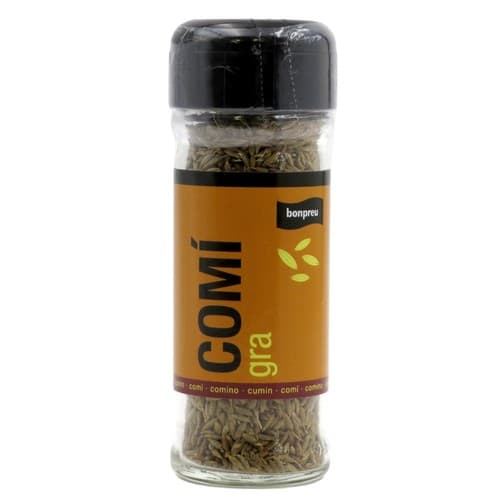
€0.79Whole Cumin
BONPREU · Bonpreu
 €1.95
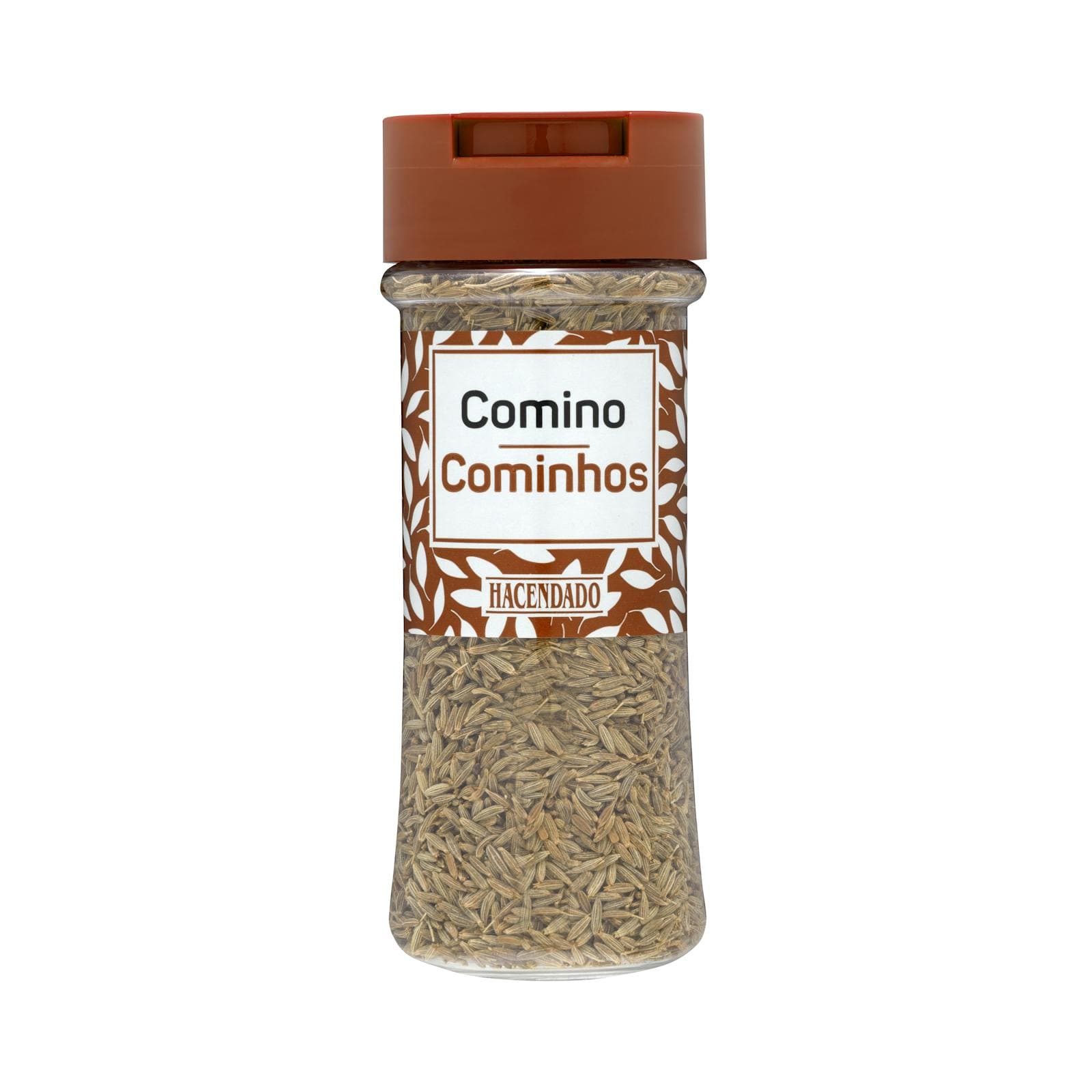
€1.95Cumin Seeds
Hacendado · 56 g · Mercadona
Good to know
- Botanical name
- Cuminum cyminum
- Family
- Apiaceae (umbellifer family, alongside parsley, dill, and fennel)
- Plant part used
- Dried ripe seeds
- Origin
- Eastern Mediterranean to Middle East; archaeological finds in Egyptian tombs from the 2nd millennium BCE
- Major producers
- India (~70% of world production), Syria, Turkey, Iran, Mexico
- Dominant aroma compound
- Cuminaldehyde, roughly 25–35% of the essential oil
- Whole-seed shelf life
- 1–2 years cool, dark, airtight; ground cumin fades within months
- Heat sensitivity
- Burns readily; over-toasting turns seeds bitter and acrid
- Approximate weight
- About 2.3 g per teaspoon of whole seeds
Substitutes
- Ground cumin — Use about 3/4 the volume; lacks the fresh, volatile top notes of toasted whole.
- Caraway seeds — Closest single substitute in texture; flavor leans anise and resinous, so use 25–50% less and adjust.
- Fennel seeds — Works in sausage and braise contexts; sweeter and more licorice-forward, so reduce by about half.
- Toasted coriander (replacing half the cumin) — The classic Indian partner spice; replacing half the cumin with toasted, ground coriander gives similar warmth and depth in curries.
- Ancho chile powder — Works in Tex-Mex applications for earthy warmth; not appropriate in Indian or Middle Eastern dishes.
- Smoked paprika plus a pinch of coriander — A rough approximation for chili blends when cumin is unavailable.
Pairs with
Also called
whole cumin · jeera · zeera · cumin seeds