North Africa
Amazigh (Berber)
Also: Berber cuisine, Imazighen cuisine, Tamazight cuisine
The indigenous cuisine of North Africa's Amazigh peoples — a pre-Arab, pre-Roman tradition of fermented butter, stone-ground grain breads, mountain tagines, and argan oil that underlies all Maghrebi cooking.
Amazigh (pl. Imazighen) cuisine is the culinary tradition of the indigenous Berber peoples of North Africa, predating Arab conquest by millennia. It is a functional mountain and desert cuisine grounded in what the land provides: durum wheat and barley stone-ground into couscous and flatbreads, olive trees and argan trees pressed for oil, sheep and goats providing milk (fermented into smen aged butter and soured cheeses), and wild herbs gathered from Atlas hillsides. Unlike the refined imperial court kitchens that layered on top of it, Amazigh cooking is purposefully unadorned — its complexity is in fermentation, time, and fire, not spice accumulation.
The flavour base
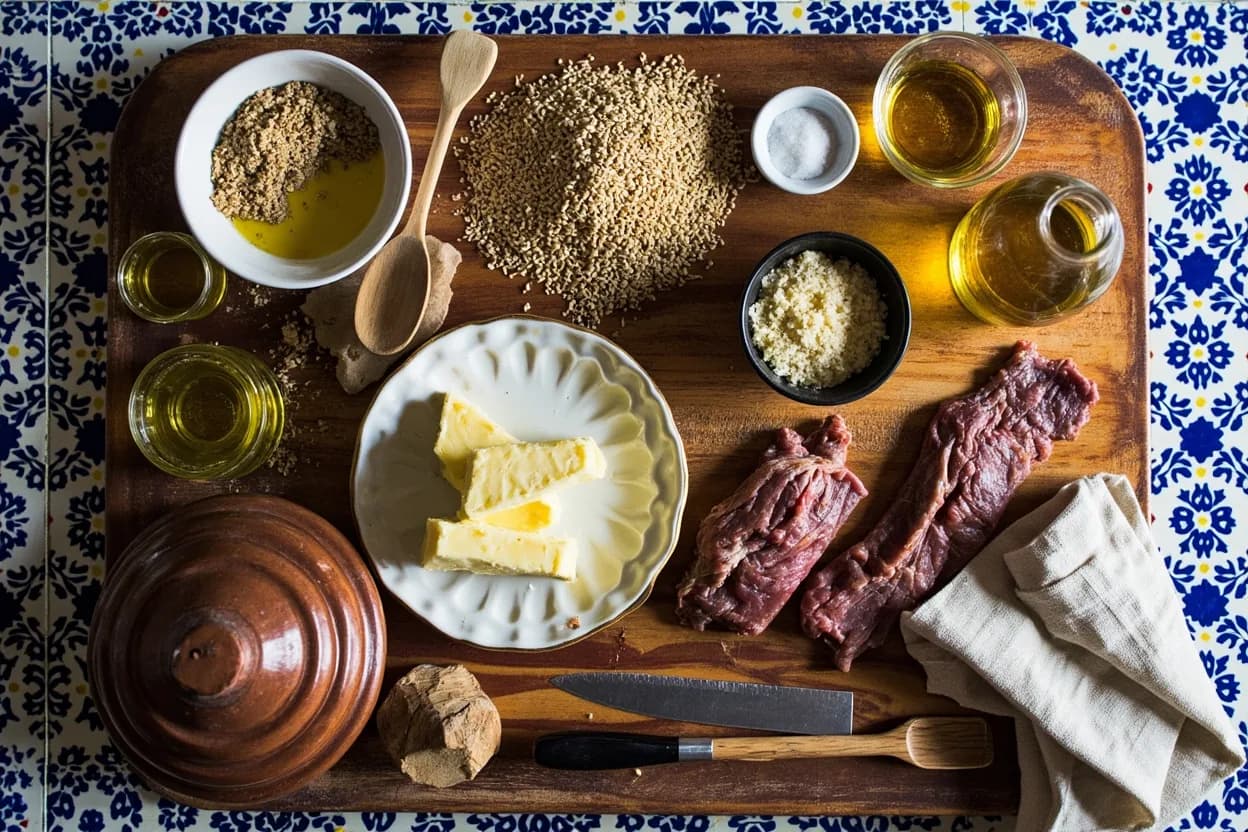
Smen (rancid-fermented butter) as a fat and flavor deepener; argan oil; stone-ground grain; dried herbs (wild thyme, rosemary, caraway); the tart acidic note of fermented milk products; and smoke from wood-fired ovens.
Pantry staples
Key ingredients
Signature techniques
Signature dishes
Amazigh (Berber) on the table
At the table
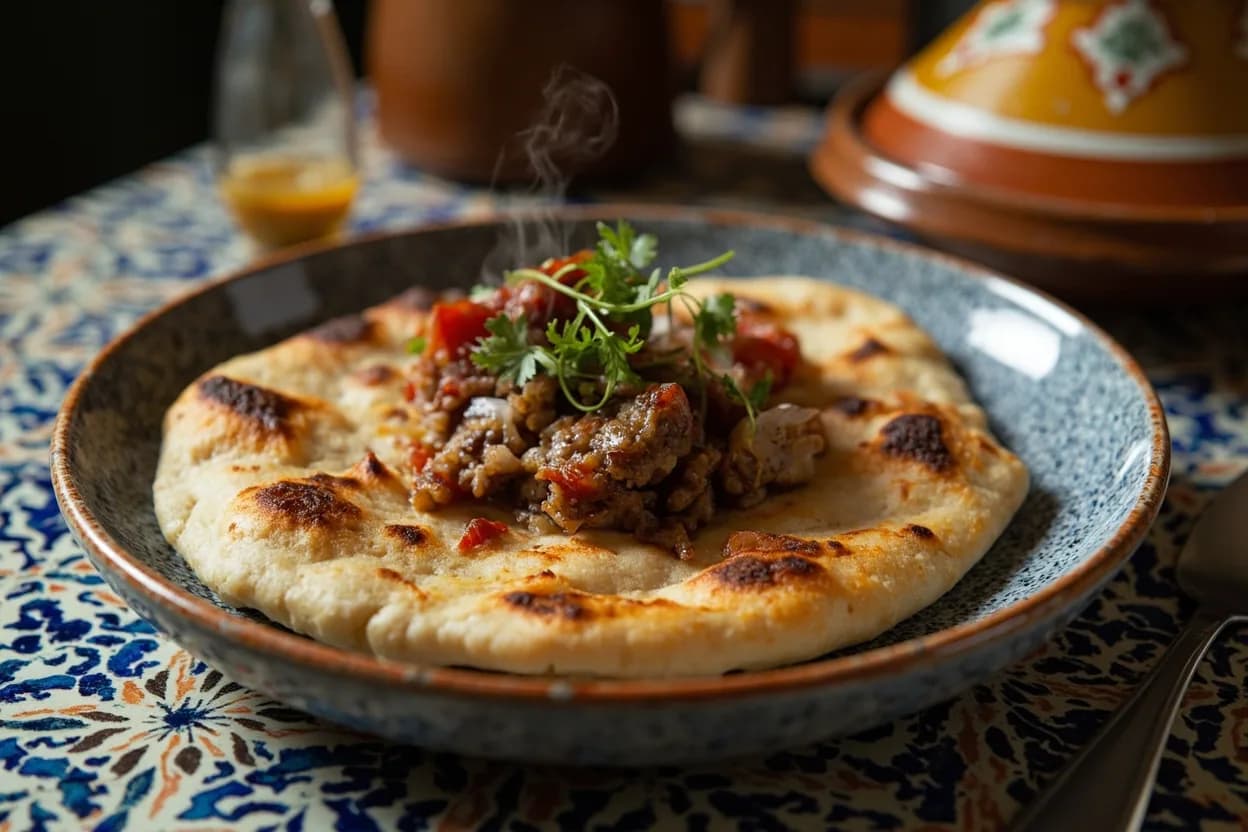
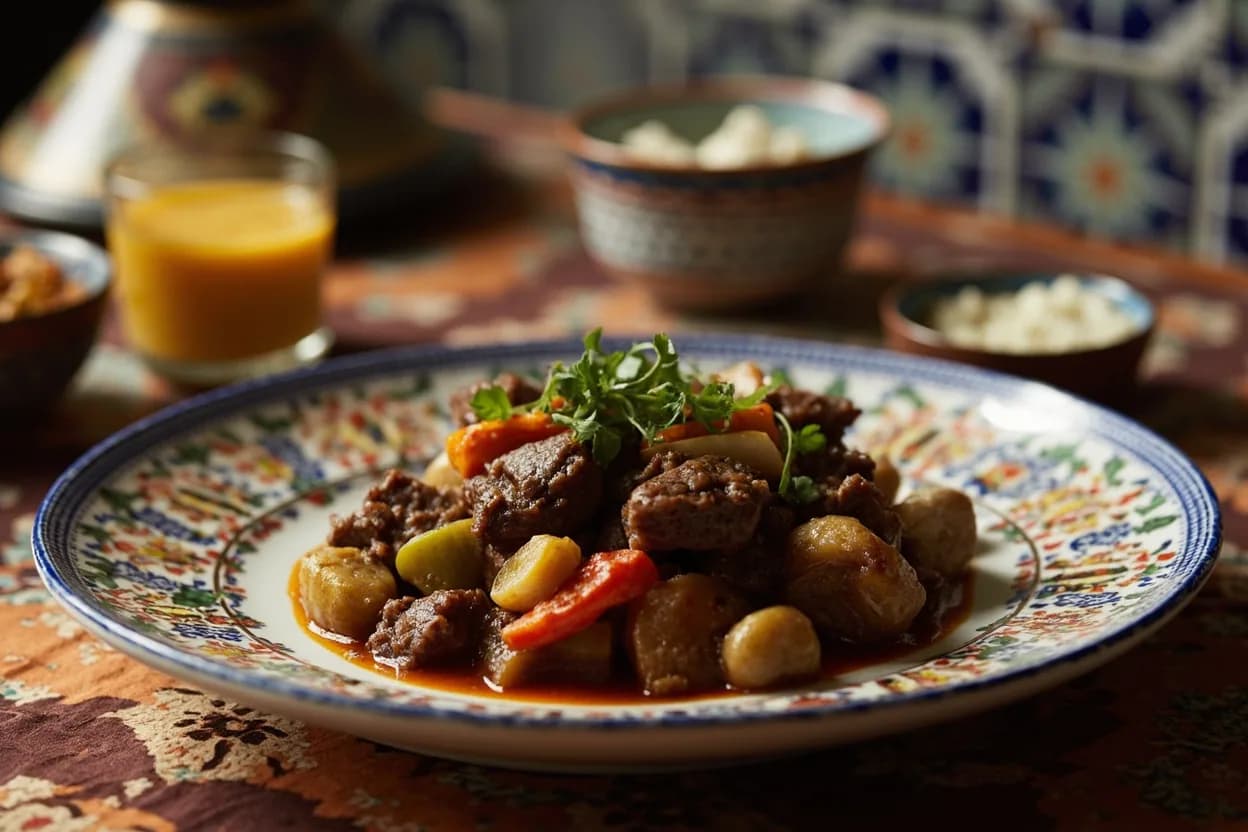
Meals are simple and communal: a central communal bowl or tagine eaten by hand, with bread used as the primary utensil. In pastoral and semi-nomadic contexts, food follows work rhythms — a heavy cooked meal at midday, lighter bread and oil morning and evening. Festival meals (weddings, Aid al-Adha) involve whole-animal roasting (mechoui) and communal couscous.
History & context
The Imazighen have inhabited North Africa for at least 10,000 years. Archaeological evidence from Neolithic sites across Morocco, Algeria, Tunisia, and Libya shows proto-Berber cultivation of wheat and barley, goat and sheep herding, and olive-pressing. The Romans called them Berbers (from barbarus, meaning foreigner), a term the people themselves rejected — Amazigh means 'free people' in Tamazight. The Arab conquest of the 7th–8th centuries introduced Islam and a new spice vocabulary but did not erase Amazigh foodways; instead, the two traditions hybridized into what we call Maghrebi cuisine. The Amazigh substrate — couscous, tagines, argan oil, smen, flatbread baking — remains the structural foundation beneath Arab and Andalusian elaborations. Amazigh cultural revival movements since the 1990s have recentered these original contributions.
Regional variations
- High Atlas (Morocco)
Mountain herding culture; smen is central; bread baked on hot stones; root vegetable tagines; cold-weather lamb stews.
- Souss Valley (Morocco)
Argan tree homeland; amlou is endemic here; Chleuh Berbers maintain the most distinct culinary identity; coarser grain preparations.
- Kabyle (Algeria)
Berber heartland of northern Algeria; assida (semolina porridge), thikhssayin (spiced meat), and seksu (Kabyle couscous) are distinct from Arab-Algerian cooking.
- Tuareg (Sahara)
Semi-nomadic desert Amazigh; tende millet porridge; tagella (ember-cooked sand bread); preserved meats; three-glass tea ceremony.
- Nafusi (Libya)
Mountain Berbers of the Nafusa plateau; bazin barley dough; stronger use of dried meats and preserved dairy.
Related cuisines
Moroccan cuisine is built on an Amazigh substrate; smen, couscous, tagines, and argan oil were Amazigh contributions centuries before the Arab synthesis.
Amazigh foodways are the oldest layer of all Maghrebi cuisine; the entire region's staple architecture (couscous, flatbreads, lamb, olive oil) is pre-Arab Amazigh.
Kabyle Berber cuisine persists as a distinct sub-tradition within Algeria, resisting Arabization of the kitchen.
Canonical recipes
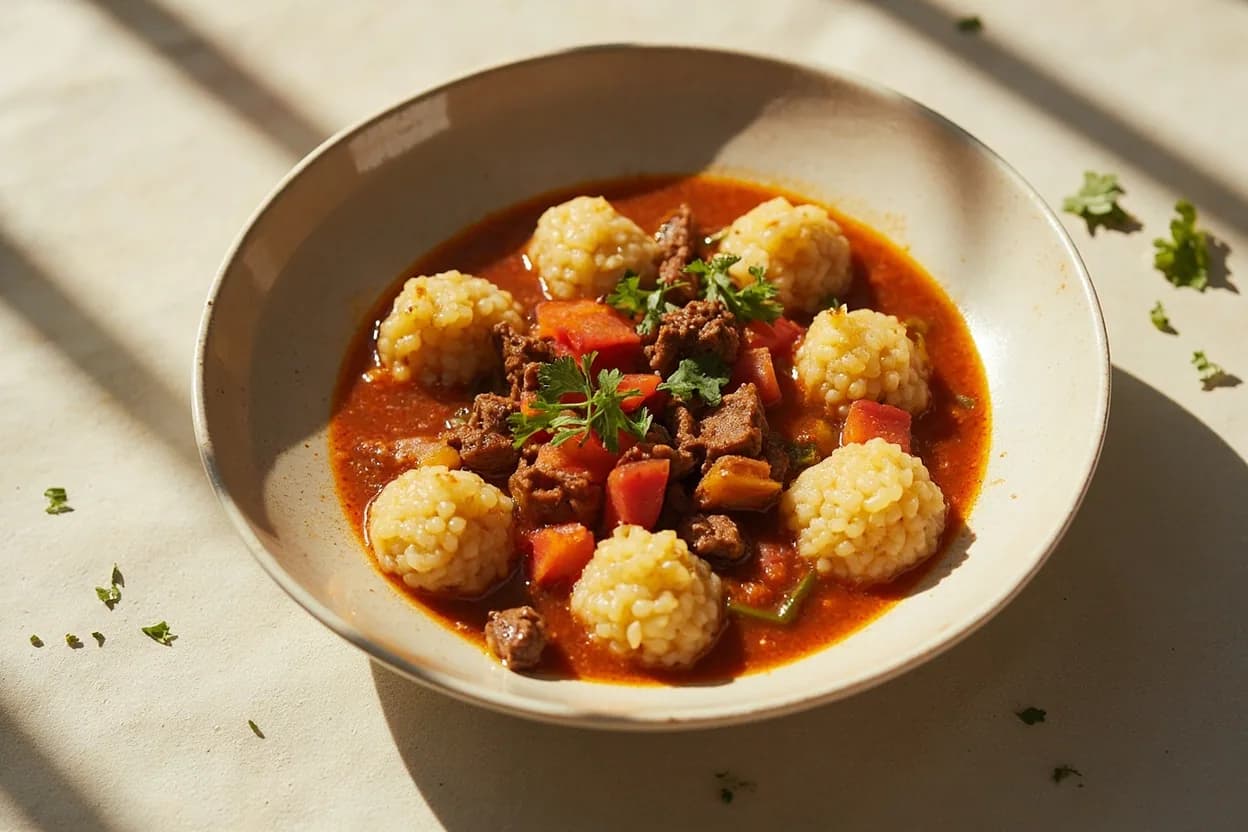
The dishes that define Amazigh (Berber), documented in the Canon.
References
- 1.The Berbers — Michael Brett & Elizabeth Fentress (1996)
- 2.Couscous and Other Good Food from Morocco — Paula Wolfert (1973)
- 3.A Mediterranean Feast — Clifford A. Wright (1999)
- 4.Tasting the Past: Recipes and Traditions from the Maghreb — (various regional sources)
Confidence: high
Notes
Couscous is Amazigh, not Arab
The earliest documented references to couscous appear in 13th-century North African and Andalusian sources, but the dish almost certainly predates writing by centuries. Linguists trace 'couscous' to Tamazight 'seksu' or 'k'seksu,' confirming Amazigh origin. The hand-rolling technique — moistening semolina and rolling it into tiny pellets — is taught mother to daughter and remains one of the defining skills of Amazigh food culture.
Smen: the Amazigh aged butter
Smen is butter salted and packed into clay pots, sometimes with thyme or other dried herbs, and aged from weeks to years (some families keep smen for decades for ritual use). The fermented, pungent result functions simultaneously as a fat, a seasoning, and a preservative. It bears comparison to the Moroccan-Jewish dafina traditions that also prized long-aged fats.