North Africa
Moroccan
Also: Moroccan imperial cuisine, Fassi cuisine
Morocco's imperial-city cuisine is one of the world's great refined traditions — a centuries-long synthesis of Amazigh, Arab, Andalusian, and sub-Saharan threads expressed through aromatic tagines, bastilla pastry, and the hospitality art of the riad table.
Moroccan cuisine is characterized by its extraordinary aromatic complexity, its sweet-savory balance (lamb with prunes, pigeon with almond and cinnamon), and a palatial hospitality culture inherited from the imperial courts of Fez, Marrakech, Meknes, and Rabat. Key markers include the spice blend ras el hanout (meaning 'top of the shop' — a merchant's finest spices), preserved lemons, argan oil, orange-blossom water, and the warqa pastry tradition. It is one of the few cuisines in which the blending of sweet, savory, and aromatic flavors is not a modern fusion but a medieval court inheritance.
The flavour base
Chermoula marinade (garlic, cumin, coriander, paprika, preserved lemon, olive oil) as the workhorse; ras el hanout and saffron for braised dishes; butter, honey, and orange-blossom water in the pastry and dessert register.
Pantry staples
Key ingredients
Signature techniques
Signature dishes
Moroccan on the table
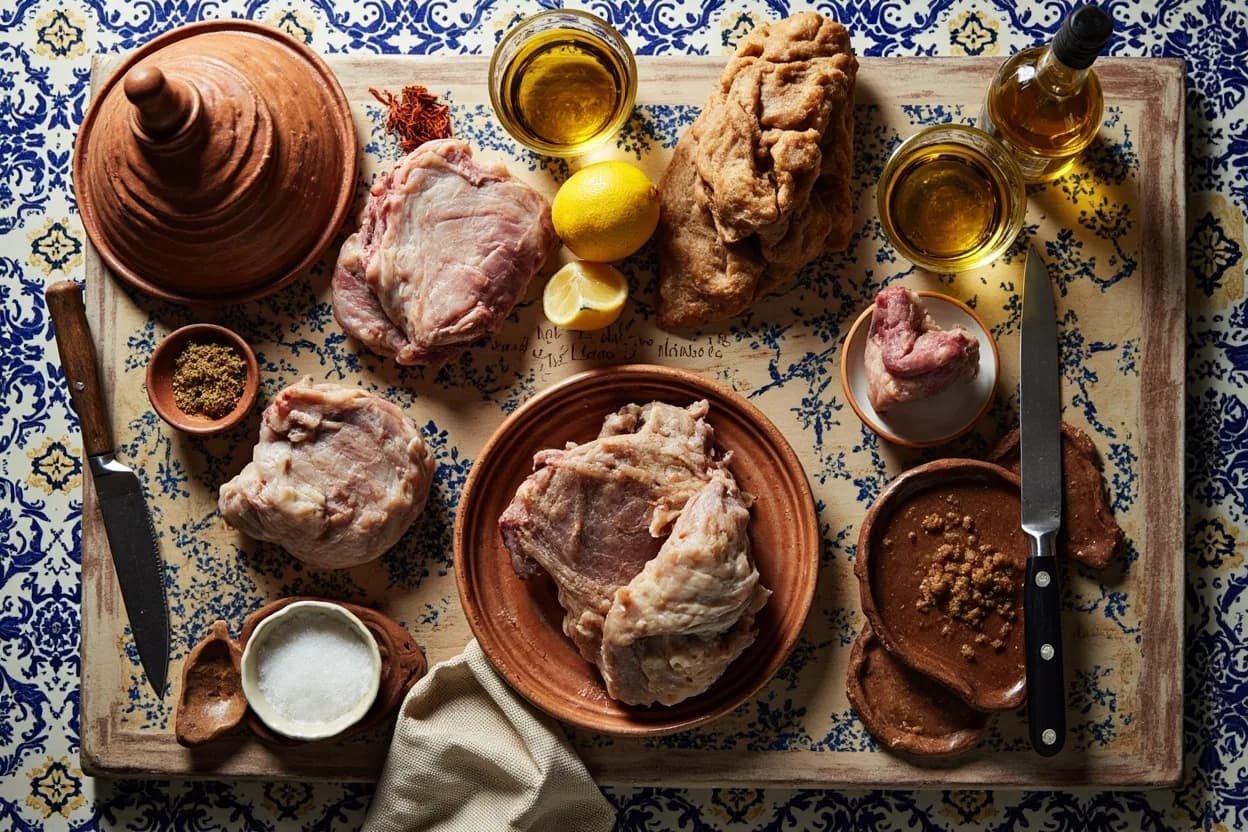
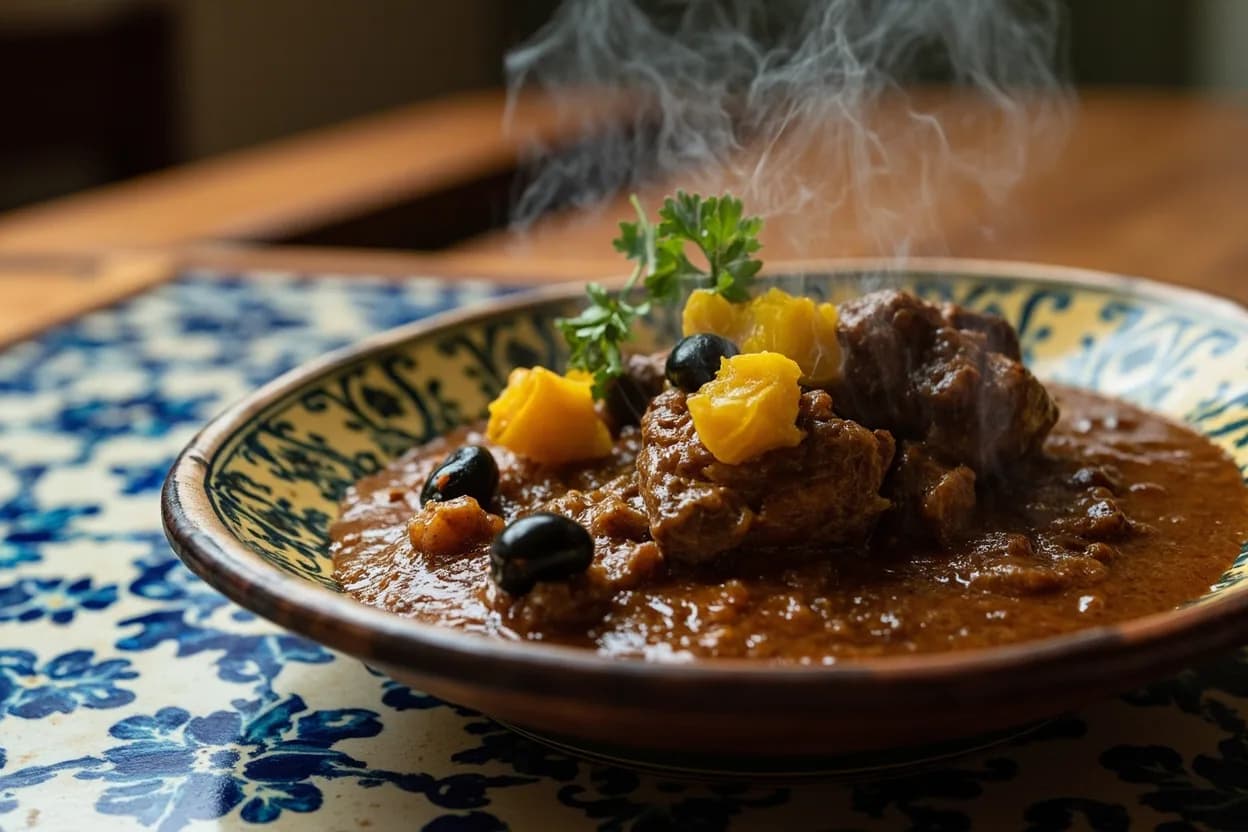
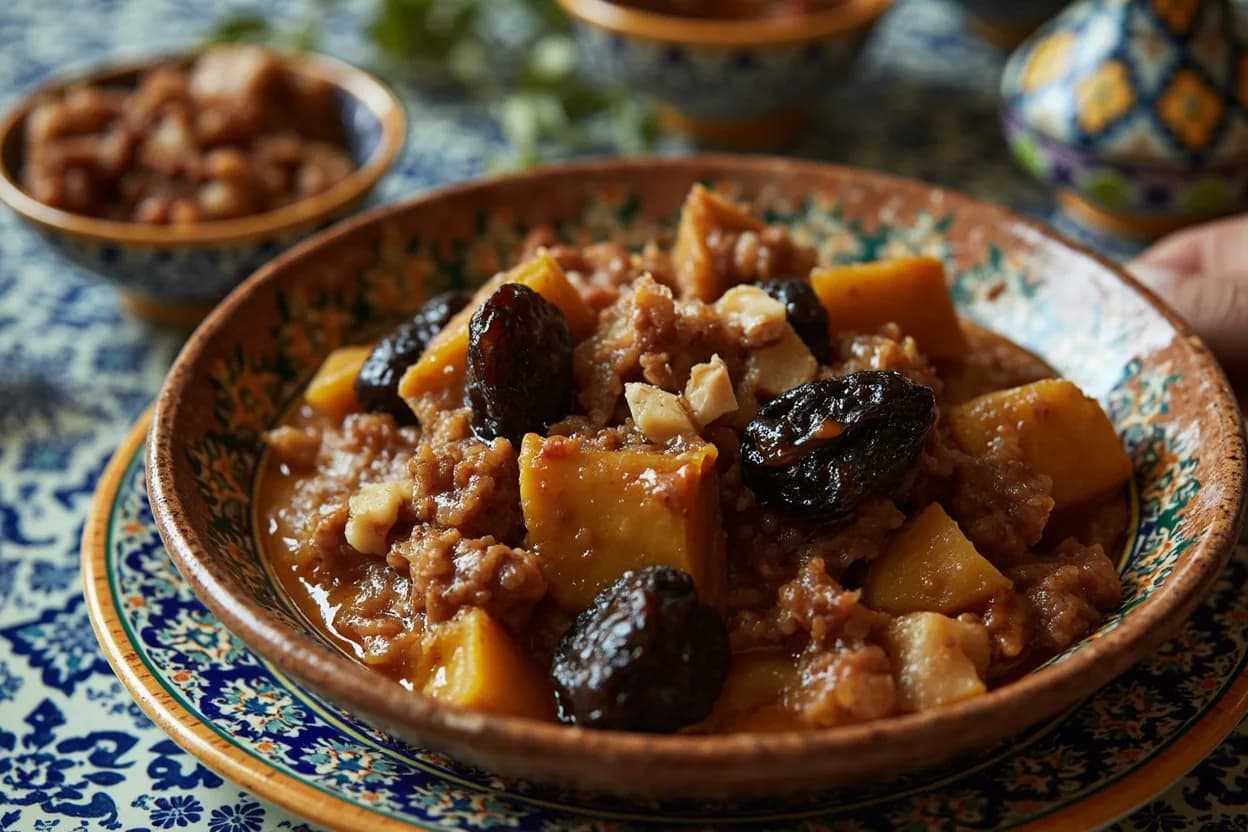
At the table
A formal Moroccan meal begins with multiple salads — cooked vegetable preparations (zaalouk, taktouka) and herb-dressed raw salads — followed by a central tagine or pastilla, then couscous as the filling final savory course, and ends with fresh fruit, pastries, and obligatory mint tea. In riad hospitality culture, the table signals generosity: abundance is the message.
History & context
Moroccan cuisine's sophistication traces to the Almoravid and Almohad dynasties (11th–13th centuries) that ruled an empire stretching from Senegal to Spain. The fall of Andalusia between 1492 and 1609 sent waves of Moorish refugees — bringing with them refined Arab-Iberian court cooking, almond confections, and citrus preparations — directly into Fez and Tetuan, where their influence is still tasted in pastilla and sellou. The four imperial cities (Fez, Marrakech, Meknes, Rabat) each developed distinct court cuisines. Argan oil, from a tree endemic to southwestern Morocco, was used by Amazigh communities for millennia before gaining international recognition. Trans-Saharan trade routes brought sub-Saharan spices and preserved meats into the southern Moroccan larder.
Regional variations
- Fez (Fassi)
The most refined imperial tradition; bastilla and elaborate pastries; the phrase 'Fassi cuisine' is a mark of prestige.
- Marrakech
Stronger Amazigh and sub-Saharan influence; tanjia (slow-cooked hammam lamb) is iconic; more robust spicing.
- Essaouira / Atlantic coast
Seafood-forward; argan oil is endemic to the Souss region nearby; grilled fish with chermoula is the everyday staple.
- Rif Mountains
Amazigh mountain cooking; more vegetable-centered; amlou spread and coarser breads; dried herbs dominate over fresh.
- Saharan south (Ouarzazate, Zagora)
Date-heavy; preserved meats (khli'a); thinner tagines; Tuareg tea ritual with three glasses.
Related cuisines
The pre-Arab substrate; amlou, tafarnout bread, smen butter, and mountain tagines are Amazigh contributions sustained within Moroccan cooking.
Moorish refugees from Spain reshaped Moroccan court cuisine; Fassi pastry and sweet-savory complexity are direct Andalusian legacies.
Morocco is the most internationally recognized member of the broader Maghrebi family, sharing couscous, tagines, and harissa with Algeria and Tunisia.
Canonical recipes
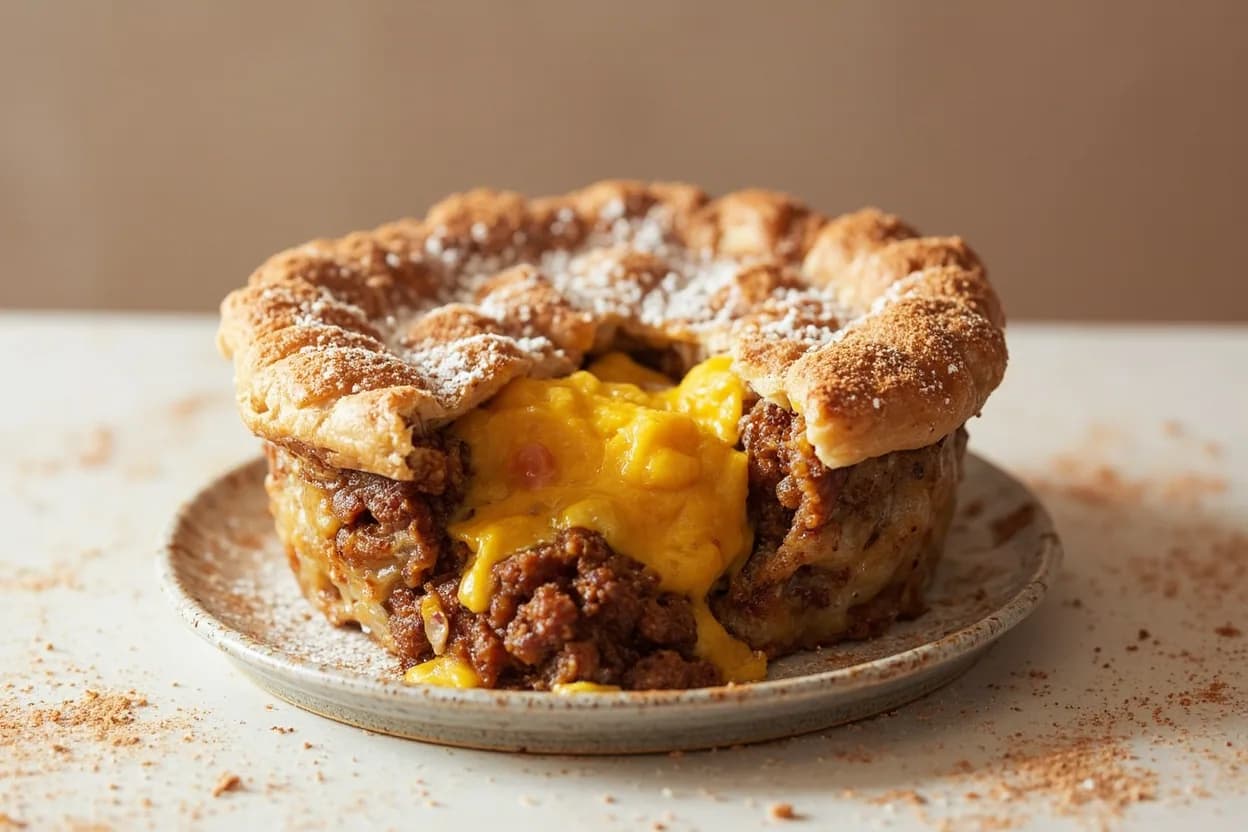
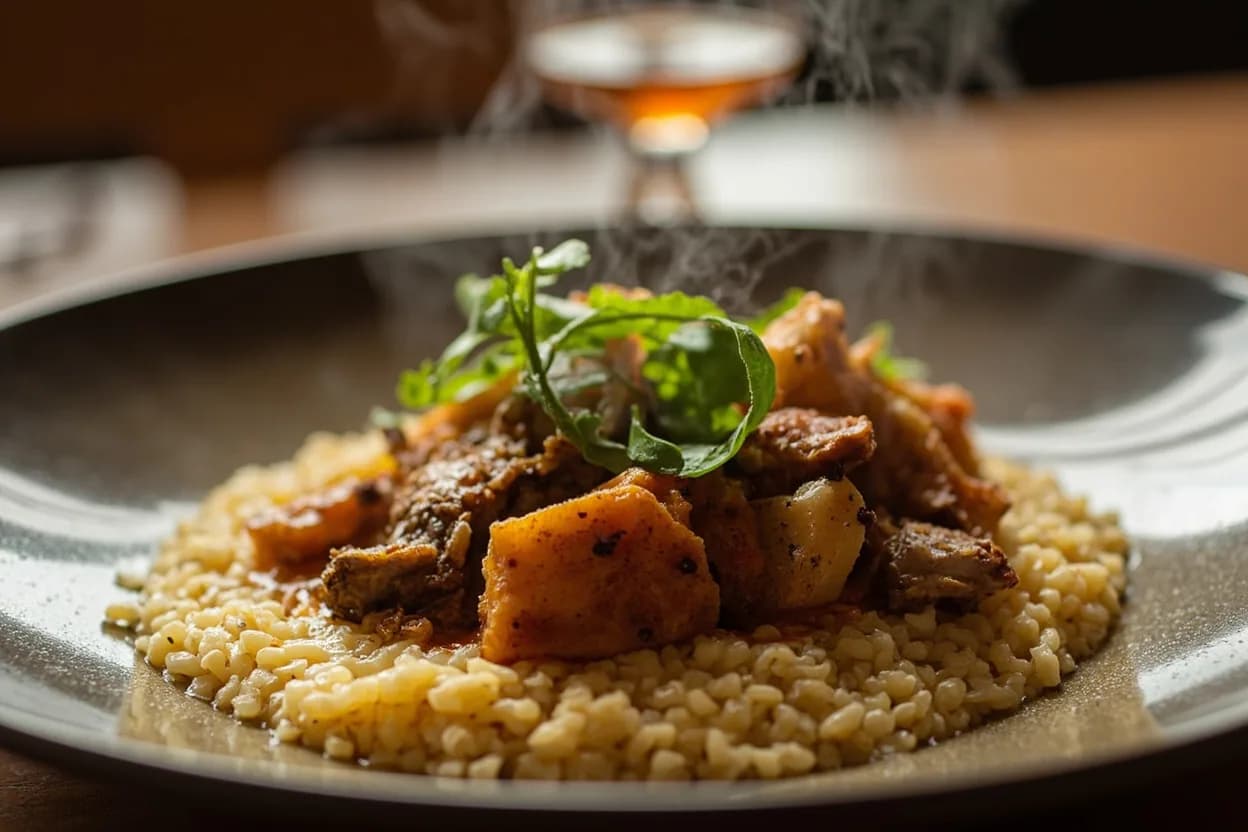
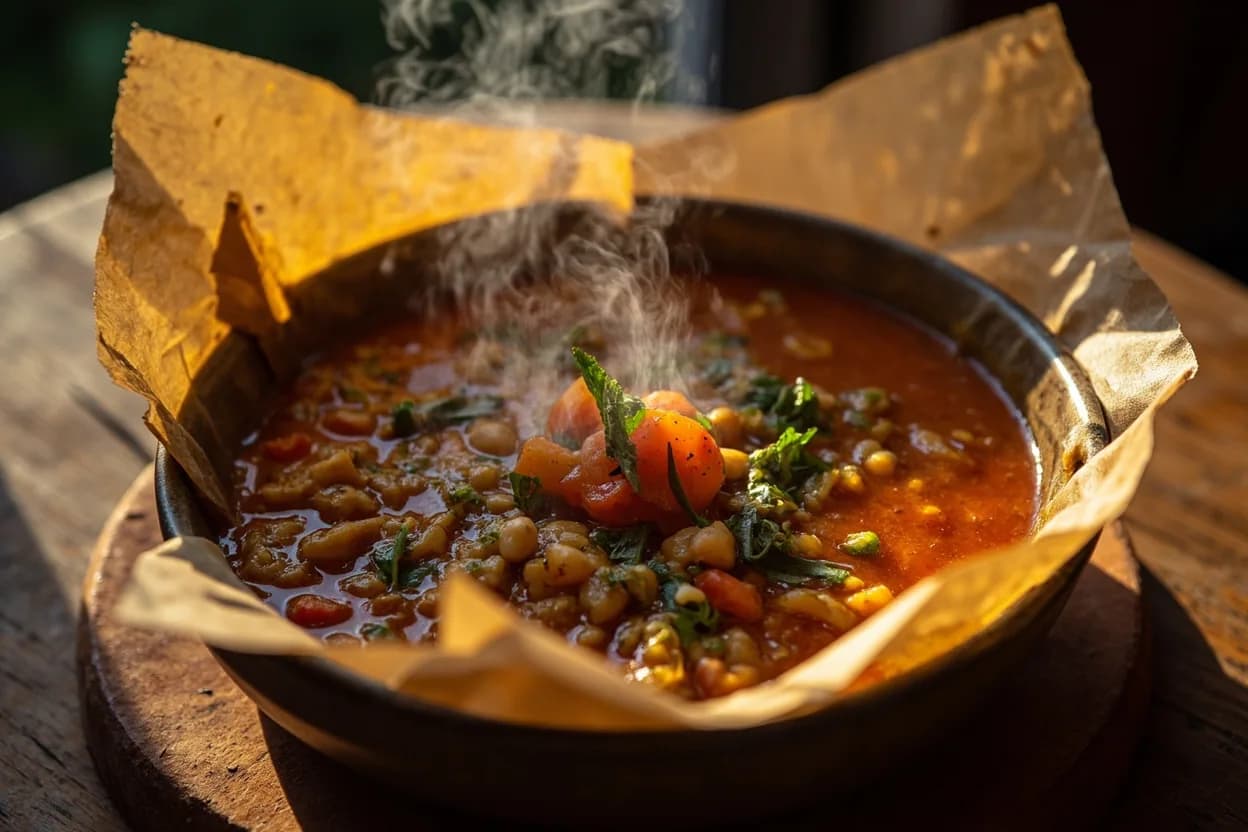
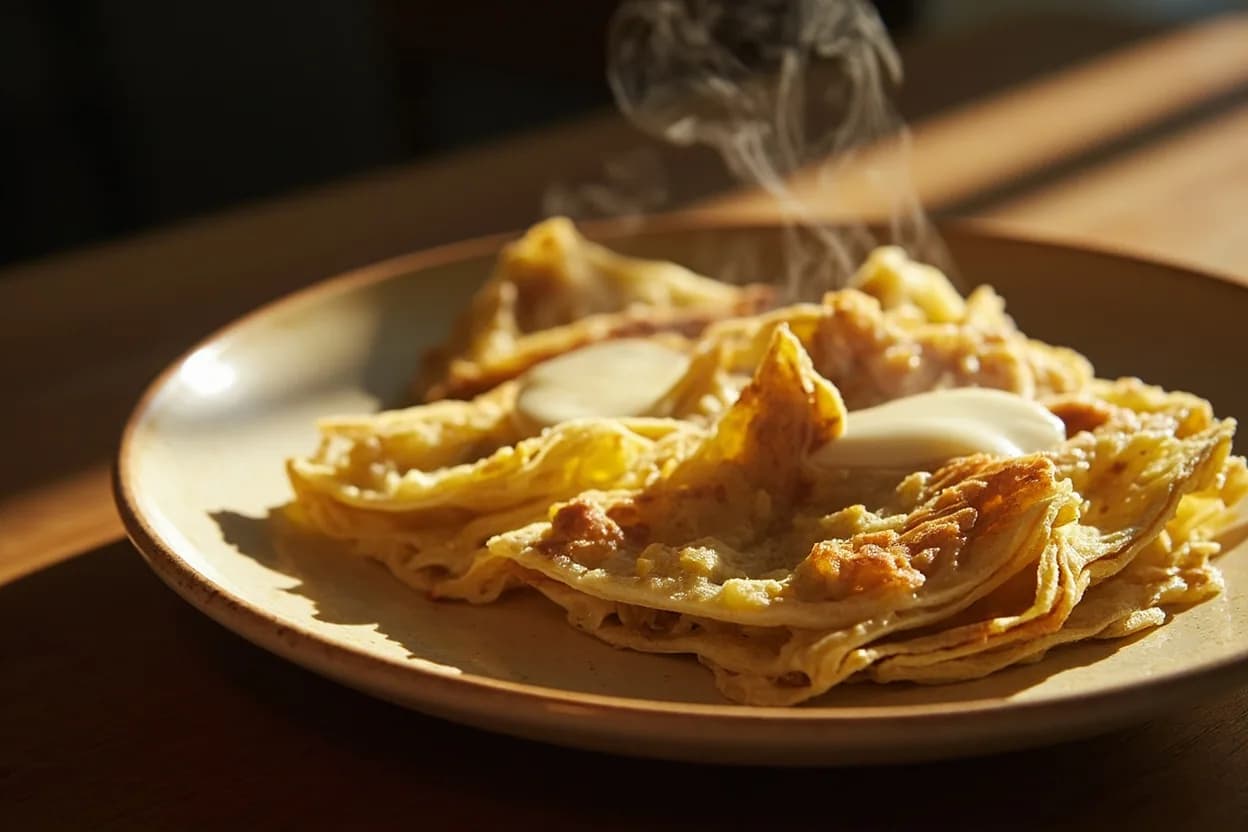
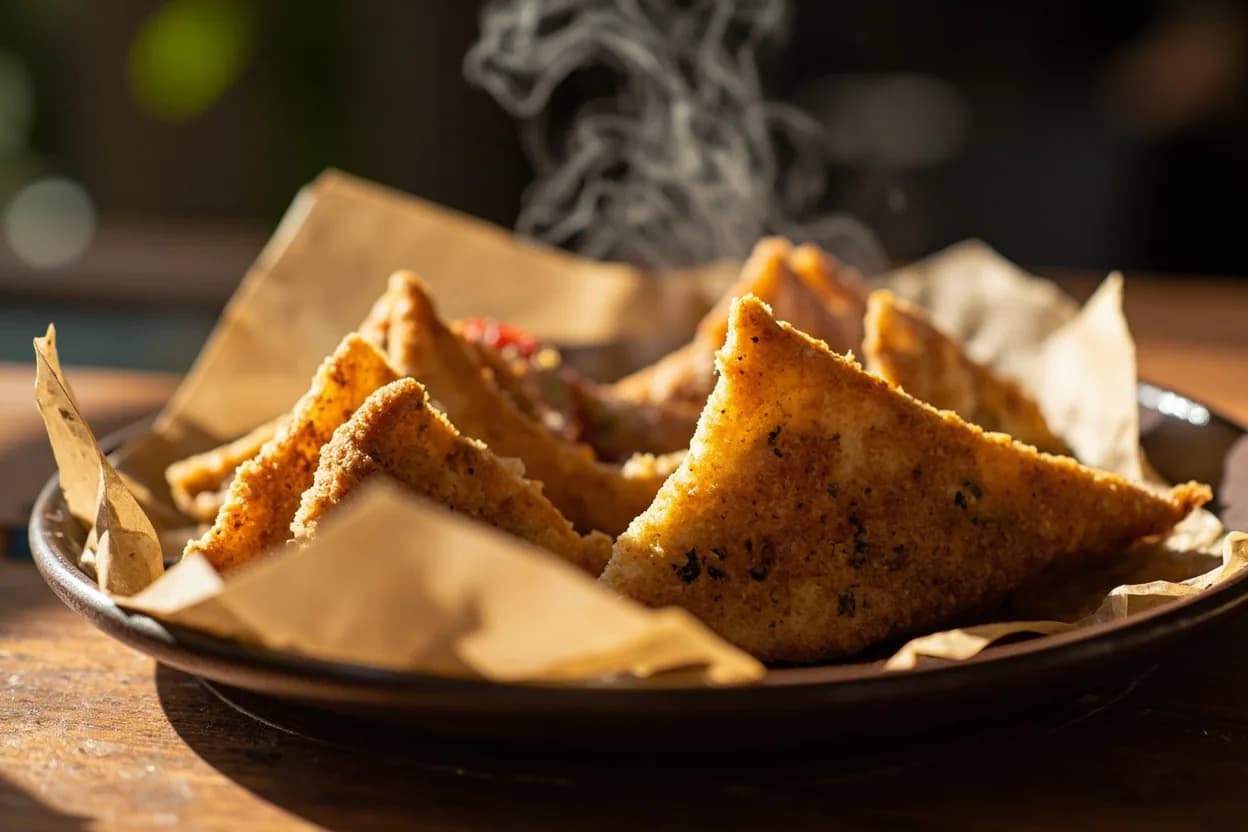
The dishes that define Moroccan, documented in the Canon.
References
- 1.Couscous and Other Good Food from Morocco — Paula Wolfert (1973)
- 2.The Food of Morocco — Paula Wolfert (2011)
- 3.Mourad: New Moroccan — Mourad Lahlou (2011)
- 4.Morocco: A Culinary Journey — Jeff Koehler (2012)
Confidence: high
Notes
Ras el hanout: not a fixed recipe
Ras el hanout can contain anywhere from a dozen to over fifty spices depending on the spice merchant and the occasion. Classic components include cinnamon, cardamom, nutmeg, mace, rose petals, galangal, coriander, cumin, black pepper, and saffron. A household's specific blend is often a closely guarded recipe — the spice merchant's pride.
Argan oil
Argan (Argania spinosa) grows only in southwestern Morocco's Souss-Massa region and is endemic to no other country. Cold-pressed culinary argan oil has a distinctly toasty, nutty profile; cosmetic argan is from unroasted kernels. Amlou — ground almonds, argan oil, and honey — is the Amazigh breakfast spread that predates any European nut butter.