Southern Europe / North Africa
Moorish-Andalusian (Al-Andalus)
Also: Al-Andalus cuisine, Andalusi cookery, Hispano-Arab cuisine
The medieval Islamic culinary civilisation of Iberia — lamb sweetened with fruits, almond-thickened sauces, saffron-gilded rice, and the aromatic vocabulary that still perfumes Andalusian and Maghrebi tables alike.
Al-Andalus designates the Islamic-ruled territories of the Iberian Peninsula from the Umayyad conquest of 711 to the fall of Granada in 1492 — nearly eight centuries. Its cuisine was not a monolith but a living synthesis: Berber pastoral traditions from North Africa, Abbasid courtly refinement from Baghdad (carried westward by displaced Ziryab and the Aghlabid cookbooks), Visigothic Iberian substrates, Jewish dietary and spice knowledge, and the agricultural revolution of Arab hydraulic irrigation that introduced sugar cane, eggplant, rice, saffron, citrus, spinach, artichokes, and hard wheat to Europe through Andalusia. The result was among the most sophisticated and aromatic culinary traditions of the medieval world.
The flavour base
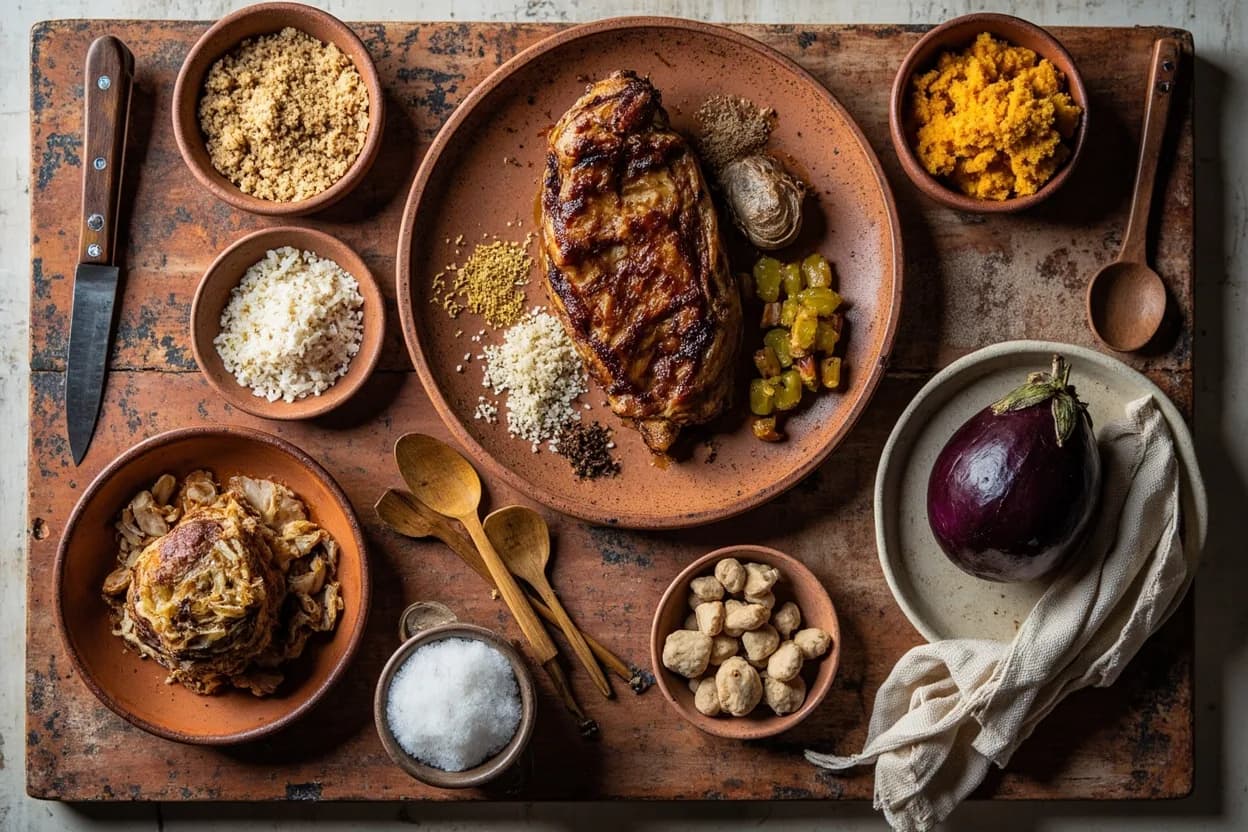
The Arabic flavor grammar of muammar and marinated dishes: vinegar or verjuice (agraz) balanced against honey or dried fruit (raisins, dates, figs); fat from rendered lamb tail or olive oil; aromatics of coriander seed, caraway, cumin, and cinnamon; bound with ground almonds or stale bread soaked in broth.
Pantry staples
Key ingredients
Signature techniques
Signature dishes
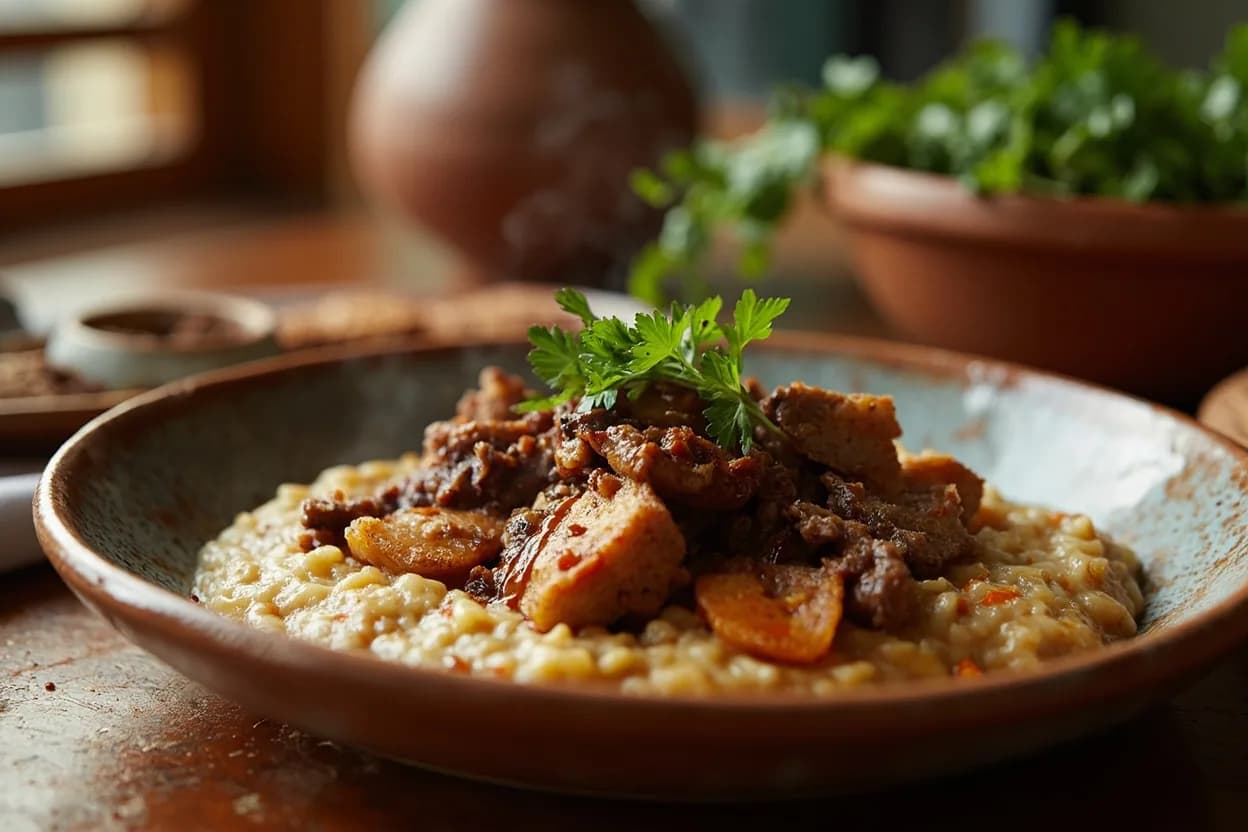
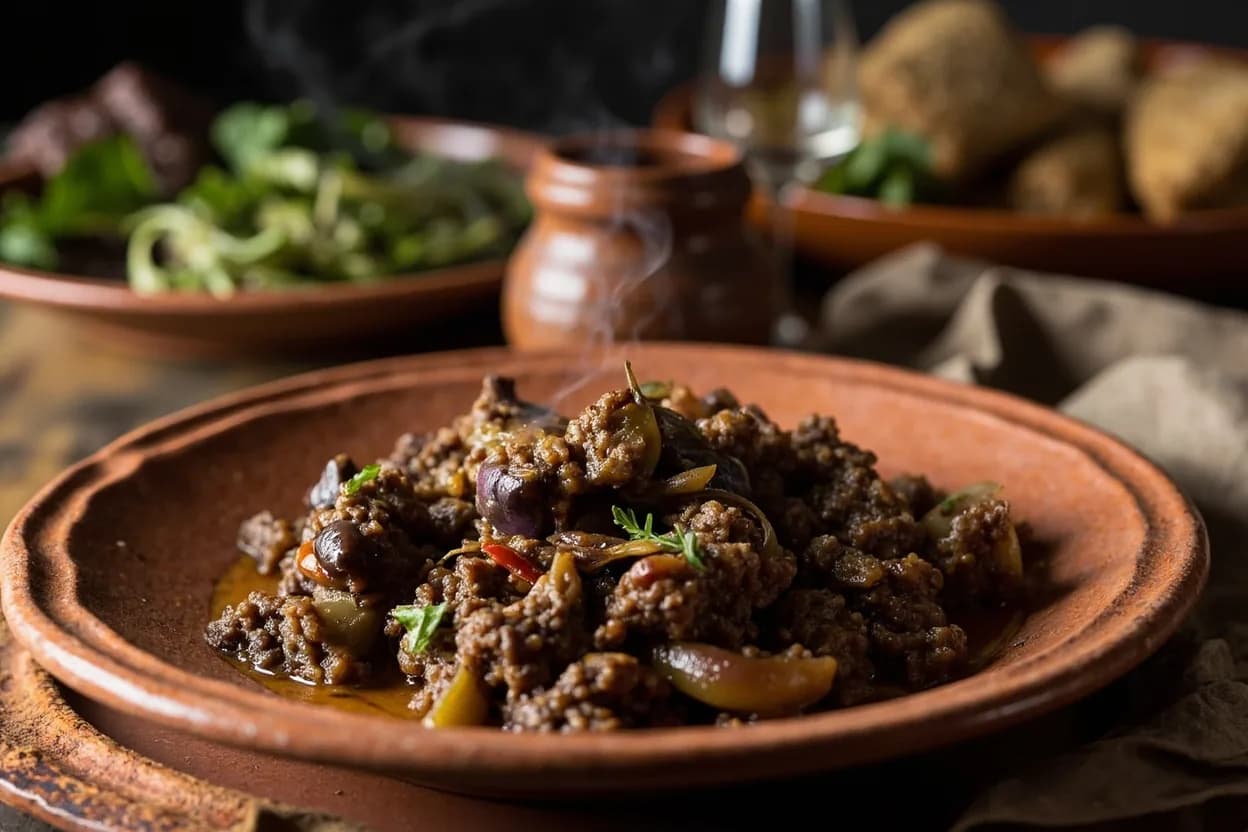
Moorish-Andalusian (Al-Andalus) on the table
At the table
Al-Andalus court banqueting followed the elaborate Abbasid three-course structure codified by Ziryab (Abū l-Ḥasan ʿAlī ibn Nāfi', 789–857): soup or light dishes first, then the main meats, then sweets and fresh fruit — inverting the Roman habit of mixed service. Music was integral to the meal. Communal table bread was standard; individual eating vessels were innovations of Andalusi courtly refinement. The working-class diet was simpler — grain porridges, legumes, vegetable stews — but the spice vocabulary filtered downward.
History & context
The Arab-Berber conquest of 711 found an Iberian peninsula already complex in food culture (Roman, Visigothic, Jewish) but transformed it within two generations. The Umayyad emirate of Córdoba (later caliphate, 929) became one of the wealthiest and most intellectually advanced polities in Europe; Córdoba's population reached 500,000 by the 10th century, dwarfing Paris. The musician and polymath Ziryab, exiled from Baghdad's Abbasid court, arrived in Córdoba c. 822 and is credited by medieval chroniclers with revolutionising table manners, meal sequencing, and palace cooking. The Anonymous Andalusian Cookbook (Manuscrito Anónimo, 13th century) survives as a primary source for over 400 recipes. The Reconquista progressively contracted Al-Andalus southward until Granada's fall in 1492. What was not destroyed survived in two streams: Mudéjar (Muslims under Christian rule) and Morisco (forcibly converted Muslims) food habits persisted until the expulsions of 1609–14, leaving permanent traces in Andalusian, Castilian, Portuguese, and Maghrebi cooking.
Regional variations
- Caliphate Córdoba (10th century)
Peak courtly sophistication; Ziryab-influenced banqueting; spice imports at maximum; sugar, almond, rosewater confections fully established.
- Taifa kingdoms (11th–12th century)
Political fragmentation produced localised adaptations; Andalusian cookbook tradition flourishes in Almería, Sevilla, Valencia.
- Nasrid Granada (13th–15th century)
Compressed into a mountain kingdom; the final synthesis of Andalusi cooking preserved in the Alhambra court; closest ancestors to modern Moroccan cooking.
- Valencian strand
Arab hydraulic rice cultivation in the Albufera wetlands directly seeded paella's predecessor; the Valencian rice tradition is the clearest continuity from Andalusian agriculture.
Related cuisines
The most direct heir — Andalusi refugees and court traditions relocated to Fez, Tetouan, and Chefchaouen after 1492 and 1609; lamb-with-fruit tagines, bastilla pastry, and preserved lemon use all trace to Al-Andalus.
- Modern Andalusian
Gazpacho, salmorejo, ajoblanco, and the almond-spice thread in Andalusian cooking are direct survivals; the escabeche method derives from Andalusian sikbaj.
- Sephardic (Judeo-Spanish)
Centuries of coexistence in Al-Andalus produced shared pantry items and techniques; adafina (the Sabbath pot) parallels Andalusian slow-braise traditions.
- Tunisian and Algerian
Moriscos expelled in 1609 settled heavily in Tunisia; their food practices merged with local Maghrebi traditions, visible in Tunisian couscous spicing and pastry.
Canonical recipes
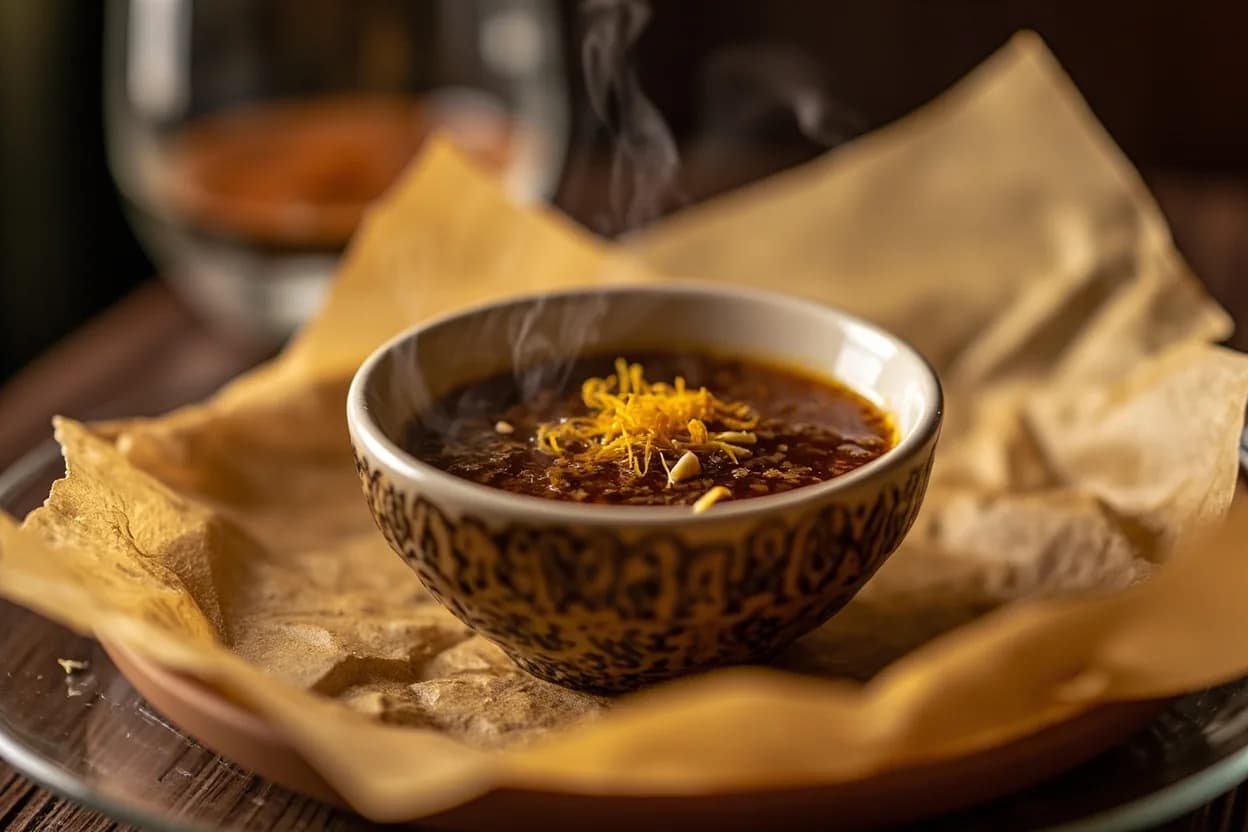
The dishes that define Moorish-Andalusian (Al-Andalus), documented in the Canon.
References
- 1.Charles Perry (trans.), A Baghdad Cookery Book (Petits Propos Culinaires, 2005)
- 2.Charles Perry & Lucie Bolens, Medieval Arab Cookery (Prospect Books, 2001)
- 3.Manuscrito Anónimo, Kitāb al-Ṭabīkh fī al-Maghrib wa al-Andalus (Anonymous Andalusian Cookbook, 13th c.)
- 4.Lucie Bolens, La Cuisine Andalouse, un art de vivre: XIe–XIIIe siècle (1990)
- 5.Richard Fletcher, Moorish Spain (1992)
Confidence: high
Notes
Ziryab and the invention of the modern meal sequence
The claim that Ziryab invented the soup-main-dessert sequence is partially mythologised — the medieval chronicler Ibn Ḥayyān attributes sweeping table reforms to him — but the historical core is that Andalusian court dining did formalise a sequenced, multi-course structure with musical accompaniment that influenced later European banquet culture. He is also credited with introducing asparagus and several spice uses to Iberia. Whether genius or useful legend, the Ziryab narrative captures the real Abbasid culinary ambition that arrived in Córdoba.
The escabeche thread
Sikbaj — the vinegar-honey-meat preparation found in 9th-century Baghdad cookbooks and adapted throughout Al-Andalus — is the direct ancestor of the Spanish escabeche (and by extension the Japanese nanban-zuke and the Latin American escabeche). The word itself derives from the Persian sikbāj (vinegar-meat). The technique of preserving cooked fish or poultry in a spiced acid marinade passed from Andalusian practice into Christian Iberia during the Reconquista and then to the Americas and Asia via the Spanish trade networks.