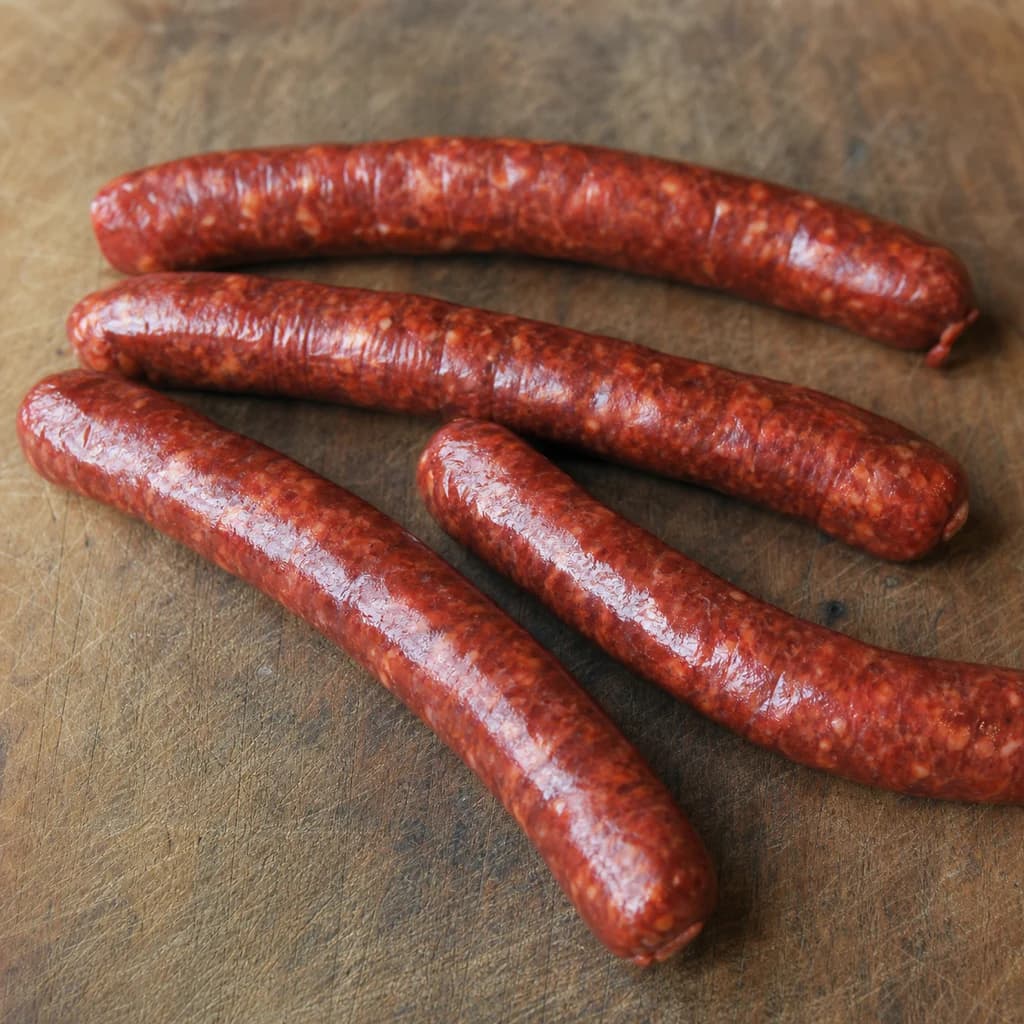
Natural form
Fresh merguez links show their deep red color and coiled lamb-casing form before cooking.
Shows the raw sausage's characteristic crimson color, slim diameter, and natural casing so readers immediately recognize it uncooked.
Proteins
Merguez Sausage
Spicy North African lamb or beef sausage red with harissa and cumin.
Merguez is a fresh, spicy North African sausage made from lamb or beef, seasoned with harissa, cumin, garlic, and paprika that give it a deep red color. It is grilled, pan-fried, or added to couscous, tagines, and sandwiches. Its bold, smoky heat makes it a favorite at street stalls and barbecues across the Maghreb and France.
Merguez is a fresh, uncooked sausage originating from North Africa—Tunisia, Algeria, and Morocco—where it has long been a staple of street food and home cooking. The defining characteristics are its deep brick-red color, which comes from liberal use of harissa (dried chilies ground with garlic and spices), and a dominant flavor profile of cumin and lamb that gives it a distinctly earthy, somewhat gamey character. Traditionally made with lamb or a lamb-and-beef combination (typically 70–80% lean meat to 20–30% fat), merguez is stuffed into lamb casing and sold fresh, never cured. It arrived in France through North African immigration and quickly became embedded in French culinary culture—grilled at markets, split onto pizzas, tucked into sandwiches. What sets merguez apart from other fresh sausages is the fat-to-lean ratio and the harissa-driven heat: the sausage is intentionally rich, and the spice is assertive rather than subtle. It must always be cooked before eating, and its high fat content means it behaves differently from leaner sausages—rendering slowly gives the casing time to crisp without the interior drying out.
- Measured in
- g
- Storage
- Fridge
Types & varieties
Most traditional; pronounced lamb flavor with pleasant gamey undertones
Milder, leaner; common in commercial production
Balanced flavor; most widely available in US and EU markets
Typically hottest; heavier harissa presence dominates the blend
Slightly sweeter spice profile; often includes fennel for a rounder finish
Fresh vs. Cured
Make sure you are buying fresh merguez, not merguez sec (cured/dried). The cured version is a different product entirely—hard, shelf-stable, and sliced thin like salami. Fresh merguez is soft, pliable, bright red, and must be cooked. If the casing is firm and dry, it is cured; cook it only if the label says fresh. Confusing the two will lead to a completely different dish.
- Fresh merguez: soft, pliable, brick-red, sold refrigerated, must be cooked
- Merguez sec: hard, dried, sliced thin, ready to eat as-is
Choosing Quality
Mass-produced merguez often uses lower fat content and inferior spice blends, which produces a dry, one-dimensional sausage. Fresh merguez from a butcher or specialty market will have superior snap, better spice integration, and a more pronounced lamb character. When selecting, look for tight, intact casings and a vivid red color—the color is your first indicator of how much harissa went into the blend.
- Deep brick-red color indicates generous harissa content
- Tight, intact casing prevents fat loss during cooking
- Specialty and butcher versions outperform mass-produced in flavor and texture
Common uses
Tips & pitfalls
- Prick the casing 2–3 times with a fork before cooking to prevent bursting under pressure
- Grill or pan-fry over medium heat rather than high to render the fat slowly without scorching the exterior
- Let rest 5 minutes after cooking—the casing should snap cleanly when bitten if properly cooked
- Taste before serving; spice levels vary dramatically between producers and regions
- If baking, use 375°F (190°C) and prick the casing to prevent pressure buildup and bursting
- Avoid overcooking—merguez becomes dry and crumbly once it passes 170°F (77°C) internal, regardless of whether it has reached safe temperature
- For sandwich use, cut diagonal slices to maximize surface area for browning and better texture in the roll
- Do not mistake merguez sec for fresh merguez; the cured version is ready to eat and behaves completely differently in cooking
- When browning sliced merguez in a pan, work in batches to prevent steaming rather than searing
Nutrition
Energy
649 kJ · per 100 g
Where the calories come from
Protein
18.8g
38% DV
Carbs
0.5g
0% DV
Fat
8.1g
10% DV
Fiber
0g
0% DV
Sugars
0g
of which
Sodium
593mg
26% DV
Source · USDA FoodData Central · approx. Sausage, turkey, fresh, raw
View on FDC →In the shops
Matched grocery products
No matched grocery products for Merguez Sausage yet.
Good to know
- Origin
- North Africa (Tunisia, Algeria, Morocco); popularized in France
- Primary Meat
- Lamb or beef (or combination); typically 70–80% lean meat to 20–30% fat
- Key Spices
- Harissa (dried chilies), cumin, coriander, garlic; sometimes fennel, paprika, caraway
- Color
- Deep brick-red from harissa and chili content
- Form
- Fresh, uncooked sausage; U-shaped links or coiled; natural or collagen casing
- Heat Level
- Moderate to hot (varies by producer; Tunisian-style typically spicier)
- Storage (Fresh)
- Refrigerate 2–3 days; freeze up to 3 months
- Safe Internal Temp
- 160°F (71°C) for beef; 165°F (74°C) for lamb
- Typical Size
- 4–6 inches long, about 1-inch diameter when linked
Substitutes
- Italian Hot Sausage — Different spice profile (fennel-dominant) but similar texture and fat content; works well in most applications
- Spanish Chorizo (Fresh) — Made with smoked paprika rather than harissa; less spicy but acceptable in a pinch
- Lamb Breakfast Sausage — Adjust with a teaspoon of harissa paste and ground cumin per link to approximate merguez flavor
- Homemade Merguez — Ground lamb (or 70/30 lamb and beef) + 15–20% lamb fat + harissa paste + cumin + coriander + garlic, stuffed into lamb casing
Pairs with
Also called
Merguez
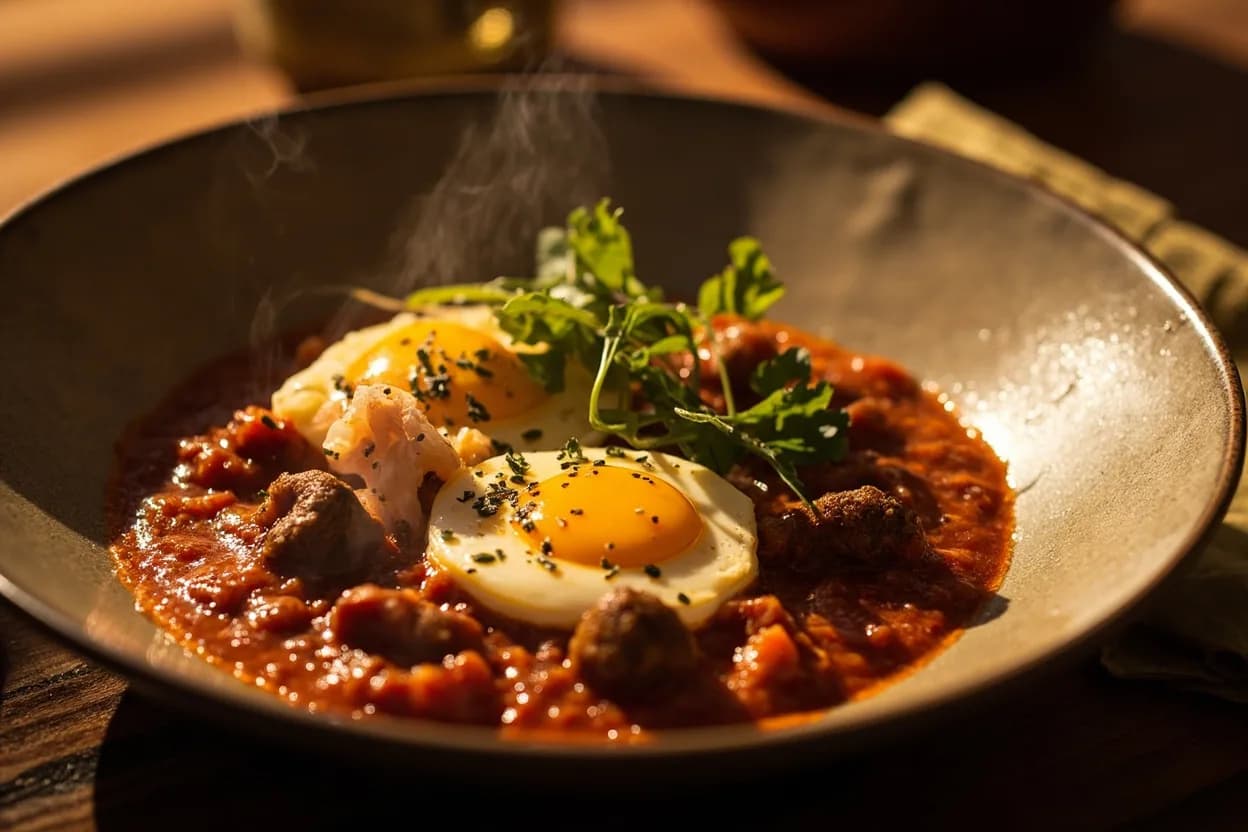
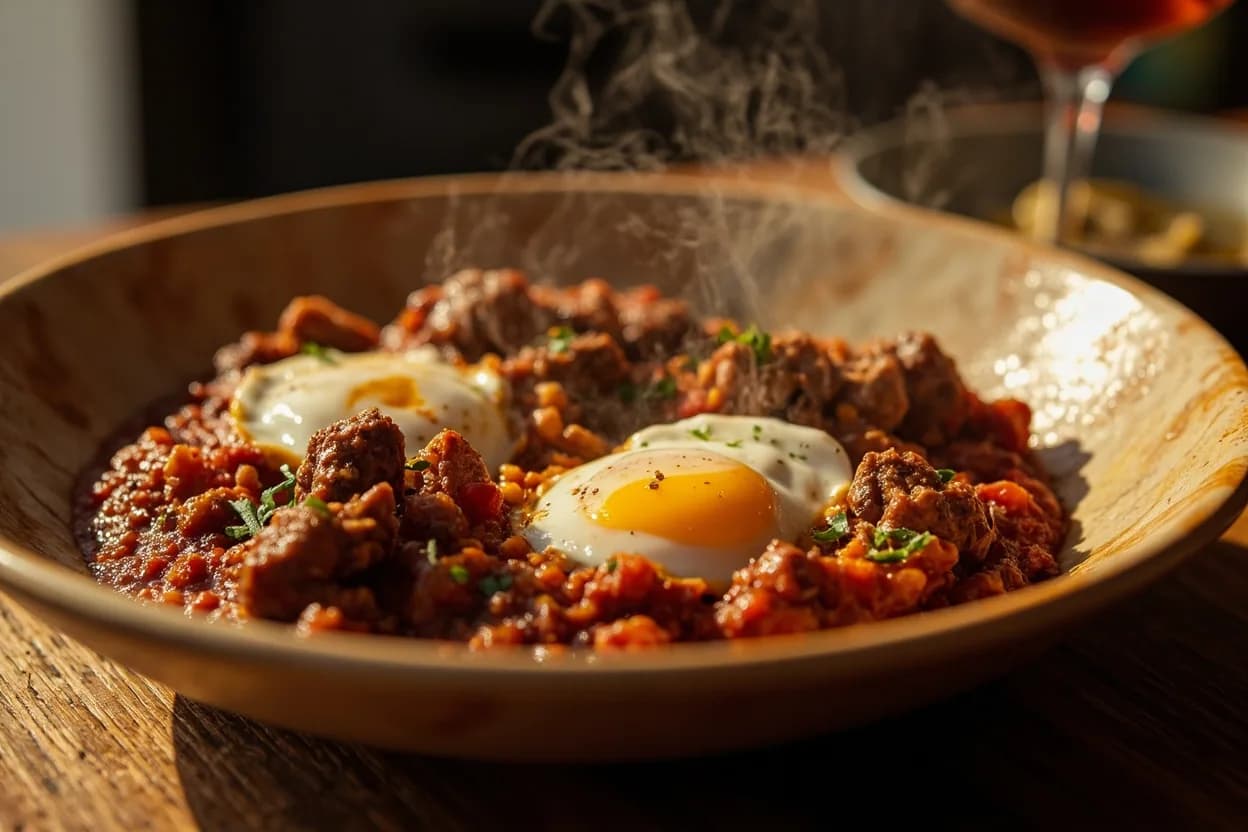
Appears in these dishes
Related
Egg
The kitchen's everything ingredient — bind, leaven, enrich, or fry
Chicken Breast
Lean, quick-cooking white meat for everyday dinners

Ground Beef
Versatile minced beef for burgers, ragù, tacos, and meatballs
Pork Loin
Lean, tender roasting cut that stays juicy with care
Salmon
Rich, rosy fish that roasts, grills, or cures beautifully

Egg White
Pure protein that whips to airy peaks for meringue and more
Egg Yolk
Rich, golden yolk for custards, mayonnaise, and pasta

Quail Egg
Tiny, speckled eggs for garnishing and elegant bites