North America
American BBQ (Regional Traditions)
Also: American barbecue, BBQ, pit barbecue, low-and-slow, smoke cooking
America's most contested culinary institution: a spectrum of low-and-slow smoke traditions running from Texas brisket to Carolina whole hog, each fiercely regional, deeply cultural, and stubbornly distinct.
American barbecue is not a single cuisine but a family of distinct regional traditions united by a core technique — long, slow cooking with hardwood smoke at low temperatures (225–275°F / 107–135°C) — and a common cultural inheritance from the pig roasts and beef cookouts of the colonial South. The major traditions are: Texas brisket (beef-centric, post oak, minimal sauce); East and West Carolina (whole hog versus pork shoulder, vinegar versus tomato-vinegar sauce); Memphis (dry-rub ribs, pulled pork on a bun); Kansas City (sauced ribs and burnt ends, broad protein range); and Alabama (white sauce, chicken). Each tradition is tied to specific hardwoods, specific cuts, specific sauces (or no sauce at all), and specific pit designs — and practitioners of each style defend their regional identity with near-theological conviction.
The flavour base
Hardwood smoke is the primary flavour driver: each region specifies its wood. Texas uses post oak and mesquite; Carolina uses hickory and fruitwood; Memphis uses hickory. A dry spice rub (salt, black pepper, paprika, garlic, cayenne in regional proportions) applied hours or days before cooking draws moisture to the surface, forming the smoke-permeable 'bark' that distinguishes great barbecue. Low-and-slow cooking dissolves collagen into gelatin, rendering connective tissue and fat into silky textures impossible to achieve any other way.
Pantry staples
Key ingredients
Signature techniques
Signature dishes
American BBQ (Regional Traditions) on the table
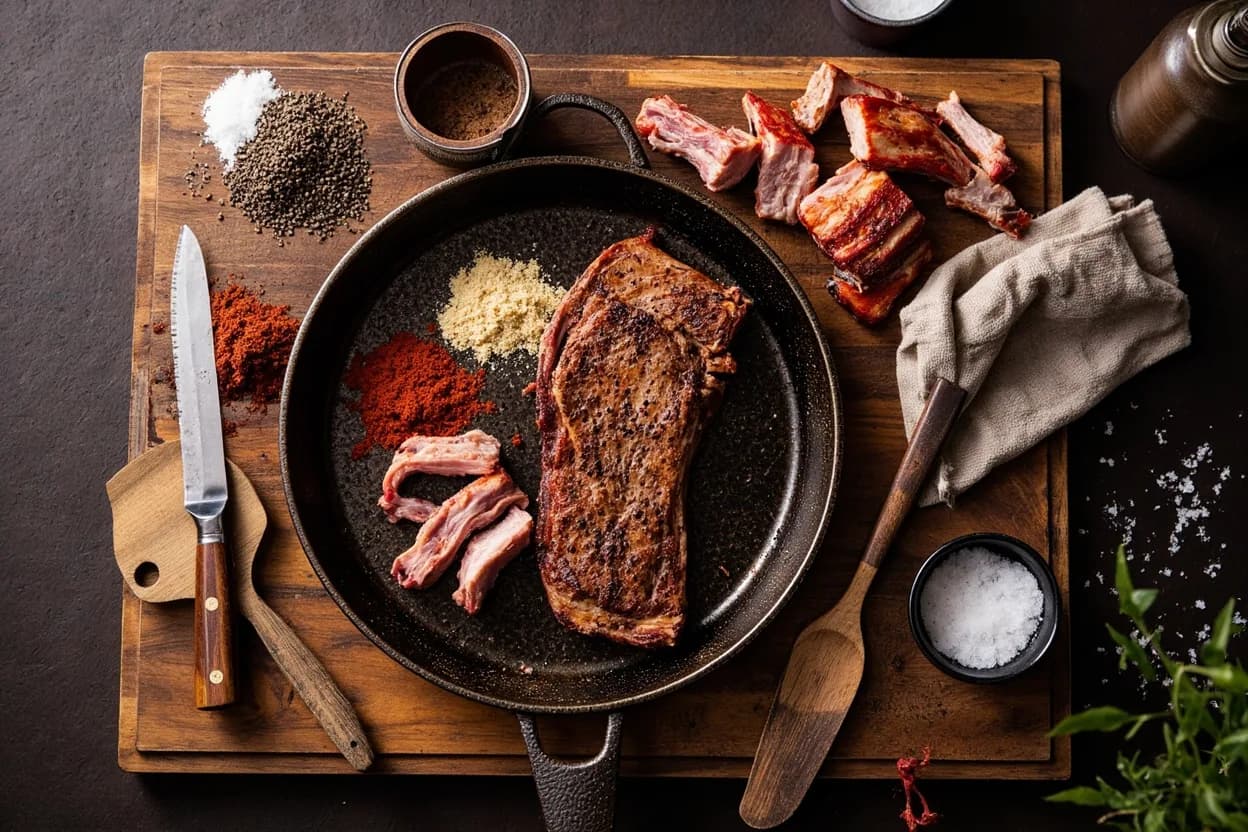
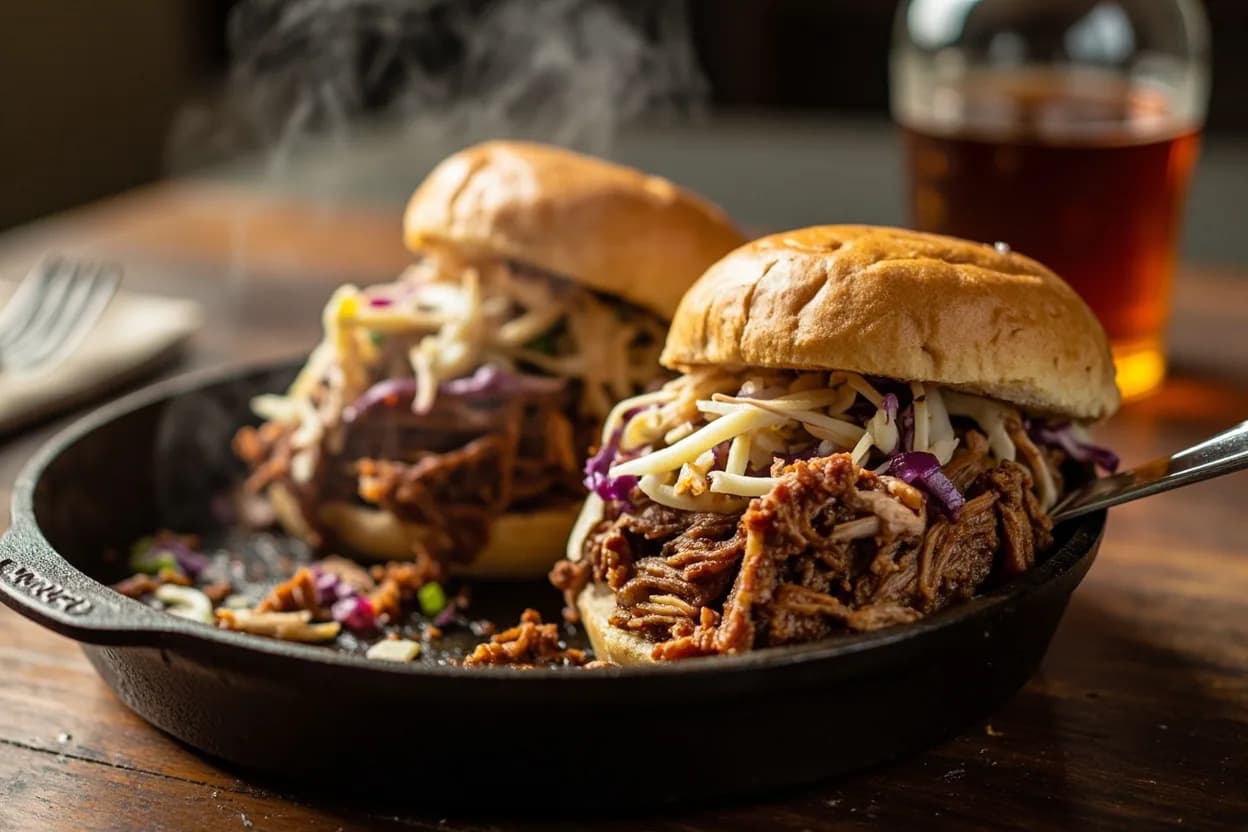
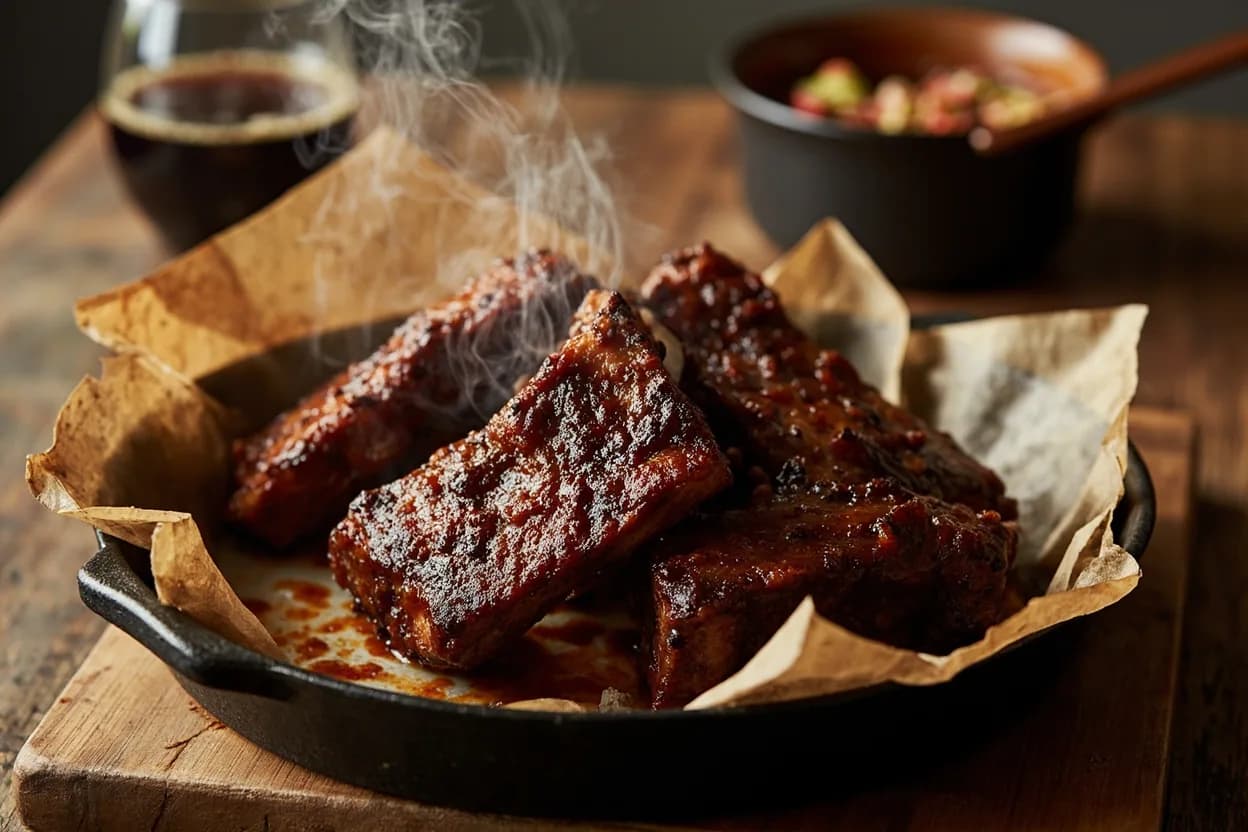
At the table
Barbecue is traditionally served in the late morning to early afternoon — the meat is put on at midnight or early morning and comes off at noon. It is eaten on butcher paper or foam trays, not plates, with white bread (to soak fat), pickled onions, pickles, and jalapeños in Texas; coleslaw and hushpuppies in Carolina; baked beans and potato salad in Kansas City. The restraint is the point: a great brisket needs nothing but itself.
History & context
American barbecue descends from the barbacoa of the indigenous Caribbean and the whole-animal pit roasts of colonial Virginia and the Carolinas, where hog-killing season produced communal feasts fed by enslaved Black pitmasters whose technique and knowledge were the foundation of the tradition. The word 'barbecue' likely derives from the Caribbean Taino word barbacoa (a wooden frame for smoking meat over fire), transmitted through Spanish colonial contact. In the antebellum South, barbecue was the great public feast — political rallies, church gatherings, and Independence Day celebrations centred on it. After the Civil War and emancipation, Black pitmasters opened the first commercial barbecue restaurants in the cities of the New South. The great regional divergences solidified from the late 19th century onward: Texas, with its cattle drives and German-Czech immigrant butcher traditions, went beef-and-smoke-only; the Carolinas stayed with whole hog and vinegar; Kansas City, at the crossroads of cattle and pork trade routes, built its sauce-centric tradition. The current 'golden age' of American barbecue — driven by pitmasters like Aaron Franklin (Texas), the Skylight Inn (NC), and Charlie Vergos's Rendezvous (Memphis) — is simultaneously a culinary and a scholarly reckoning with the African American roots of the craft.
Regional variations
- Texas (Central Texas / Lockhart / Austin)
The purist tradition: salt and pepper only, post oak smoke, no sauce at the table. Beef brisket is the prestige cut; beef sausage (hot links) and beef ribs are co-stars. Franklin Barbecue in Austin is the current reference point. The German-Czech butcher-shop origin of the style means brisket was originally sold by weight on butcher paper.
- East Carolina (Lexington / Ayden)
Whole hog is the only legitimate protein. The sauce is cider vinegar, red pepper flakes, and a little sugar — no tomato. The Skylight Inn in Ayden (Wayne Monk, then Samuel Jones) has operated since 1947 and is the benchmark. Cornbread and coleslaw are required.
- West / Lexington-Style Carolina
Pork shoulder (not whole hog) and a tomato-tinged vinegar sauce ('dip') distinguish this Piedmont style from the eastern tradition. A religious boundary between the two camps runs roughly along I-85.
- Memphis
Ribs are supreme — dry-rub or wet (sauced). Charlie Vergos's Rendezvous and Cozy Corner define the style. Pulled pork sandwiches with slaw are the everyday format. Hickory smoke; the sauce is tomato-mustard-vinegar with heavy paprika.
- Kansas City
The most sauce-forward tradition and the broadest in protein range (brisket, ribs, burnt ends, chicken, turkey). KC Masterpiece-style thick, sweet, tomato-molasses sauce is the national archetype. Burnt ends — the fatty, cubed point of the brisket, double-smoked — were invented here and are now internationally recognised.
- Alabama (Decatur / North Alabama)
Big Bob Gibson's white sauce — mayonnaise, horseradish, apple cider vinegar, black pepper — applied to smoked chicken is the defining regional signature. Pork is also smoked but chicken is the flag-bearer.
Related cuisines
Barbecue and soul food share deep roots in African American cooking tradition and the same whole-animal pork philosophy; many soul food restaurants have a barbecue component and vice versa.
- Mexican (Northern / Norteño)
Barbacoa — pit-roasted beef or goat, traditionally in agave leaves — is the Mexican parallel tradition that influenced Texas barbecue via vaquero and border culture exchange.
- Caribbean (Jerk)
Jamaican jerk cooking — slow-smoked over pimento wood in a covered pit — shares structural technique with American pit barbecue and descends from a similar indigenous-African fusion tradition.
A parallel New World live-fire tradition focused on beef; different technique (high-heat rotisserie, not low-and-slow smoke) but a related cultural logic of communal meat celebration.
References
- 1.Franklin Barbecue: A Meat-Smoking Manifesto — Aaron Franklin & Jordan Mackay
- 2.Whole Hog BBQ: The Gospel of Carolina Barbecue — Sam Jones & Daniel Vaughn
- 3.Republic of Barbecue — Elizabeth S. D. Engelhardt (ed.)
- 4.The Prophets of Smoked Meat — Daniel Vaughn
- 5.Barbecue: The History of an American Institution — Robert F. Moss
Confidence: high
Notes
The stall: barbecue's most important phenomenon
At around 150–165°F (65–74°C) internal temperature, a large brisket or pork shoulder will stop rising in temperature and may actually drop slightly — sometimes for several hours. This 'stall' is caused by evaporative cooling as moisture escapes the meat's surface. It is the central test of a pitmaster's patience and judgment: wrapping in butcher paper (the 'Texas crutch') shortens the stall by trapping moisture; leaving the meat unwrapped produces a harder, darker bark. Different schools have strong views; Aaron Franklin wraps; the Skylight Inn never does.
The African American origin question
The scholarship of Robert Moss, Adrian Miller, and others has documented that American barbecue — particularly in the South — was created and perfected by enslaved and later free Black pitmasters who were responsible for the entire tradition from pit construction to seasoning to serving. Their names were rarely recorded. The contemporary reckoning — including the elevation of Black pitmasters like Rodney Scott (South Carolina whole hog), Kenny Gilchrist (Texas), and the Jones family (North Carolina) — is beginning to correct the record.