North America
American Southern (Soul Food)
Also: soul food, African American Southern cooking, Down Home cooking, Deep South cooking, Black American cuisine
The African American culinary tradition forged under slavery, refined through the Great Migration, and now recognised as the foundational flavour of American food — a cuisine of resourcefulness, love, and profound cultural memory.
Soul food is the African American culinary tradition rooted in the Deep South states of Georgia, Alabama, Mississippi, South Carolina, and their neighbours. It evolved from the cooking of enslaved Africans who were given the least desirable cuts of pork and the scraps of the plantation larder and transformed them — through techniques carried from West and Central Africa — into dishes of extraordinary depth and nourishment. The cuisine is defined by its relationship to pork (every part used), to low-and-slow braising, to corn in all its forms, to collard and mustard greens, and to the shotgun marriage of constrained ingredients and skilled hands. Through the Great Migration (1910–1970), soul food spread to Chicago, Detroit, New York, and Los Angeles, becoming the template for American comfort food broadly.
The flavour base
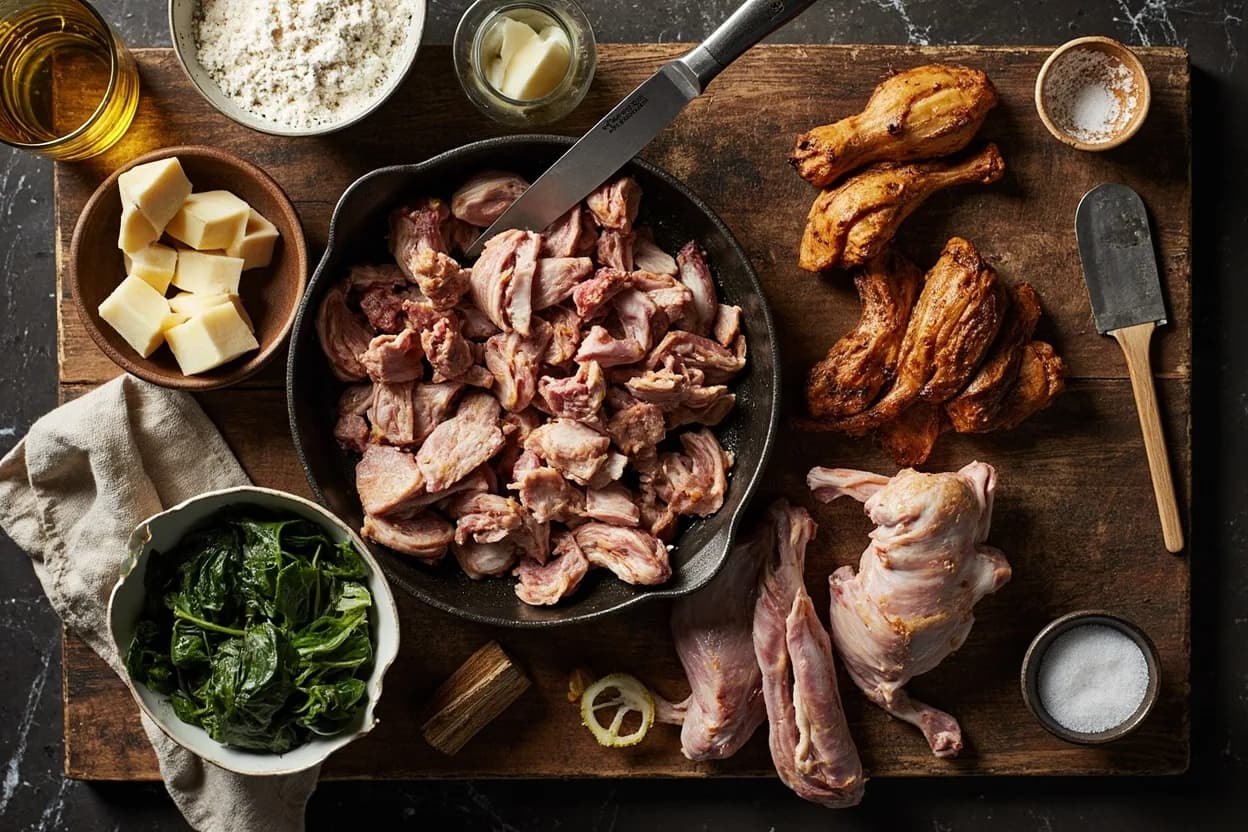
Smoked and salted pork — fatback, ham hocks, neck bones — is the foundational flavoring agent, used even in vegetable dishes. Onion and garlic provide the aromatic base. Long cooking in liquid (braising, stewing, simmering) extracts gelatin and collagen from bones and connective tissue, creating richly bodied pot liquors that are as prized as the solid food they accompany.
Pantry staples
Key ingredients
Signature techniques
Signature dishes
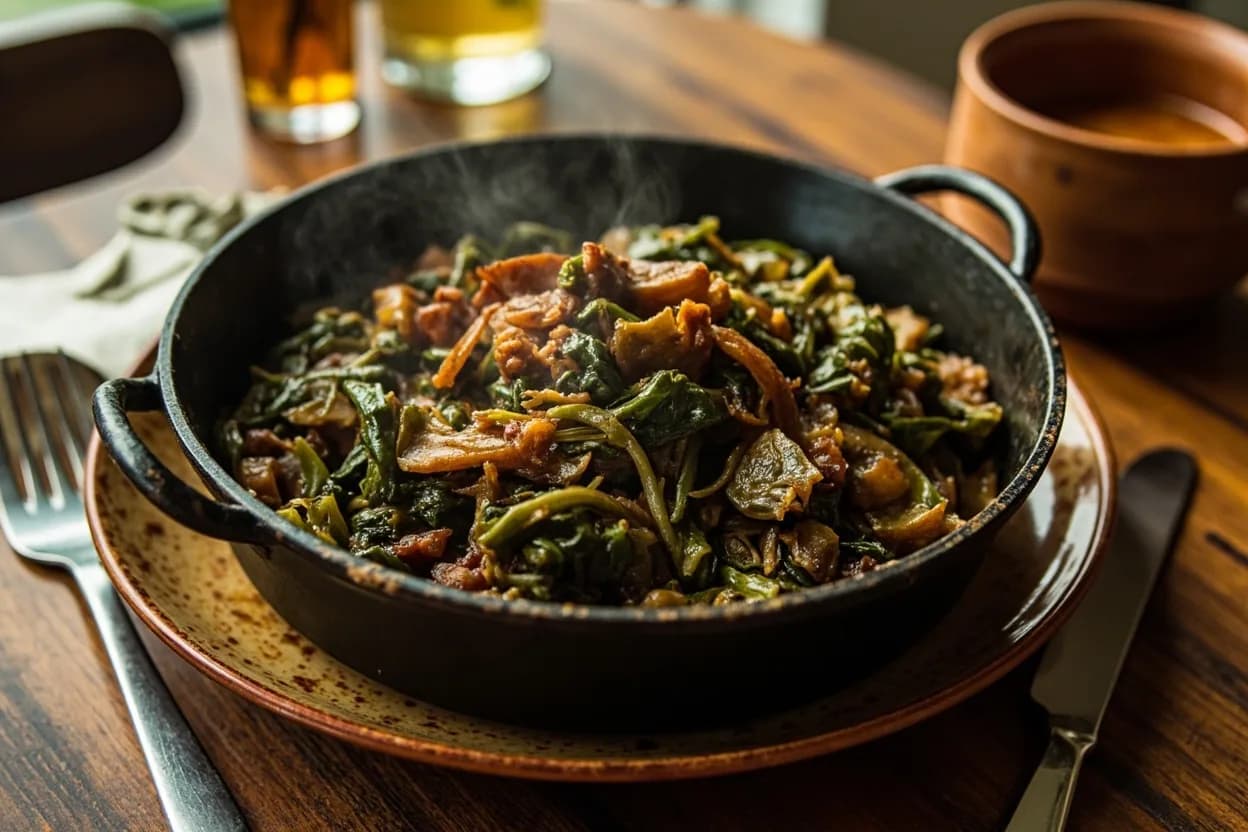
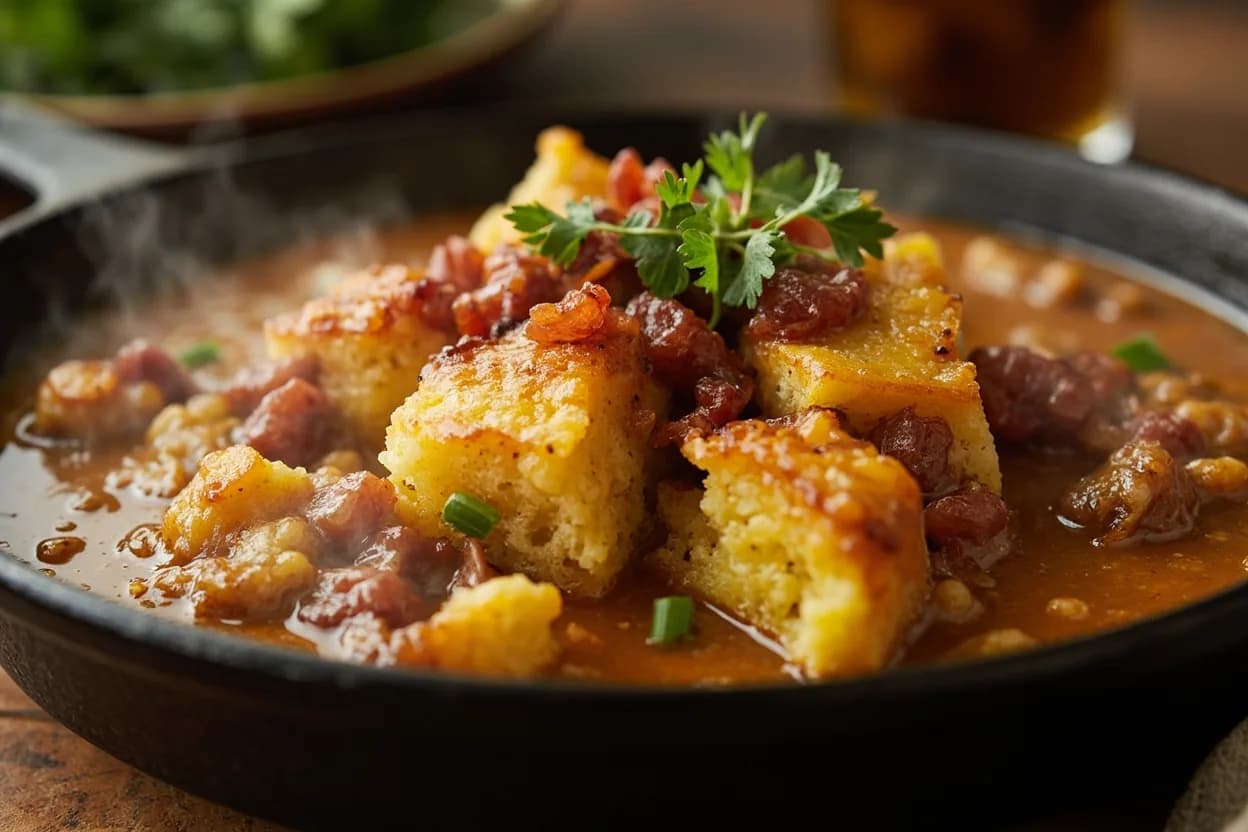
American Southern (Soul Food) on the table
At the table
Soul food is the quintessential Sunday dinner tradition: a large mid-day meal after church, featuring a central protein (fried chicken or pork), multiple 'sides' (greens, beans, mac and cheese, cornbread), and a dessert (pie, cobbler). The sides are never secondary — they carry as much cultural weight as the protein. Weekday cooking draws on the same ingredients but stretched further: bean soups with ham hocks, cornmeal mush, and dishes built from leftovers and bones.
History & context
The origin lies in the forced transplantation of millions of West and Central Africans to the American South between the 17th and 19th centuries. Enslaved people cooked for their enslavers in the plantation kitchens of Virginia, the Carolinas, and Georgia — becoming the technical authors of American Southern cooking broadly — while feeding themselves and their families on rations of cornmeal, fatback, molasses, and vegetables they grew in their own garden plots. The techniques (one-pot cooking, deep-frying, long braising) and ingredients (okra, black-eyed peas, sorghum, rice) they brought from Africa shaped everything that followed. The term 'soul food' was coined in the 1960s during the Black Power movement, reclaiming the cuisine as a proud expression of African American identity rather than the food of poverty. The Great Migration had already carried it to Northern cities, where soul food restaurants in Harlem, Chicago's South Side, and Detroit's Black Bottom became community anchors. Contemporary chefs — including Edna Lewis, Leah Chase, and later Mashama Bailey and Kwame Onwuachi — have elevated soul food into fine-dining contexts while insisting on its cultural dignity.
Regional variations
- Lowcountry (South Carolina / Georgia coast)
Rice is the primary starch, not cornbread, reflecting the expertise of enslaved Gullah Geechee people — many brought from West Africa's 'Rice Coast' (Sierra Leone, Guinea). Shrimp and grits, perloo (rice pilaf), and Gullah-specific preparations are distinct.
- Mississippi Delta
The blues and the tamale are both Delta products; tamale culture arrived with Mexican agricultural workers in the early 20th century and was absorbed into Black Delta cooking. Catfish from the bayous is the definitive protein.
- Urban North (Chicago / Detroit / Harlem)
Great Migration soul food adapted to urban kitchens and different ingredient availability; the classic 'soul food restaurant' template — long hours, abundant sides, sweet tea — emerged here.
- Texas soul food
Blends with Tex-Mex influence; beef becomes more prominent alongside pork; jalapeños appear in cornbread; Creole and Cajun cross-pollination is heavy near the Louisiana border.
Related cuisines
- West African
The source tradition: okra, black-eyed peas, sorghum, rice cultivation, and one-pot stew technique all arrived with enslaved Africans and form the DNA of soul food.
- American Southern (White traditions)
Soul food and white Southern cooking share most of the same ingredients and many techniques — because enslaved and then free Black cooks were the primary authors of Southern cuisine broadly, a fact long understated.
Closely related: same African-French-pork-rice substrate; New Orleans Creole cooking is in many respects the most sophisticated branch of the same tree.
- Caribbean (Afro-Caribbean)
Diaspora cousins: similar pork, rice, legume, and root vegetable emphasis; jerk seasoning, rice and peas, and oxtail preparations show the shared African foundation across different New World contexts.
Canonical recipes
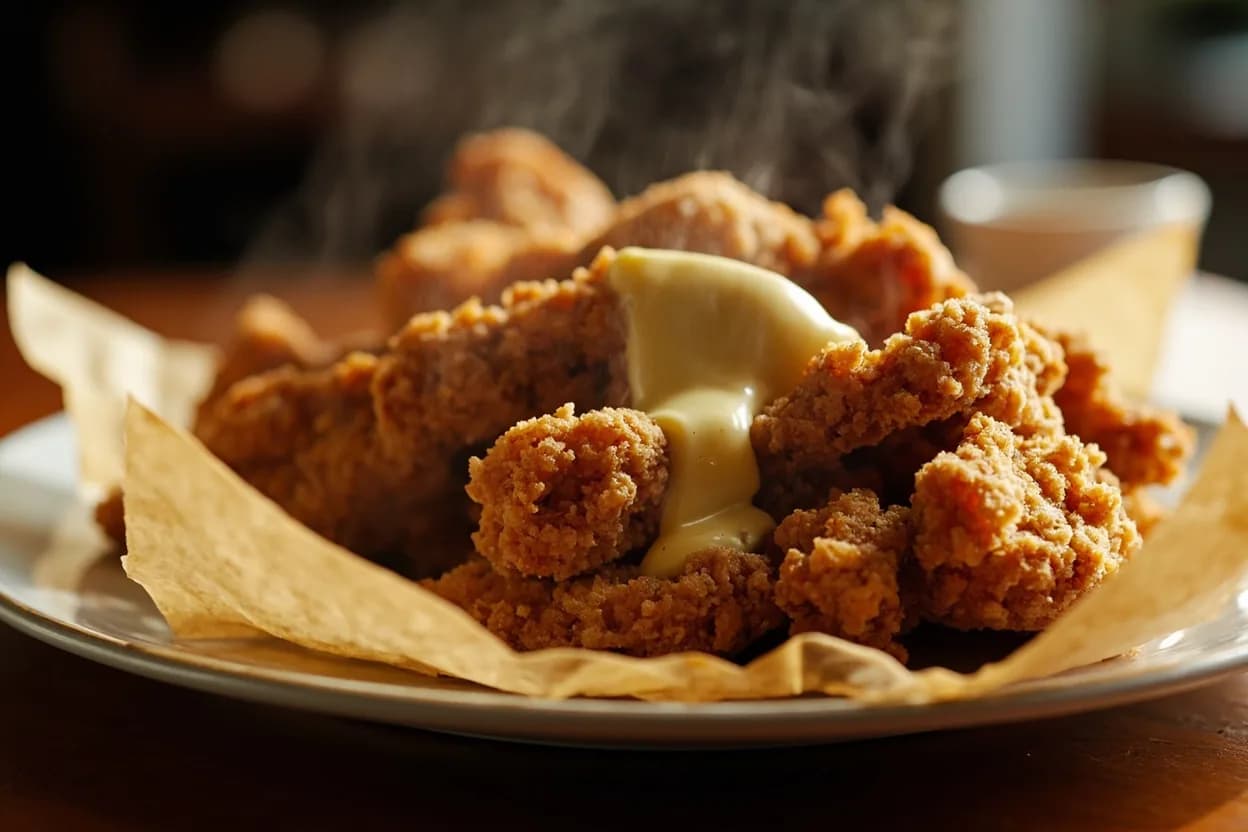
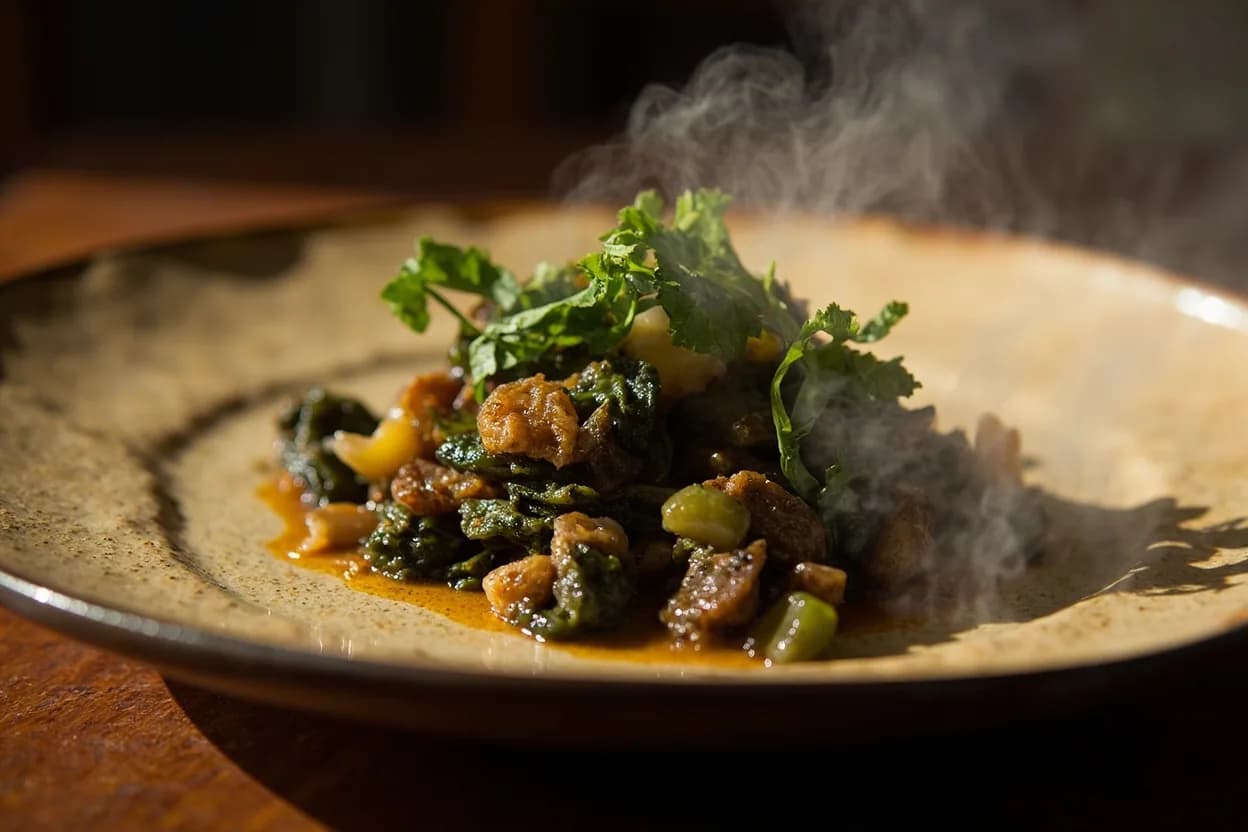
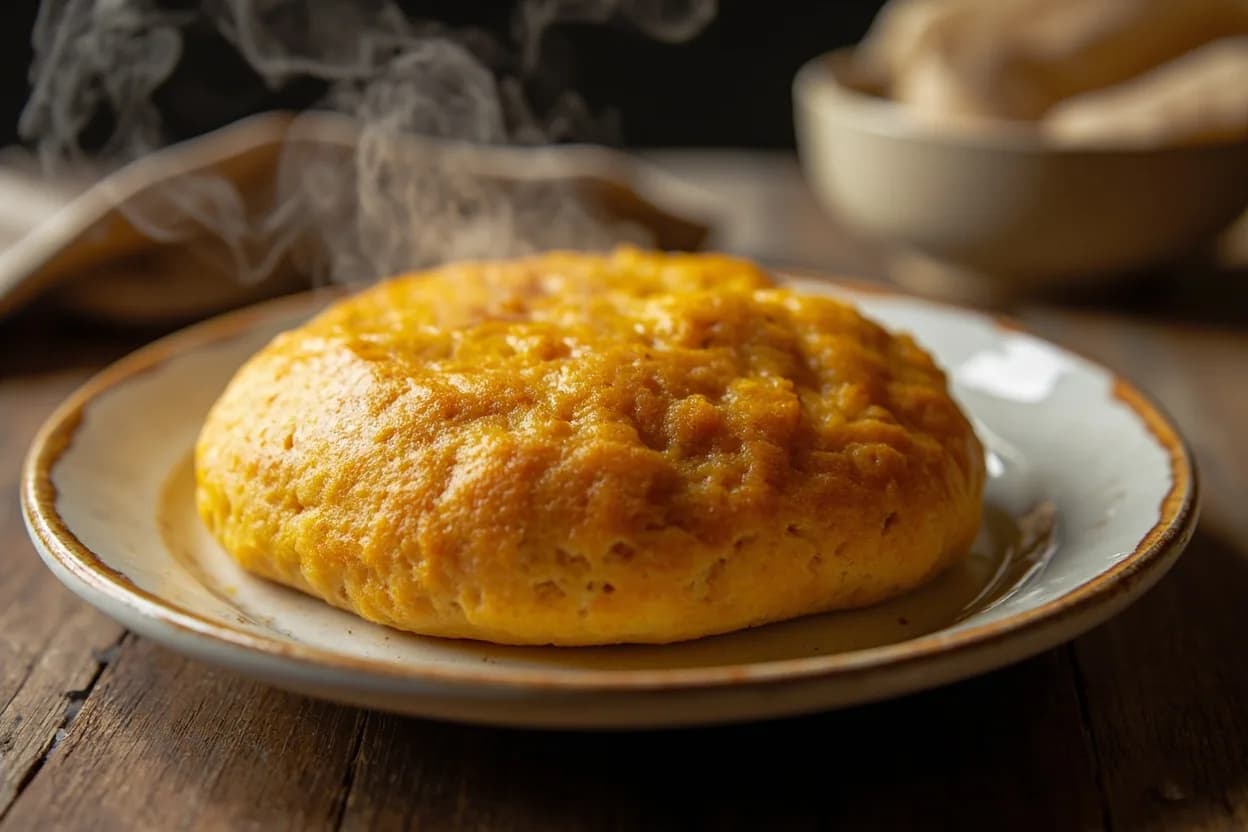
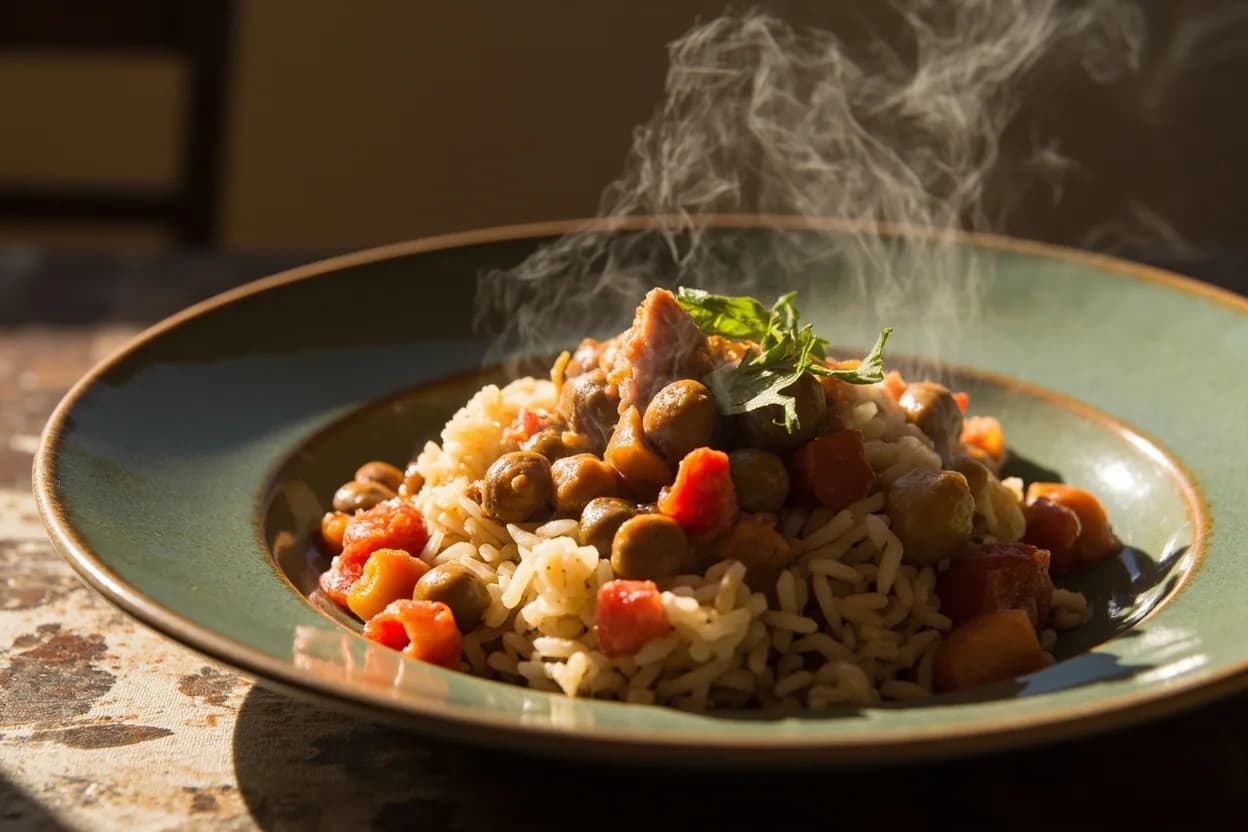
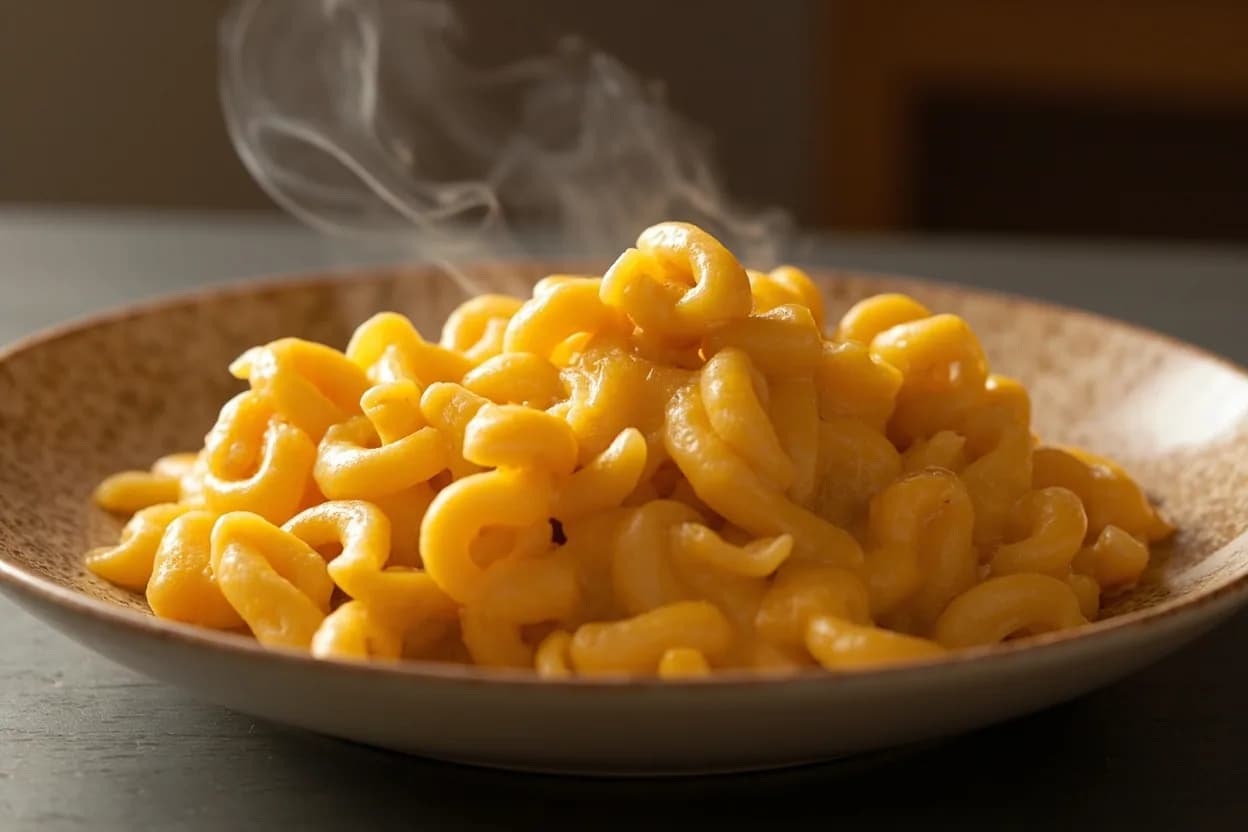
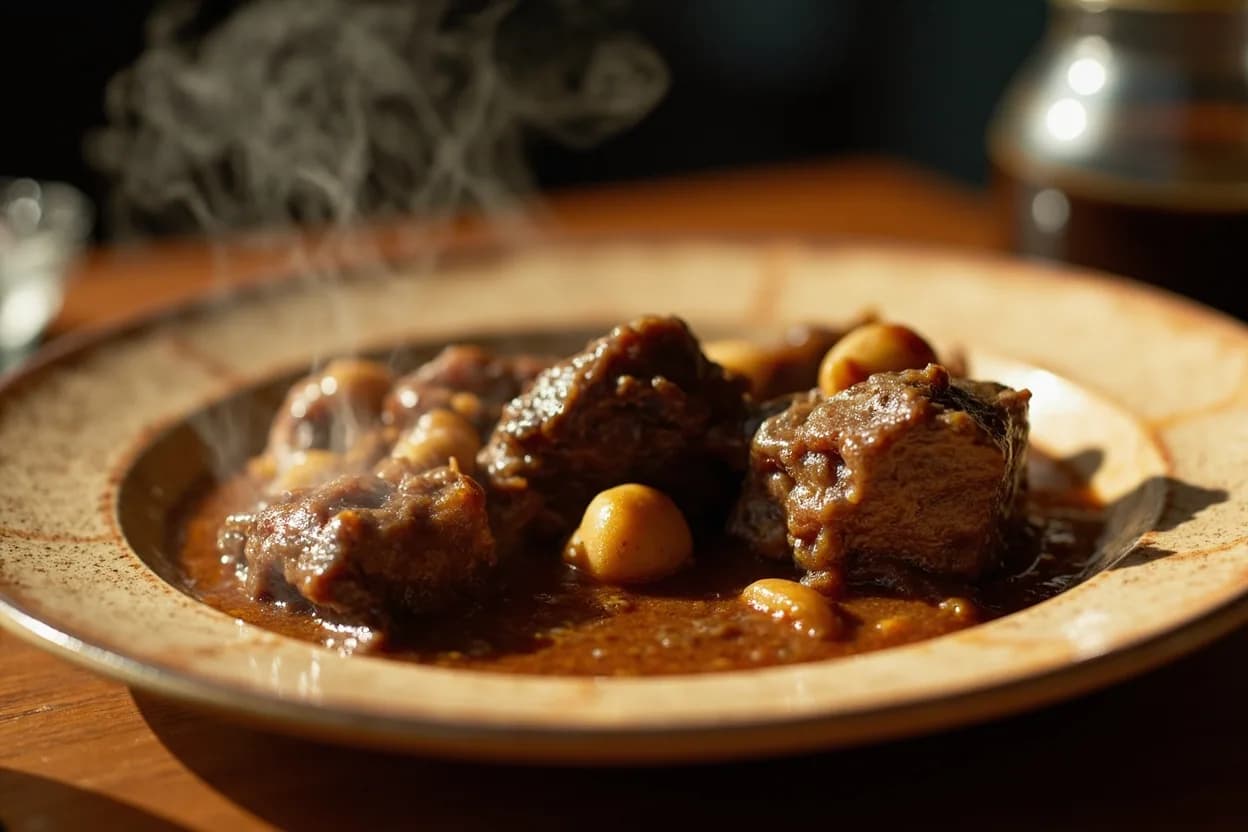
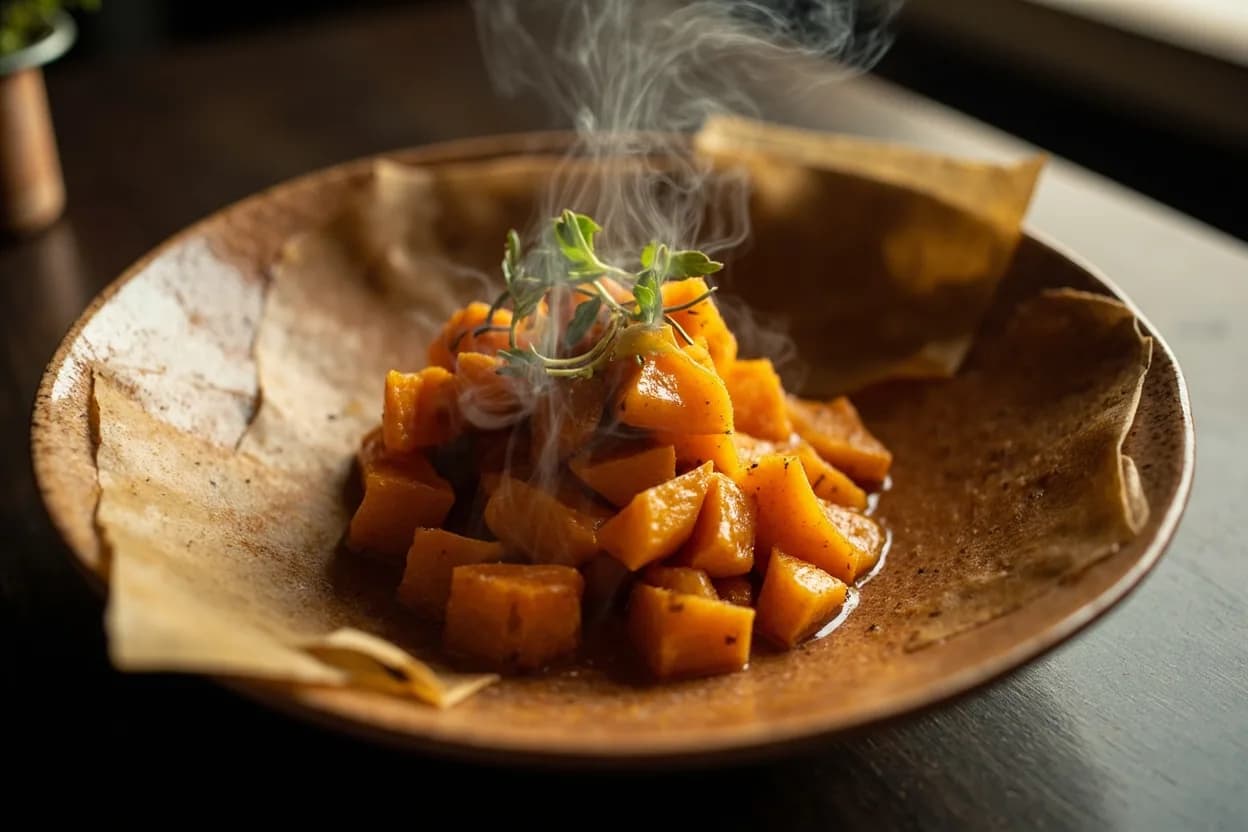
The dishes that define American Southern (Soul Food), documented in the Canon.
References
- 1.The Taste of Country Cooking — Edna Lewis
- 2.High on the Hog: A Culinary Journey from Africa to America — Jessica B. Harris
- 3.Soul Food: The Surprising Story of an American Cuisine — Adrian Miller
- 4.The Welcome Table: African American Heritage Cooking — Jessica B. Harris
- 5.In Pursuit of Flavor — Edna Lewis
Confidence: high
Notes
Pot likker: the liquid prize
The liquid left after long-braising collard greens with smoked pork — called pot likker — is considered as valuable as the greens themselves. Rich in vitamins, collagen, and the deep savory essence of the pork, it is drunk from a bowl, used to soak cornbread, or drunk straight from the pot. During enslavement, pot likker was sometimes the only nutrient-dense food available to enslaved workers. The tradition of not wasting this liquid is one of the most direct material connections between West African cooking practice and African American soul food.
The authorship question
The history of American Southern cooking is inseparable from the history of African American labour. Virtually all of the canonical 'Southern' dishes — fried chicken, cornbread, biscuits and gravy, barbecue — were developed, refined, and transmitted by Black cooks whose names were not recorded. The academic and culinary reckoning with this history — led by scholars like Jessica B. Harris and Toni Tipton-Martin — is ongoing and has fundamentally reshaped how American food culture understands itself.