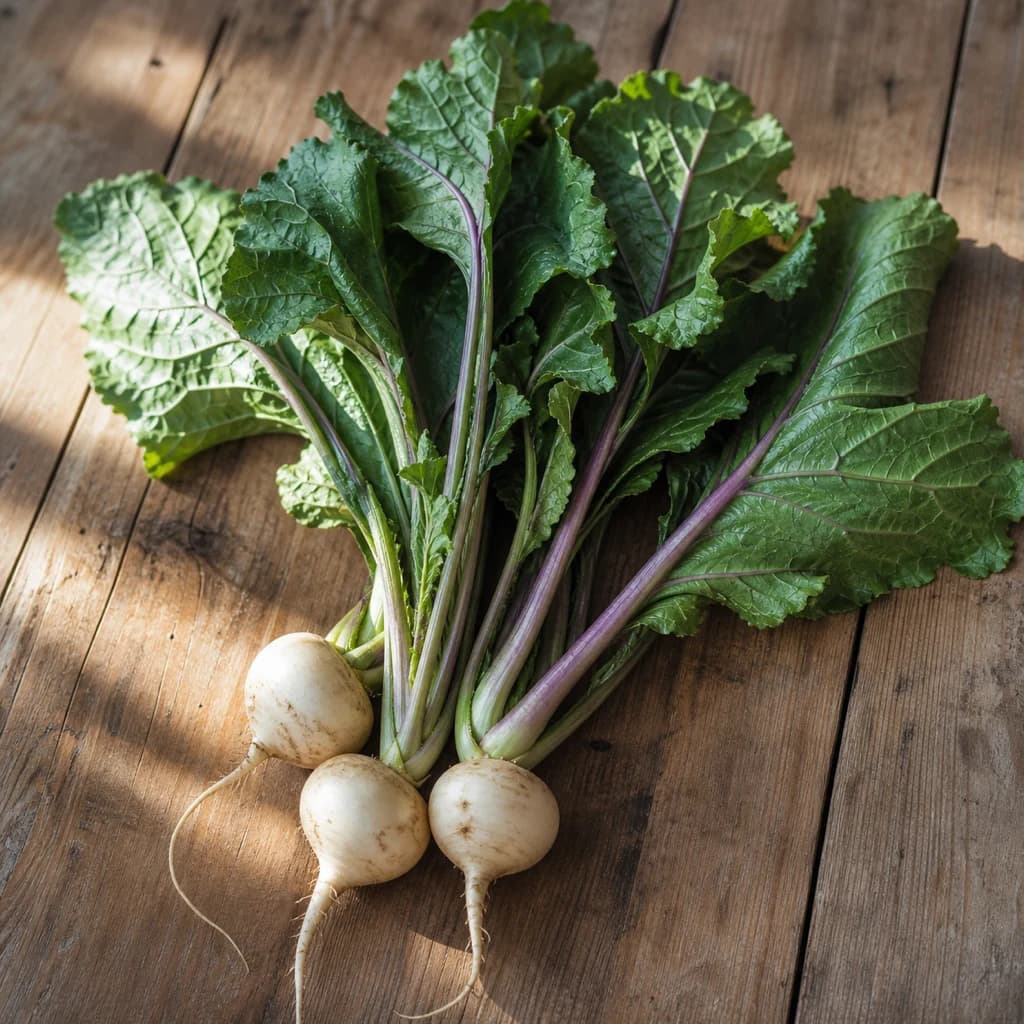
Natural form
Fresh turnip greens still attached to their roots, showing the full plant as harvested.
Shows the ingredient in its most recognizable state — intact leafy tops on the turnip root — teaching both identity and origin at a glance.
Produce
Turnip Greens (Grelos)
Tender leafy tops of the turnip plant, slightly bitter, braised in Southern US and Galician cooking.
Turnip greens are the leafy tops of the turnip, with a peppery, slightly bitter bite that softens with cooking. In the American South they are slow-braised with smoked pork until tender, while in Galicia (grelos) they star in lacon con grelos and the stew caldo galego. Quick blanching tames their bitterness, and they are rich in vitamins A, C, and K.
Turnip greens are the tender leafy tops of Brassica rapa, the same plant that produces the turnip root. Harvested since antiquity across the Mediterranean, the greens have long been a cornerstone of both Galician and Southern American cooking traditions. The leaves are deeply lobed, somewhat curly, and grow in a rosette from a central crown; they range from small and delicate in spring to large and coarse by late fall. Their flavor is characteristically bitter and peppery with an earthy undertone, but a light frost triggers the plant to convert starches to sugars, producing a notably sweeter, more mellow green—this is why many cooks consider post‑frost greens the finest. Cooking turnip greens causes them to collapse dramatically; roughly one pound of raw greens yields only a half‑cup of finished product, so plan portions accordingly. The cooking liquid, called pot likker or pot liquor, is intensely nutritious and has historically been prized as a finishing course with cornbread for soaking.
- Measured in
- g
- Storage
- Fridge
Types & varieties
Distinct Spanish variety with slender, tender stems and smaller, less bitter leaves; the defining green in caldo galego and empanada gallega
Grown primarily for greens; purple‑tinged leaves; common in the Southern US
Hybrid variety bred specifically for abundant, vigorous leaf production
Mild, lettuce‑like Asian variety sometimes substituted; not a true turnip green but similar texture and use
Regional Traditions
In the American South, turnip greens are one of three primary greens—alongside collards and mustard—cooked low and slow with a smoked pork element until meltingly tender. The dish is a staple of soul food and country cooking, served with pot likker and cornbread for soaking. In Galicia, northwestern Spain, grelos refer specifically to the regional variety of turnip green, cooked with potatoes, white beans, and chorizo in caldo galego, or chopped fine and tucked into empanada gallega. The entire young turnip, greens and all, is often cooked together in Galicia, whereas Southern cooks typically discard the root. Both traditions share a reverence for the cooking liquid as a nourishment‑rich broth rather than something to drain away.
- In Galicia, grelos and young turnips are cooked together; in the American South, only the greens are typically used
- Pot likker (pot liquor) is the cooking liquid—a traditional Southern serving is with crumbled cornbread for dipping
- Galician preparations tend to be lighter on fat, using olive oil rather than pork fatback or ham hock
- Seven Top and All Top are the varieties most commonly available in American markets
Common uses
Tips & pitfalls
- Wash thoroughly in several changes of cold water; grit lodges in curly leaves and can ruin a finished dish—swish, lift, and repeat
- Strip or fold out the tough center ribs from larger, mature leaves before cooking; smaller spring leaves can be left whole
- Do not overcook—15 to 25 minutes of braising should leave some texture and vibrant color, not mush
- Save and serve the pot likker; it concentrates nutrients leached from the leaves and is traditionally paired with cornbread
- For milder bitterness, add a tablespoon of apple cider vinegar or a pinch of sugar in the last 5 minutes of cooking
- Cook in two batches if the pot is crowded; greens must braise, not steam, or they turn dull and uniformly mushy
- Young spring greens need only 5 to 10 minutes; mature fall and winter greens may require the full 20 to 25 minutes
- After frost, the greens are noticeably sweeter—adjust seasoning accordingly and consider shorter cooking times
Nutrition
Energy
134 kJ · per 100 g
Where the calories come from
Protein
1.5g
3% DV
Carbs
7.1g
3% DV
Fat
0.3g
0% DV
Fiber
3.2g
11% DV
Sugars
0.8g
of which
Sodium
40mg
2% DV
Source · USDA FoodData Central · Turnip greens, raw
View on FDC →In the shops
Matched grocery products
 €1.49
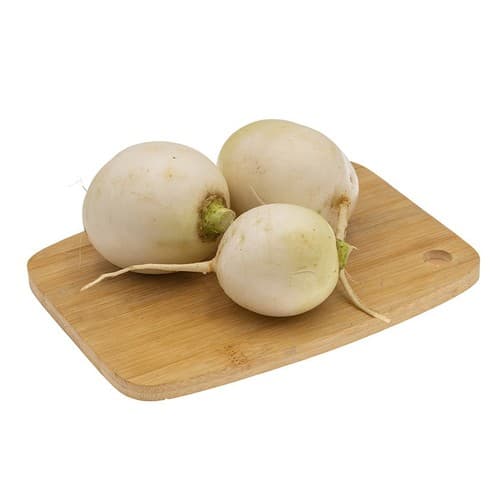
€1.49Turnips 400 g Bag
LA COLLITA · kg · Bonpreu
Good to know
- Scientific name
- Brassica rapa subsp. rapa
- Family
- Brassicaceae (mustard family)
- Origin
- Mediterranean region, cultivated since antiquity
- Peak season
- Fall through early spring; flavor sweetens after light frost
- Flavor profile
- Slightly bitter, peppery, earthy; notably sweeter after frost
- Storage
- Refrigerate unwashed in loosely closed plastic bag, 3–5 days; freeze after blanching for up to 6 months
- Yield
- 1 lb raw yields approximately ½ cup cooked; shrinks dramatically
- Nutrition highlight
- Exceptionally high in vitamins K, A, and C; rich in calcium, folate, and antioxidants
Substitutes
- Collard greens — Similar texture and cook time; slightly less peppery bite; the closest behavior match for braising
- Mustard greens — Sharper, more pungent flavor; cook identically; reduce cooking time slightly as they tenderize faster
- Kale — Sturdier texture requiring longer cooking; flavor is milder and less bitter than turnip greens
- Swiss chard — Similar tenderness when cooked; beet‑like earthiness differs; cook stems separately from leaves
Pairs with
Also called
Grelos · Turnip Tops · Cime di Rapa
Appears in these dishes
Related
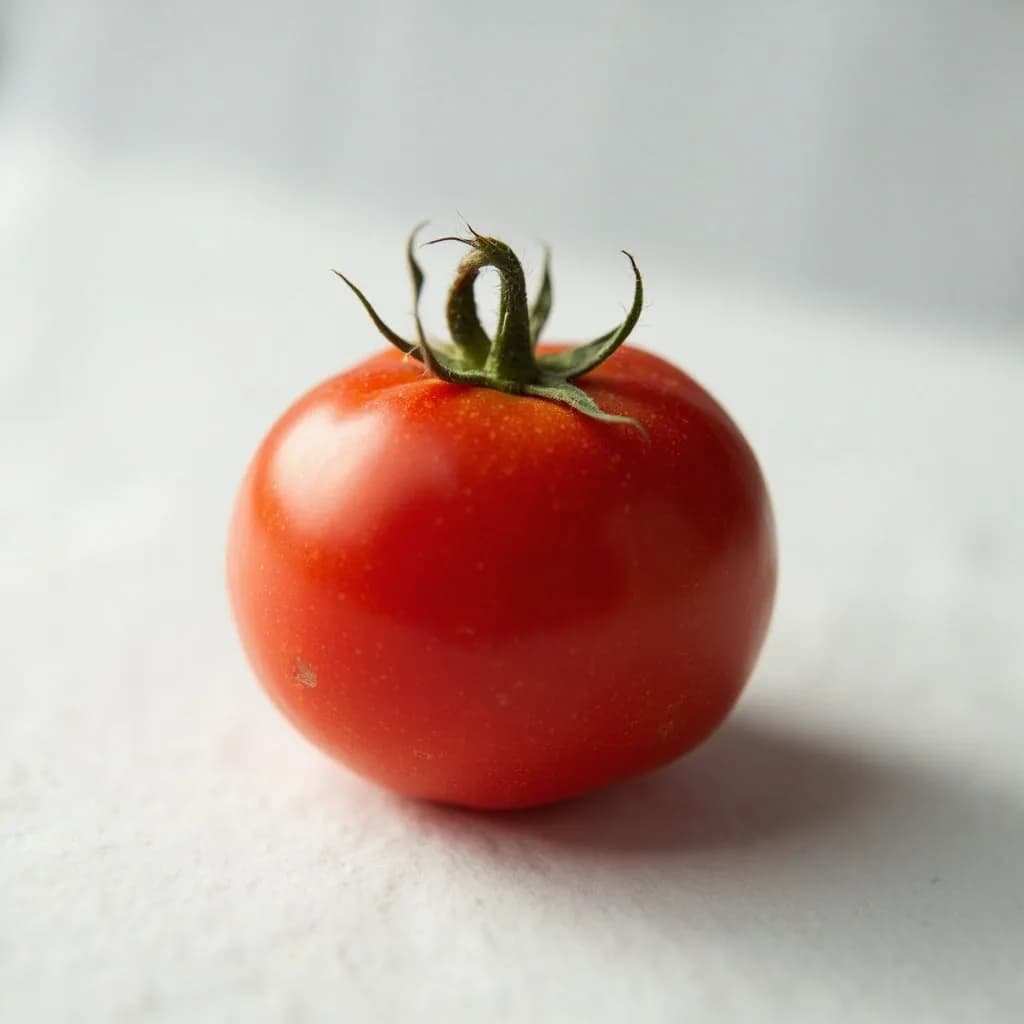
Tomato
Juicy, sun-sweet fruit for sauces, salads, and slow-cooked depth
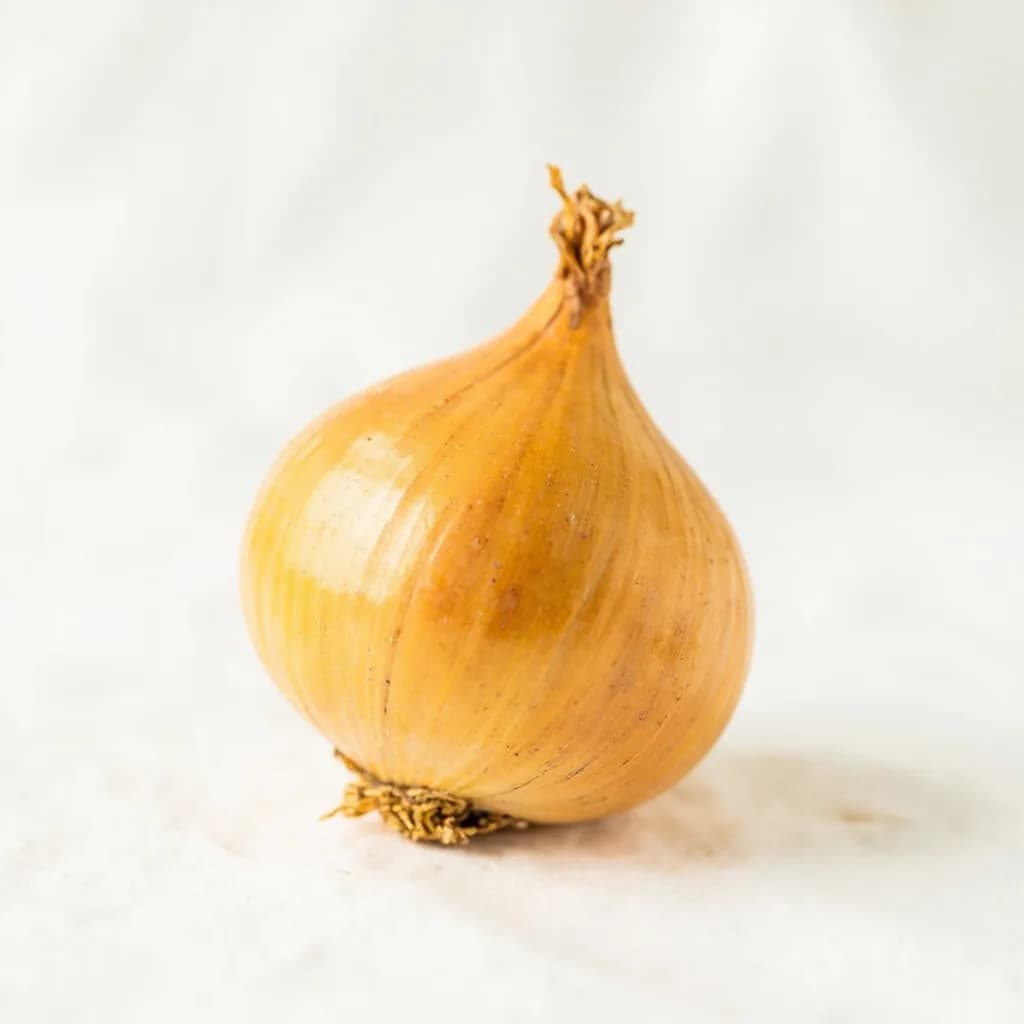
Yellow Onion
The aromatic backbone of soups, sofritos, and braises
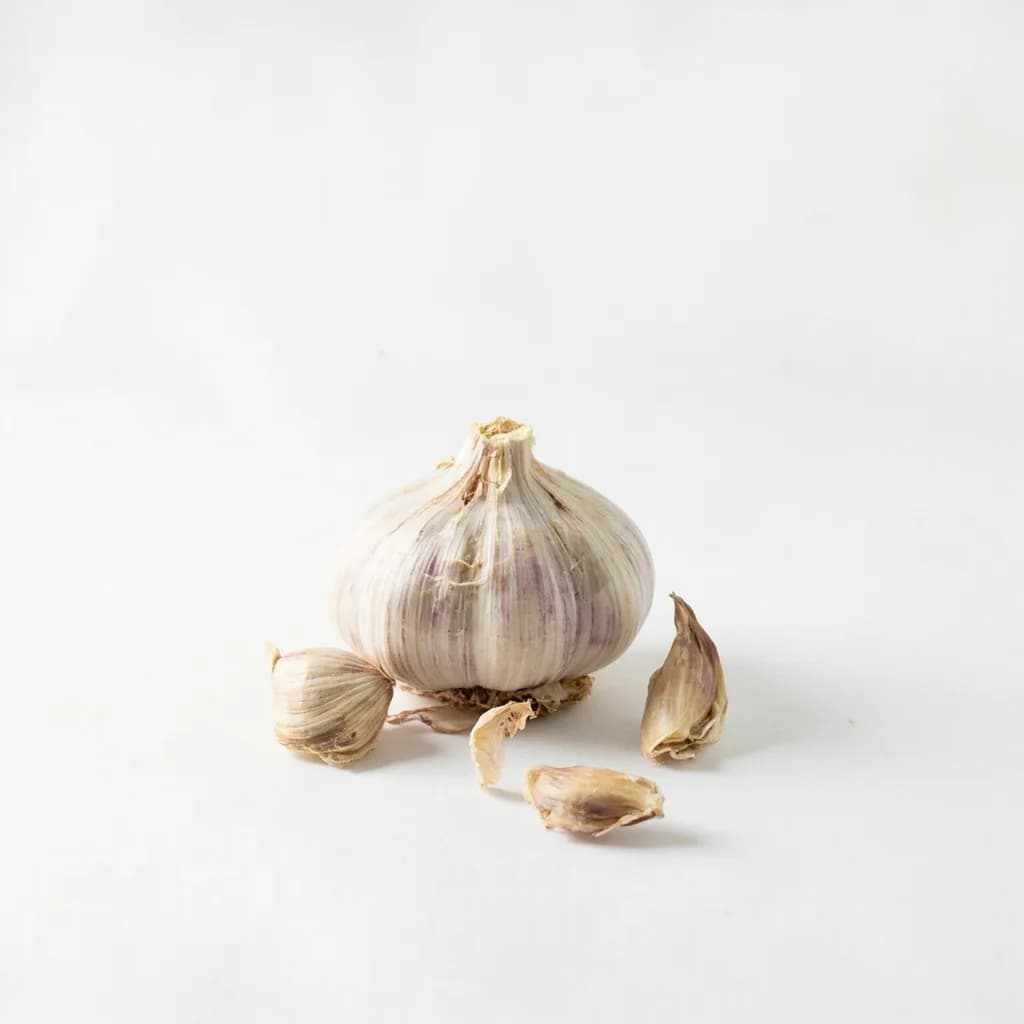
Garlic
Pungent cloves that perfume nearly every savory dish
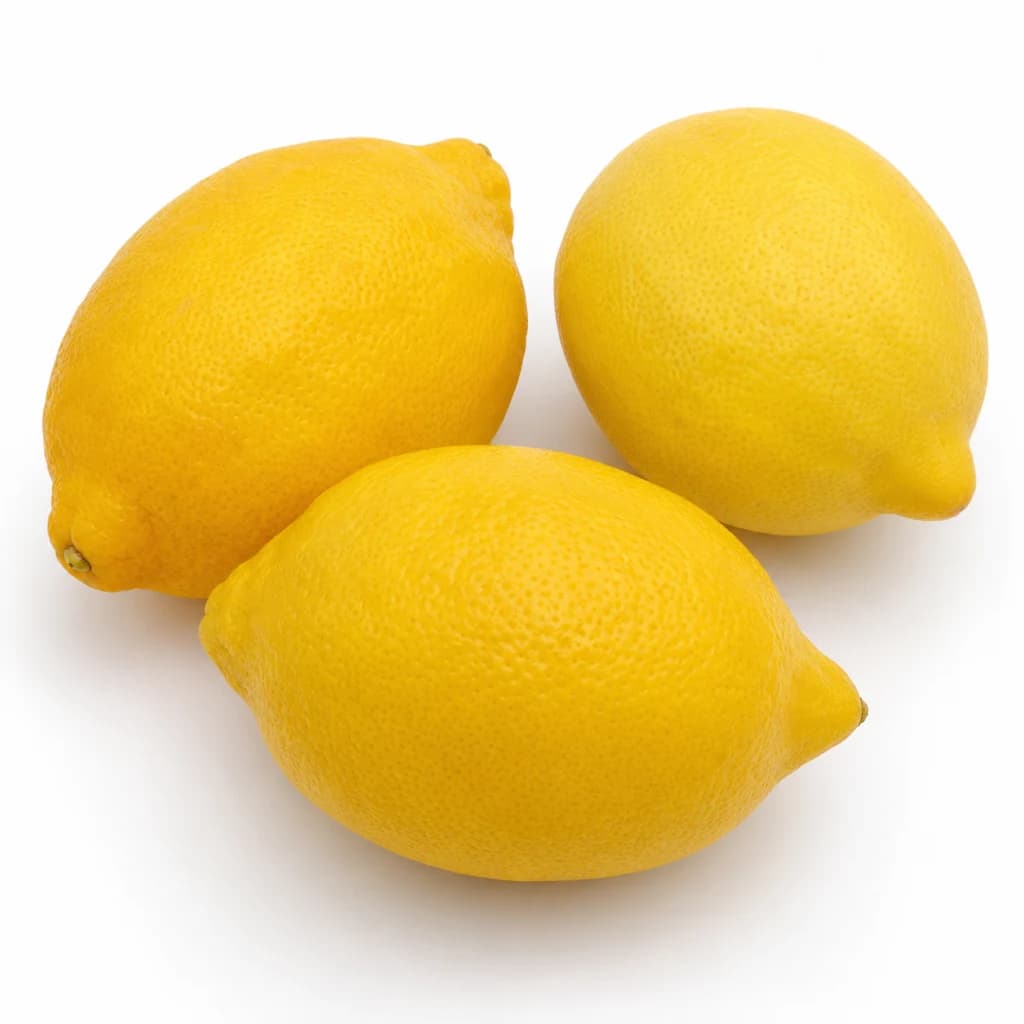
Lemon
Bright, acidic citrus that wakes up almost any dish
Potato
Humble, hearty staple — roast, mash, fry, or boil
Carrot
Sweet, crunchy root — raw, roasted, or the base of a sofrito
Cucumber
Cool, crisp, and watery — for salads, pickles, and tzatziki

Lettuce
Crisp leaves for salads, wraps, and a fresh crunch