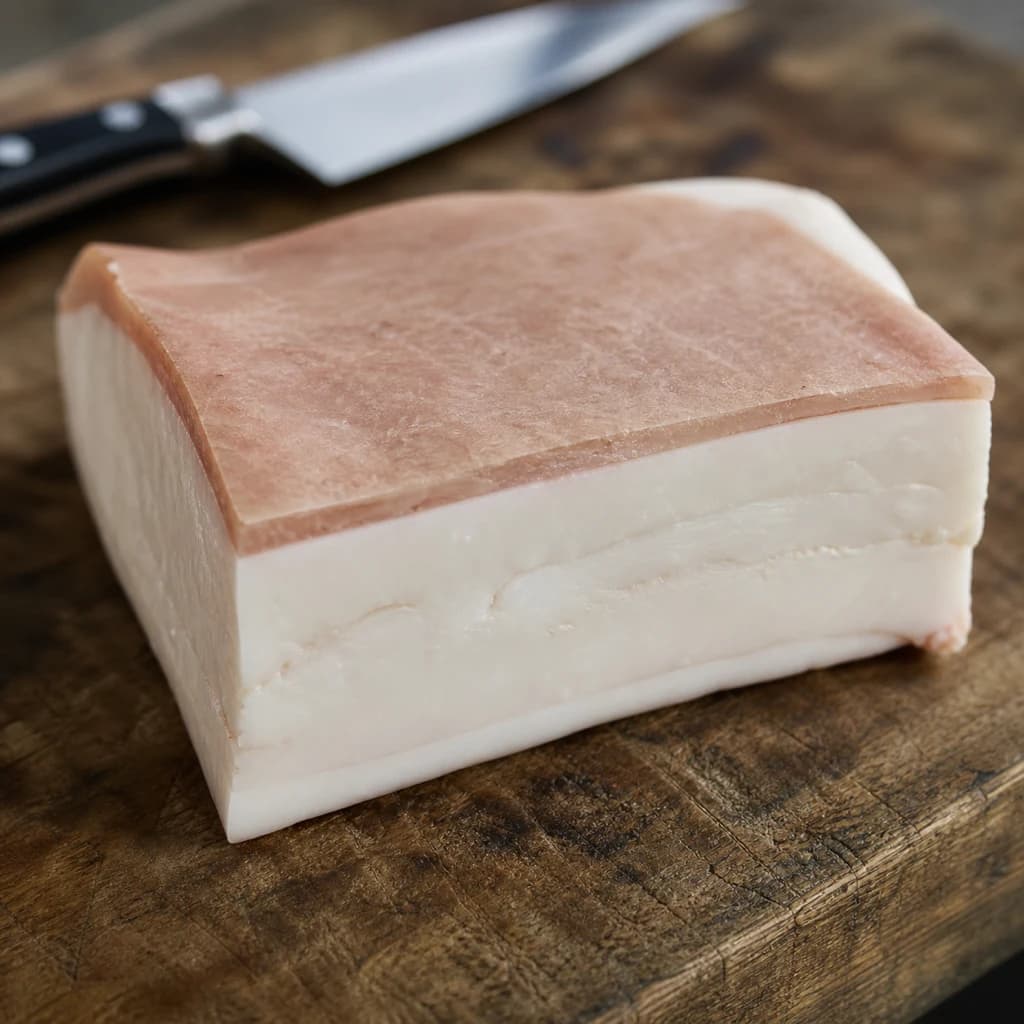
Natural form
A thick slab of raw pork back fat showing its firm white exterior and distinct layers.
Shows the reader the unprocessed ingredient as it arrives from the butcher, with its characteristic thickness and firm texture.
Oils & Fats
Pork Back Fat
Hard fat from the pig's back, used for larding, sausages, and rendered lard.
Pork back fat, or fatback, is the firm layer of fat from along the pig's back. It is diced into sausages and pâtés, cut into lardons, used to bard lean roasts, or rendered into lard for cooking. Its clean pork fat adds moisture, richness, and flavor to charcuterie and braises.
Pork back fat, also called fatback, is the thick subcutaneous fat layer along the pig's spine and back. Unlike pork belly (which carries lean streaks and is used for bacon) or leaf fat (which surrounds the kidneys), back fat is a dense, nearly pure fat deposit with minimal connective tissue. This composition gives it a firm, slightly fibrous texture that holds its shape remarkably well when cubed, sliced, or threaded into lean meats. The fat is whiter and harder than other pork fats, with a higher saturation level that translates to a higher melting point and better structural integrity in cold preparations.
In the kitchen, back fat is prized for its dual nature: it can be used raw in structural applications like larding and sausage making, where the fat must remain discrete and intact, or it can be slowly rendered into a clean, versatile cooking fat. The rendered fat has a neutral-to-subtle pork flavor that does not overwhelm delicate dishes, though it lacks the refined sweetness of leaf lard. Back fat behaves differently from leaf fat in pastry applications—its slightly coarser texture creates a different flake structure—and it carries more flavor than the ultra-mild kidney fat. For charcutiers and serious home cooks, understanding when to reach for back fat versus leaf fat or belly fat is a matter of matching fat character to the job at hand.
- Measured in
- g
- Storage
- Fridge
Types & varieties
Raw, unsliced slab; most common form for larding and sausage. Sold in slabs or cubed.
Yields a slightly less refined lard than leaf fat; suitable for pastry, frying, and general cooking fat.
Salt-cured and sometimes peppered; used in Italian and Spanish charcuterie. Not interchangeable with fresh for larding.
AOP-protected Italian cured fatback from Valle d'Aosta; seasoned with herbs and spices, sliced paper-thin as a garnish or charcuterie component.
Filipino cured pork fat; sweetened and spiced; used as a bacon-like garnish in Filipino cuisine.
Fatback vs. Leaf Fat vs. Belly Fat
These three pork fats are often confused, but they behave very differently in the kitchen. Back fat is a dense, nearly pure fat layer under the pig's skin along the spine—it is hard, white, and contains almost no lean tissue. Leaf fat, found around the kidneys, has a finer grain and produces the most prized rendered lard for pastry. Pork belly carries the iconic marbling of streaky bacon and is far softer, with significant connective tissue. For structural uses where fat must hold its shape—larding needles, sausage casings, wrapping a terrine—back fat is the clear choice. For the finest pie crust or biscuit, reach for leaf lard instead.
- Use back fat when fat must remain discrete and intact in a preparation
- Use leaf fat for the cleanest, mildest pastry lard
- Use pork belly when you want streaky fat-and-lean texture, as in bacon or fresh belly
Larding with Fatback
Larding is one of the oldest techniques for moistening and enriching lean cuts of meat. The cook threads thin strips or needles of firm, cold fatback through a roast or braised cut so that the fat melts during cooking, basting the meat from within. This technique is essential for lean game meats like venison, boar, or ostrich, where the natural fat content is minimal. It is also used for aging beef and certain charcuterie preparations. The key to successful larding is temperature control: the fatback must be frozen or nearly frozen before slicing so that it cuts cleanly into matchstick pieces or thin needles without smearing. Warm fat smears against the knife and distributes unevenly, creating a mealy rather than juicy result.
- Freeze back fat 30 minutes before cutting for clean, sharp slices
- Cut into matchstick-sized pieces or use a dedicated larding needle
- Thread strips through the thickest part of the lean cut, spacing them evenly
- Larded roasts benefit from slow, moist cooking methods (braising, pot roasting) to allow the fat to render gradually
Common uses
Tips & pitfalls
- Keep pork back fat COLD before cutting—it should be firm enough to slice cleanly into thin needles or cubes. Warm fat smears and won't render evenly.
- For larding, freeze the fat briefly (30 minutes) before slicing; this makes it easier to cut into clean matchstick-sized pieces for threading through lean cuts.
- Render slowly at low heat (225–250°F) with a small amount of water to prevent scorching. The water cooks off first, then the fat slowly melts—rush this and you will burn the solids and create off-flavors.
- After rendering, strain through cheesecloth into a clean jar. Discard the cracklings or save them for seasoning; they are protein-rich and edible.
- In sausage making, keep both the fat and lean meat COLD—nearly frozen—when grinding. Warm fat smears and binds improperly, creating a mealy, greasy texture instead of a cohesive one.
- Do not substitute bacon fat or drippings for back fat in larding; they carry smoke flavor and higher moisture content that will overpower the dish.
- Store rendered back-fat lard in the refrigerator for up to 3 months, or freeze it. Rancidity develops faster than with leaf fat due to its higher saturation profile.
- Back-fat lard has a lower smoke point than some other fats and can develop off-flavors if reused for high-heat frying multiple times. Reserve it for baking, moderate frying, or pastry.
Nutrition
Energy
2644 kJ · per 100 g
Where the calories come from
Protein
9.3g
19% DV
Carbs
0g
0% DV
Fat
65.7g
84% DV
Fiber
0g
0% DV
Sugars
0g
of which
Sodium
47mg
2% DV
Source · USDA FoodData Central · Pork, fresh, separable fat, raw
View on FDC →In the shops
Matched grocery products
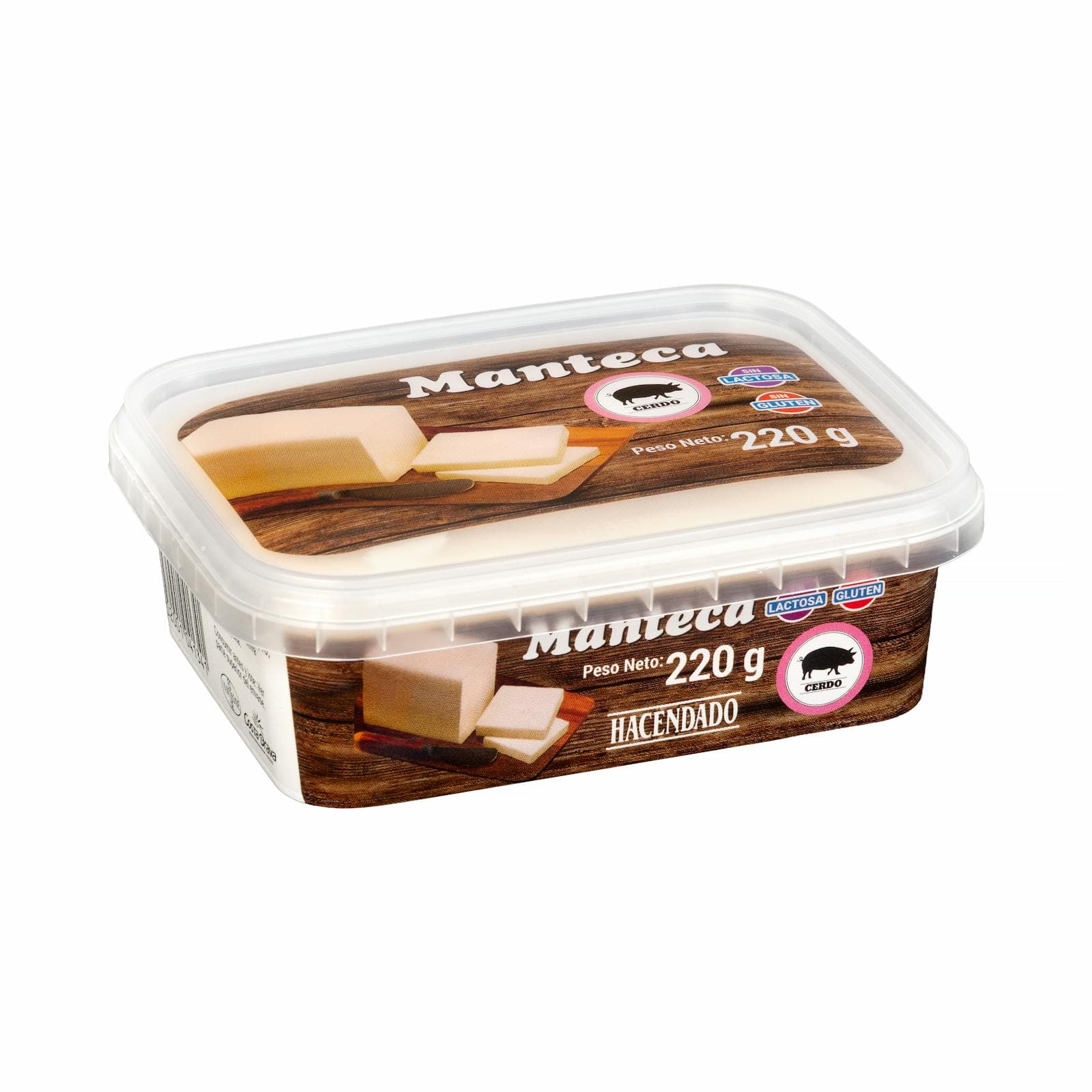 €2.20
€2.20Pork Lard
Hacendado · 220 g · Mercadona
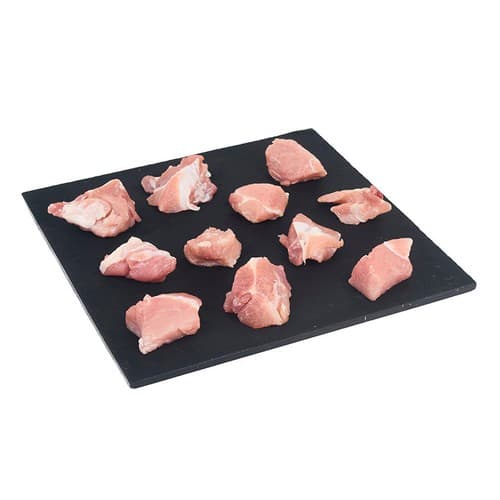 €3.40
€3.40Pork Stew
BONPREU · ud · Bonpreu
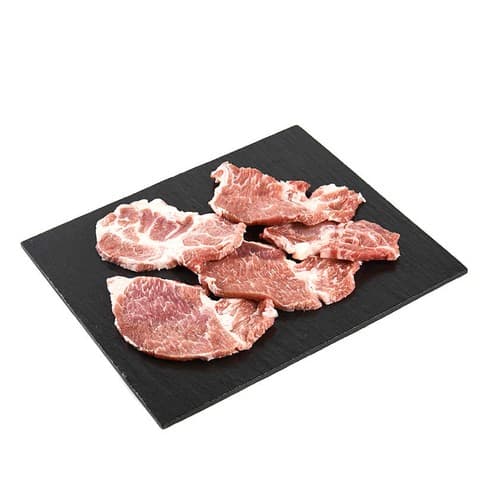 €3.45
€3.45Lean Pork
BONPREU DE L'ERA · ud · Bonpreu
 €2.10
€2.10Pork Spine
300 g · Mercadona
 €3.22
€3.22Diced Pork
560 g · Mercadona
 €3.75
€3.75Pork Pluma
300 g · Mercadona
Good to know
- Type
- Hard animal fat, pork-derived
- Source
- Subcutaneous layer along the pig's back
- Fat Composition
- ~95% fat; higher saturation than belly or leaf fat; firm texture when raw
- Texture
- Firm, slightly fibrous; holds shape well when cubed or sliced
- Melting Point
- Higher than leaf fat or belly fat due to saturation level
- Rendered Yield
- Approximately 75–85% usable fat (rest is water and protein solids)
- Smoke Point
- ~374°F (190°C) for back-fat lard
- Shelf Life (Raw)
- Refrigerated 5–7 days; frozen up to 6 months in airtight wrap
Substitutes
- Leaf Fat (Kidney Fat) — Superior for rendering into fine pastry lard; milder flavor and cleaner texture. Use 1:1 in any application.
- Beef Suet — Harder fat with higher melting point; acceptable for sausages and pastry but imparts a distinct beefy flavor. Use 1:1.
- Vegetable Shortening (Crisco) — Suitable only for pastry applications where neutral flavor is desired; does not provide the same flavor or melt properties. Use volume-for-volume.
- Commercial Lard — If already rendered, use as a substitute in equal amounts; adjust texture expectations for raw applications like larding.
- Bacon Fat — Not a true substitute for larding or rendering; use only where smoky flavor is appropriate. Adds smoke notes and higher moisture content.
Pairs with
Also called
Fatback · Pork Fat · Lardo
Appears in these dishes

Related
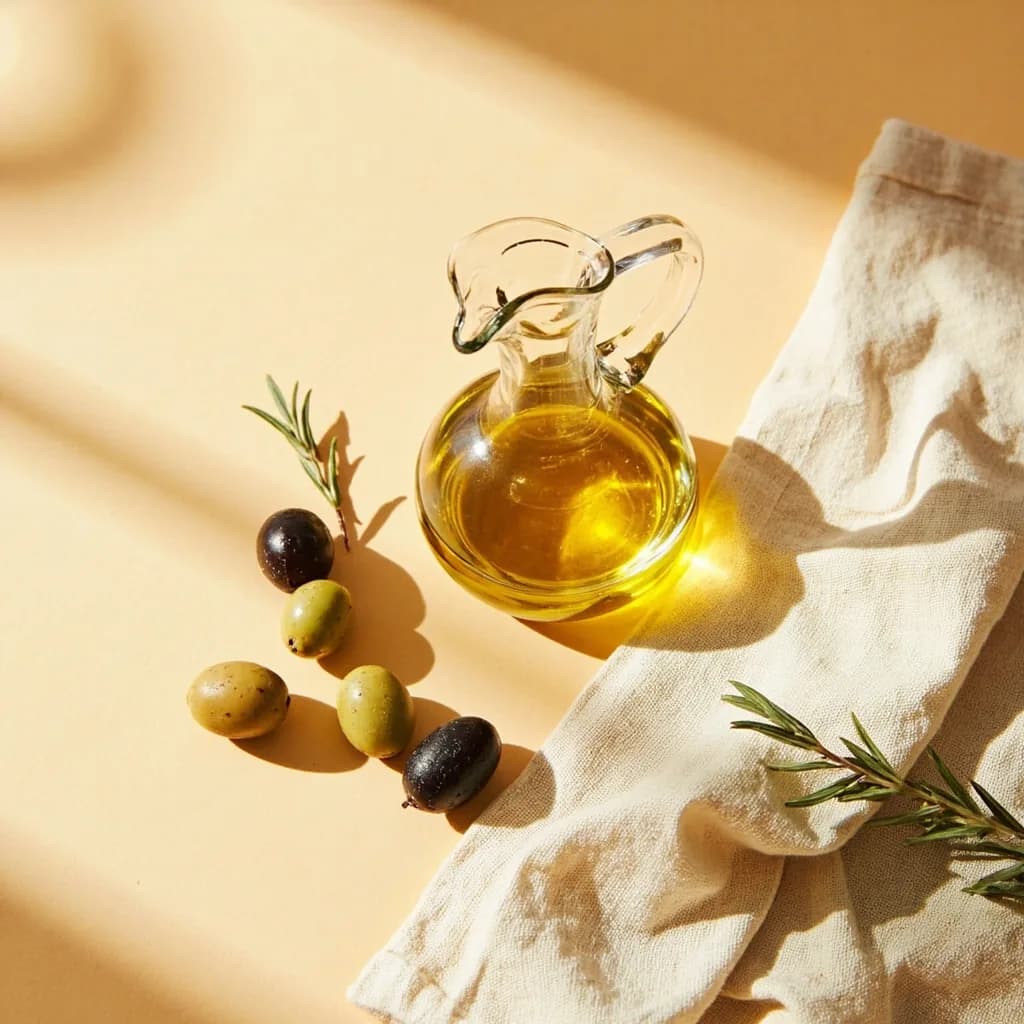
Olive Oil
Fruity, peppery everyday oil for sautéing, dressing, and finishing
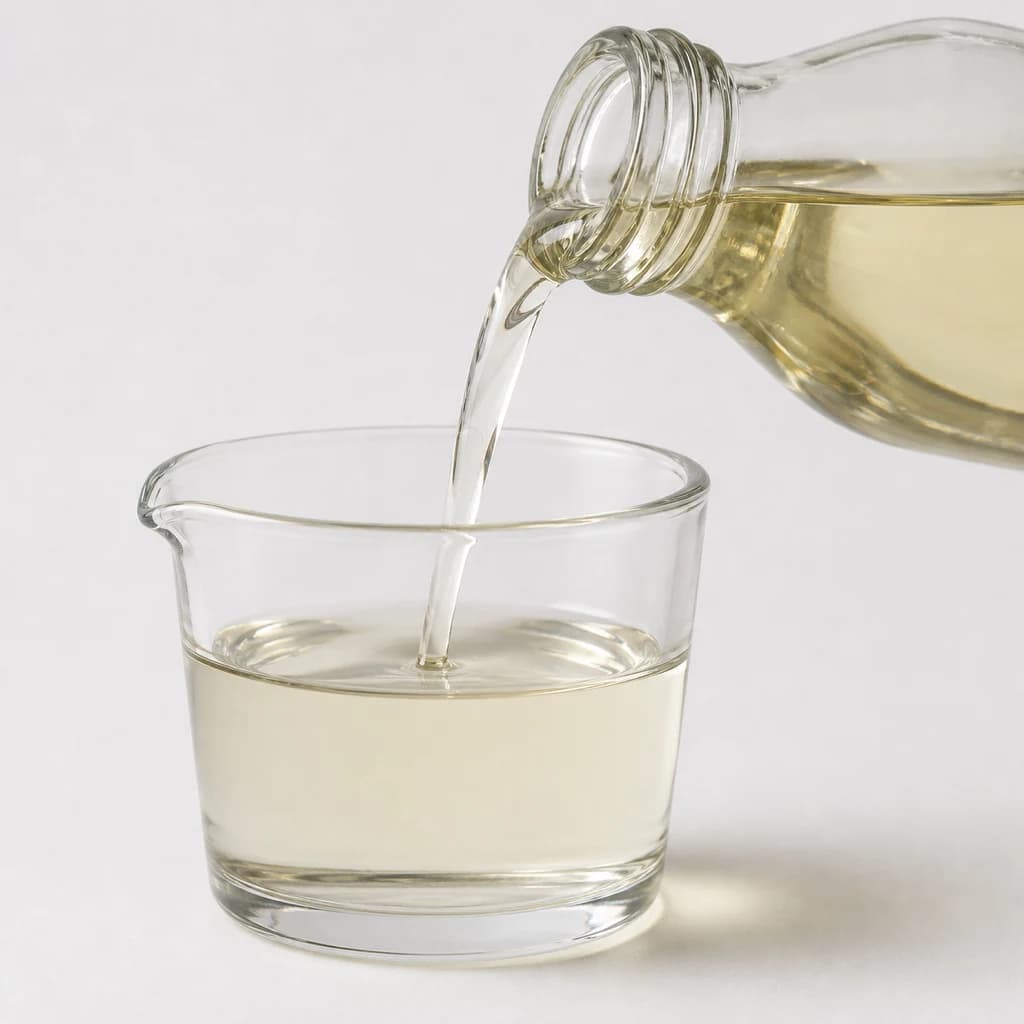
Vegetable Oil
Neutral, high-heat oil for frying and all-purpose cooking
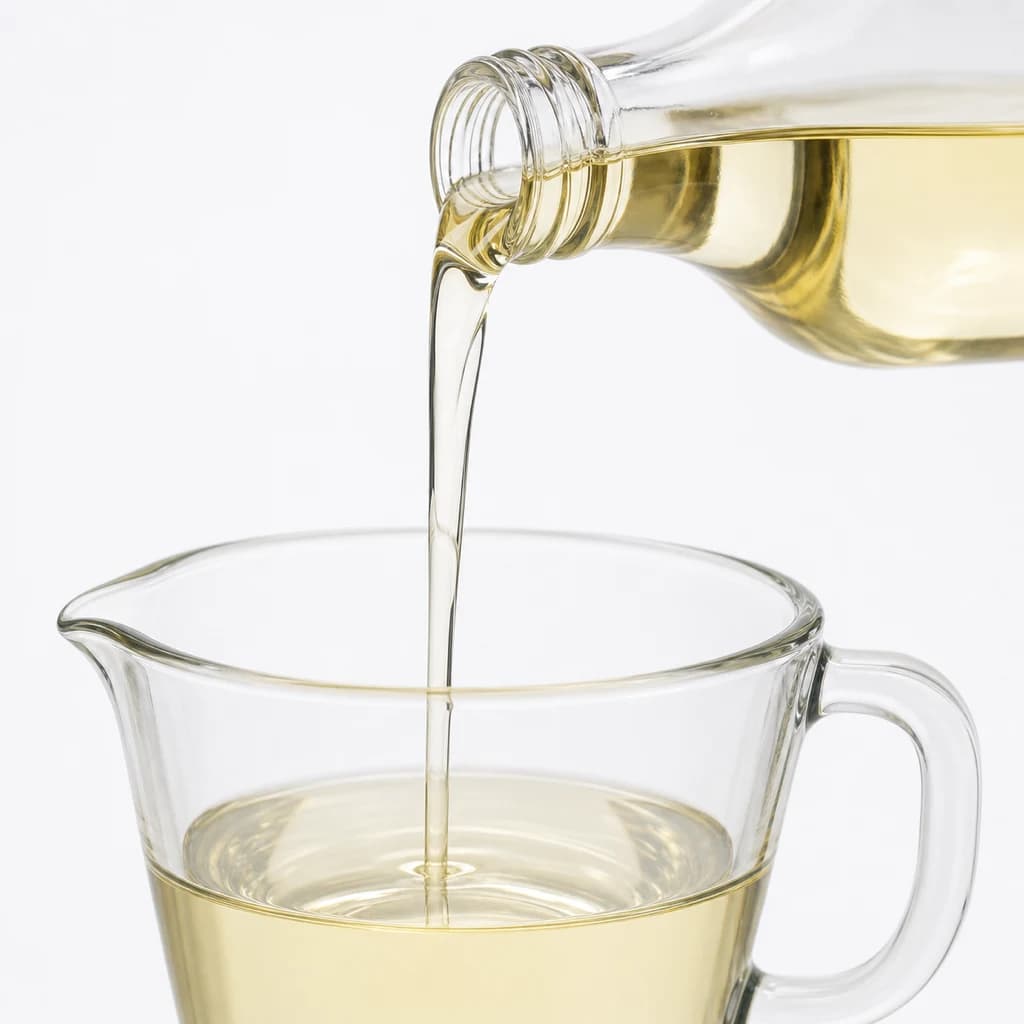
Canola Oil
Light, neutral oil for frying, baking, and dressings

Sunflower Oil
Clean, neutral oil for frying and everyday cooking
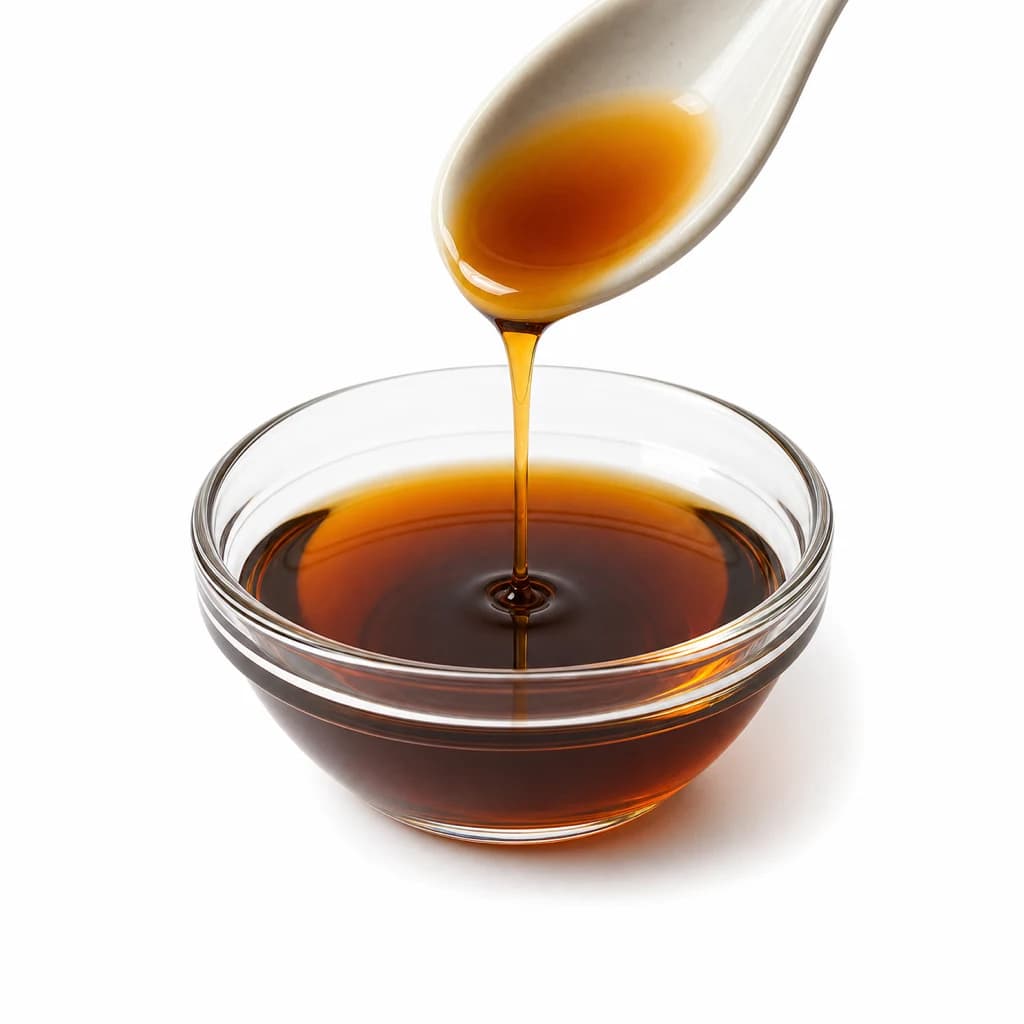
Sesame Oil
Toasty, aromatic oil — a finishing splash for Asian dishes
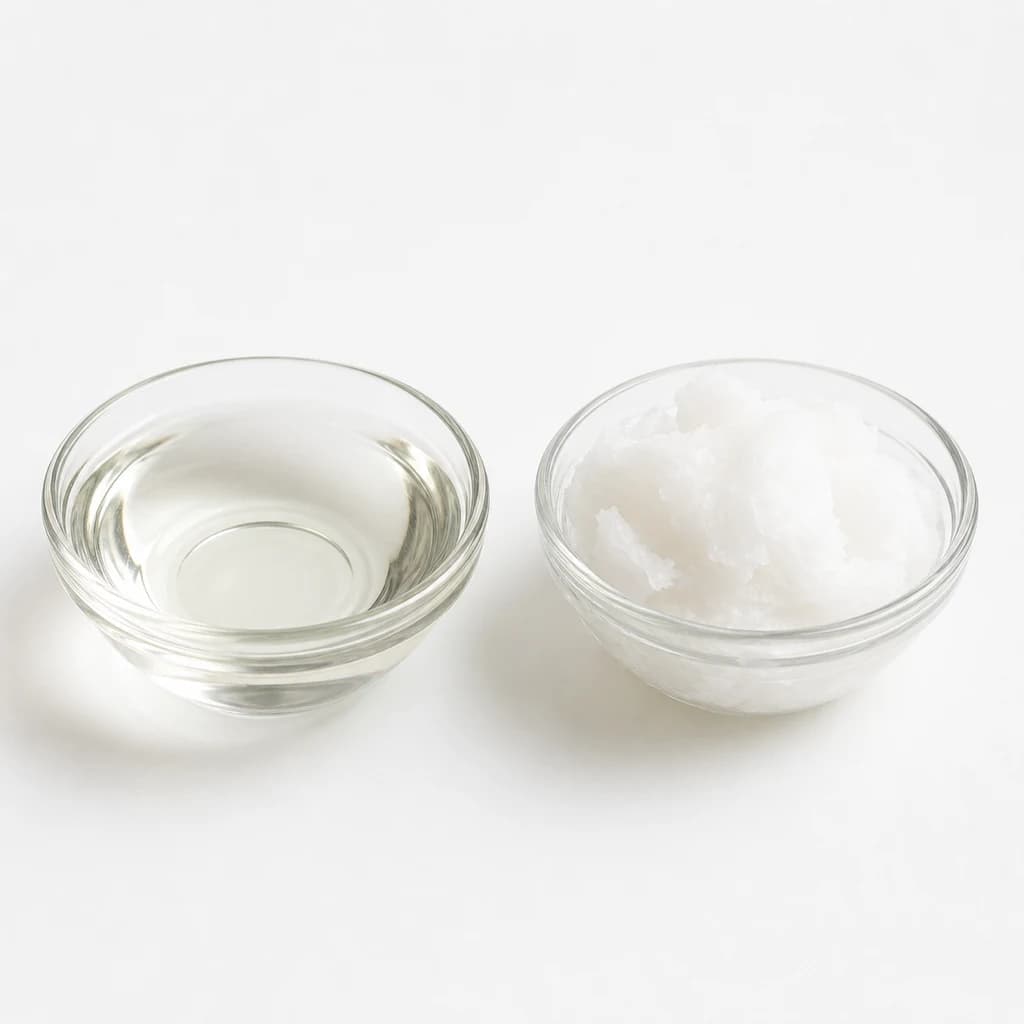
Coconut Oil
Fragrant, solid-at-room-temp fat for baking and frying
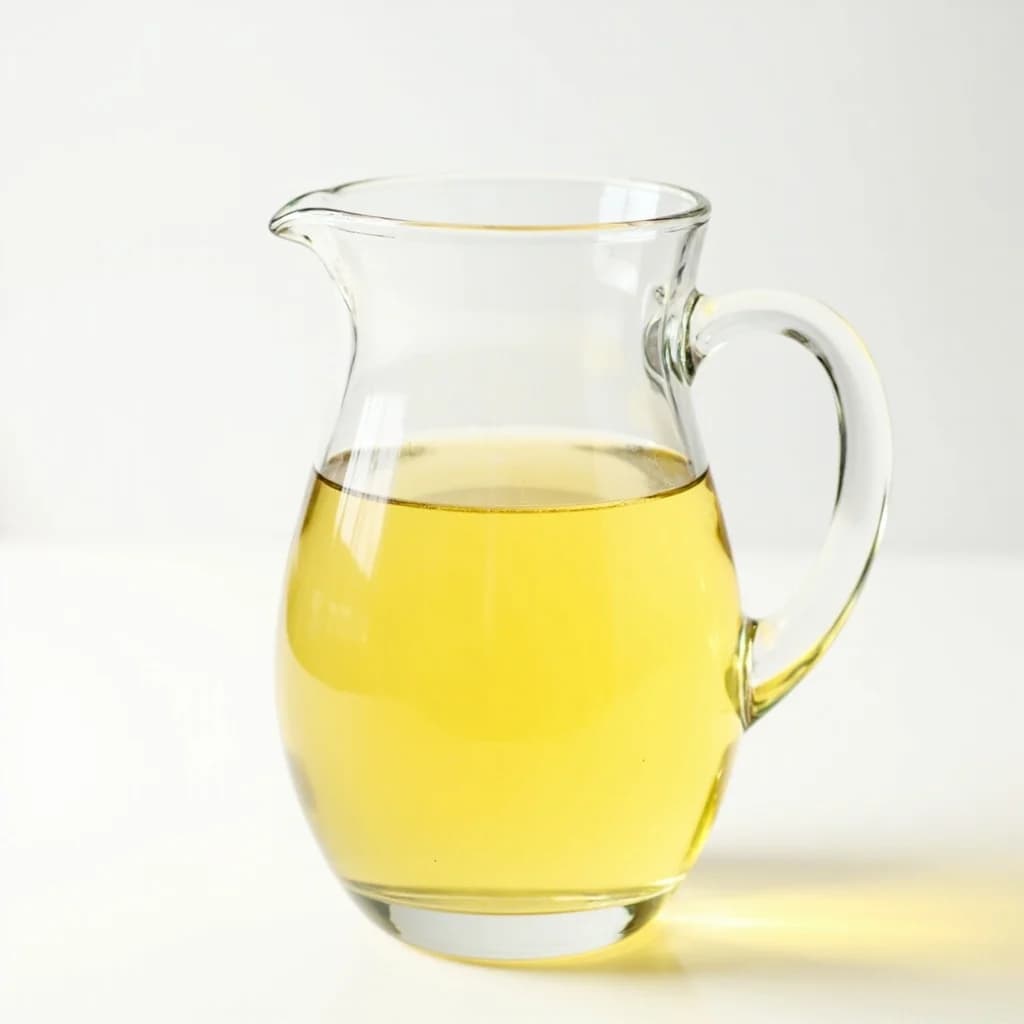
Peanut Oil
High-heat oil with a faint nutty note — ideal for frying

Lamb Tail Fat
Rich rendered fat from fat-tailed sheep — used as a cooking fat and flavor base in Central Asian and Middle Eastern dishes.