Oils & Fats
Vegetable Shortening
Solid hydrogenated vegetable fat, flavorless and 100% fat with a high melt point. Makes flaky pie crusts and tender biscuits; cuts in without melting like butter and fries crisply.
Vegetable shortening is a 100% fat solid made from hydrogenated, interesterified, or naturally saturated plant oils, prized by bakers for its neutral flavor, plastic texture, and unique ability to produce exceptionally tender, flaky pastries. Unlike butter (roughly 80% fat with water and milk solids) or stick margarine (similar, plus emulsifiers), shortening is pure fat — no water, no protein, no flavor — which lets it coat flour particles and inhibit gluten development more thoroughly than any other common baking fat. That single feature explains both its strengths and its shortcomings: doughs made with shortening are tender, soft, and keep well, but they miss the rich flavor and deep, even browning that butter provides through its milk solids and water content.
Introduced as Crisco by Procter & Gamble in 1911, shortening was originally built on partially hydrogenated cottonseed oil and carried significant trans fat for nearly a century. The 2018 U.S. FDA ban on artificial trans fats forced reformulation across the industry; today's shortenings rely on blends of palm, soybean, and cottonseed oils that are fully hydrogenated, interesterified, or naturally saturated to achieve the same scoopable texture without artificial trans fat. Shortening softens around 84–95°F (29–35°C) and melts just above body temperature, with a smoke point of 425–450°F (220–230°C) that makes it equally useful for high-heat frying.
For pastry work, the central rule is temperature: cold shortening cut into flour leaves discrete pockets of fat that steam in the oven and lift the dough into flaky layers; warm shortening smears into the flour and yields a dense, greasy crust. That one variable — how cold the fat stays, and how large the pieces remain when the dough comes together — is the difference between a tender, shattering pie crust and a tough one.
- Measured in
- cup
- Storage
- Store Covered At Room Temperature In A Cool Pantry
Find it in
Suits
Types & varieties
The standard, flavorless white solid — Crisco Original and most store brands. The most versatile choice for both baking and frying.
Plain shortening colored yellow and flavored with butter flavoring; mimics butter in cakes and icings while keeping the 100% fat advantage.
Brands like Spectrum use sustainably sourced palm oil with no hydrogenation; slightly softer texture, popular with bakers avoiding processed oils.
Food-service shortenings with added antioxidants such as TBHQ that resist breakdown during long, hot frying sessions.
Post-2018 reformulations using interesterified or fully hydrogenated oils; perform like traditional shortening with no artificial trans fat.
Shortening vs. Butter: When to Reach for Which
The two fats overlap but are not interchangeable, and the right choice depends on what you want from the finished bake. Shortening wins on tenderness, shelf life, and neutrality; butter wins on flavor, browning, and a more complex crumb. A practical rule of thumb: use shortening when tenderness and flakiness are the goal and flavor is secondary, and use butter when flavor and color matter more than the lightest possible texture. For many home bakers, a blend of the two — half shortening for tenderness, half butter for flavor — is the best of both worlds.
- Flaky pie crusts, biscuits, and rough puff: shortening (or half shortening, half butter) gives the most reliable layers.
- Shortbread, sugar cookies, and tender cake layers: butter, unless maximum softness and a long shelf life are priorities.
- Buttercream and cooked frostings: butter for flavor; butter-flavored shortening for a pure-white wedding-cake finish that holds shape in warm rooms.
- Deep frying: shortening is traditional, but refined peanut, canola, or avocado oil are lighter, healthier choices with comparable smoke points.
- Enriched breads, biscuits, and rolls: solid vegetable shortening keeps the crumb soft for days, even at room temperature.
The Trans Fat Transition
For most of the twentieth century, American shortening meant partially hydrogenated oil, and therefore meant trans fat. Procter & Gamble developed Crisco in 1911 partly to compete with lard and partly to find a commercial use for hydrogenated cottonseed oil; the product was marketed relentlessly to home bakers as cleaner and more modern than animal fats. The health consequences of artificial trans fat became clear over the 1990s and 2000s, and the FDA's 2018 ban forced the entire industry to reformulate. Modern shortenings achieve their solid texture through fully hydrogenated oils (which are not trans), interesterified oils, or naturally saturated fats like palm oil. Performance is very close to the original, though many bakers notice that the new shortenings are a touch softer straight from the tub and benefit from a few minutes in the fridge before being cut into flour.
- Pre-2018 shortening was nearly always partially hydrogenated and contained measurable trans fat.
- Post-2018 shortenings use fully hydrogenated oil, interesterified oil, or palm oil to reach a solid texture with 0g trans fat.
- Newer shortenings are often softer at room temperature; chill briefly before cutting into pastry.
- Saturated fat content remains high in any vegetable shortening — typically 25–30% of total fat by weight.
Common uses
Tips & pitfalls
- Keep shortening cold — even slightly chilled from the fridge — when cutting it into flour for pastry; warm fat melts into the flour and produces tough, greasy crusts instead of flaky ones.
- For biscuits, cut shortening into the flour until the largest pieces are pea-sized. For the flakiest pie crusts, leave some larger, flat, lima-bean-sized pieces intact so they create distinct flaky layers in the oven.
- Because shortening has no water, baked goods made with it stay tender and fresh noticeably longer than butter-based versions — but sacrifice the flavor and browning of butter.
- For cakier cookies, cream the shortening alone for 1–2 minutes before adding sugar; creaming it together with butter (half and half) gives a workable compromise between tenderness and flavor.
- Never substitute liquid oil 1:1 for solid shortening in a recipe — the structure will collapse. Use a solid fat substitute (butter, lard, or solid coconut oil) instead, and adjust liquids if the substitute contains water.
- When greasing and flouring a cake pan, smear a thin layer of shortening on with a paper towel, dust with flour, tap out the excess, and the cake will release cleanly with no bare patches.
- For the flakiest biscuits and scones, grate frozen shortening into the flour on a box grater instead of working it in with a pastry cutter — the fat stays colder and the pieces stay more distinct.
- Measure shortening correctly: pack it firmly into a dry measuring cup and level with a straight edge, or use the weight given in the recipe (a stick is 113 g / ½ cup).
Nutrition
Energy
3699 kJ · per 100 g
Where the calories come from
Protein
0g
0% DV
Carbs
0g
0% DV
Fat
100g
128% DV
Fiber
0g
0% DV
Sugars
0g
of which
Sodium
4mg
0% DV
Source · USDA FoodData Central · Shortening, vegetable, household, composite
View on FDC →In the shops
Matched grocery products
No matched grocery products for Vegetable Shortening yet.
Good to know
- Composition
- 100% fat — no water, no milk solids, no protein; butter is roughly 80% fat, 16% water, 4% solids
- Melting Point
- Softens around 84–95°F (29–35°C); fully melts just above body temperature
- Smoke Point
- Approximately 425–450°F (220–230°C) depending on the oil blend
- Trans Fat Status
- Major U.S. brands reformulated to 0g trans fat after the 2018 FDA ban on partially hydrogenated oils
- Forms Sold
- Tubs (1 lb, 3 lb) and sticks (1/2 cup each, 4 per pound); sticks wrap for easier measuring and cutting in
- Storage
- Shelf-stable at cool room temperature for 1–2 years; refrigerate or freeze for longer keeping
- Texture at Room Temp
- Plastic, soft solid that holds its shape but creams and cuts into flour easily
- Original Brand
- Crisco, introduced by Procter & Gamble in 1911 as a cleaner, cheaper alternative to lard
Substitutes
- Butter — 1:1 by volume. Adds about 20% water, so reduce other liquids slightly; gives flavor and browning but a less tender, less flaky result.
- Lard — 1:1. The traditional pie-crust fat; produces very flaky, tender pastry with a mildly savory, not neutral, flavor.
- Refined Coconut Oil (solid) — 1:1. Solid below about 76°F; refined is neutral, virgin adds coconut flavor. Best in cooler kitchens.
- Stick Margarine — 1:1. Contains water and emulsifiers; behaves closer to butter than to pure shortening, and browning varies by brand.
- Vegan Butter Sticks — Earth Balance and similar; 1:1. Plant-based and behaves like butter; results vary by brand, and some are softer than shortening.
- Butter + Neutral Oil (combined) — Roughly half butter, half oil by volume mimics shortening's 100% fat content while restoring some of butter's flavor.
Pairs with
Also called
vegetable shortening · crisco · white shortening · hydrogenated vegetable fat
Appears in these dishes
Related
Olive Oil
Fruity, peppery everyday oil for sautéing, dressing, and finishing
Vegetable Oil
Neutral, high-heat oil for frying and all-purpose cooking
Canola Oil
Light, neutral oil for frying, baking, and dressings

Sunflower Oil
Clean, neutral oil for frying and everyday cooking
Sesame Oil
Toasty, aromatic oil — a finishing splash for Asian dishes
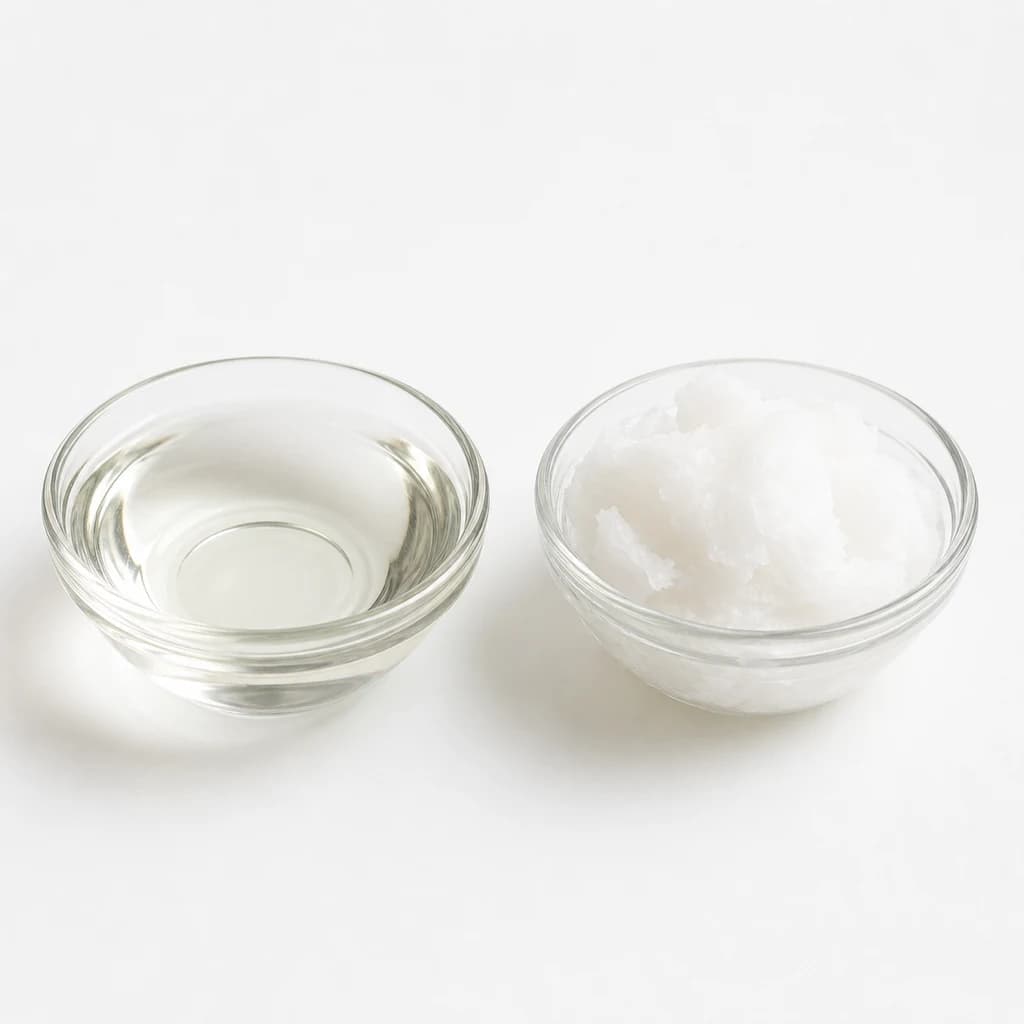
Coconut Oil
Fragrant, solid-at-room-temp fat for baking and frying
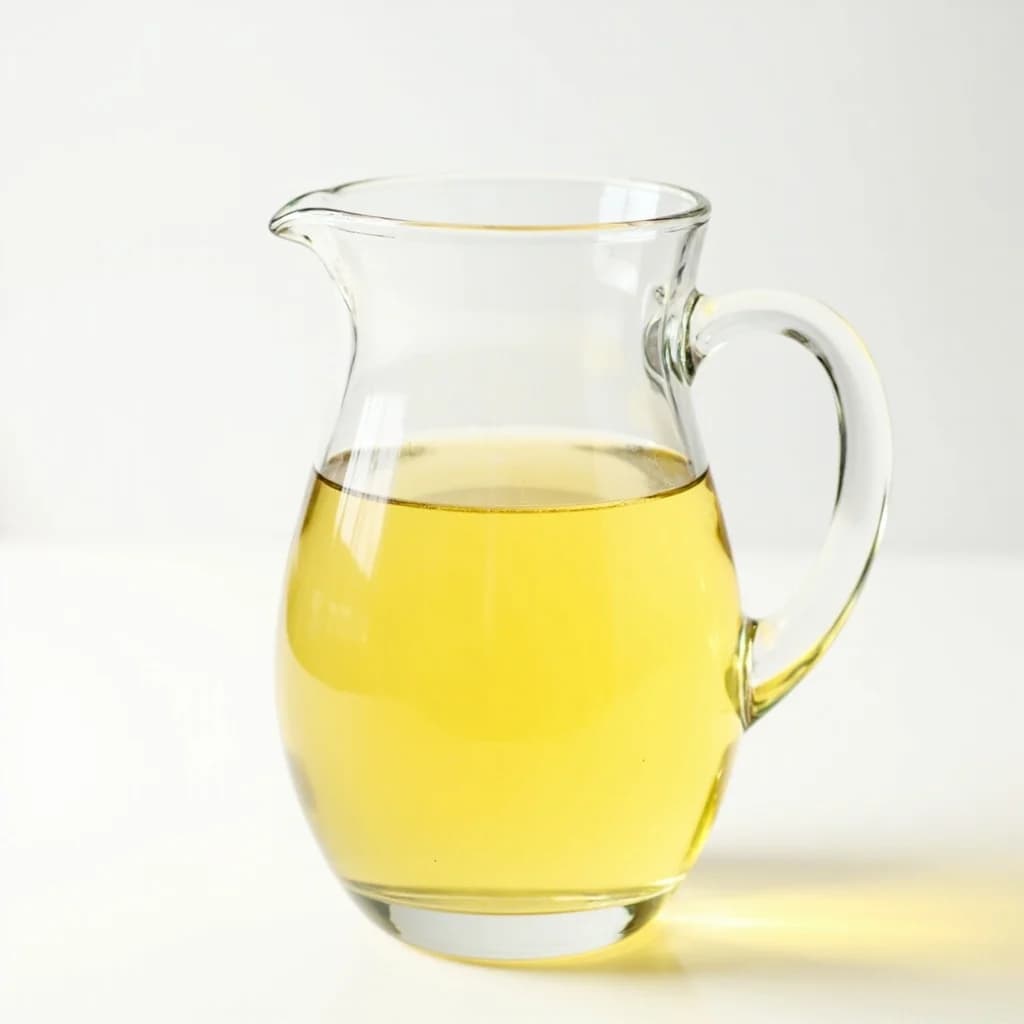
Peanut Oil
High-heat oil with a faint nutty note — ideal for frying

Lamb Tail Fat
Rich rendered fat from fat-tailed sheep — used as a cooking fat and flavor base in Central Asian and Middle Eastern dishes.