
Natural form
Whole collard green leaves showing their large flat shape, thick central stem, and deep blue-green color.
Establishes the leaf's distinctive large size, flat shape, sturdy midrib, and dark blue-green color — the primary recognition markers for collard greens.
Produce
Collard Greens
Sturdy dark leafy green braised low and slow or finely sliced and quickly cooked.
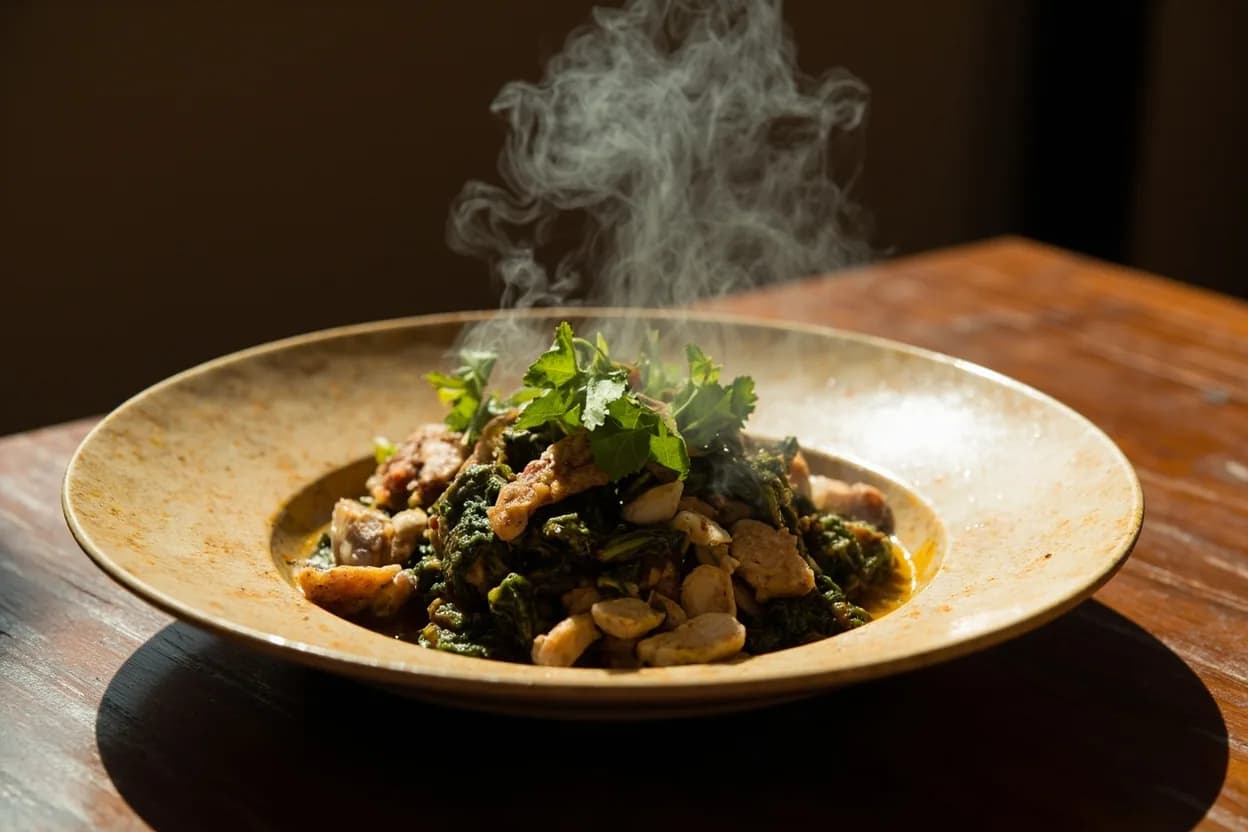
Collard greens are large, flat, dark-green leaves with thick stems and a robust, slightly bitter flavor. They are braised slowly with smoked meat in the American South, finely shredded and flash-cooked as Brazilian couve, or stewed as sukuma wiki in East Africa. The tough leaves soften with cooking and stand up to long simmering without falling apart.
Collard greens (Brassica oleracea var. viridis) are among the oldest members of the cabbage family, descended from wild brassicas that grew across the Mediterranean millennia before becoming cultivated staples. Unlike kale or cabbage, collards never form a tight head—they grow in an open rosette of thick, waxy, blue-green leaves that can reach 12–18 inches long, with a pronounced center rib running the full length of each leaf. The texture is leathery and sturdy, the flavor earthy and mildly bitter, closer to cabbage than to kale's peppery edge.
- Measured in
- g
- Storage
- Fridge
Types & varieties
Most common commercial variety; large blue-green leaves, mild flavor
Compact plant forming loose head; tender leaves
Yellowish leaves, buttery texture when cooked; slower to bolt
Distinctly yellow-green; sweeter, more delicate
Hybrid variety; disease-resistant, reliable crop
Compact, non-heading variety; cold-hardy
The Rib: To Remove or Keep
The thick center rib is the defining challenge of collard greens. It stays fibrous and chewy far longer than the leaf blade, even after hours of braising. Most cooks remove it entirely by folding the leaf in half and slicing or tearing the rib away from the base to the tip. Save the ribs—they can be chopped and added to stocks, braised separately with other vegetables, or treated like celery in mirepoix. Some Southern preparations keep the ribs for texture, but this requires extended cooking (90 minutes or more) to achieve tenderness.
- Fold leaf in half lengthwise, slice rib away from base to tip
- Ribs can be saved for stocks or braised separately
- Keeping ribs requires cooking at least 90 minutes for tender results
Heat Tolerance and the Summer Garden
Collards are the most heat-tolerant cooking green in the brassica family, outlasting kale and broccoli when summer temperatures rise. While other greens bolt and turn bitter in July heat, collards keep producing—making them the most reliable crop for gardeners who want fresh greens through multiple seasons. This heat tolerance also means collards hold up better in warm-climate kitchens, where they don't wilt the moment they're exposed to heat the way more delicate greens do. The tradeoff: collards never develop the sweetness that frost brings, so summer-harvested leaves are more assertively bitter and benefit from longer cooking or the company of smoked, salty, or sweet elements.
- Plant in summer for fall harvest—the best flavor comes after light frost
- Summer-grown collards need longer cooking to tame bitterness
- Heat tolerance makes collards reliable where other greens fail
Common uses
Tips & pitfalls
- Remove the thick center rib from each leaf—it stays chewy even when leaves are tender.
- Wash thoroughly: sand and grit lodge in the crinkled leaves; multiple rinses in cold water are essential.
- Braise low and slow (275–300°F) with fat and liquid for at least 45 minutes to break down the fibrous texture.
- A splash of acid (apple cider vinegar or lemon juice) added near the end brightens flavor and cuts richness.
- Season with smoked meat early in cooking so the smokiness melds into the greens.
- Do not overcrowd the pot when braising; leaves need room to steam and collapse.
- For sautéing, stack leaves, roll tightly, and slice into ribbons (chiffonade) for even cooking.
- Young, small leaves can be eaten raw; mature leaves always need cooking.
Nutrition
Energy
255 kJ · per 100 g
Where the calories come from
Protein
1.1g
2% DV
Carbs
14.7g
5% DV
Fat
0.5g
1% DV
Fiber
3g
11% DV
Sugars
9g
of which
Sodium
3mg
0% DV
Source · USDA FoodData Central · approx. Kiwifruit, green, raw
View on FDC →In the shops
Matched grocery products
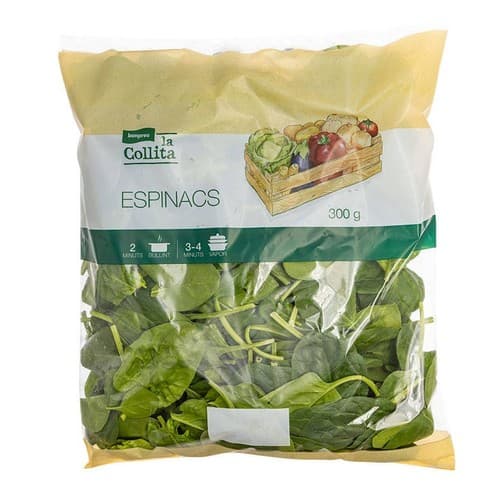 €1.29
€1.29Spinach
LA COLLITA · kg · Bonpreu
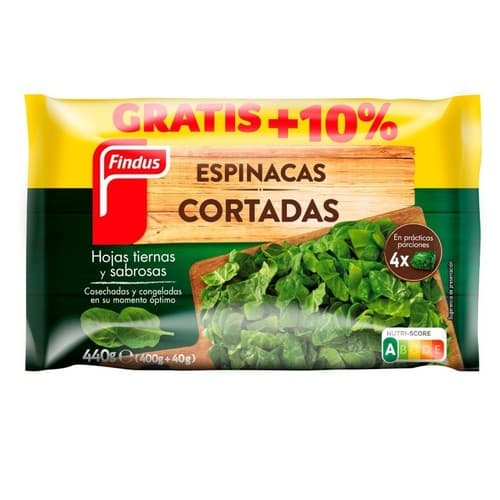 €2.89
€2.89Cut Spinach
FINDUS · kg · Bonpreu
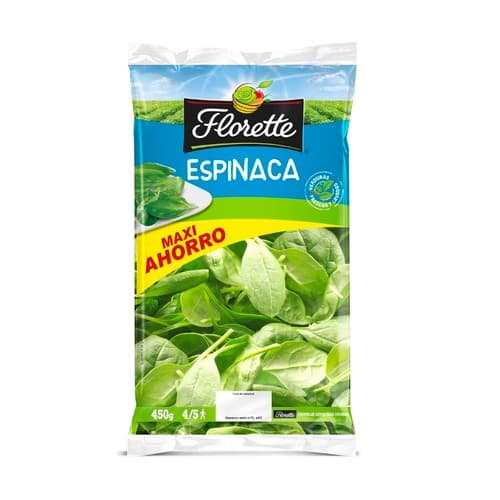 €2.59
€2.59Maxi Spinach
FLORETTE · kg · Bonpreu
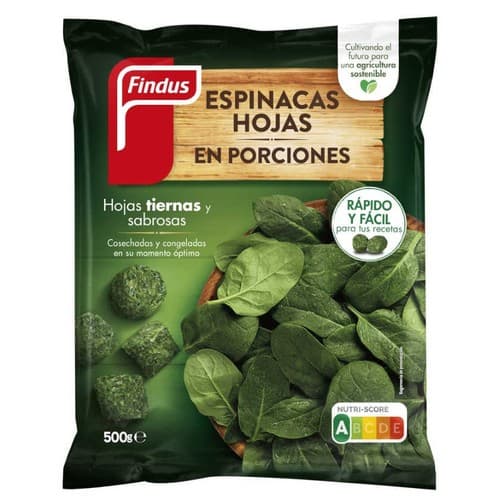 €2.99
€2.99Leaf Spinach
FINDUS · kg · Bonpreu
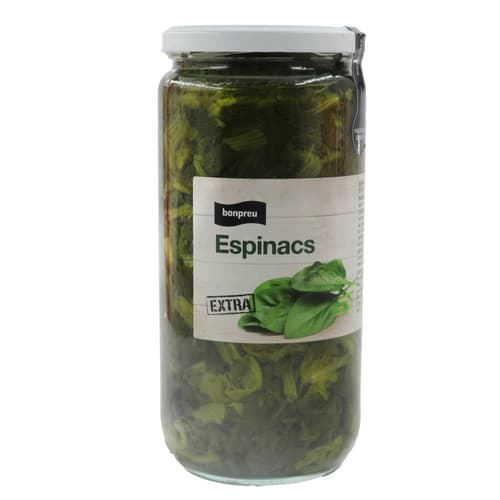 €1.55
€1.55Extra Spinach
BONPREU · kg · Bonpreu
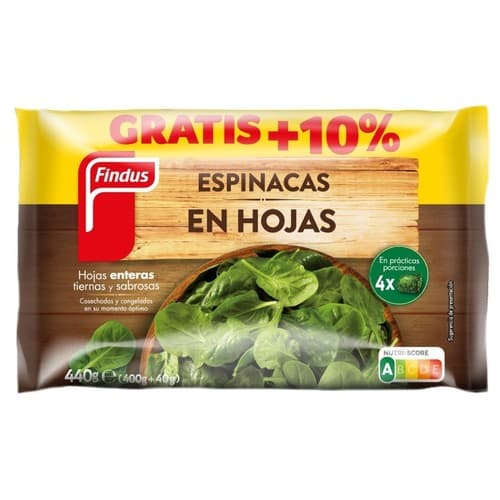 €2.89
€2.89Spinach Leaves
FINDUS · kg · Bonpreu
Good to know
- Scientific name
- Brassica oleracea var. viridis
- Family
- Brassicaceae (mustard family)
- Origin
- Mediterranean region; cultivated for thousands of years
- Introduced to U.S.
- Brought by enslaved West Africans, 17th–18th century
- Peak season
- Fall through early spring; frost improves sweetness
- Flavor
- Earthy, slightly bitter, cabbage-like; milder than kale
- Texture
- Thick, leathery leaves; fibrous central rib
- Refrigerator shelf life
- 5–7 days unwashed in plastic bag
- Yield
- About 50% after trimming stems; 1 lb raw yields 2–3 cups chopped
- Primary growing regions
- Southeastern U.S., Portugal, Brazil, Ethiopia, East Africa
Substitutes
- Kale — Tighter texture; cook 20% less time; more peppery, less earthy
- Turnip greens — Similar cooking time; slightly sweeter, more delicate
- Mustard greens — Much spicier; reduce cooking time by half; better for quick sauté
- Swiss chard — Softer texture; cook briefly; stems can be used like collard ribs
- Napa cabbage — Cooked: best in soups; raw: better texture similarity for salads
Pairs with
Also called
Couve · Sukuma Wiki · Covo
Appears in these dishes
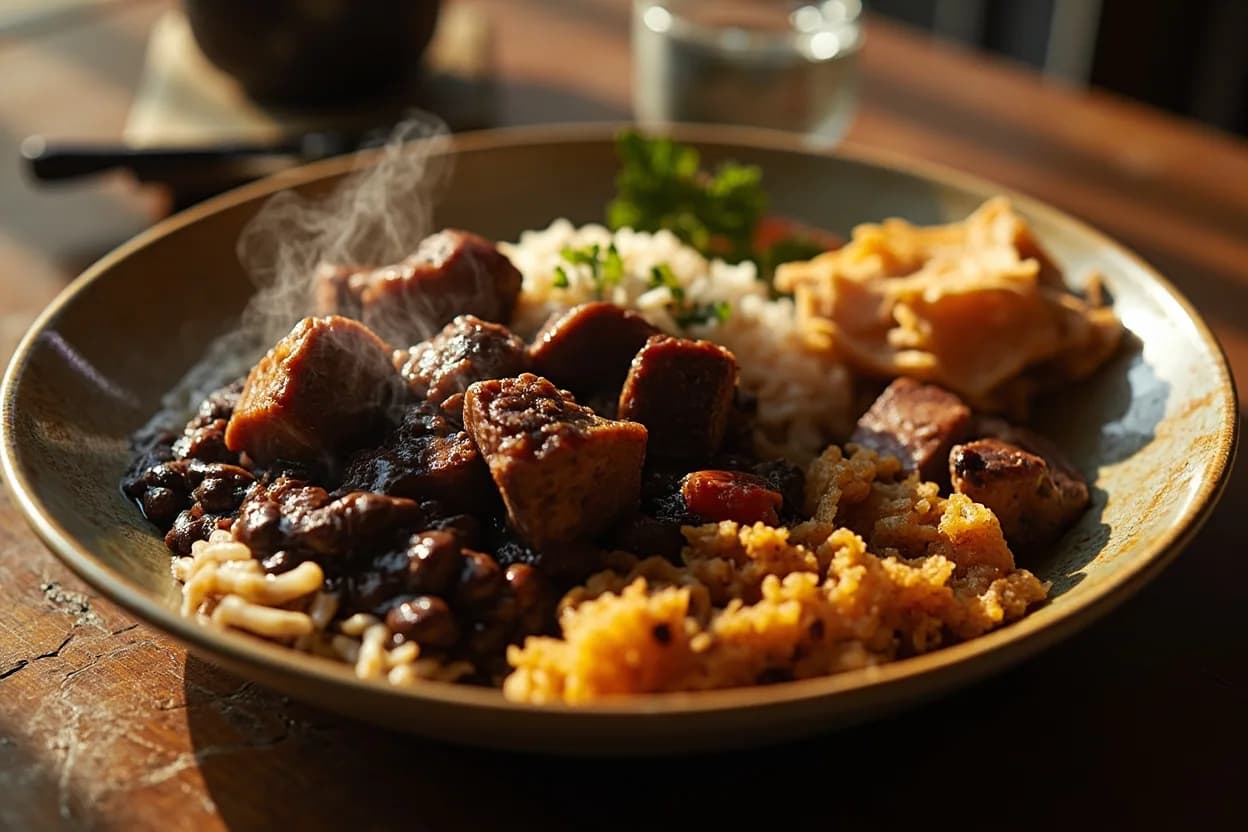
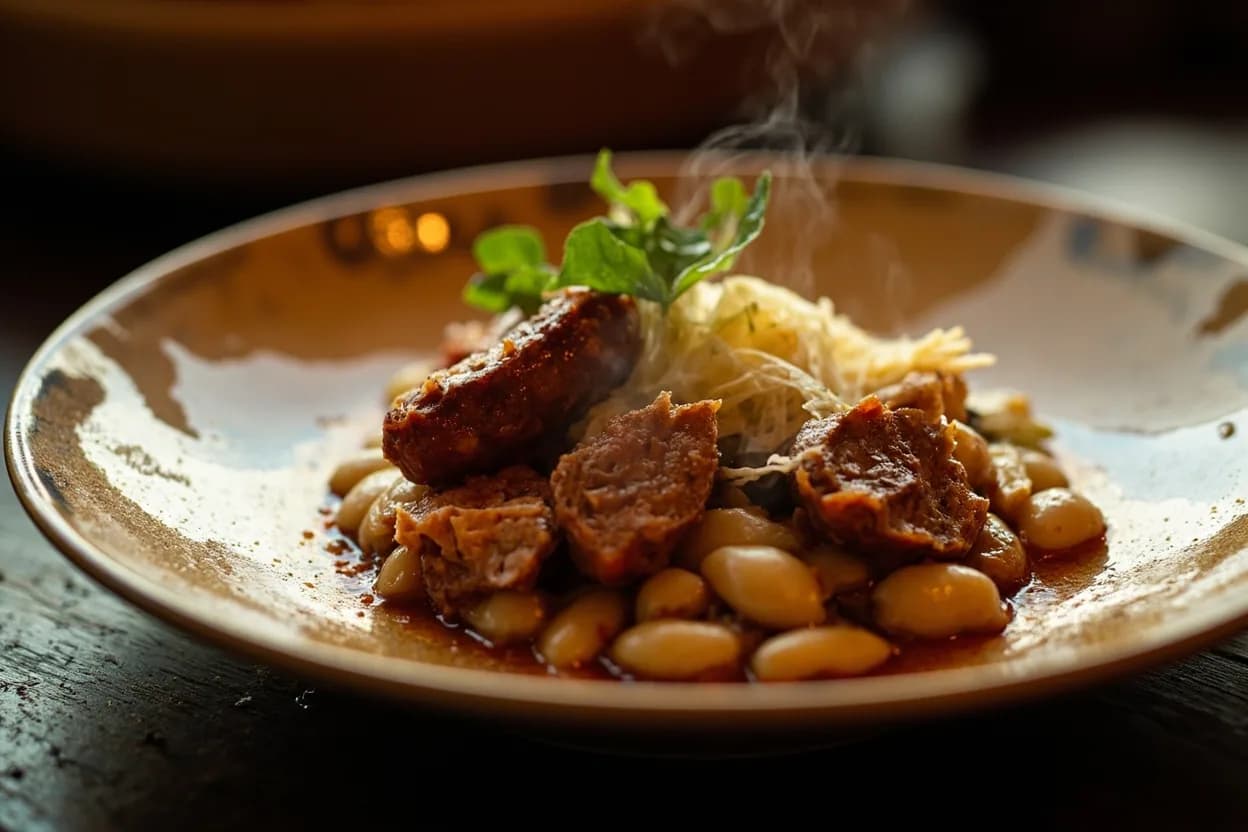
Related
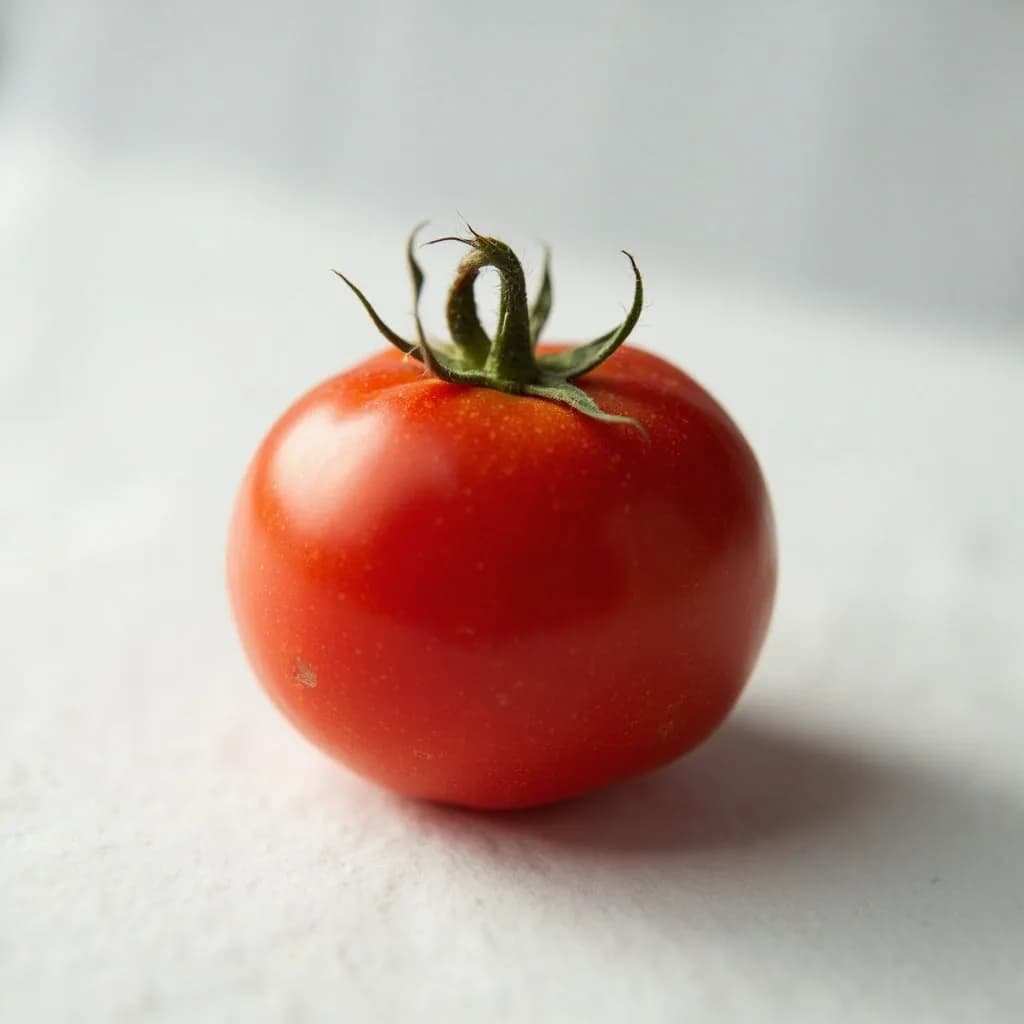
Tomato
Juicy, sun-sweet fruit for sauces, salads, and slow-cooked depth
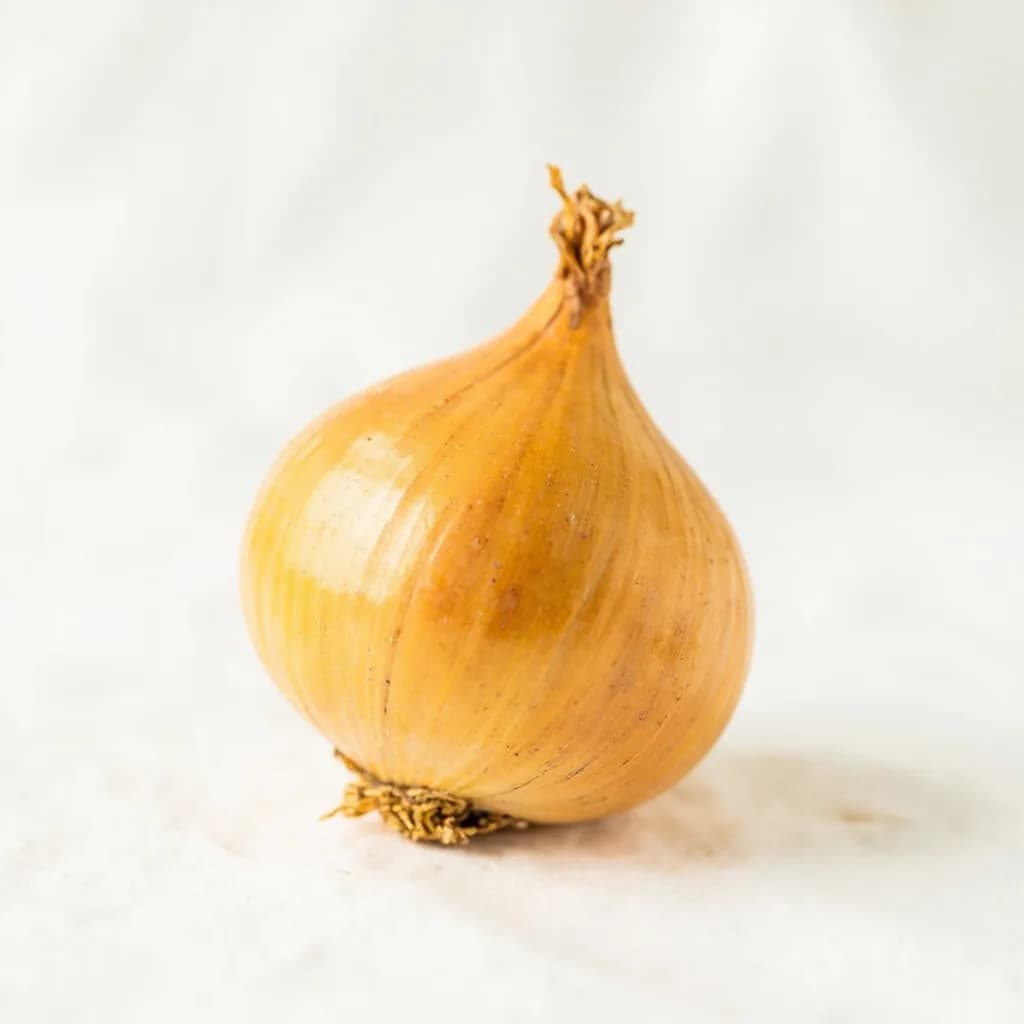
Yellow Onion
The aromatic backbone of soups, sofritos, and braises
Garlic
Pungent cloves that perfume nearly every savory dish
Lemon
Bright, acidic citrus that wakes up almost any dish
Potato
Humble, hearty staple — roast, mash, fry, or boil
Carrot
Sweet, crunchy root — raw, roasted, or the base of a sofrito
Cucumber
Cool, crisp, and watery — for salads, pickles, and tzatziki

Lettuce
Crisp leaves for salads, wraps, and a fresh crunch