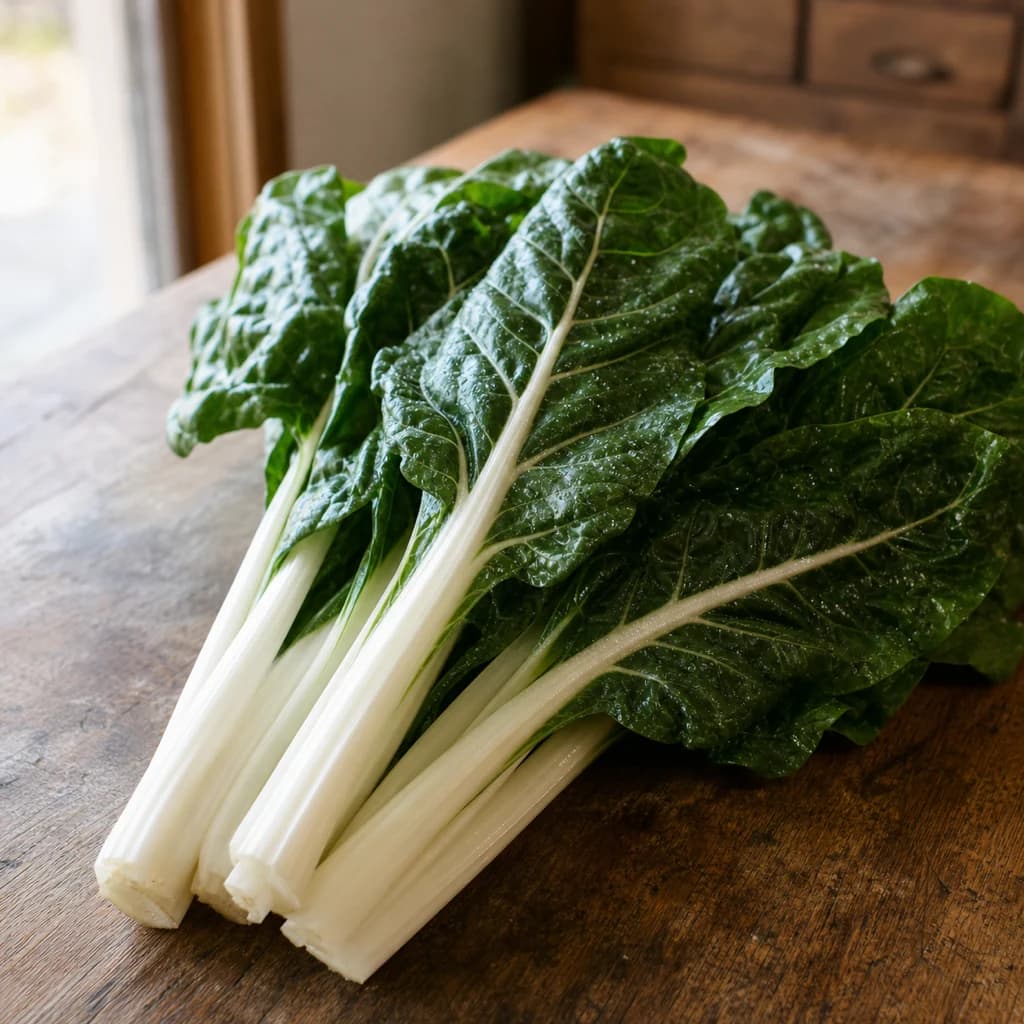
Natural form
A fresh bunch of silverbeet with broad dark leaves and thick white stalks.
Shows the full plant as harvested — leaves, stalks, and their proportions — so readers recognize it in markets and gardens.
Produce
Silverbeet (Swiss Chard)
Leafy chard with large glossy leaves and crisp stalks, braised, sauteed, or baked across Mediterranean cooking.
Silverbeet is the Australian and New Zealand name for chard, a leafy green with broad, glossy dark leaves and thick edible stems that range from white to vivid red and yellow. The leaves are sauteed, braised, or baked into pies and gratins, while the crunchy stalks are often cooked separately. Earthy and mildly bitter, it is a Mediterranean staple closely related to beetroot.
Silverbeet, known as Swiss chard in North America, is one of the most versatile and resilient greens in the kitchen. Despite its misleading common name, it originated in the Mediterranean and has no connection to Switzerland — the misnomer dates to 19th-century English seed catalogs, likely chosen for its exotic ring. Botanically, silverbeet belongs to the Beta vulgaris species, making it a close relative of the beetroot rather than spinach, which belongs to an entirely different family. What sets silverbeet apart is its distinctive structure: broad, glossy leaves with prominent central ribs and thick, crunchy stalks that can be cooked separately or alongside the greens. In cooking, chard behaves differently than spinach — it holds its structure better, tolerates longer cooking without turning muddy, and develops a sweeter, less minerally flavor when heat breaks down its cellular walls. The stalks require roughly three to four minutes more cooking time than the leaves, making it essential to treat them as a separate ingredient. Its natural affinity with garlic, lemon, and rich fats makes silverbeet a staple across Mediterranean, Middle Eastern, and Eastern European cuisines, where it appears in everything from simple braises to elaborate pastries.
- Measured in
- g
- Storage
- Fridge
Types & varieties
White stalks; most common variety with sturdy texture and robust, traditional chard flavor
Multi-colored stalks in red, yellow, orange, pink, and white; identical flavor to white chard with striking visual appeal
Deep crimson stalks and red-veined leaves; slightly earthier flavor; the red pigment bleeds when cooked
Large, heavily crinkled leaves with thick white stalks; superior heat tolerance compared to other varieties
A chard variety bred for smaller leaves and a spinach-like growing habit; milder flavor with less fibrous stalks
Understanding the Stalk-Leaf Dynamic
The fundamental technique for cooking silverbeet is separating stalks from leaves before beginning. This separation is not arbitrary — the stalks contain more fiber and take considerably longer to tenderize. Cut or snap the stalks away from the leaves, then chop each component according to your recipe's needs. Stalks can be treated as a distinct vegetable: slice them thinly for quick cooking in stir-fries, braise them whole for a more substantial side dish, or pickle them for a tangy condiment. The leaves can be stacked, rolled, and sliced into ribbons for even wilting.
- Reserve stalks for pickling, braising, or adding to stocks
- Chiffonade leaves by stacking, rolling, and slicing for uniform texture
- Both components can be cooked together once you understand their different timing needs
The Name Explained
Swiss chard and silverbeet describe the exact same vegetable, yet neither name makes immediately intuitive sense. Silverbeet, the common name in Australia and New Zealand, references the silvery sheen on the underside of the leaves. Swiss chard emerged from Victorian-era English seed catalogs — the 'Swiss' was marketing, not geography. The vegetable itself is entirely Mediterranean in origin and completely unrelated to Switzerland. In North America, the term Swiss chard stuck; elsewhere, silverbeet prevails. Either name refers to Beta vulgaris var. cicla, distinct from spinach (Spinacia oleracea) and beetroot (Beta vulgaris var. vulgaris), though all three share the Beta genus.
- The name Swiss chard has no historical connection to Switzerland
- Silverbeet and Swiss chard are interchangeable terms for the same ingredient
- Chard belongs to the same species as beetroot, just bred for leaves instead of roots
Common uses
Tips & pitfalls
- Wash silverbeet in several changes of cold water; sand and grit lodge in the leaf crevices and will ruin a dish.
- Always separate stalks and leaves — stalks take 3–4 minutes longer to become tender, and cooking them together results in uneven texture.
- Roll stacked leaves tightly and slice into ribbons for even cooking and better sauce adhesion.
- Do not overcook; chard should retain some resistance and vibrant color, typically 2–4 minutes of active cooking after the leaves wilt.
- Season with salt early to draw out moisture, but finish with a splash of acid (lemon or vinegar) to balance the earthiness.
- Young, small spring leaves need only brief wilting; larger fall-grown leaves benefit from a 30-second blanch first to tenderize them.
- A squeeze of lemon added at the end brightens the flavor and helps preserve the green color.
- The stems can be pickled, braised separately as a side, or used as a decorative lattice for a vegetable tart.
Nutrition
Energy
79 kJ · per 100 g
Where the calories come from
Protein
1.8g
4% DV
Carbs
3.7g
1% DV
Fat
0.2g
0% DV
Fiber
1.6g
6% DV
Sugars
1.1g
of which
Sodium
213mg
9% DV
Source · USDA FoodData Central · Chard, swiss, raw
View on FDC →In the shops
Matched grocery products
No matched grocery products for Silverbeet (Swiss Chard) yet.
Good to know
- Origin
- Mediterranean region; cultivated since ancient times
- Peak Season
- Spring and fall; tolerates light frost, which concentrates sugars
- Flavor
- Mildly bitter, earthy; sweeter when cooked; stalks are crunchy and slightly saline
- Storage
- Refrigerate unwashed in a plastic bag up to 5 days; pat dry thoroughly before cooking
- Yield
- 1 bunch (about 450g) yields 4–6 cups chopped leaves, 1–1.5 cups chopped stalks
- Nutrition
- Exceptional source of vitamins K, A, and C; high in magnesium, potassium, and iron; contains oxalates
- Cooking Equivalents
- 1 cup cooked chard equals roughly 1 cup raw; leaves collapse to about one-fifth original volume
- Oxalate Content
- High; blanching reduces oxalate levels by approximately 40 percent
Substitutes
- Spinach — Milder flavor; cook 1–2 minutes less; reduce quantities by one-third as spinach cooks down more
- Kale — Sturdier texture; massage raw or cook 5–8 minutes longer; lacinato (dinosaur) kale is the closest match
- Collard Greens — Broader leaves with tougher texture; chiffonade finely and cook 8–10 minutes longer
- Beet Greens — Virtually identical; swap one-for-one; the slight beet earthiness may come through
- Bok Choy — Best for stir-frying; stems stay crunchier while leaves wilt faster
Pairs with
Also called
Chard · Swiss Chard · Rainbow Chard · Beet Greens
Appears in these dishes
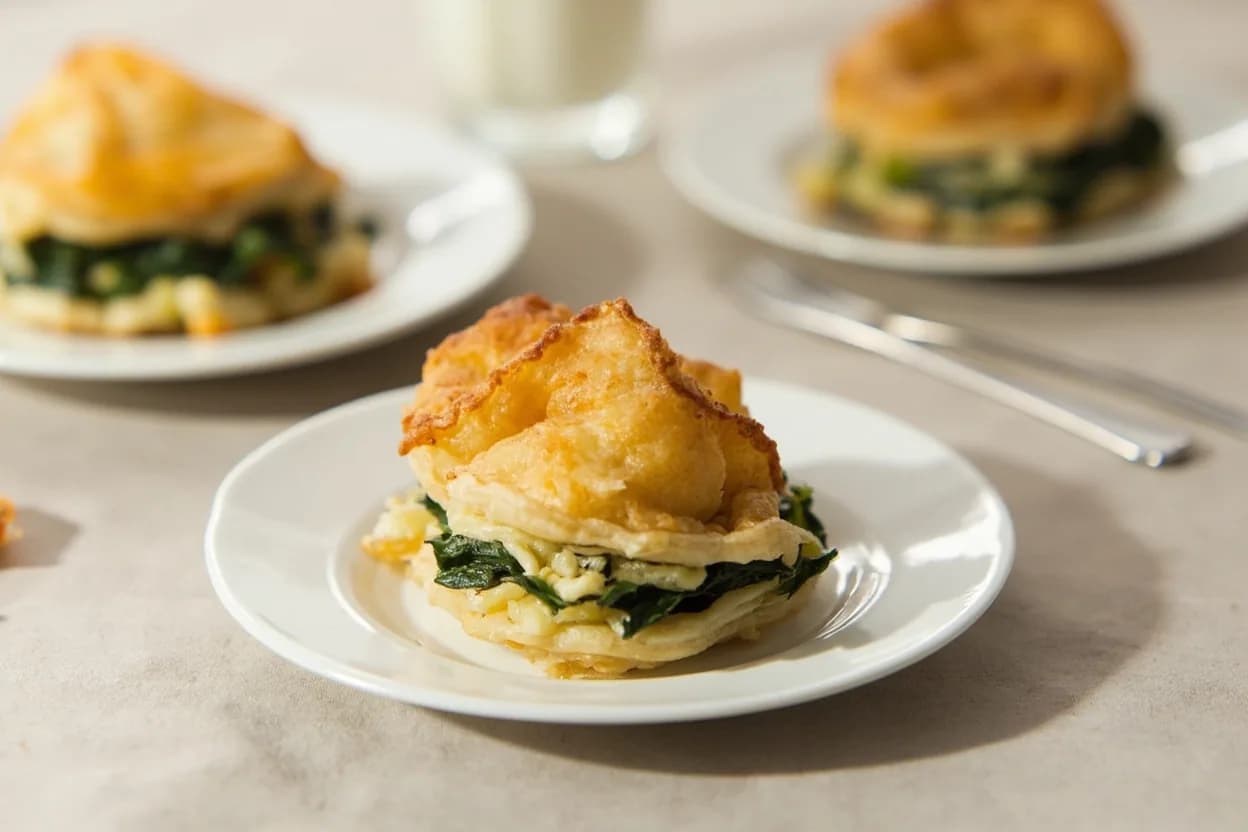
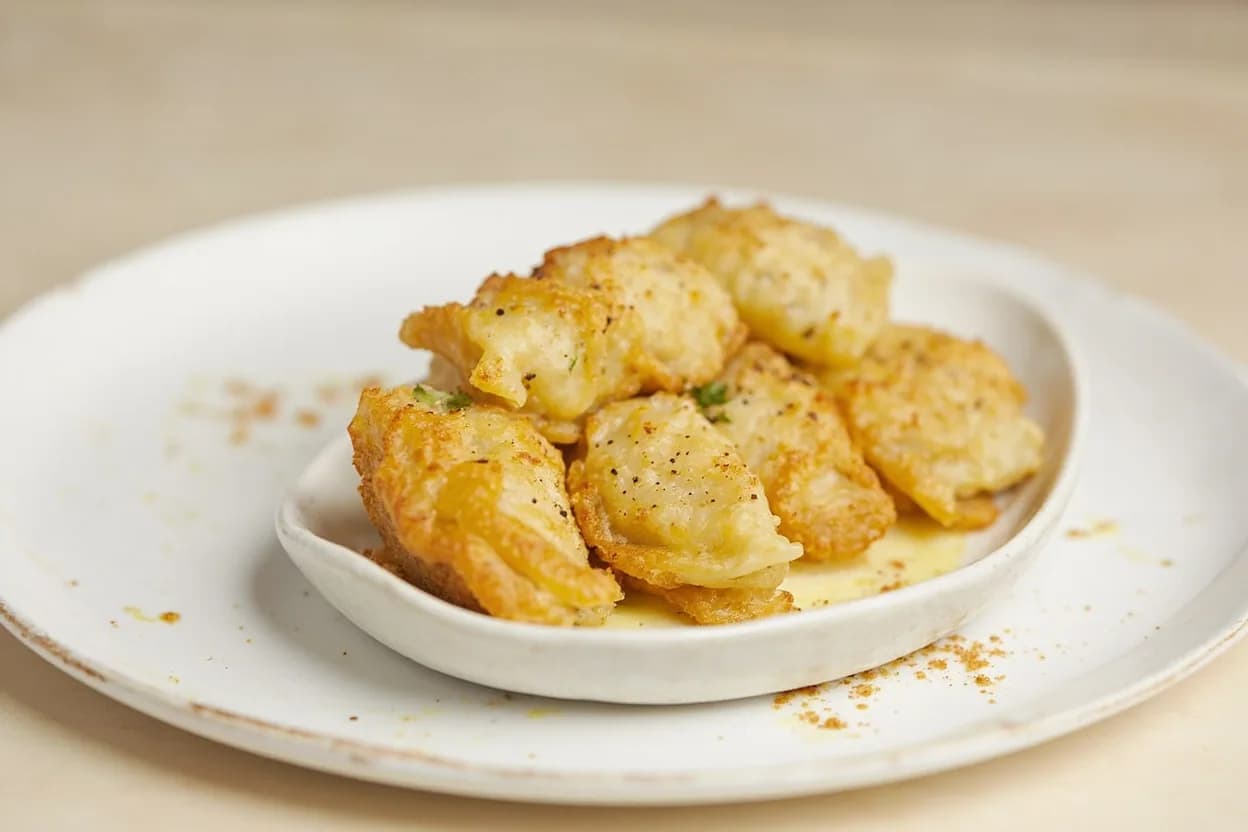
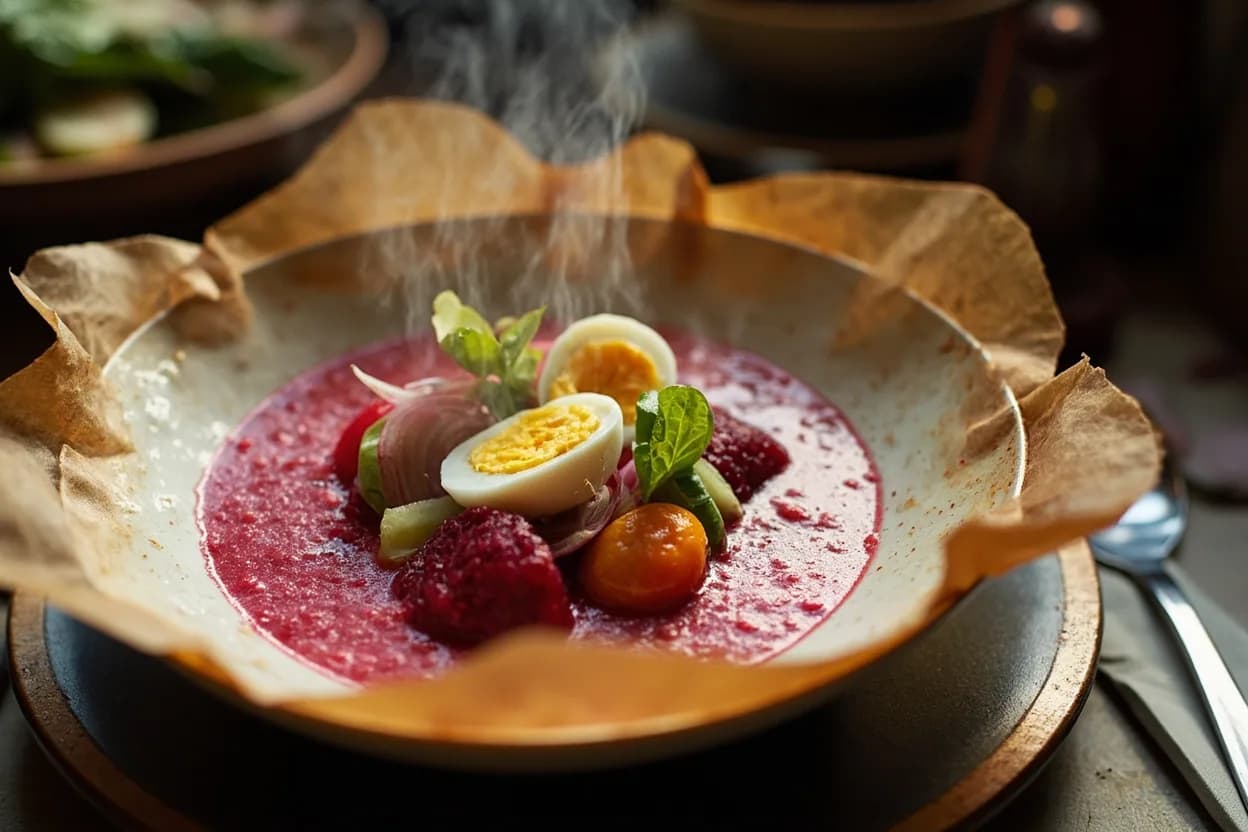
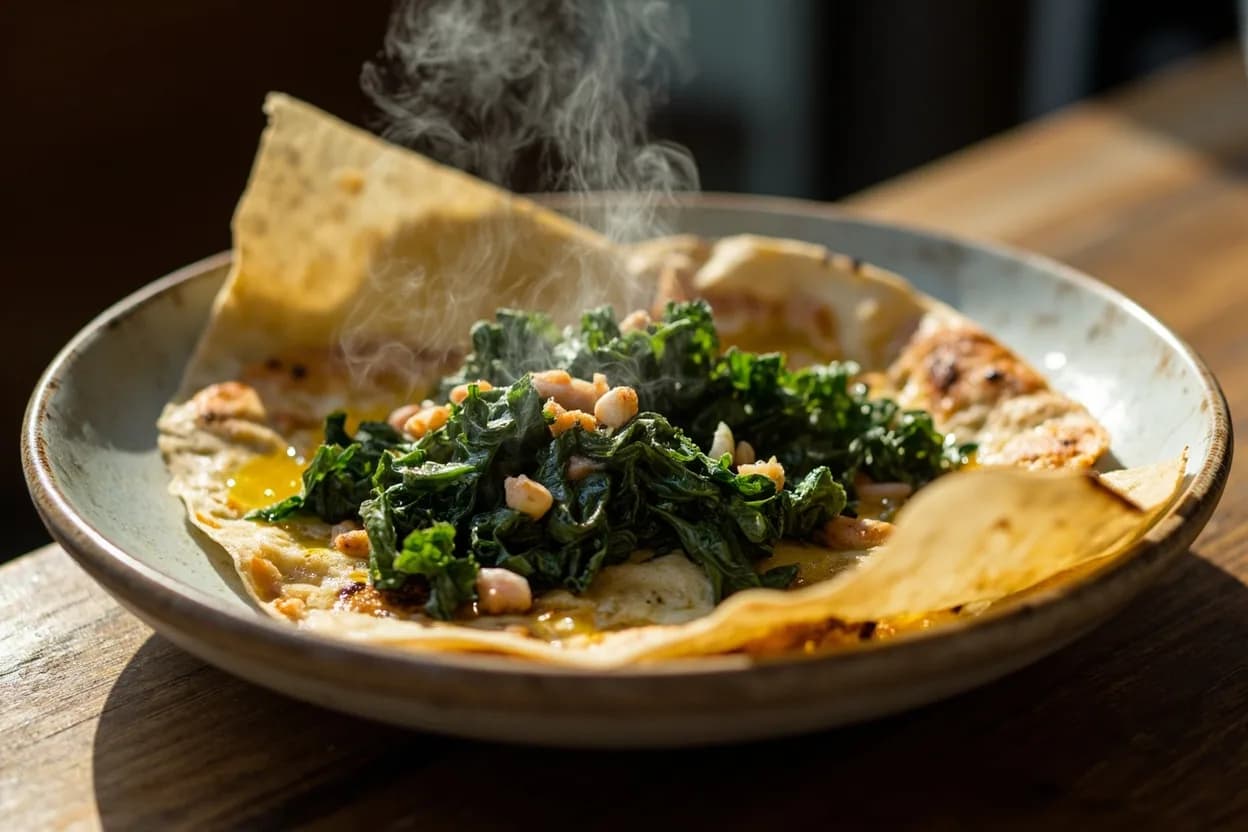
Related
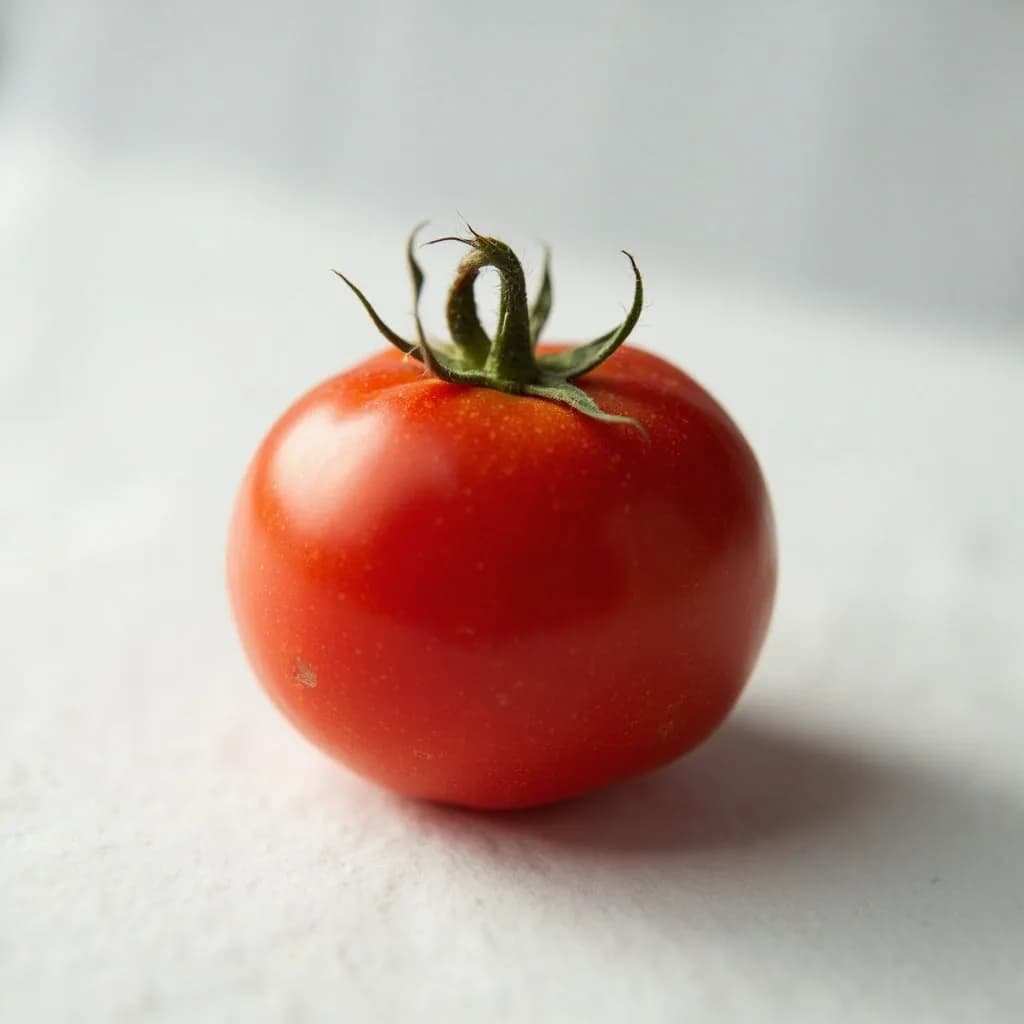
Tomato
Juicy, sun-sweet fruit for sauces, salads, and slow-cooked depth
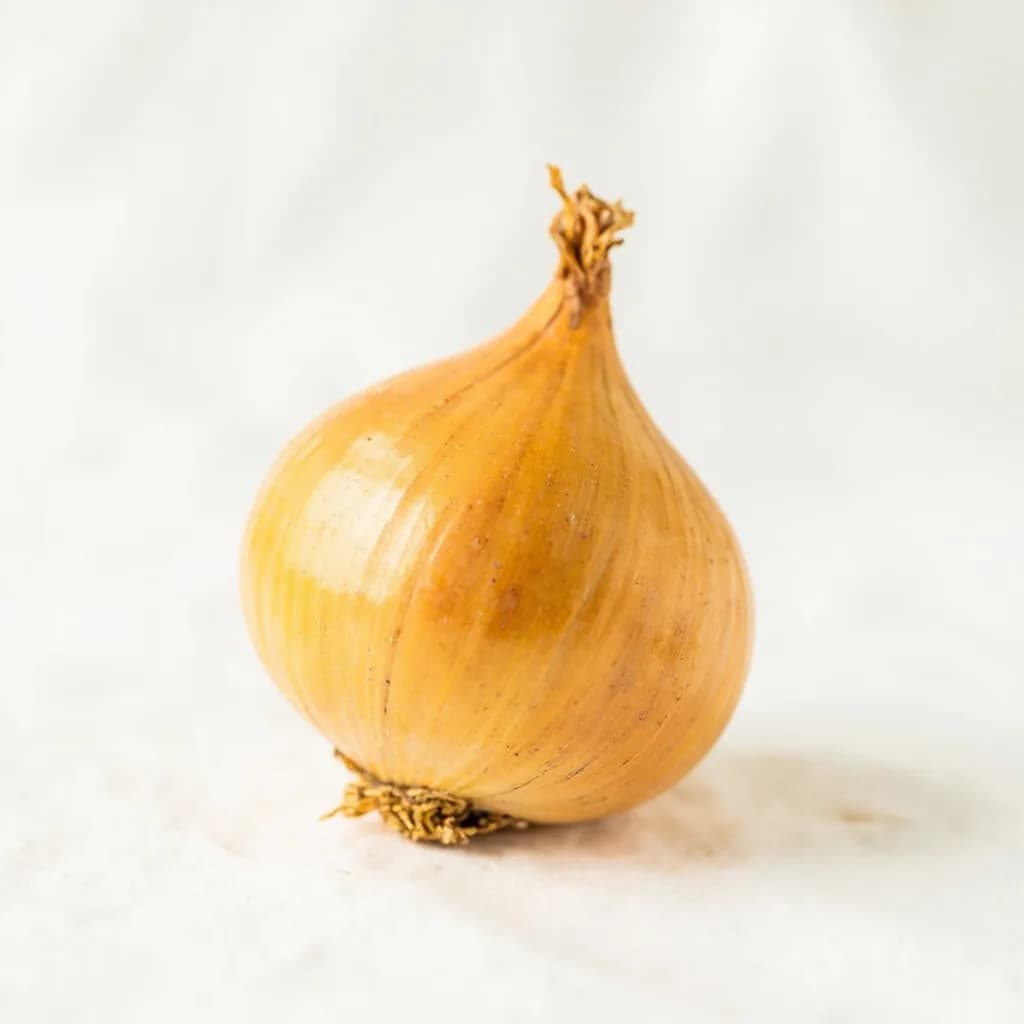
Yellow Onion
The aromatic backbone of soups, sofritos, and braises
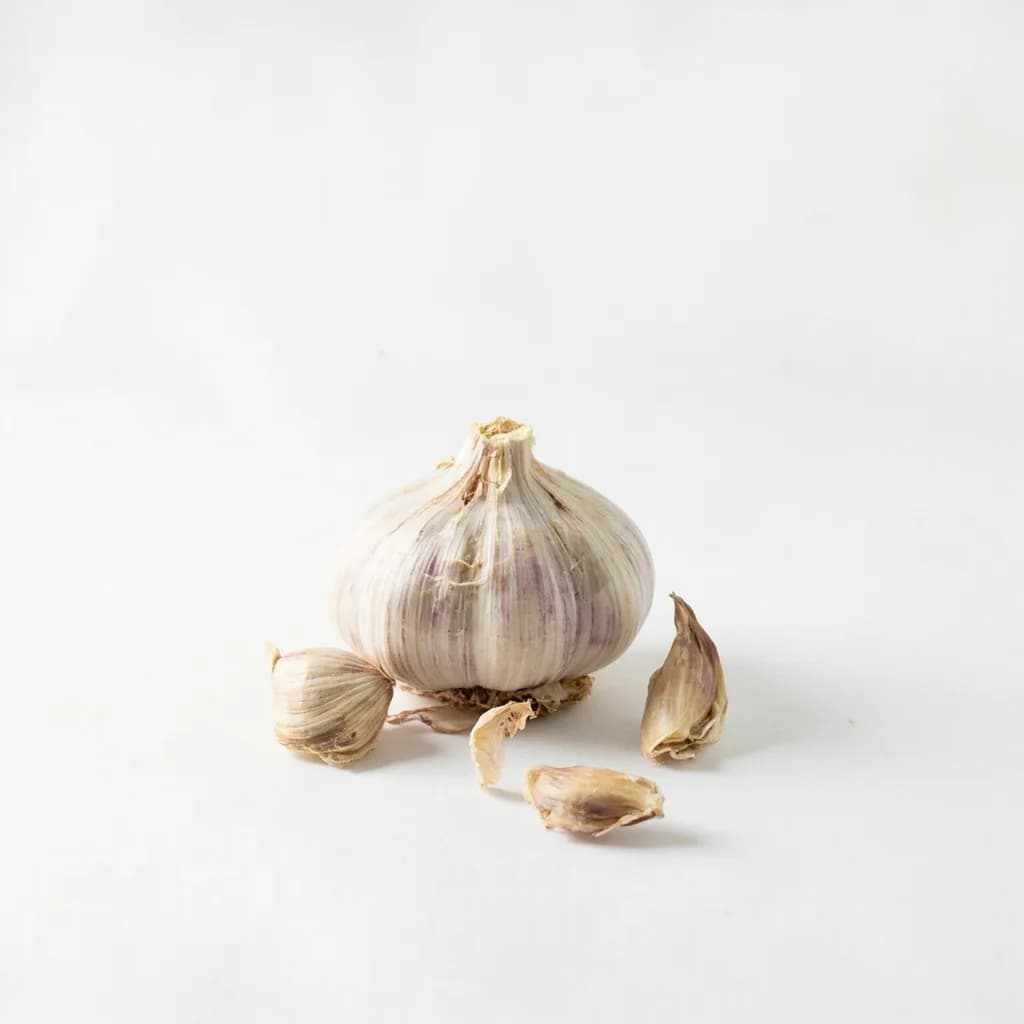
Garlic
Pungent cloves that perfume nearly every savory dish
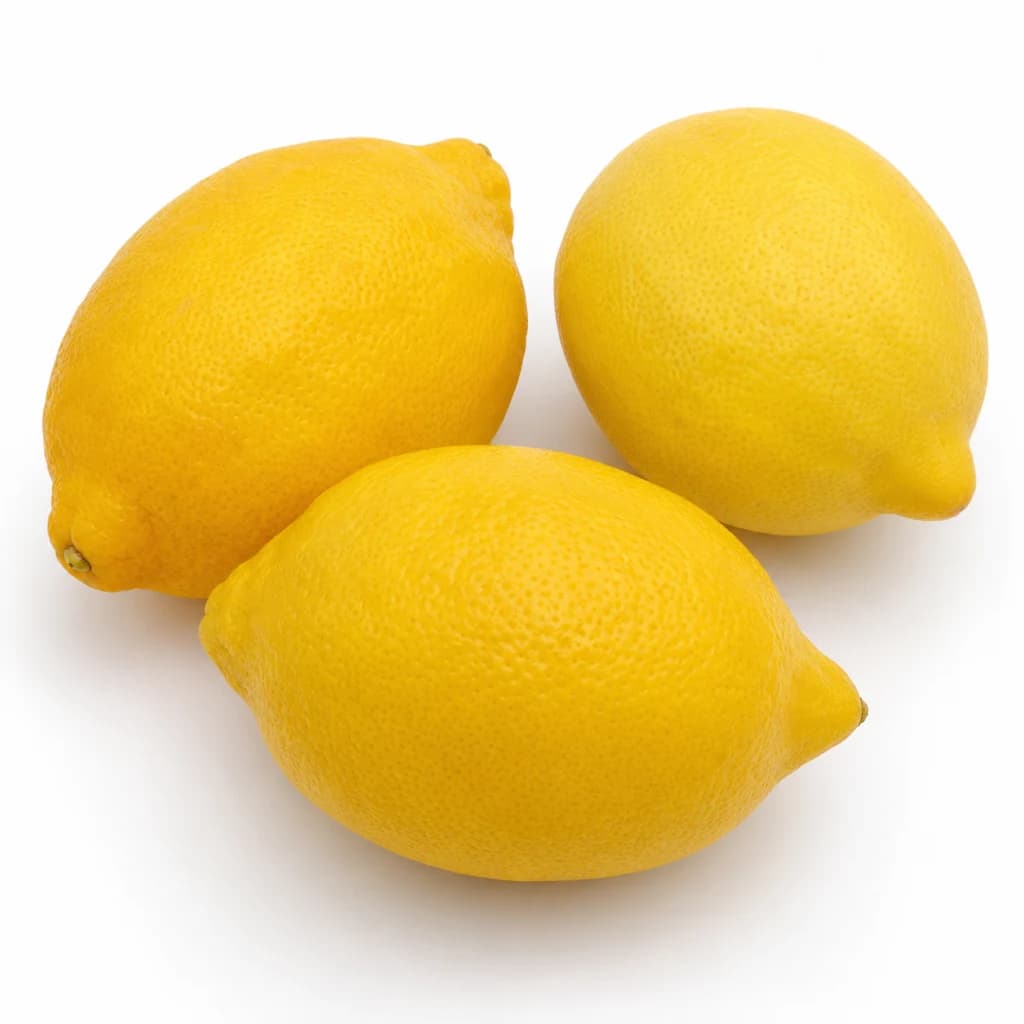
Lemon
Bright, acidic citrus that wakes up almost any dish
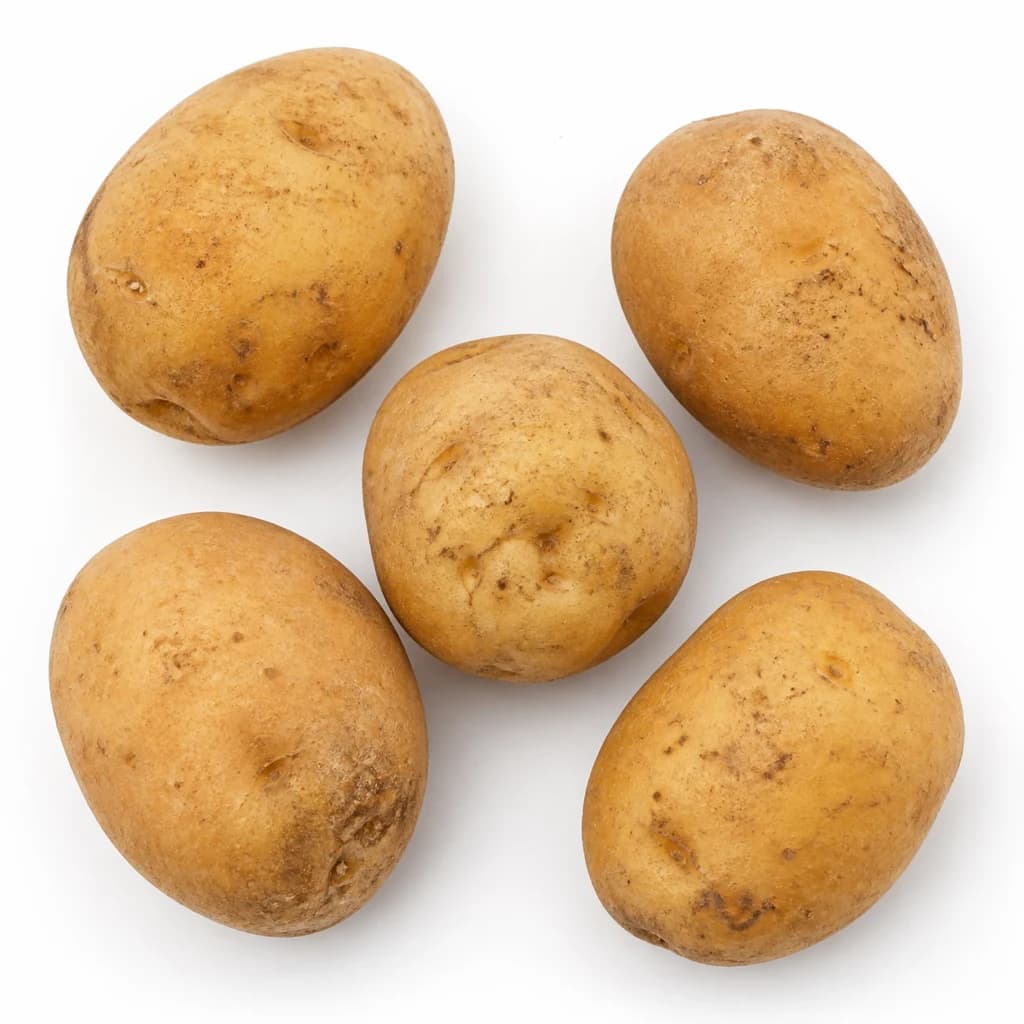
Potato
Humble, hearty staple — roast, mash, fry, or boil
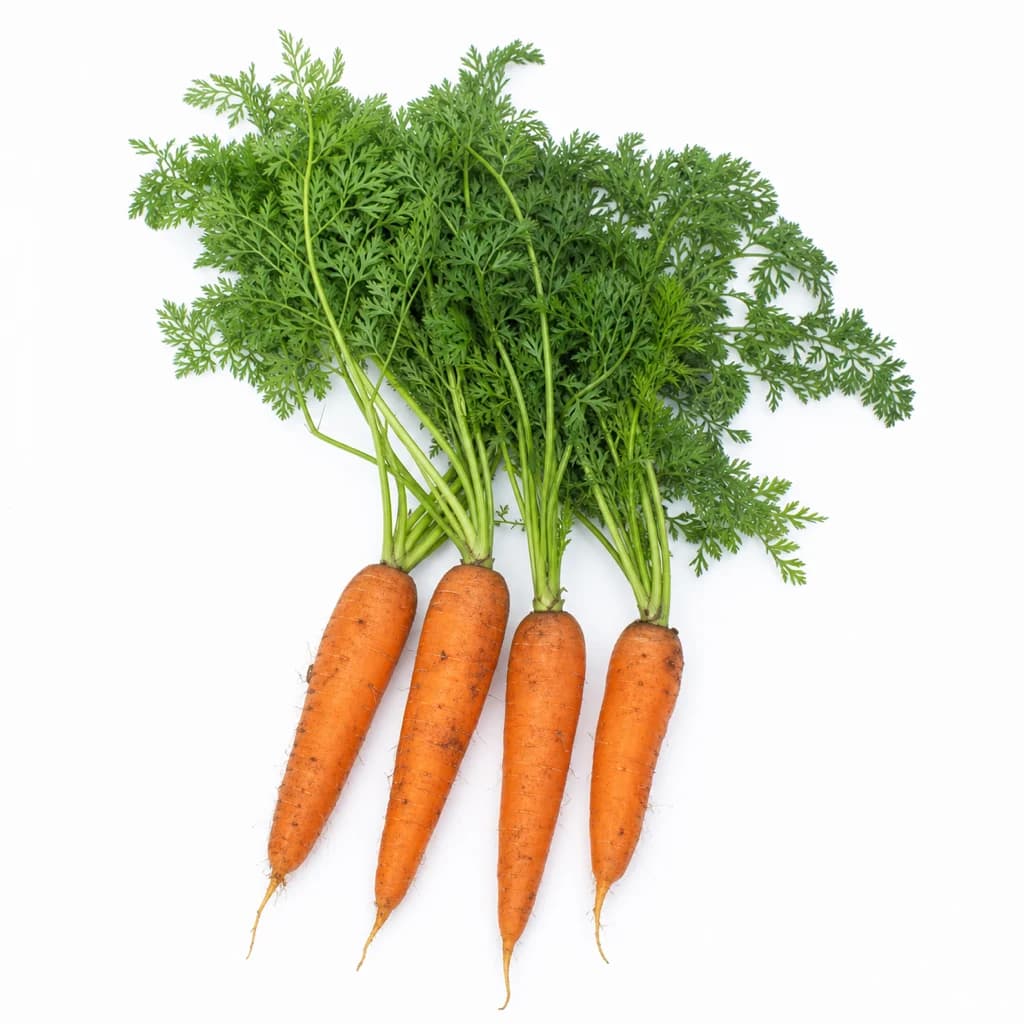
Carrot
Sweet, crunchy root — raw, roasted, or the base of a sofrito
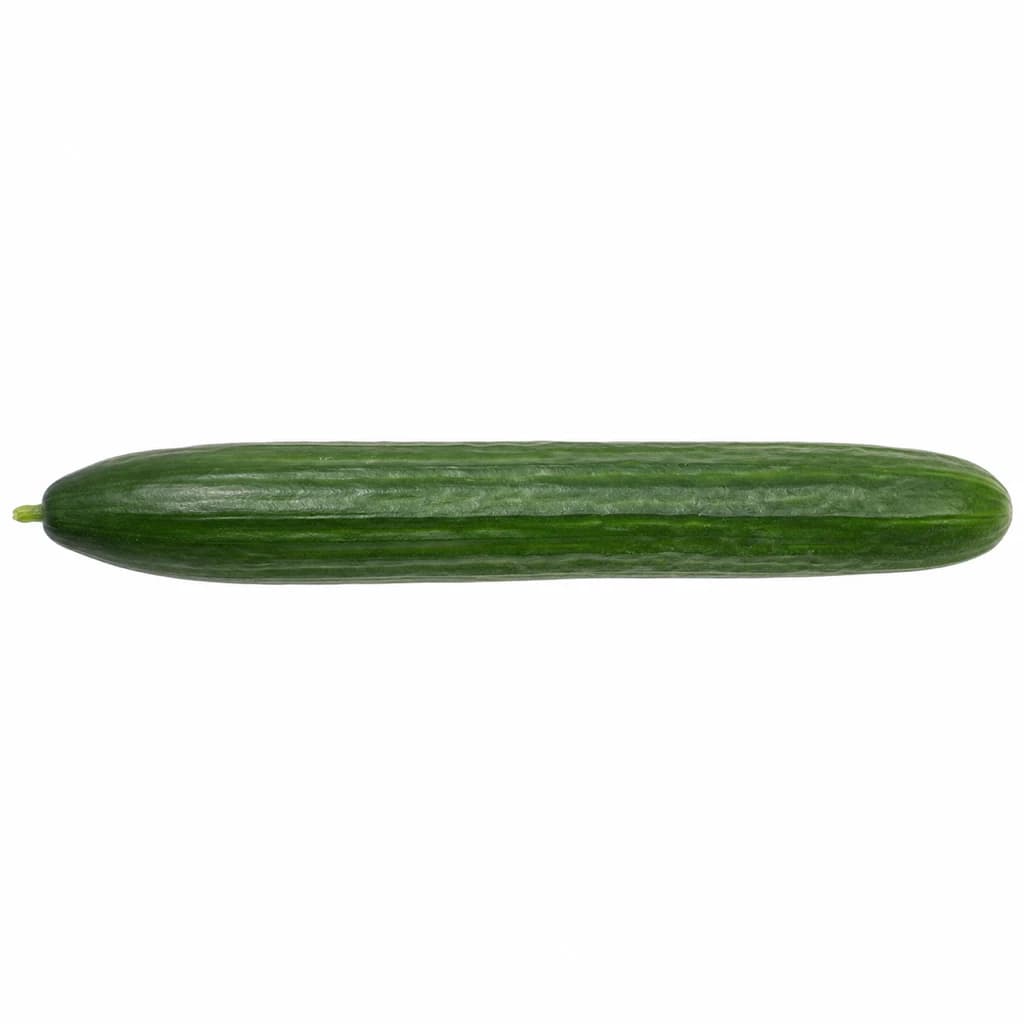
Cucumber
Cool, crisp, and watery — for salads, pickles, and tzatziki

Lettuce
Crisp leaves for salads, wraps, and a fresh crunch