North America
Louisiana Creole & Cajun
Also: Creole cuisine, Cajun cuisine, Louisiana cooking, New Orleans cuisine, South Louisiana food
Two distinct yet intertwined Louisiana traditions: the cosmopolitan African-French-Spanish sophistication of New Orleans Creole cooking and the rural Acadian fire of Cajun bayou cuisine — together the most complex regional food culture in North America.
Louisiana's culinary identity is split between two traditions that share ingredients but differ in technique, setting, and cultural origin. Creole cuisine evolved in New Orleans from the collision of French haute technique, Spanish colonialism, West African cooking knowledge, and later Italian and German immigration — refined, urban, and sauce-driven, its masterworks include gumbo, étouffée, and red beans and rice. Cajun cuisine developed among the Acadian exiles (expelled from French Canada in 1755) who settled the bayous and prairies west of New Orleans — rural, intensely spiced, and built around the trinity of onion, celery, and bell pepper cooked in animal fat. Both traditions rely on a dark roux as a thickening and flavoring agent; both claim gumbo, though their versions differ profoundly.
The flavour base
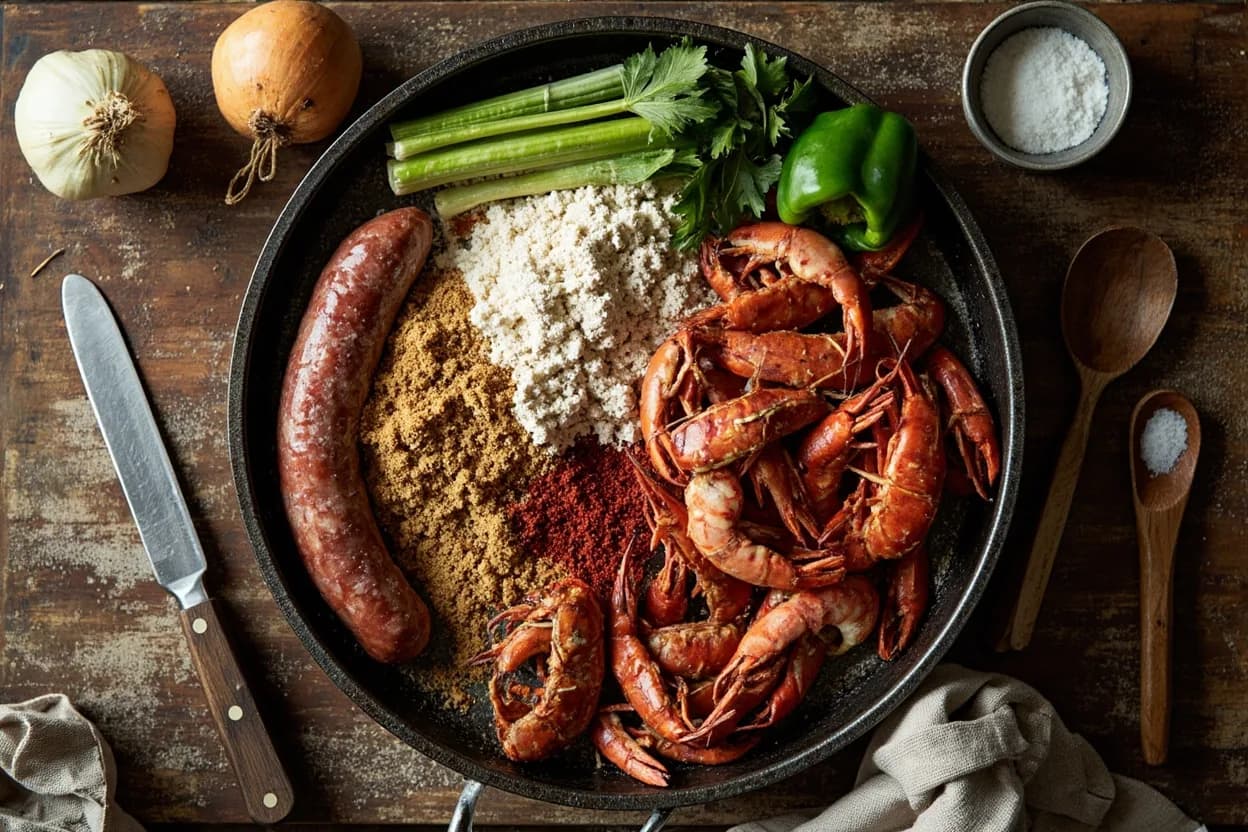
The Cajun and Creole 'holy trinity' — onion, celery, and green bell pepper — is the shared aromatic base. Dark roux (flour cooked in fat until it reaches the colour of dark chocolate) provides depth and body. West African technique of okra as thickener (via filé powder, dried and ground sassafras leaves) runs through gumbo. Tomato distinguishes Creole from Cajun in many dishes: Creole gumbo uses tomato; Cajun does not.
Pantry staples
Key ingredients
Signature techniques
Signature dishes
Louisiana Creole & Cajun on the table
At the table
New Orleans Creole tradition follows a French three-course model: appetizer or soup, main, dessert. Sunday red beans and rice (cooked while the family was at church, requiring minimal attention) remains a citywide institution observed by restaurant and home cook alike. Cajun country meals are more informal — one-pot dishes served in large quantities. Boucherie (communal pig slaughter and processing) is a Cajun social institution that produces boudin, cracklins, and smoked meats for the community in a single day.
History & context
The story begins with French colonial New Orleans (founded 1718) and the enslaved West African women who cooked in its kitchens, bringing with them okra, black-eyed peas, and the technique of thickening with okra mucilage that became the soul of gumbo. Spanish rule (1769–1800) added tomatoes, peppers, and braised rice dishes. Free people of colour (gens de couleur libres) ran the city's most important early restaurants and created Creole cuisine's foundational repertoire. The Acadian exiles arrived in Louisiana from 1764 onward, adapting their French-Canadian techniques to local Gulf Coast ingredients in the bayous of Lafourche, Terrebonne, and the Cajun prairie. The two traditions remained geographically distinct until the 20th century, when Paul Prudhomme and Emeril Lagasse brought both to national attention in the 1980s–90s, sometimes conflating them in the popular imagination.
Regional variations
- New Orleans French Quarter / Uptown (Creole)
The most refined expression: turtle soup, oysters Rockefeller, trout meunière, bananas Foster. Restaurant cooking with classical French French technique, heavily influenced by African American culinary genius.
- Cajun Prairie (Lafayette / Ville Platte)
Cracklins, boudin, smothered pork chops, couche-couche (fried cornmeal). Rice farming country — rice is the staple. Zydeco music and boucherie culture are inseparable from food here.
- Cajun Bayou (Lafourche / Terrebonne parishes)
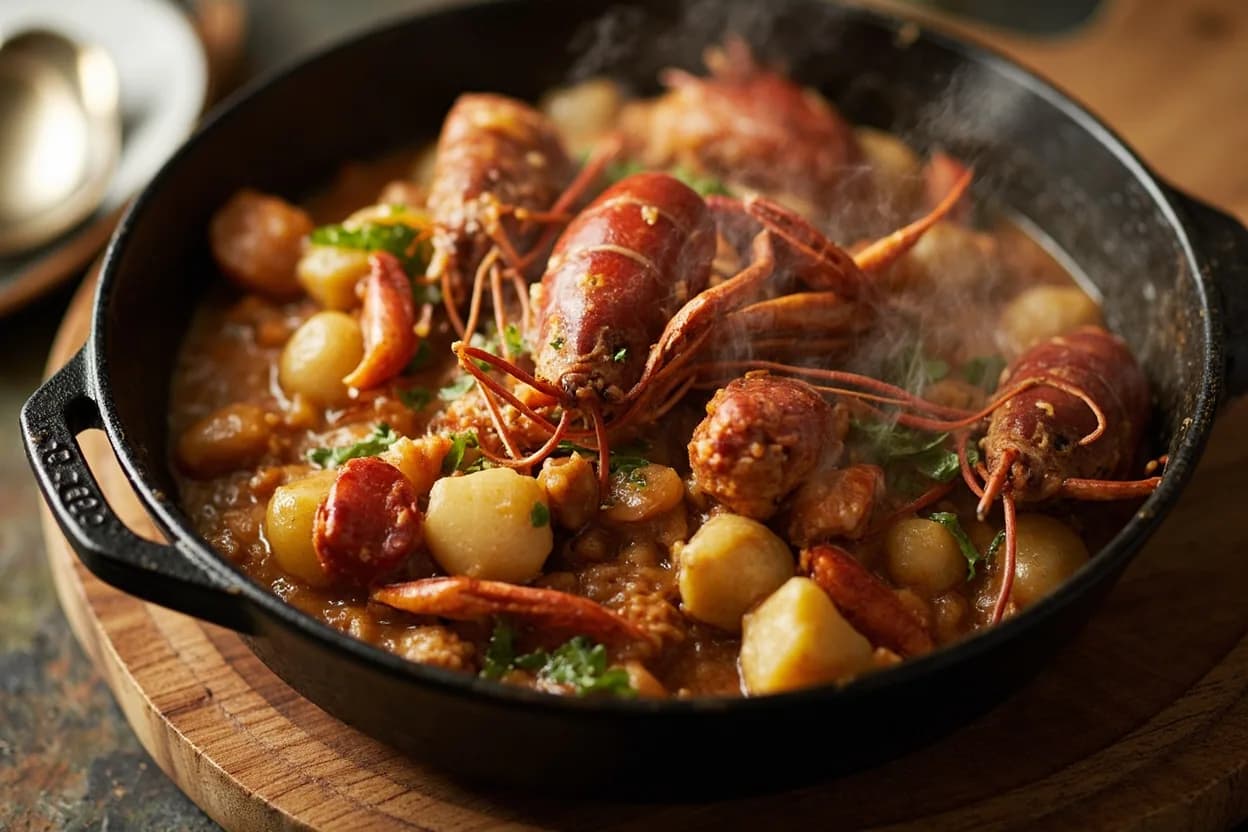
Seafood-dominant: crawfish, crab, oysters, shrimp from the estuaries. Crawfish bisque, crab stew, and freshwater catfish are central.
- Northern Louisiana (Shreveport / Monroe)
Less distinct from general American Southern cooking; soul food influence is stronger; Creole and Cajun elements thin out north of I-10.
Related cuisines
- West African
Enslaved Africans — particularly from Senegambia and the Gulf of Guinea — contributed okra, black-eyed peas, rice cultivation technique, and the one-pot stew tradition that underlies gumbo.
- French (Classical)
Roux-based sauce technique, court-bouillon, and the formal restaurant structure of New Orleans Creole cooking descend directly from French classical cuisine.
- Spanish
The Spanish colonial period (1769–1800) contributed tomatoes, sofrito-adjacent techniques, and the paella-to-jambalaya transformation.
Overlapping ingredients and African American culinary authorship; but Louisiana Creole is more technically elaborate and seafood-centric than Deep South soul food.
Canonical recipes
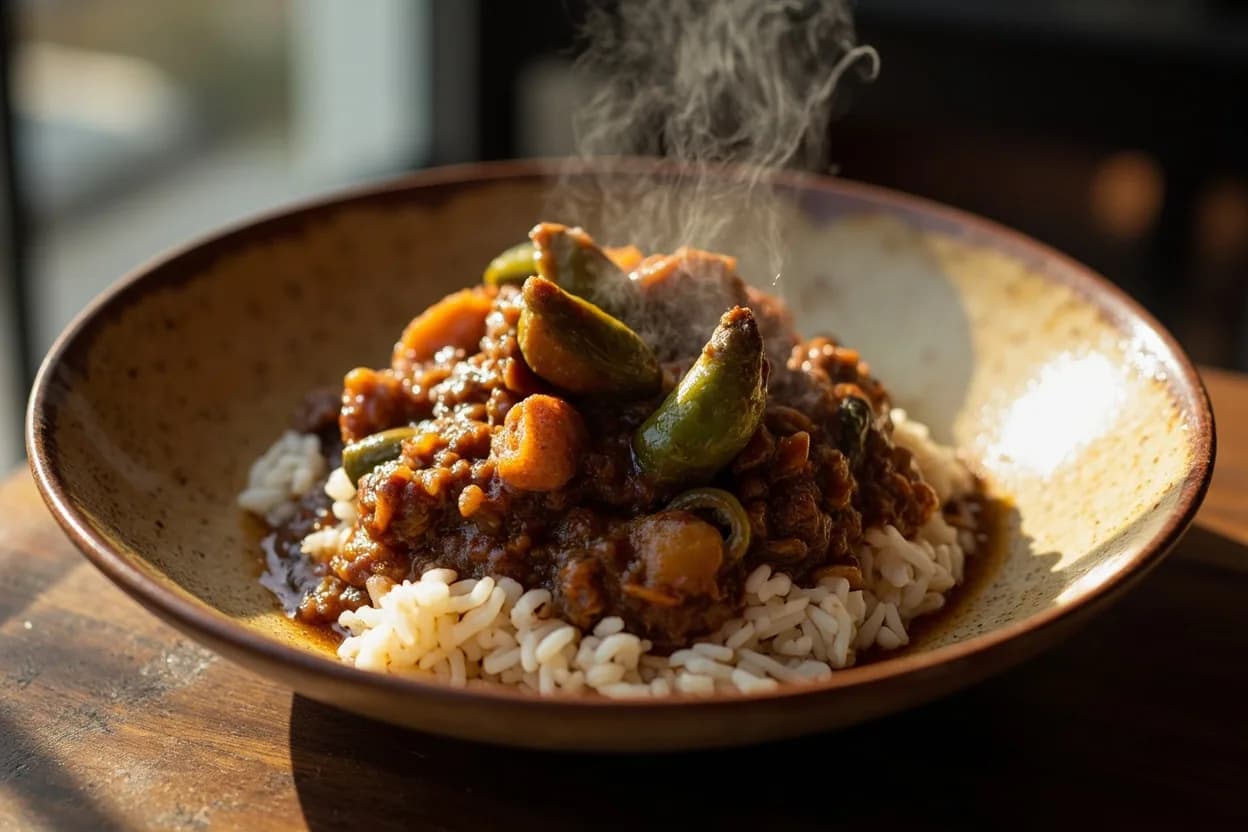
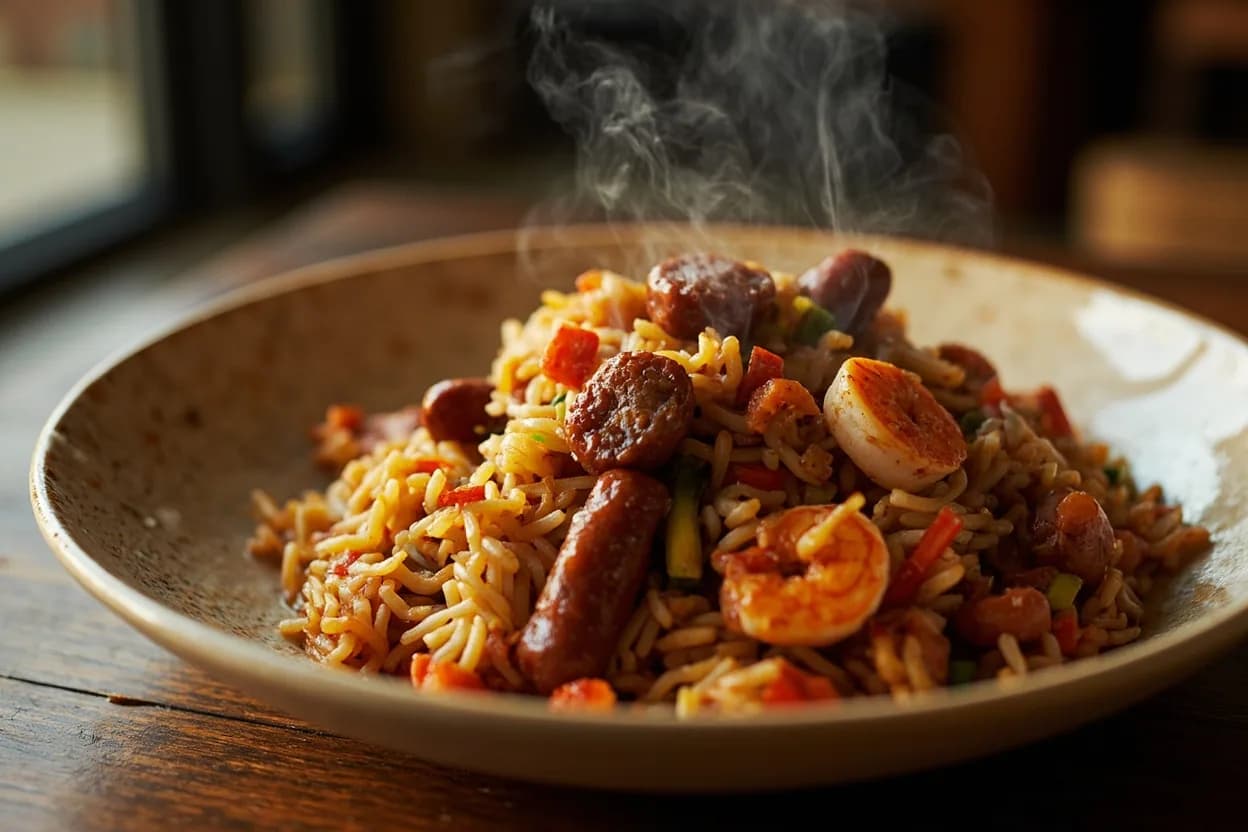
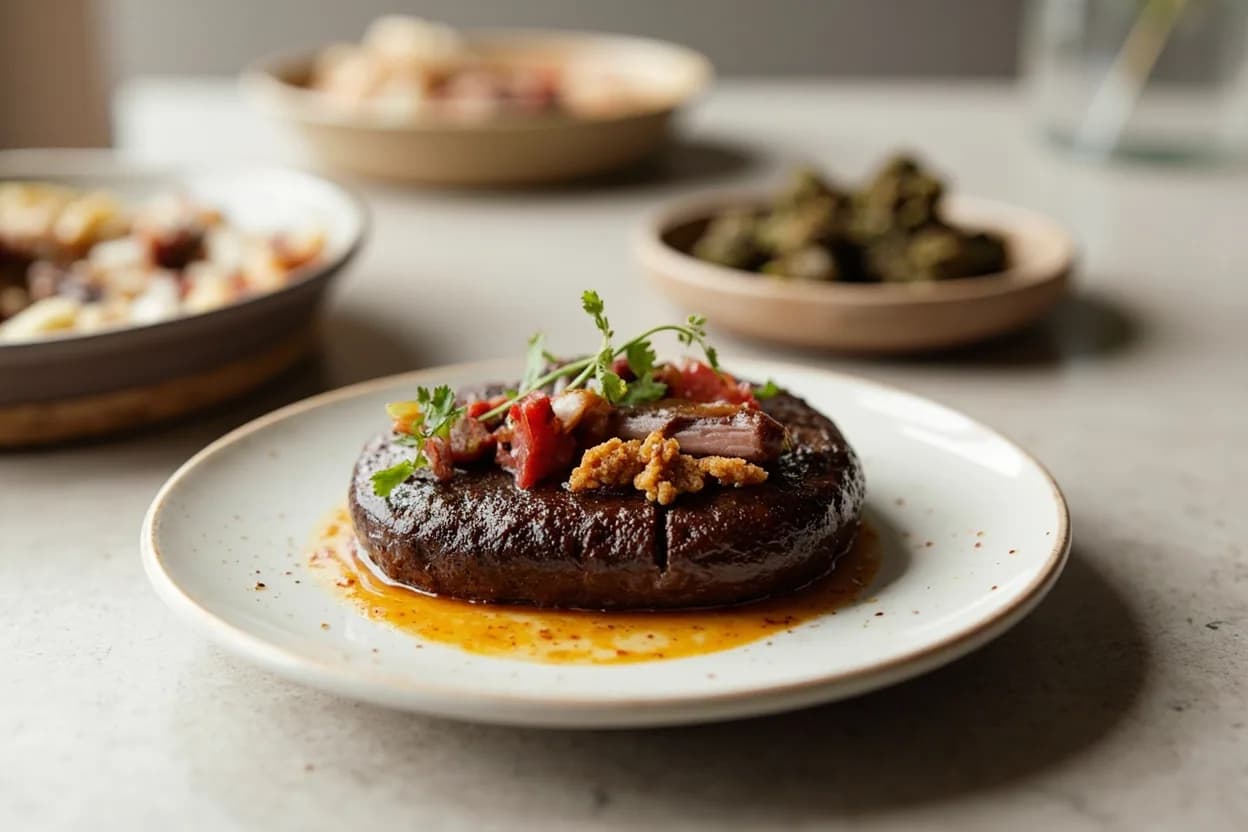
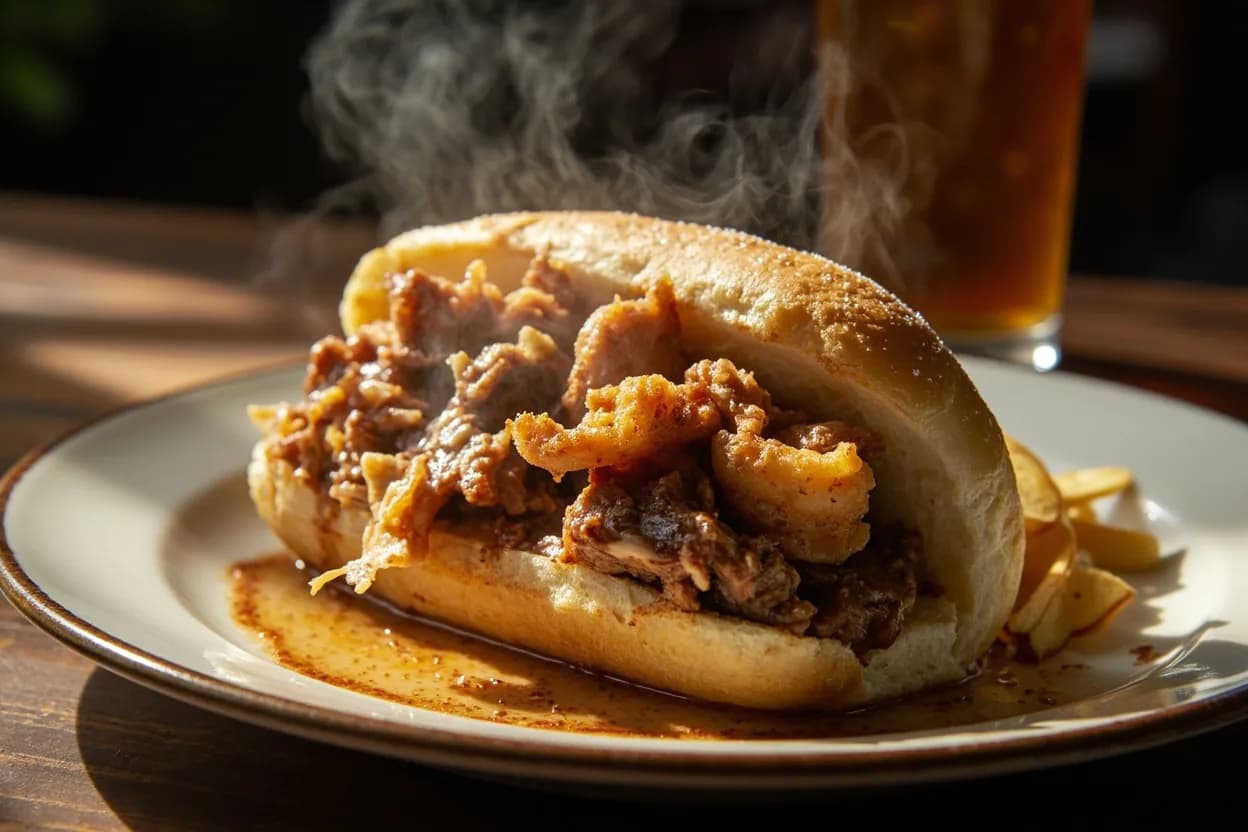
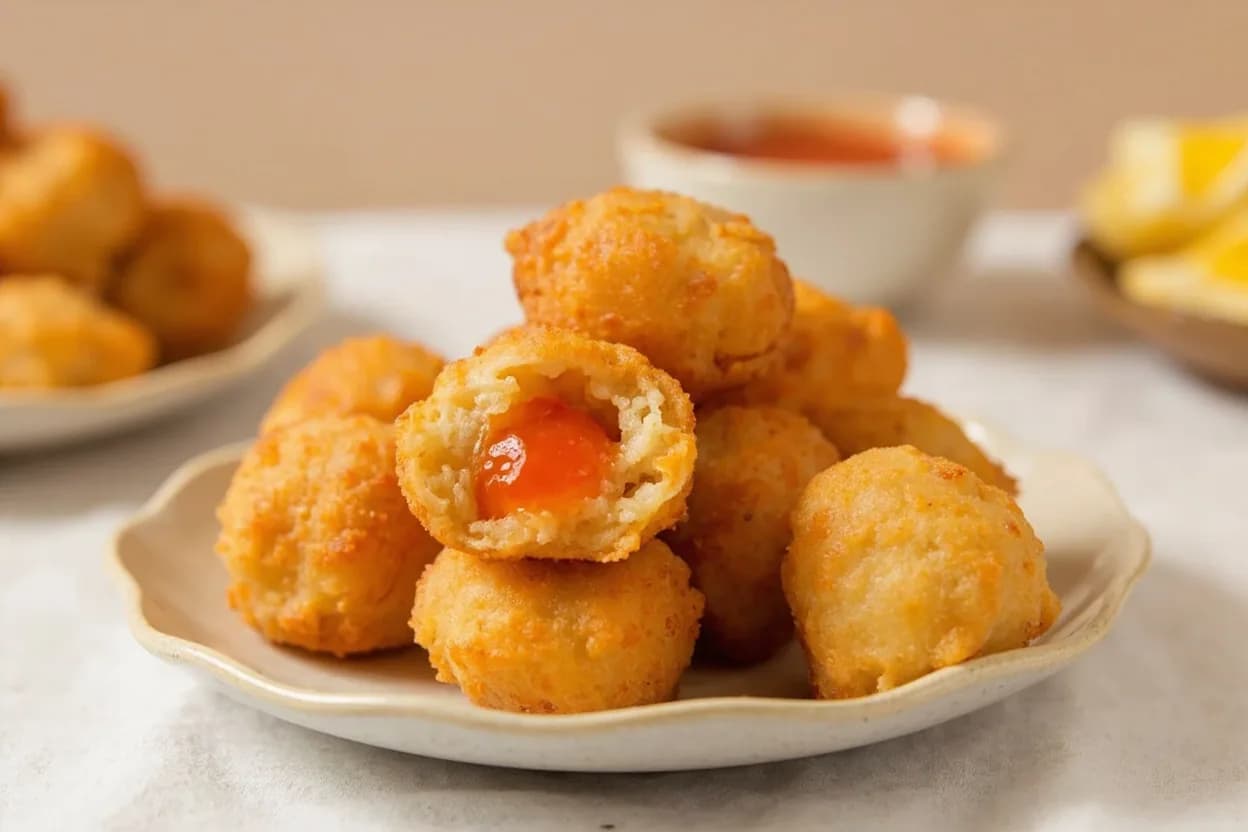
The dishes that define Louisiana Creole & Cajun, documented in the Canon.
References
- 1.The Picayune's Creole Cook Book — Times-Picayune Publishing (1901, facsimile editions)
- 2.Cajun Country — Barry Jean Ancelet, Jay D. Edwards & Glen Pitre
- 3.The Encyclopedia of Cajun & Creole Cuisine — John D. Folse
- 4.High on the Hog: A Culinary Journey from Africa to America — Jessica B. Harris
- 5.Paul Prudhomme's Louisiana Kitchen — Paul Prudhomme
Confidence: high
Notes
Gumbo: the dish that defines the debate
Gumbo is the single dish that most crystallizes the Creole/Cajun distinction. Creole gumbo typically includes tomatoes, okra, and shellfish in an urban household tradition; Cajun gumbo omits tomatoes entirely, uses a darker roux, and often builds on chicken and andouille. The thickener debate — okra versus filé (sassafras powder, a Choctaw contribution) versus roux — is a Louisiana culture war in miniature. The word 'gumbo' itself derives from the Bantu word for okra (ki ngombo), confirming the dish's African origin.
The roux: Louisiana's engine
Both Creole and Cajun cooking use roux, but at different registers. Creole roux is often blond (15 minutes), producing a more neutral thickener. Cajun roux is pushed to dark chocolate or even black (45+ minutes of constant stirring), producing complex, smoky, bitter-nutty flavours that define the depth of dishes like chicken and andouille gumbo. Burning roux — 'passing the point of no return' — means starting over; it is the fundamental skill test of the Louisiana kitchen.