Proteins
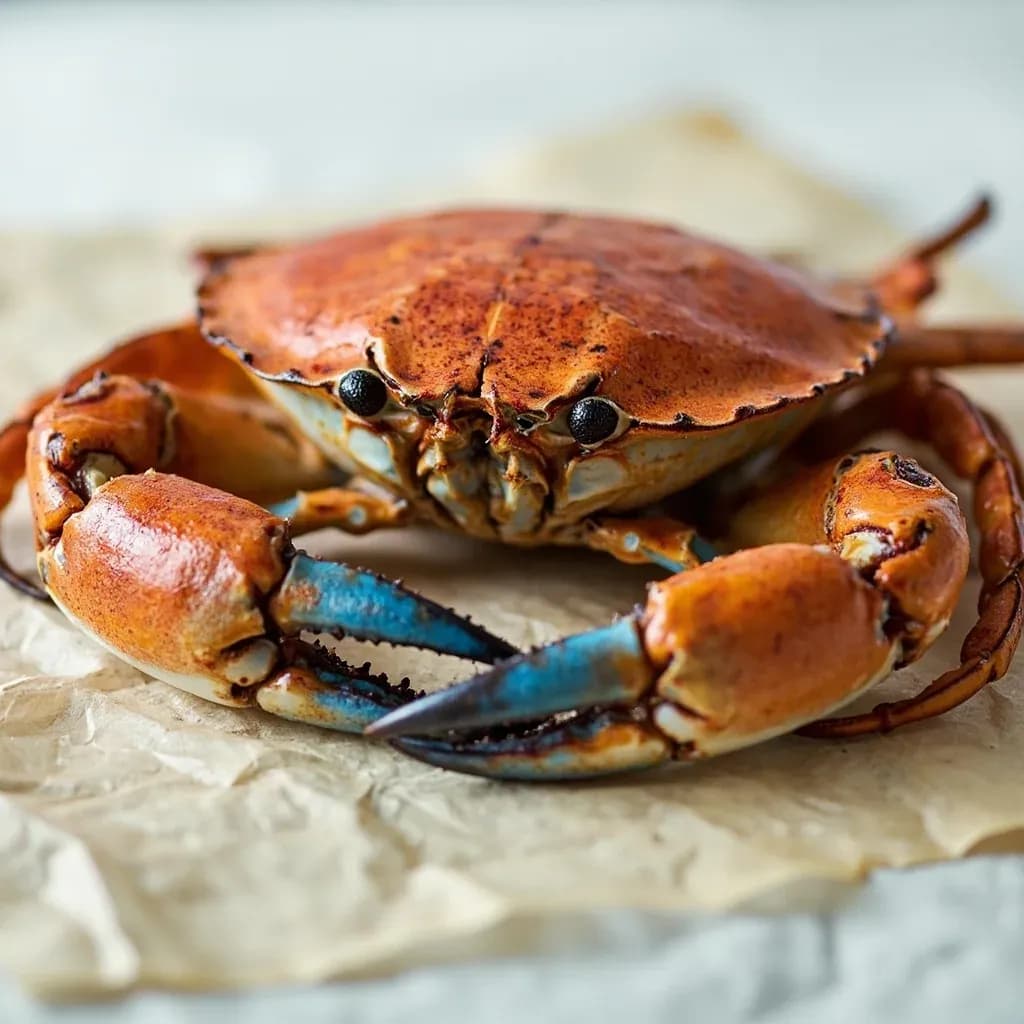
Blue Crab
Sweet-meated Atlantic crab, steamed with spice or picked for crab cakes and the prized soft-shell stage.
Blue crab is a small Atlantic crab with distinctive blue claws and exceptionally sweet, delicate meat. It is steamed whole with Old Bay seasoning, picked for crab cakes and soups, and eaten whole and fried at the soft-shell molting stage. It is a cornerstone of Chesapeake Bay and Gulf Coast cooking.
Blue crab (Callinectes sapidus, "savory beautiful swimmer" in Latin) is the defining crab of the American Atlantic and Gulf coasts, with its cultural identity most deeply rooted in the Chesapeake Bay region. The species ranges from Nova Scotia to Argentina, but it is the Maryland and Virginia watermen who built the commercial fishery and culinary tradition that made blue crab a national icon. The meat is notably sweeter than most other crab species—a clean, briny sweetness that heavy seasoning easily overwhelms. When cooked, the meat turns white, flaky, and translucent, with a delicate oceanic character that should lead in any preparation rather than disappear beneath it.
The species is sold primarily as live crabs, but fresh-cooked whole, pasteurized picked meat, and frozen forms are also available. Meat yield runs approximately 14–15% by weight; a typical 1–1.5 pound live crab yields about 2 ounces of meat. The soft-shell stage—occurring when the crab molts its carapace and has not yet hardened—is a brief but intensely prized window during which the entire animal is edible, shell and all. This stage peaks from May through September when warmer water temperatures trigger molting.
Sustainability is a real consideration. The Chesapeake Bay stock has been managed under quotas since 1993, and consumers should seek crabs from fisheries certified by the Chesapeake Bay Program or equivalent state monitoring programs. Beyond the kitchen, blue crab has a place in food science: the species produces crustacyanin C, the blue pigment that gives cooked crab shells their characteristic hue, and this compound is used in food science research.
- Measured in
- piece
- Storage
- Fridge
Allergens
Types & varieties
Standard market crab; full shell must be steamed or boiled before eating; available year-round within season.
Recently-molted crab that has not yet hardened; the entire crab is edible, including the shell; prized for frying, sautéing, or Philly cheesesteak stuffing; peak season May–September.
Colloquial name for male blue crab; "peekytoe" refers to the curved, inward-pointing claws; traditionally considered superior for picking by Maryland watermen, though flavor is equivalent to female.
Female blue crab carrying a visible mass of fertilized eggs (the "sponge") beneath the apron; legal to sell in most states only outside of egg-bearing season.
Picking a Blue Crab
Efficiency in crab picking comes with practice, but knowing which parts to discard is essential. The carapace is removed by lifting the flap at the rear. The gills (the "dead man's fingers")—the feathery organs on either side of the body—must be pulled away and discarded. The body meat lies in the central body cavity; the claw and leg meat requires cracking the shell with a hinged jaw cracker, never your teeth, which bruise the meat and introduce bacteria. The apron—the abdominal flap—identifies sex: a narrow, pointed apron indicates a male (jimmie); a wider, rounded apron indicates a female (sook).
- Live crabs must be cooked the same day purchased; stress and decomposition degrade flavor rapidly
- Always keep live crabs moist and on ice in a breathable bag; never store in freshwater
- For the sweetest flavor, buy live and cook at home rather than relying on pre-picked meat
Common uses
Tips & pitfalls
- Always cook live crabs the same day they are purchased; stress and decomposition degrade flavor and texture rapidly.
- When steaming, add vinegar or lemon juice to the water—the mild acid helps the shell release cleanly and brightens the meat.
- After steaming, plunge live crabs into an ice bath for 3–5 minutes. This stops the cooking, cools the shell for easier handling, and firms the meat.
- Use a dedicated crab cracker's hinge jaw, not your teeth—teeth introduce bacteria and you will bruise the meat.
- Do not overcook; crab meat turns waterlogged and loses its sweet flavor past 20–25 minutes of steaming.
- For crab cakes, handle the meat minimally—fold rather than press; excessive mixing compresses the lumps and produces a dense, fishy cake.
- If buying pasteurized picked meat, check the sell-by date; it should smell ocean-fresh, not sour, ammonia-like, or overwhelmingly fishy.
- Soft-shell crabs must be cleaned before cooking—use kitchen shears to snip off the face and lift out the gills (the "dead man's fingers").
Nutrition
Energy
364 kJ · per 100 g
Where the calories come from
Protein
18.1g
36% DV
Carbs
0g
0% DV
Fat
1.1g
1% DV
Fiber
0g
0% DV
Sodium
293mg
13% DV
Source · USDA FoodData Central · Crustaceans, crab, blue, raw
View on FDC →In the shops
Matched grocery products
No matched grocery products for Blue Crab yet.
Good to know
- Scientific name
- Callinectes sapidus ("savory beautiful swimmer")
- Habitat
- Western Atlantic: Nova Scotia to Argentina; also Gulf of Mexico
- Shell color
- Olive-green carapace; legs and claws have blue-green tint that gives the species its name
- Peak season
- April through November; soft-shell stage peaks May through September
- Meat color
- White, flaky, translucent when cooked
- Flavor profile
- Sweet, clean, briny; prized for its delicate oceanic taste
- Typical market form
- Live (most common), fresh-cooked whole, pasteurized picked meat, frozen
- Sold by
- Dozen, bushel (60–65 lbs live, yielding ~2–3 quarts picked meat)
- Meat yield
- Approximately 14–15% by weight; one 1–1.5 lb live crab yields ~2 oz meat
- Equipment needed
- Steamer or large pot with lid, crab separators, mallets or nutcrackers for whole crabs
- Cook time
- 15–25 minutes for live crabs in steamer; dip in ice water immediately after to stop cooking
- Storage (live)
- Keep moist, in a breathable bag over ice; up to 24–48 hours; do not store in freshwater
- Storage (cooked)
- Refrigerate in shell up to 5 days; picked meat up to 3 days; freeze up to 6 months for best quality
Substitutes
- Dungeness Crab — West Coast analogue; slightly sweeter, larger clusters; comparable in crab cake or salad applications; not a direct substitute for steamed whole blue crab tradition.
- Jonah Crab — Atlantic species (Cancer borealis); similar sweet flavor profile; smaller, darker meat; works well in cakes, dips, and soups where blue crab is called for.
- Stone Crab — Florida specialty; sweet firm claw meat; excellent for cold presentations; claw only, so not suitable for whole-steamed preparations.
- Imitation Crab (Surimi) — Reconstituted fish protein; acceptable only for cost-driven applications like crab rangoons; completely unsuitable for any dish where true sweet crab flavor is essential.
Pairs with
Also called
Blue Crab · Atlantic Blue Crab
Appears in these dishes
Related

Egg
The kitchen's everything ingredient — bind, leaven, enrich, or fry

Chicken Breast
Lean, quick-cooking white meat for everyday dinners

Ground Beef
Versatile minced beef for burgers, ragù, tacos, and meatballs

Pork Loin
Lean, tender roasting cut that stays juicy with care

Salmon
Rich, rosy fish that roasts, grills, or cures beautifully

Egg White
Pure protein that whips to airy peaks for meringue and more

Egg Yolk
Rich, golden yolk for custards, mayonnaise, and pasta

Quail Egg
Tiny, speckled eggs for garnishing and elegant bites