South America
Brazilian Churrasco
Also: Churrasco Gaúcho, Espeto Corrido, Brazilian Barbecue
The gaucho-born rotisserie tradition of Brazil's south — where picanha reigns, farofa soaks up juices, and the rodízio format turns a meal into an endless ceremony of spit-roasted abundance.
Brazilian churrasco is the fire-cooking tradition originating among the gaúchos of Rio Grande do Sul, Santa Catarina, and Paraná, built around espeto (metal skewer) roasting of large beef cuts over charcoal or hardwood embers. Its defining characteristics are the rotating skewer (espeto), the use of only coarse salt as seasoning, and picanha (rump cap with its fat layer intact) as the prestige cut. The rodízio format — where waiters circulate with laden skewers and carve tableside until the diner flips a token to red — is churrasco's contribution to global restaurant culture.
The flavour base
Charcoal or Carvão (hardwood charcoal from eucalyptus or native woods) as heat source; sal grosso (coarse sea salt) as the only required seasoning, applied before and rested; rendered beef fat from the picanha cap basting the meat as it rotates; farofa (toasted cassava flour) as the absorbent starch companion.
Pantry staples
Key ingredients
Signature techniques
Signature dishes
Brazilian Churrasco on the table
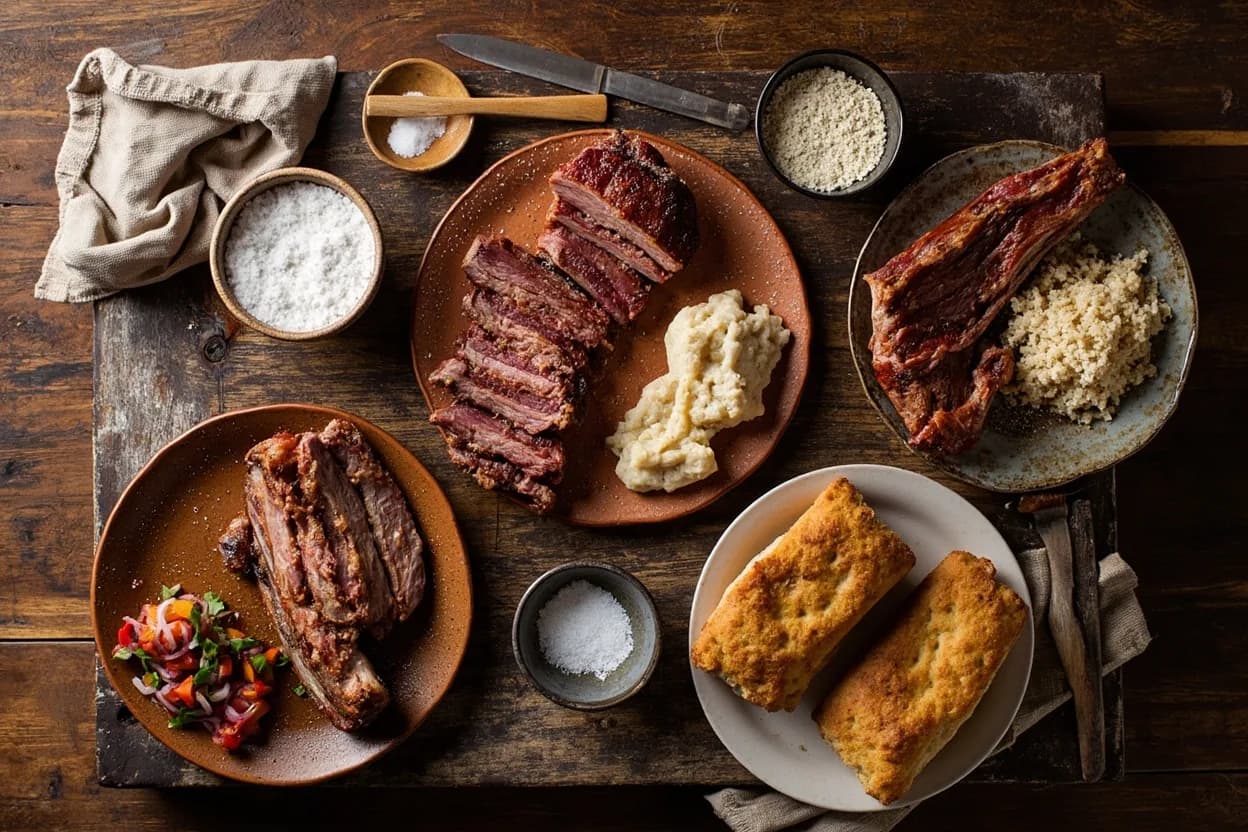
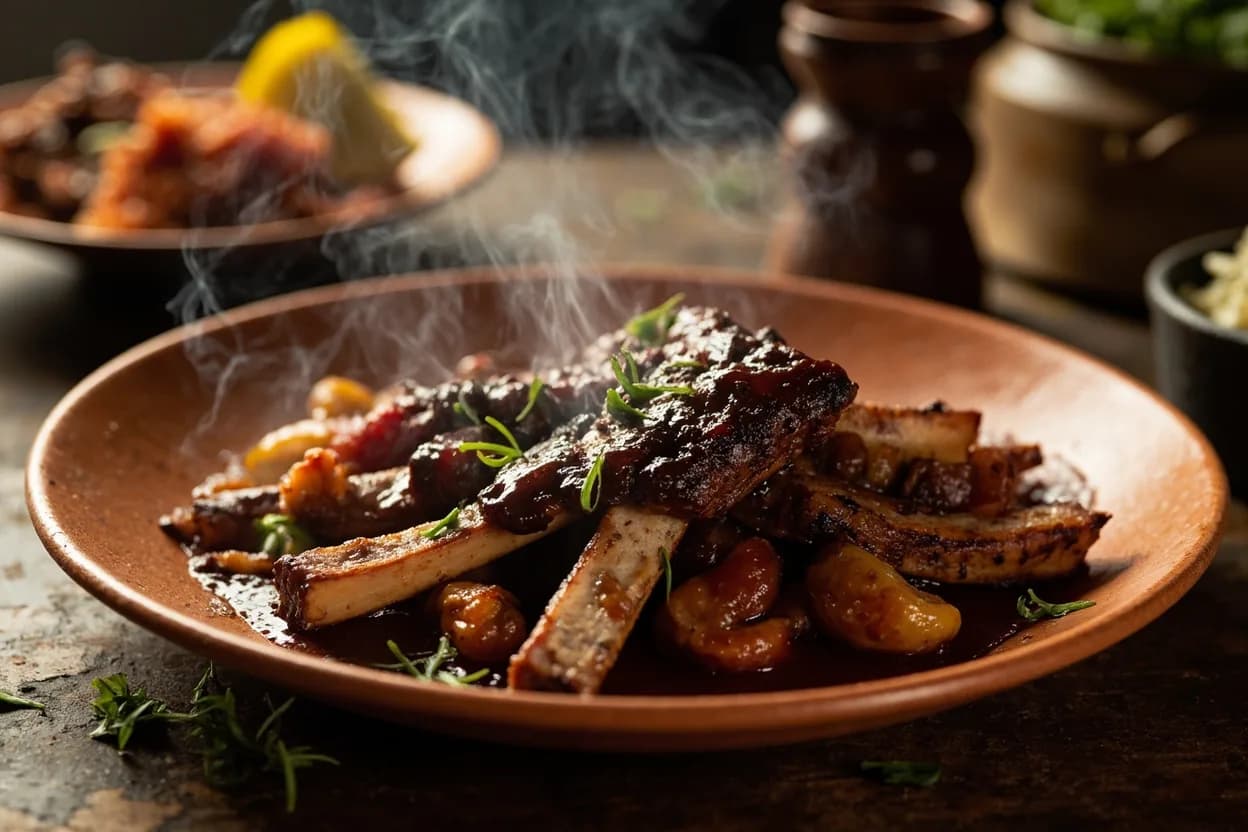
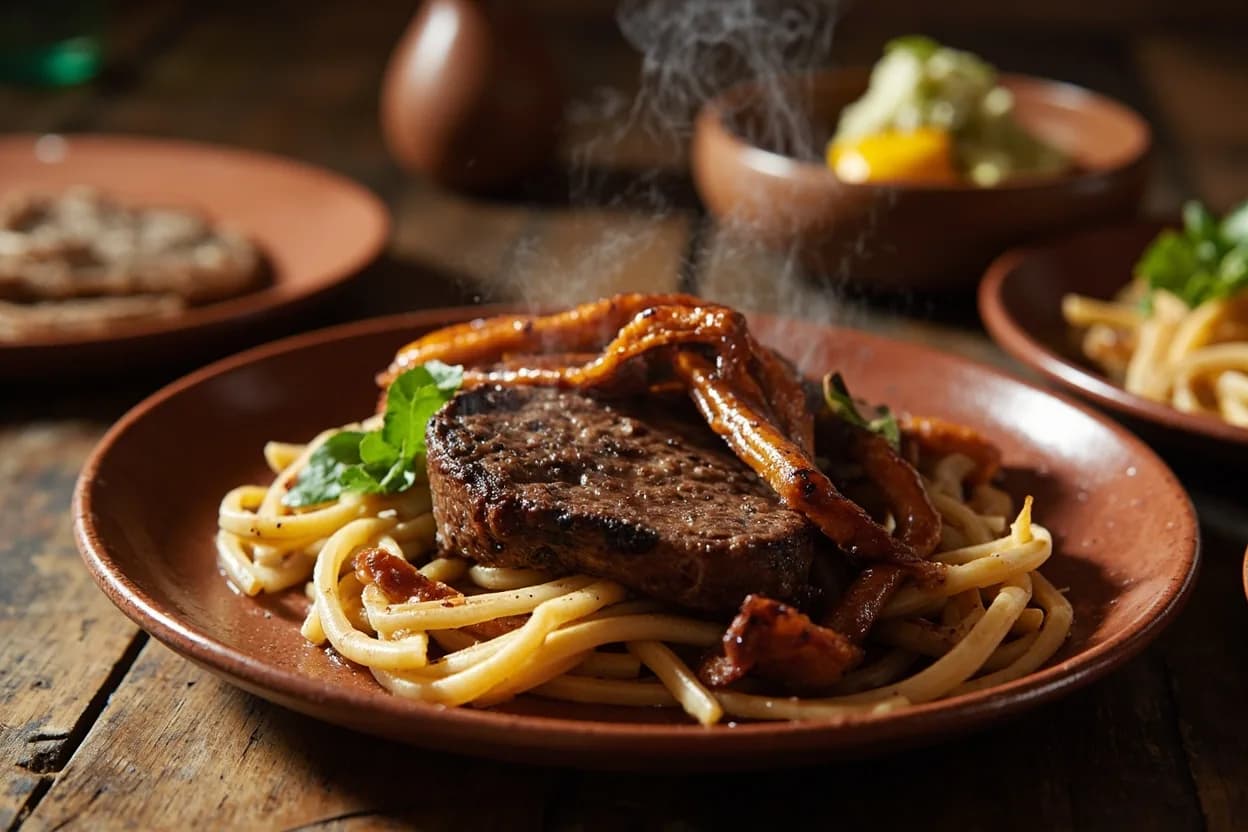
At the table
In the full rodízio format, the meal begins with an expansive buffet spread (salads, farofa, vinagrete, rice, beans, potato salad) and then shifts to continuous service of skewered meats carved tableside. A double-sided token — green for 'keep bringing it' and red for 'pause' — governs pace. The meat sequence typically runs from lighter cuts (chicken, sausage, pork) toward richer beef cuts (fraldinha, maminha, picanha) with grilled pineapple as a palate-cleansing finale. Caipirinha is the canonical drink.
History & context
Brazilian churrasco originates with the gaúchos of the southern Pampas — the same cattle-herding mestizo culture that produced Argentine asado across the border. In the 18th and 19th centuries, gaúchos would cook beef over open fires during cattle drives, using nothing but coarse salt. The espeto tradition formalized around the late 19th century in Rio Grande do Sul as agricultural settlements stabilized. African-descended enslaved people and Portuguese colonizers contributed the farofa tradition (cassava flour was a staple of African and indigenous Brazilian cooking). The rodízio restaurant format was invented in the 1930s in the interior of São Paulo state and became a national institution by the 1960s, eventually spreading globally. The introduction of zebu (Bos indicus) cattle — particularly the Nelore breed — in the 20th century gave Brazilian churrasco a distinctive cut unavailable elsewhere: the cupim, the fatty zebu hump.
Regional variations
- Rio Grande do Sul (Gaúcho origin)
Purist tradition; minimal seasoning beyond sal grosso; costela (ribs) cooked for 6–8 hours over slow indirect embers; gaúcho cultural identity inseparable from churrasco; chimarrão (yerba mate) served throughout.
- São Paulo (Rodízio Capital)
Home of the commercial rodízio format; the most elaborate churrascaria chains (Fogo de Chão, Barbacoa, Plataforma) originated here; wider cut variety, more international influences in the buffet.
- Bahia and Northeast
Churrasco coexists with Afro-Brazilian traditions; carne de sol (sun-dried beef) and bode (goat) appear on northeastern grill menus alongside standard beef cuts.
- Minas Gerais
Frango ao molho pardo (chicken in dark blood sauce) and leitão (suckling pig) are prized alongside beef; pão de queijo (cheese bread) invariably accompanies.
Related cuisines
A parallel gaucho fire tradition; Argentina uses parrilla grill rather than espeto rotisserie; Argentine cuts (vacío, entraña) differ from Brazilian picanha and cupim; slower and lower heat philosophy.
Brazilian culinary traditions interweave; churrasco's farofa derives from the cassava-flour tradition central to Afro-Brazilian cooking.
- Uruguayan Asado
Adjacent gaucho tradition sharing the same Pampas cattle culture; Uruguay also claims the picanha cut under the name cuadril.
- South African Braai
Parallel fire-culture institution with similar social gravity; boerewors shares a sausage-on-fire-at-a-social-gathering role analogous to Brazilian linguiça.
Canonical recipes
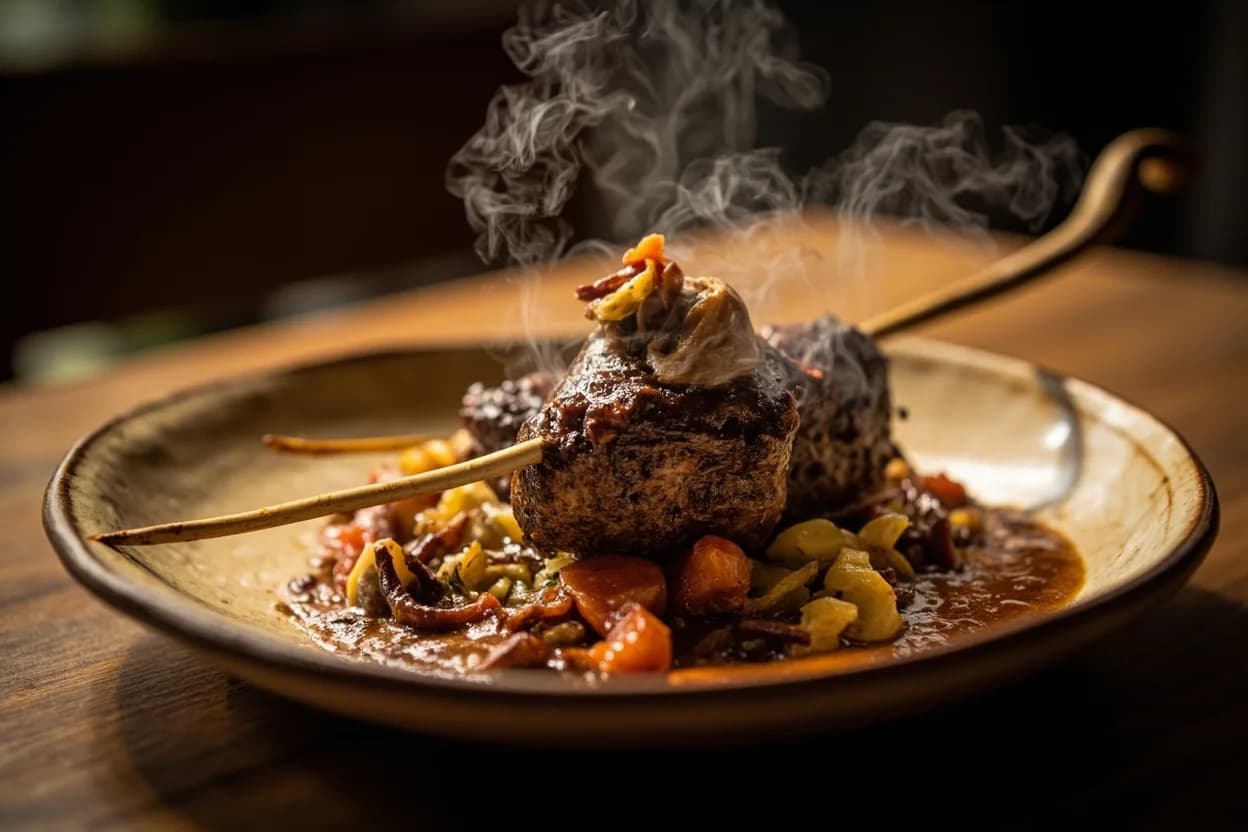
The dishes that define Brazilian Churrasco, documented in the Canon.
References
- 1.The Brazilian Table — Yara Castro Roberts and Richard Roberts (Gibbs Smith, 2009)
- 2.Brazil: A Cook's Tour — Christopher Idone (Clarkson Potter, 1995)
- 3.The Oxford Companion to Food — Alan Davidson (Oxford University Press, 3rd ed., 2014)
- 4.Churrasco: Grilling the Brazilian Way — Evandro Caregnato (Mango, 2019)
Confidence: high
Notes
The picanha question
Picanha is the biceps femoris — rump cap — with its fat layer kept fully intact. In Brazil, it is sliced about 3–4 cm thick, folded with the fat-side outward, and skewered so the fat renders over the meat as it rotates. The fat layer is the point: it bastes the meat through the entire cook. American butchers often trim it off, which is why picanha remained obscure outside Brazil until recently. The cut is also called culotte in France and rump cap in the UK.
Cupim: a uniquely Brazilian cut
Cupim is the distinctive hump of the zebu (Nelore) cattle that dominates Brazilian herds. Rich in intramuscular fat and collagen from a lifetime of supporting its own weight, cupim requires long, slow cooking (4–6 hours wrapped in foil in the churrasqueira) to become tender. Its flavor is intensely beefy with a unique fattiness. No equivalent cut exists in European or American beef cattle.