Proteins
Rump / Picanha
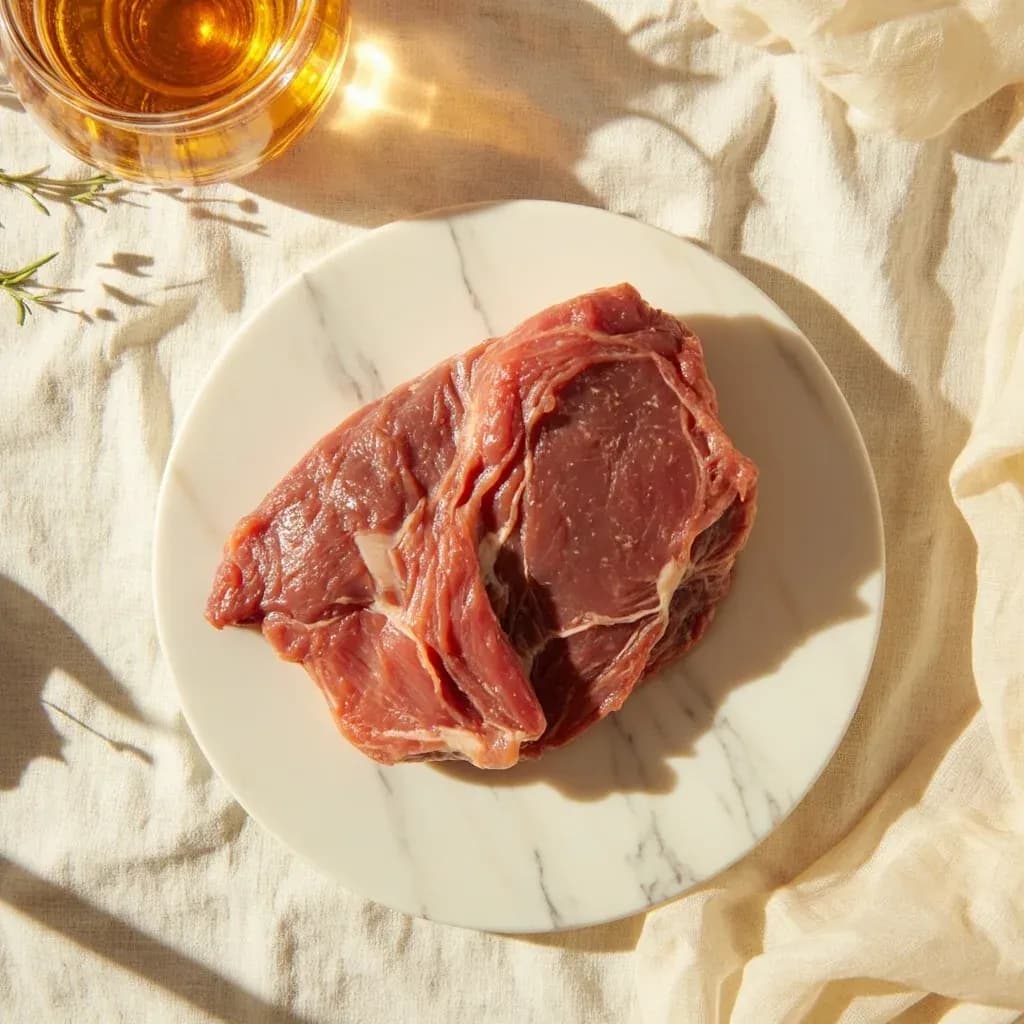
Lean, flavorful rump cap with a thick fat lid (picanha). Roast or grill fat-side first to render, then slice thin against the grain. Centerpiece of Brazilian churrasco.
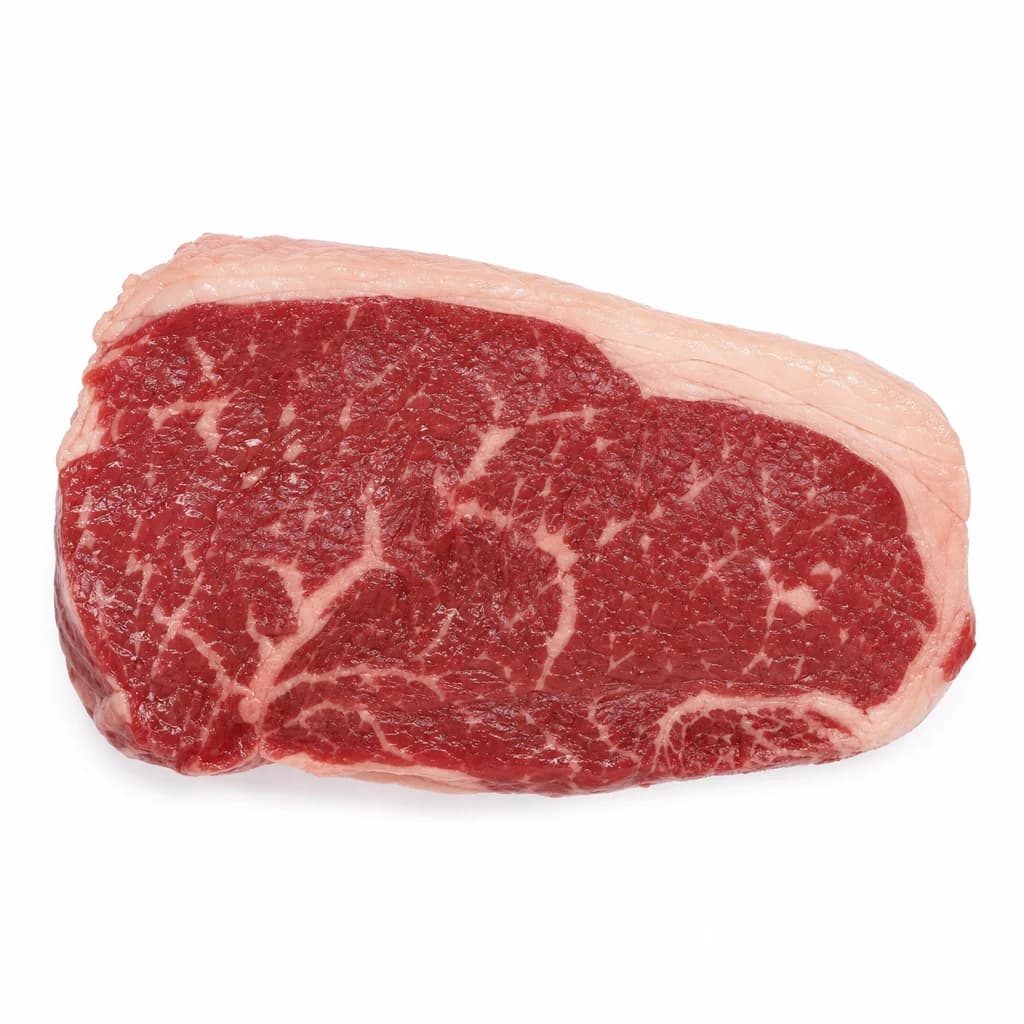
The rump cap, known as picanha in Brazil, tapa de cuadril in Argentina, and top sirloin cap or culotte in the United States, is the triangular wedge of muscle that sits on top of the primal round like a small roof. A cook recognizes it instantly: a wedge tapering from a broad base to a point, with a thick, almost papery white fat lid covering one side and very little internal marbling. Roughly 90% lean, the cut is among the leanest steaks with a serious flavor reputation, and that reputation hinges entirely on the fat cap. Strip it off and you have a fairly ordinary, somewhat dry piece of round; cook it with the cap intact and the rendered fat bastes the muscle underneath, producing something deeply beefy with a savory, almost nutty richness.
Because the muscle itself is lean and the fibers run in long parallel bundles, picanha rewards restraint. It is best cooked rare to medium, rested briefly, and sliced thin across the grain, the same discipline applied to flank or skirt. Brazilian churrasco tradition treats it with minimalist reverence: coarse salt applied well ahead of cooking, a hot fire, and nothing else. The cut takes on smoky char beautifully and stays tender within its narrow doneness window. Past medium-well, the fibers tighten noticeably and the meat chews rather than yields, a transition that happens more abruptly here than in heavily marbled cuts like ribeye.
For a home cook, the practical takeaway is that picanha is a fat-cap story. Where you buy it, how it is trimmed, and how you handle the lid determines almost everything about the result. UK and Australian retailers often sell a partially trimmed version; US butcher counters increasingly carry it whole under the names culotte or top sirloin cap (NAMP/IMPS 184B). Brazilian butchers and churrascarias leave the cap untouched. If you want to cook it the canonical way, look for the whole untrimmed muscle weighing around 1–1.5 kg, with at least half a centimeter of hard white fat on the broad side.
- Measured in
- g
- Storage
- Refrigerate
Find it in
Types & varieties
Whole untrimmed muscle with full fat cap, the classic Brazilian churrasco form.
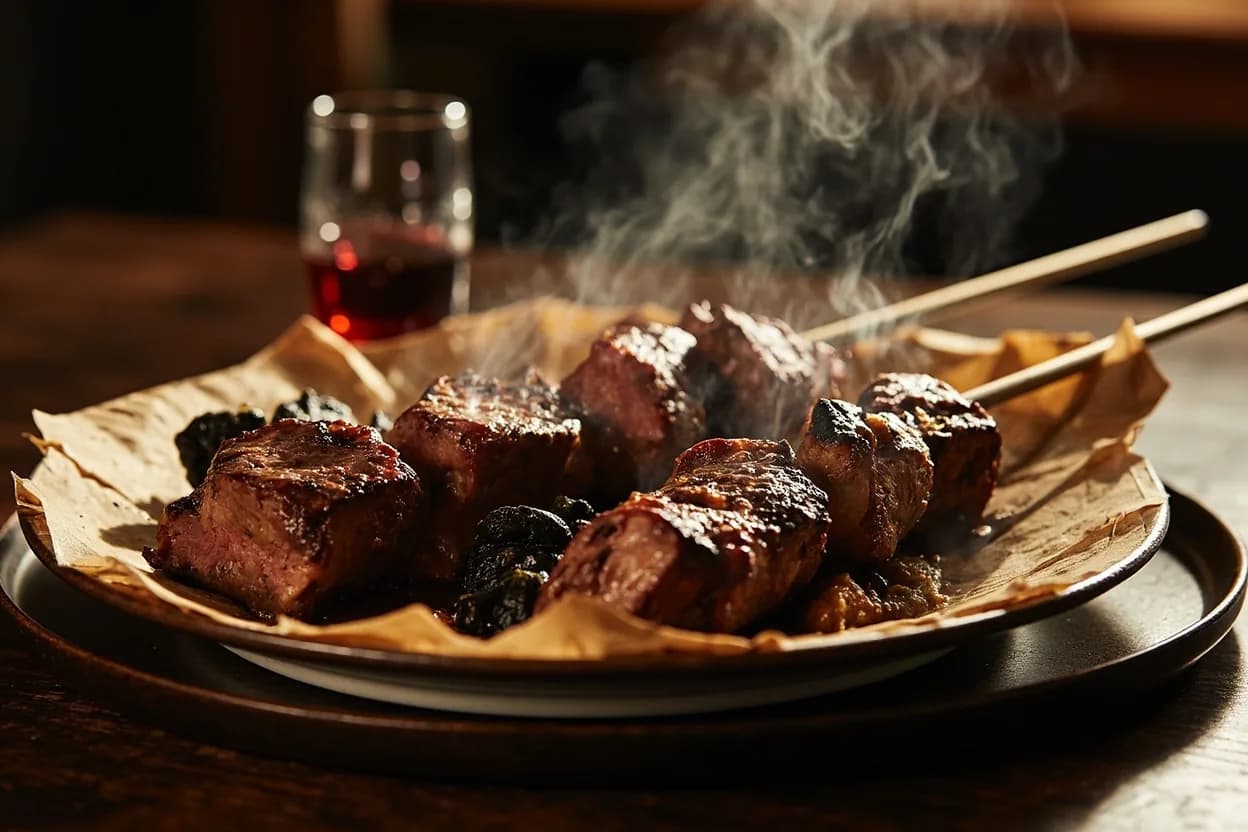
Thick C-shaped steaks butterflied from the cap and skewered so the fat curls around the outside; the iconic rodízio presentation.
US retail name, usually butterflied or portioned into steaks with the fat cap left on.
Often sold partially trimmed of the fat lid for retail; ask the butcher to leave the cap intact.
Institutional designation in North America, sometimes boneless and partially defatted.
Argentine name; typically grilled flat on a parrilla in thinner portions, sliced across the grain.
Buying the right piece
Most of the disappointment cooks have with picanha comes down to buying the wrong version. A retail culotte steak with a thin or absent fat cap is a different animal from a whole picanha sold with the full lid intact.
- Look for a triangular wedge with a continuous fat cap at least 0.5 cm thick on the broad side; avoid steaks where the cap has been shaved down to a translucent film.
- Aim for a whole muscle around 1–1.5 kg if you want the churrasco experience; individual steaks of 350–500 g work well for grilling for two to four people.
- If the cap has been trimmed, ask the butcher for a separate piece of hard beef fat to lay over the top during cooking, or baste aggressively with butter or tallow.
- The lean surface often carries a strip of silverskin along one seam; remove it with a sharp knife, but leave the white fat cap above it intact.
- Color should be bright cherry-red. Deeply yellow fat typically reflects a grass-fed diet rather than poor handling; gray or dull fat, however, can indicate age or oxidation.
The traditional Brazilian method
Authentic churrasco prep is famously minimalist, and each step exists for a reason. Understanding the logic makes it easier to adapt when circumstances change.
- Salt only: coarse flake salt, applied 40–60 minutes before cooking, is the entire seasoning. The salt draws surface moisture, which then reabsorbs, seasoning the meat evenly and drying the exterior for better Maillard browning.
- Skewer into a C or 'mushroom' shape: thread the folded muscle onto a long skewer so the fat cap faces outward in a curl. The fat renders down the sides and self-bastes the lean interior.
- Cook over open flame or hot coals, fat-side first, rotating to render the lid without flaming the lean meat. Target rare to medium; an instant-read thermometer is more reliable than touch.
- Rest 10 minutes, then slice thin against the grain with a long, sharp knife. The pieces should be no thicker than a pencil for the most tender bite.
Common uses
Tips & pitfalls
- Keep the fat cap on throughout cooking; it is the cut's only built-in source of moisture and flavor, not optional trim.
- Score the fat cap lightly in a crosshatch without cutting into the meat so it renders flat and curls attractively instead of buckling.
- Salt generously with coarse flake salt 40–60 minutes ahead; pat the surface dry just before grilling for a better crust.
- Sear fat-side down first so the rendered fat bastes the lean muscle underneath and protects it from direct heat.
- Cook to rare or medium at most; past medium-well the lean fibers tighten and the meat turns noticeably chewy.
- Identify the grain before slicing — fibers run lengthwise along the muscle — and cut thin slices perpendicular to it for maximum tenderness.
- Use a long, sharp slicing knife and a single drawing motion; sawing tears the fibers and ruins the texture.
- Rest loosely tented with foil for 10–15 minutes; tight wrapping steams the crust and turns it soggy.
- Save the rendered fat cap drippings to baste the meat, fry eggs, crisp potatoes, or flavor farofa.
- If marinating, keep acidic ingredients brief (under 2 hours); long vinegar or citrus soaks can mush the lean surface.
- On skewers, thread the meat so the fat cap faces outward in a C or 'mushroom' shape — the traditional Brazilian presentation that lets the fat curl around and baste the interior.
Nutrition
Energy
590 kJ · per 100 g
Where the calories come from
Protein
21.7g
43% DV
Carbs
0g
0% DV
Fat
6.1g
8% DV
Fiber
0g
0% DV
Sugars
0g
of which
Sodium
49mg
2% DV
Source · USDA FoodData Central · Beef, New Zealand, imported, rump centre, separable lean only, raw
View on FDC →In the shops
Matched grocery products
No matched grocery products for Rump / Picanha yet.
Good to know
- Also known as
- Top sirloin cap, culotte (US); rump cap (UK/Australia); tapa de cuadril (Argentina); picanha (Brazil)
- Primal location
- Top of the primal round, covering the top sirloin
- Butcher's reference
- NAMP/IMPS 184B
- Typical weight
- 0.9–1.6 kg (2–3.5 lb) whole
- Lean-to-fat ratio
- ≈90% lean, protected by an external fat cap rather than internal marbling
- Ideal doneness
- Rare to medium, 52–60 °C (125–140 °F)
- Resting time
- 10–15 minutes loosely tented
- Yield after trimming
- Roughly 70–80% of original weight once silverskin is removed
Substitutes
- Tri-tip — Similar triangular shape and grill-friendly character; slightly more marbled but lacks the thick fat cap — wrap in bacon or baste with butter to compensate.
- Top sirloin (whole) — Lean and beefy but with no fat lid; brush with oil and baste during cooking to prevent drying out.
- Flank steak — Comparable beefiness and slice-against-the-grain service, but much thinner; cut cook time roughly in half.
- Skirt steak — Intensely beefy and cooks fast; slice thinly against the very strong grain for a similar eating experience.
- Boneless ribeye cap (spinalis dorsi) — More luxurious alternative with even better marbling; choose when picanha is unavailable and budget allows.
- British rump steak — Affordable and beefy but leaner; benefits from a brief marinade or butter-basting.
Pairs with
Also called
picanha · rump cap · coulotte · top sirloin cap · sirloin cap