Western Europe
Champagne (Culinary Tradition)
Also: Cuisine champenoise, Champagne-Ardenne cuisine, Troyen cuisine
A cuisine of cold-country pragmatism — andouillettes de Troyes, potée champenoise, and warming gratins — quietly integrated with the world's most celebrated sparkling wine.
Champagne's culinary tradition is often overshadowed by its wines, but the food of Champagne-Ardenne is a substantial, cold-weather cuisine shaped by the chalky Marne plateau, the dense forests of the Ardenne, and a centuries-long trade-fair culture centered on Troyes, Reims, and Châlons-en-Champagne. The cuisine is fundamentally bourgeois and provincial: long-cooked pork preparations, river fish from the Marne and Aube, game from the Ardenne, and distinctive offal charcuterie (above all the andouillette de Troyes, one of France's most challenging preserved meats). Sparkling wine does appear in cooking — in beurre champenois sauces, with oysters, in vinegar-based reductions — but the cooking is not dependent on Champagne the way Burgundy's is on Pinot Noir.
The flavour base
Butter and cream enrichment; pork fat for braised preparations; Champagne-wine vinegar (vinaigre de Champagne) for acidity in sauces; smoked pork (petit salé) as the flavor backbone of soups and stews
Pantry staples
Key ingredients
Signature techniques
Signature dishes
Champagne (Culinary Tradition) on the table
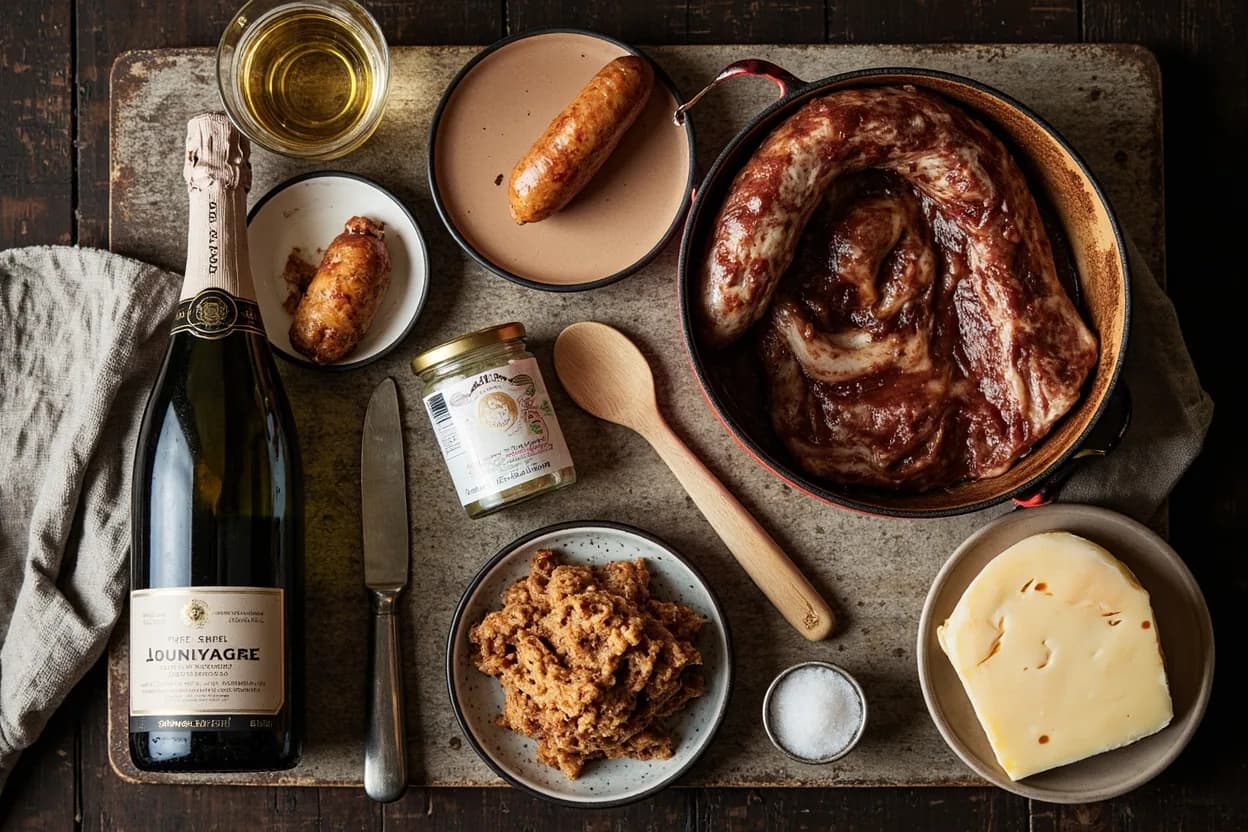

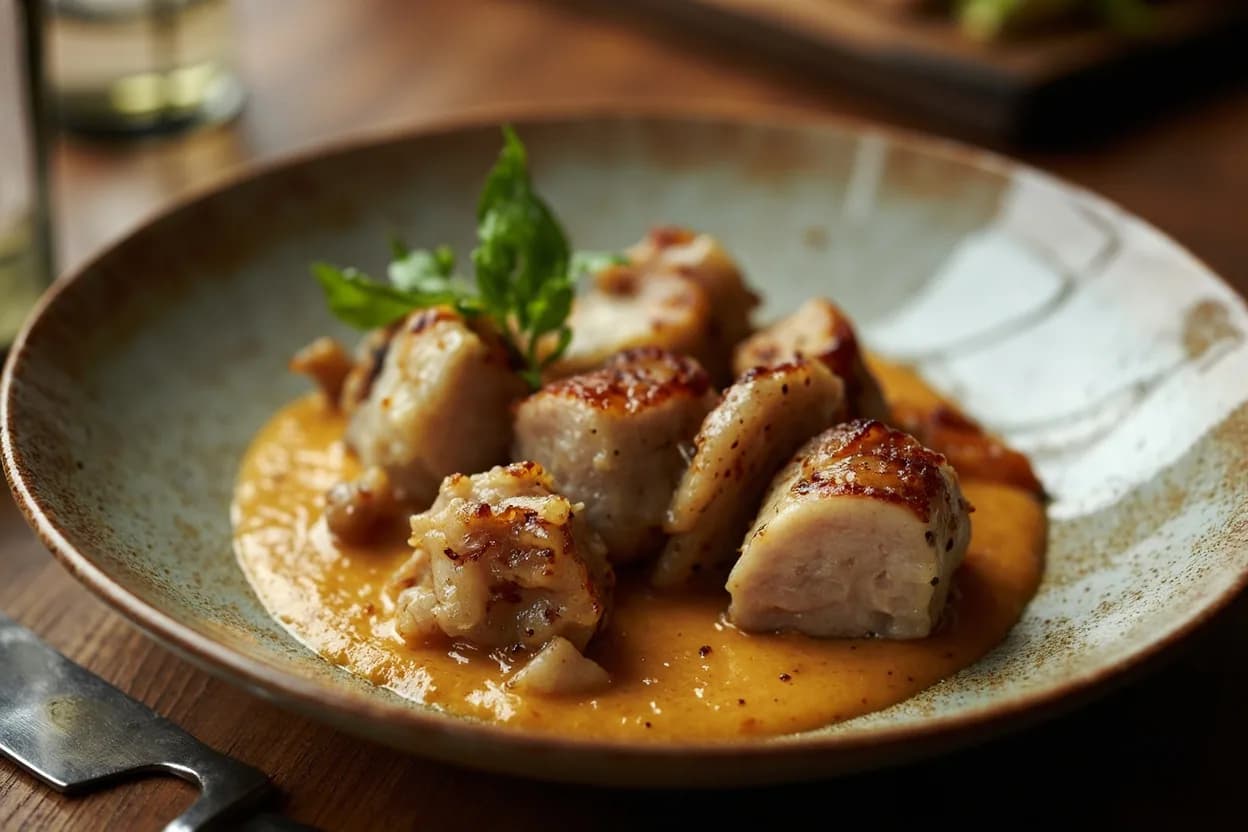
At the table
A formal Champagne meal opens with an apéritif of brut non-vintage Champagne and amuse-bouches — classically biscuits roses, small gougères, or oysters. The fish course arrives with a blanc de blancs or vintage brut; game from the Ardenne or a pork plat with a rosé Champagne. Cheese — Chaource, Langres — closes the savory sequence; Langres is traditionally presented with a small hollow in its top, into which a splash of Champagne is poured at the table. Dessert features pink biscuit charlotte or a fruit tart. The cuisine is designed for celebration rather than everyday sustenance.
History & context
The Champagne fairs of Troyes were the commercial hub of medieval Europe from the 12th to 14th centuries, bringing Italian, Flemish, and German merchants into contact with local produce and creating a cosmopolitan food culture unusual for a cold inland region. Reims was the coronation city of French kings, and its cathedral kitchens maintained a sophisticated table. Champagne as a sparkling wine was systematized by Dom Pérignon at the Abbey of Hautvillers around 1670, though the méthode champenoise was refined over the following century. The cuisine attached to the wine trade is largely 19th-century in its current form: the grand hotels of Épernay and Reims, the trade houses of Moët, Veuve Clicquot, and Pol Roger, created a hospitality culture around the wine. Andouillette de Troyes has been documented since at least the 16th century and holds a distinguished amateur society (AAAAA — Association Amicale des Amateurs d'Andouillette Authentique) that certifies genuine specimens.
Regional variations
- Troyes and Aube (southern Champagne)
Andouillette capital; also the zone for Chaource AOC cheese; more textile-trade bourgeois cooking than the wine-centric north.
- Reims and Marne (Champagne heartland)
Where the grandes maisons are headquartered; biscuit rose de Reims is native here; cuisine more polished and wine-integrated than the Ardenne.
- Ardenne (northeast)
Dense forest cuisine: wild boar, venison, smoked wild ham (jambon fumé des Ardennes PGI), trout; cooler, darker, more Germanic in character.
Related cuisines
Both wine-producing regions with a winter-braised cuisine and a reverence for aged cow's milk cheeses; Burgundy uses still red wine where Champagne uses sparkling white.
Shares the Germanic frontier influence (choucroute, smoked pork, forest game) and proximity to the Ardenne-Vosges forest corridor.
- Lorraine
Immediate neighbor to the east; overlapping terrain of smoked pork, mirabelle plums, and quiche traditions; Champagne's eastern edge merges into Lorraine cooking.
Canonical recipes
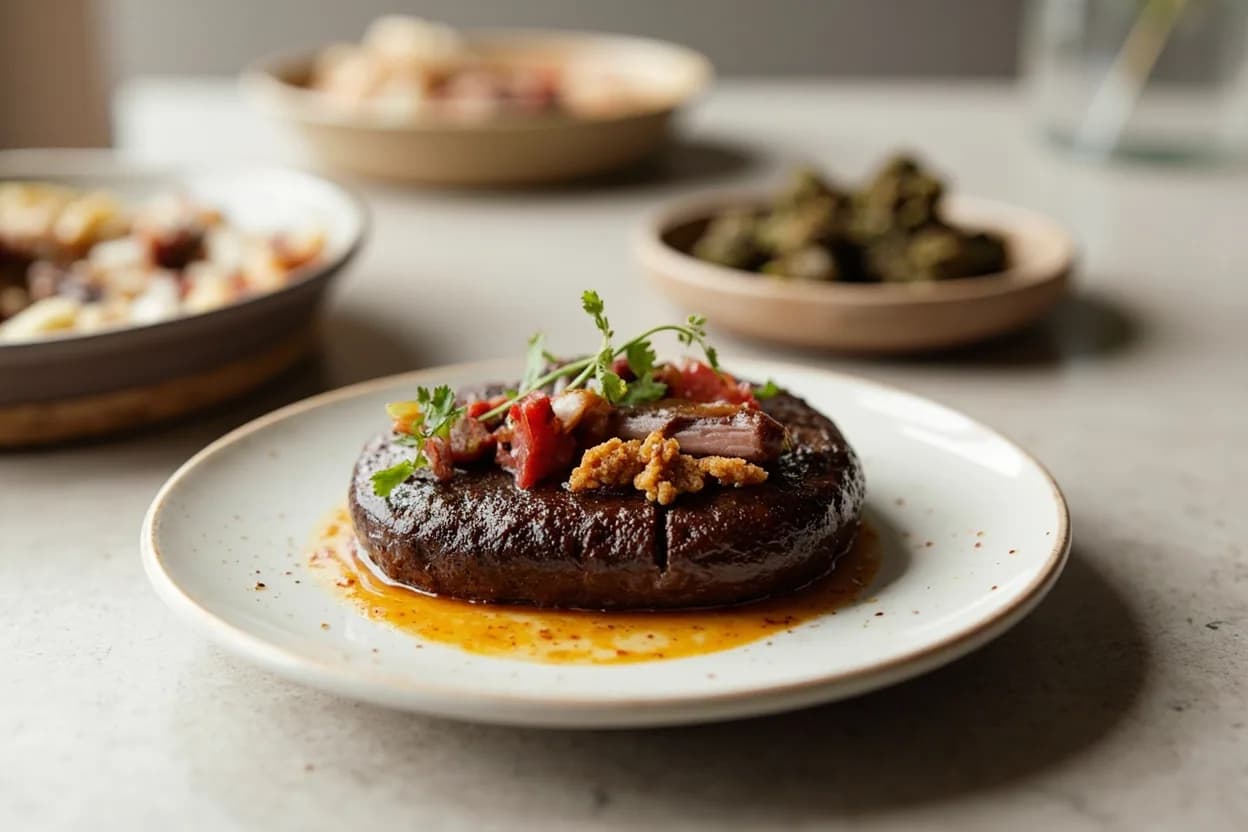
The dishes that define Champagne (Culinary Tradition), documented in the Canon.
References
- 1.The Food of France — Waverly Root (1958)
- 2.Champagne — Serena Sutcliffe (1988)
- 3.Charcuterie: The Craft of Salting, Smoking and Curing — Michael Ruhlman & Brian Polcyn (2005)
- 4.French Cheeses — Kazuko Masui & Tomoko Yamada (1996)
Confidence: high
Notes
Langres and Champagne
Langres is a washed-rind cow's milk cheese from the Haute-Marne, shaped in a truncated cylinder with a concave crown that forms naturally during affinage. The tradition of pouring a small measure of Champagne (or Marc de Bourgogne) into this hollow before eating dates from at least the 19th century; the wine seeps into the cheese, softening the paste near the rind and adding a lightly fermented finish. It is one of the few cheese-and-wine pairings in French cuisine where the wine is consumed as part of the cheese rather than alongside it.
Andouillette de Troyes
The andouillette de Troyes is made exclusively from pork large intestine (chitterlings), hand-assembled in lengths that preserve the tube structure rather than being ground. The AAAAA certification requires a discernible texture of intestinal honeycombing rather than a smooth forcemeat. The smell during cooking is assertive; the finished sausage is typically grilled and served with Dijon or Champagne mustard and pommes frites. It is not to be confused with andouille (a smoked sausage of different construction).