Proteins
Boudin
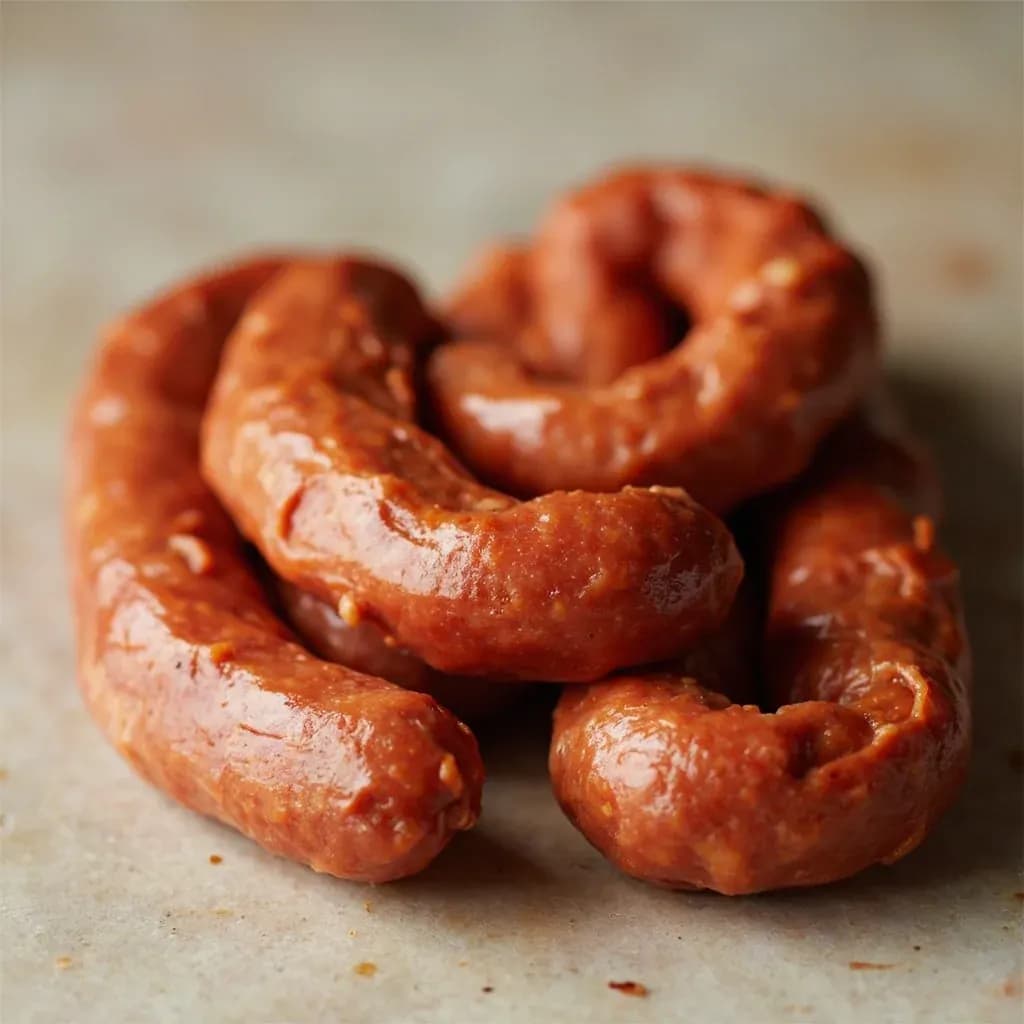
Cajun pork-and-rice sausage, steamed or grilled and squeezed from its casing.
Boudin is a Cajun Louisiana sausage of cooked pork, rice, onions, and seasonings packed into a casing. It is steamed, simmered, or grilled, and is often eaten by squeezing the soft filling out of the casing as a snack. The French term also covers blood sausage (boudin noir) and a white version (boudin blanc), but in Louisiana it usually means the rice-filled link.
Boudin is a fully cooked, steamed pork-and-rice sausage that is the defining specialty of Southwest Louisiana's Cajun country. Unlike virtually every other American sausage, boudin is never dried, cured, or smoked as a preservation method—it's assembled and eaten fresh. The filling is packed into natural hog casings, steamed until the casing is tender, and served piping hot. The most distinctive characteristic is the rice content, which typically runs 40–45% by volume, making boudin as much a rice dish as a sausage. This high rice-to-meat ratio creates a filling that squeezes easily from the casing and gives boudin its unique soft, spoonable texture unlike the snap of a cured sausage or the firm slice of a breakfast patty. Boudin kitchens and roadside butcher shops are ubiquitous throughout Acadiana, particularly along the Boudin Trail between Lafayette and Lake Charles, where families have been making boudin for generations using recipes that evolved from the French boudin brought by Acadian settlers in the 18th century, adapted with local ingredients and the rice paddies of the Cajun prairies.
- Measured in
- g
- Storage
- Fridge
Types & varieties
Made without blood; lighter beige color; the most common variety in Cajun country butcher shops
Contains pork blood giving it a dark red-brown color; richer, earthier flavor; more traditional in older recipes
Lightly smoked over hardwood after stuffing; adds subtle smoke flavor to the filling
Specialty variety substituting alligator tail meat for a portion of the pork; found in coastal regions
Cajun fusion variety with crawfish tail meat added; seasonal availability in south Louisiana
Not a casing variety but a preparation: the filling is rolled into balls, breaded, and deep-fried as an appetizer
What Sets Boudin Apart
Boudin occupies a unique position in American charcuterie because it breaks nearly every rule of traditional sausage-making. Most American and European sausages are either cured, dried, or smoked for preservation and flavor development. Boudin is assembled, cooked, and consumed within days—sometimes hours—of being made. The casing is not meant to be edible in the traditional sense; it's a cooking vessel that is discarded before eating. The defining rice content is genuinely unusual among U.S. sausages, stemming from the abundance of rice cultivation in the Cajun prairies. The filling is fully cooked during steaming, which means boudin purchased from a quality boudin kitchen is ready to eat the moment you unwrap it—no additional cooking required unless you're doing a secondary preparation like grilling or frying.
- Boudin is fully cooked (steamed), not cured or dried like most sausages
- Casing is typically discarded rather than eaten
- High rice content (40–45% by volume) is the defining characteristic
- Unlike French boudin noir or blood sausages, Louisiana boudin evolved independently with local ingredients
Buying and Storing Boudin
Freshness is paramount with boudin. The product has no preservatives or curing agents to extend its shelf life, so quality degrades rapidly after the first 24 hours. When purchasing from a boudin kitchen, ask for it fresh that day and plan to eat it within a few hours if possible. The casing should be supple and moist, not dried out or cracked. If the casing looks shriveled or feels brittle, the boudin has been sitting too long. For storage, wrap tightly in plastic wrap or place in an airtight container and refrigerate for up to 5 days. For longer storage, freeze in a single layer on a sheet pan, then transfer to a freezer bag. Frozen boudin will keep for up to 3 months. Thaw overnight in the refrigerator before reheating.
- Buy fresh boudin made that day whenever possible
- Casing should be supple, not dried or cracked
- Refrigerate up to 5 days; freeze up to 3 months
- Thaw frozen boudin overnight in refrigerator before reheating
Common uses
Tips & pitfalls
- When grilling boudin, pierce the casing 3–4 times with a fork to allow steam to escape; otherwise the casing will burst and filling will fall through the grate
- The most authentic reheating method is steaming for 10–12 minutes; microwaving is the most common mistake as it dries out the filling
- For boudin balls, ensure the filling is cold and firm before breading; chilled filling holds together much better during frying
- Don't overmix the filling or it becomes paste-like; fold rice and pork together gently to maintain texture
- If making from scratch, use cooked rice that is slightly underdone—it will continue cooking during steaming and you want it to hold its shape
- The ratio of rice to meat typically runs 40–45% rice by volume; too much rice dilutes the pork flavor
- Fresh boudin casing should be supple and moist; dried casings will crack during cooking and cause filling loss
- Microwaving in its plastic wrapper is the single worst way to reheat boudin—it turns the filling dry and mealy within 90 seconds
Nutrition
Energy
649 kJ · per 100 g
Where the calories come from
Protein
18.8g
38% DV
Carbs
0.5g
0% DV
Fat
8.1g
10% DV
Fiber
0g
0% DV
Sugars
0g
of which
Sodium
593mg
26% DV
Source · USDA FoodData Central · approx. Sausage, turkey, fresh, raw
View on FDC →In the shops
Matched grocery products
No matched grocery products for Boudin yet.
Good to know
- Origin
- Southwest Louisiana, specifically the Cajun parishes; evolved from French boudin brought by Acadian settlers in the 18th century
- Primary Ingredients
- Pork (typically shoulder and liver), cooked long-grain rice, onions, celery, bell pepper, parsley, and cayenne-based seasoning
- Casing
- Natural pork intestine (hog casings)
- Color Types
- Boudin Rouge (contains pork blood, dark red-brown); Boudin Blanc (no blood, pale beige)
- Traditional Serving Method
- Steamed in casing; eaten by squeezing filling directly from casing into mouth, no utensils required
- Serving Temperature
- Steamed hot (traditional); also grilled, pan-fried, or deep-fried when prepared as boudin balls
- Shelf Life
- Refrigerated 5–7 days; freeze up to 3 months
- Cultural Context
- Staple of Louisiana Boudin Trail; boudin kitchens attached to family butcher shops dominate Acadiana; Boudin Festival held annually in Scott, LA
Substitutes
- Smoked Sausage (Andouille or Kielbasa) — Can stand in for boudin in gumbos but lacks the rice and herbal character; slice and brown before adding
- Italian Sausage — Sweet or hot Italian pork sausage works in a pinch for boudin balls; remove from casing and use filling as-is
- Fresh Chorizo — Mexican-style fresh chorizo approximates the spice profile but lacks the rice component; mix with cooked rice 1:1 to approximate boudin filling
- Homemade Boudin Blend — Blend ground pork shoulder, pork liver (optional), cooked rice, onion, celery, bell pepper, parsley, cayenne, black pepper, and salt; stuff into hog casings and steam
Pairs with
Also called
Cajun Boudin · Boudin Sausage
Related

Egg
The kitchen's everything ingredient — bind, leaven, enrich, or fry

Chicken Breast
Lean, quick-cooking white meat for everyday dinners

Ground Beef
Versatile minced beef for burgers, ragù, tacos, and meatballs

Pork Loin
Lean, tender roasting cut that stays juicy with care

Salmon
Rich, rosy fish that roasts, grills, or cures beautifully

Egg White
Pure protein that whips to airy peaks for meringue and more

Egg Yolk
Rich, golden yolk for custards, mayonnaise, and pasta

Quail Egg
Tiny, speckled eggs for garnishing and elegant bites