East Asia
Chengdu Street Food (Xiaochi)
Also: 成都小吃, Chengdu snacks, Sichuan street food
Chengdu's world-famous canon of numbing, bright, and explosive street snacks — a UNESCO-recognized culinary heritage that has made this Sichuan capital one of the planet's great eating cities.
Xiaochi (小吃, literally 'small eats') is the street-food and snack tradition of Chengdu, capital of Sichuan province. While Sichuan cuisine broadly is one of China's Eight Great Cuisines, Chengdu's xiaochi is a distinct subset: inexpensive, single-portion, intensely flavored preparations sold from stalls, carts, and hole-in-the-wall counters. The defining quality is the interplay of málà (麻辣) — the numbing tingle of Sichuan peppercorns combined with the heat of dried chilies — with sweet, sour, savory, and sesame notes. Chengdu was designated a UNESCO Creative City of Gastronomy in 2010, one of only three cities globally to receive that designation at the time.
The flavour base
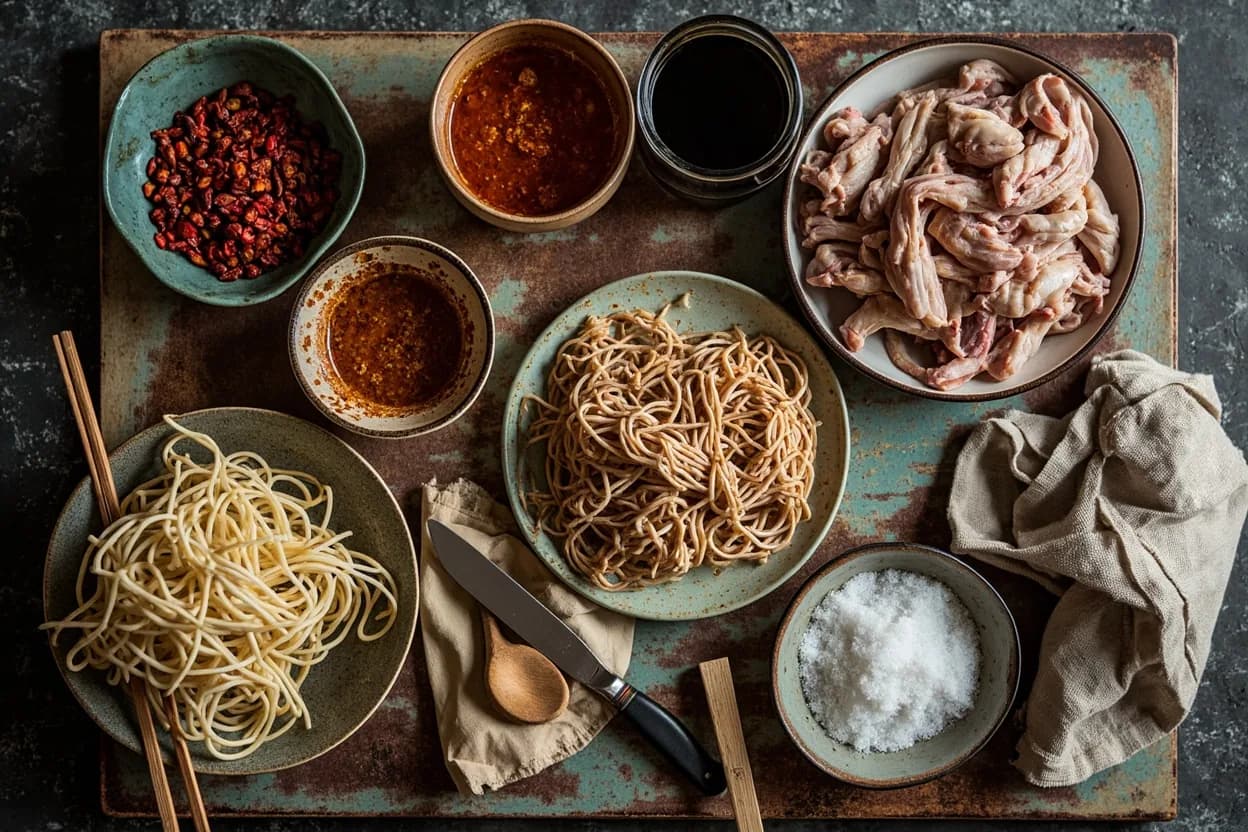
The flavor triad is málà (numbing-hot from Sichuan peppercorns + dried chilies), sour (Zhenjiang vinegar or pickled vegetables), and a rounded sesame-paste richness. Chili oil (红油) made with dehydrated chilies steeped in hot neutral oil is the single most important condiment; Sichuan peppercorn (花椒) provides the paradoxical cooling-numbing sensation (hydroxy-alpha-sanshool acting on TRPV1).
Pantry staples
Key ingredients
Signature techniques
Signature dishes
Chengdu Street Food (Xiaochi) on the table
At the table
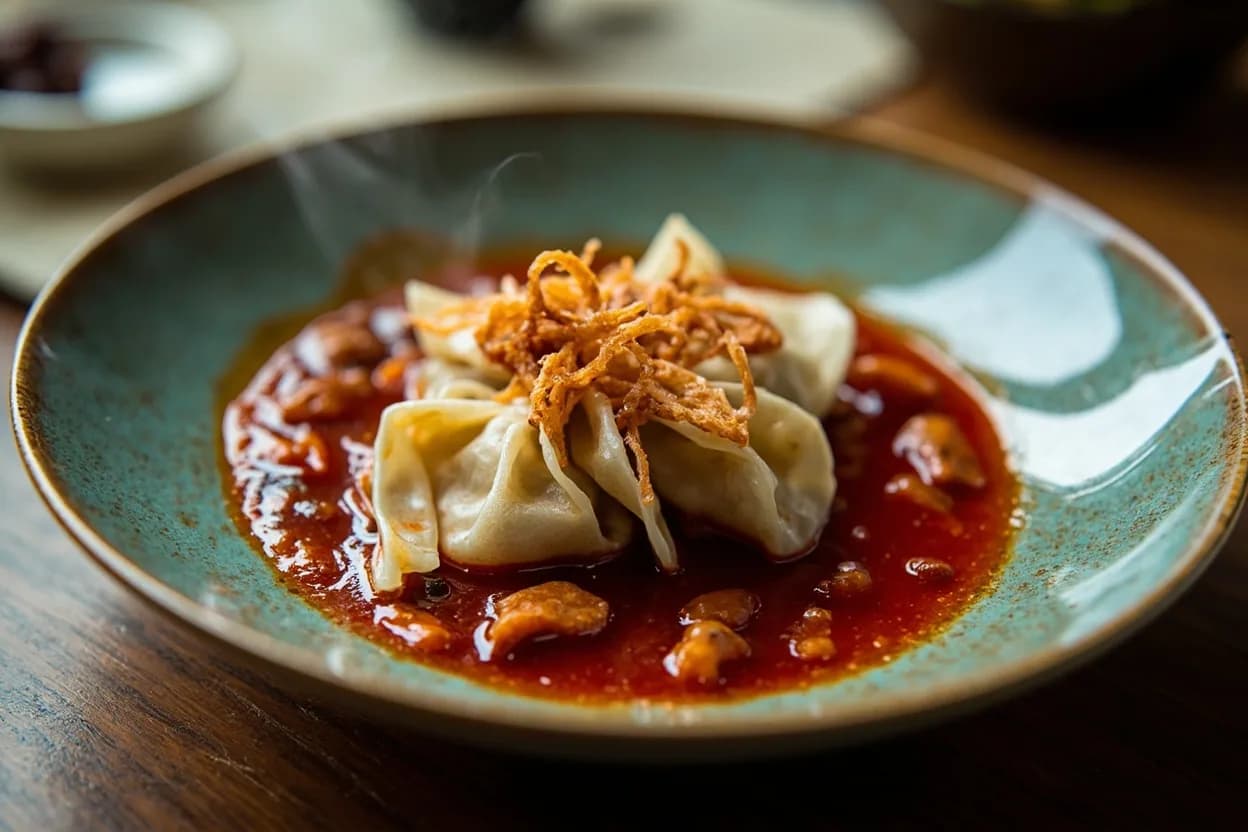
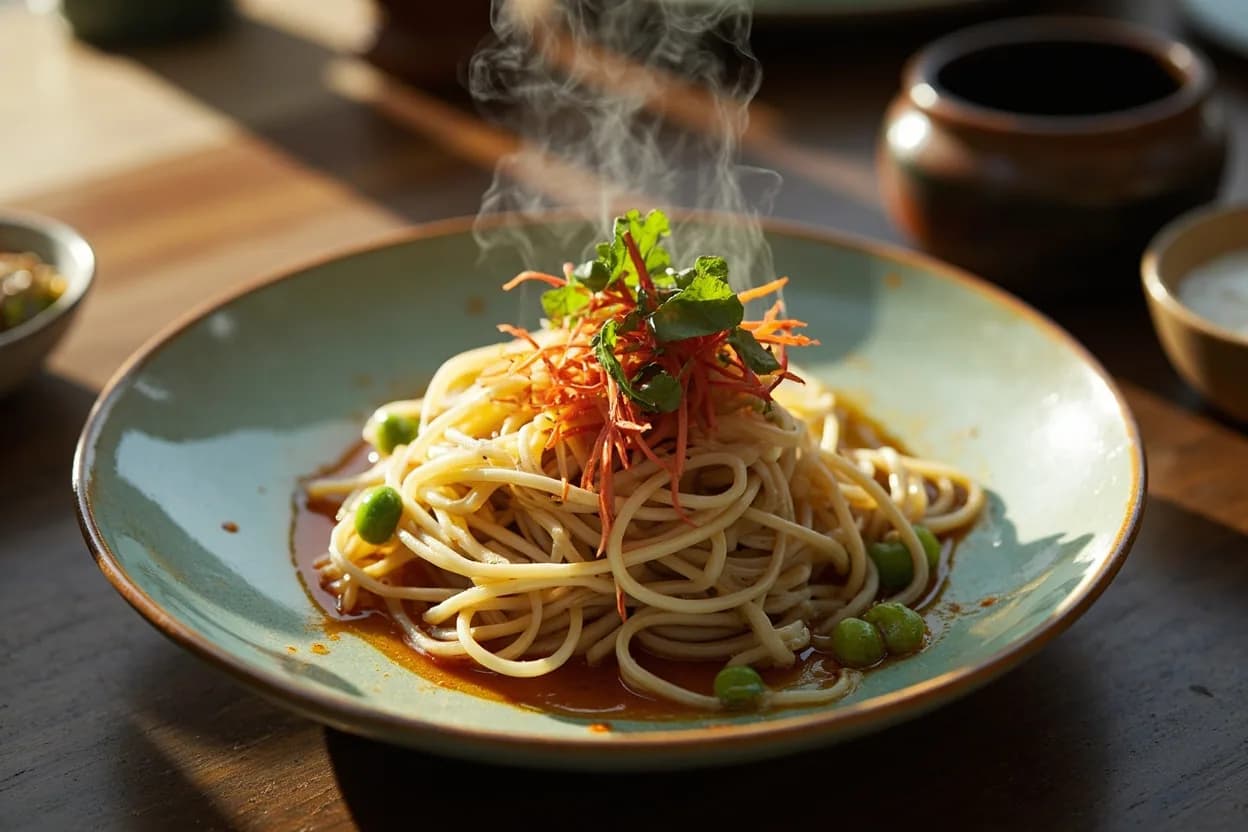
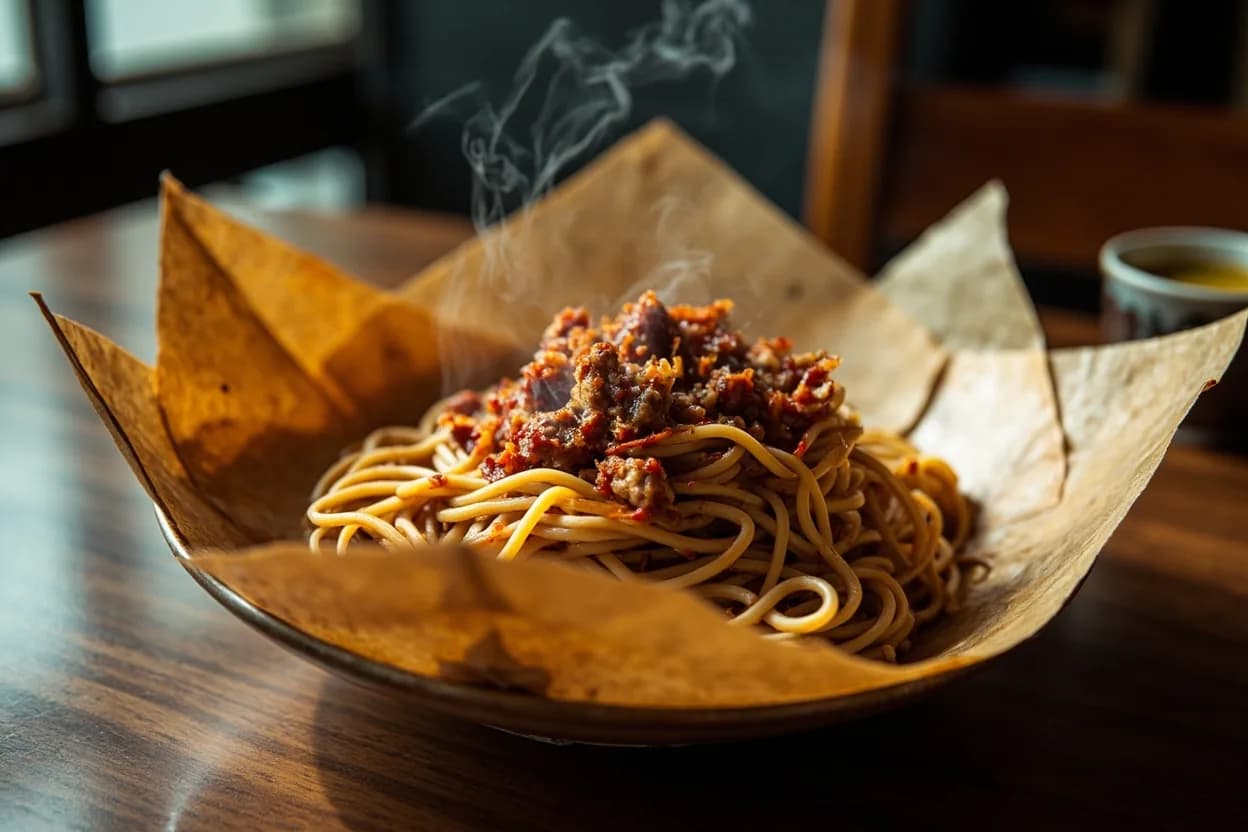
Xiaochi are designed for individual, ambulatory eating throughout the day rather than structured meals. They are not appetizers or side dishes — a single bowl of dan dan noodles or a paper cup of zhong dumplings constitutes a complete eating occasion. Chengdu residents eat xiaochi at breakfast, as mid-morning or afternoon snacks, and as late-night meals. The Jinli pedestrian street and Kuanzhai Alley are the tourist circuits; locals gravitate to neighborhood stalls around the university districts and old residential quarters.
History & context
Chengdu's street-food culture is rooted in the city's historical role as a wealthy commercial hub of the Sichuan basin, insulated from invasion by mountain ranges and sustained by the Chengdu Plain's agricultural abundance. The chili pepper arrived in Sichuan from the Americas via trade routes in the 17th century and rapidly integrated into existing mala-flavored dishes that had previously used Sichuan peppercorn alone. The Republican era (1912–1949) saw the consolidation of xiaochi into named, branded preparations — Zhong Xie Sen's dumplings (1931) and the Chen family's mapo tofu — establishing a culture of named masters. The Cultural Revolution suppressed the hawker culture briefly, but the reform era saw its vigorous revival. The UNESCO designation in 2010 formalized what locals had long claimed: Chengdu is among the world's most important eating cities.
Regional variations
- Leshan
Birthplace of Leshan bowl chicken and a slightly sweeter chili oil profile; strong Buddhist influence produces excellent vegetarian xiaochi
- Zigong
The 'salt capital' of Sichuan; beef is the dominant protein (salt-well workers historically ate beef); distinctive cold spiced beef slices
- University district stalls (Wenjiang, Shuangliu)
Student economies sustain the most affordable and most experimental xiaochi; here new snack forms emerge and prices are a fraction of tourist circuits
Related cuisines
Xiaochi is the informal, street-food expression of the broader Sichuan culinary tradition, which also encompasses formal restaurant and banquet cooking
A neighboring and rival city's equally iconic communal food tradition; both share the mala flavor base but represent entirely different dining occasions
Shares some noodle formats and chili culture through shared southwest China food geography
Canonical recipes
The dishes that define Chengdu Street Food (Xiaochi), documented in the Canon.
References
- 1.Land of Plenty — Fuchsia Dunlop (W.W. Norton, 2003)
- 2.The Food of Sichuan — Fuchsia Dunlop (W.W. Norton, 2019)
- 3.Every Grain of Rice — Fuchsia Dunlop (W.W. Norton, 2012)
Confidence: high
Notes
The numbing paradox
Sichuan peppercorn (花椒, huājiāo) is not a true pepper but the dried husk of the Zanthoxylum genus. It produces a tingling, buzzing, anesthetic sensation (paraesthesia) on the tongue and lips by activating the same receptor channel (TRPV1) that responds to heat and pressure. This sensation — numbness combined with heat from chilies — is the defining sensory experience of Chengdu street food and is acquired rather than innate. Regulars prize the depth and quality of a stall's huajiao as a primary quality signal.