South Asia
Chettinad
Also: Chettiar cuisine, Chettinad Tamil cuisine
Tamil Nadu's fiercest and most complex cuisine — the spice-merchant Chettiar community's kuzhambu gravies, black pepper chicken, and a private vocabulary of aromatics no other Indian tradition uses.
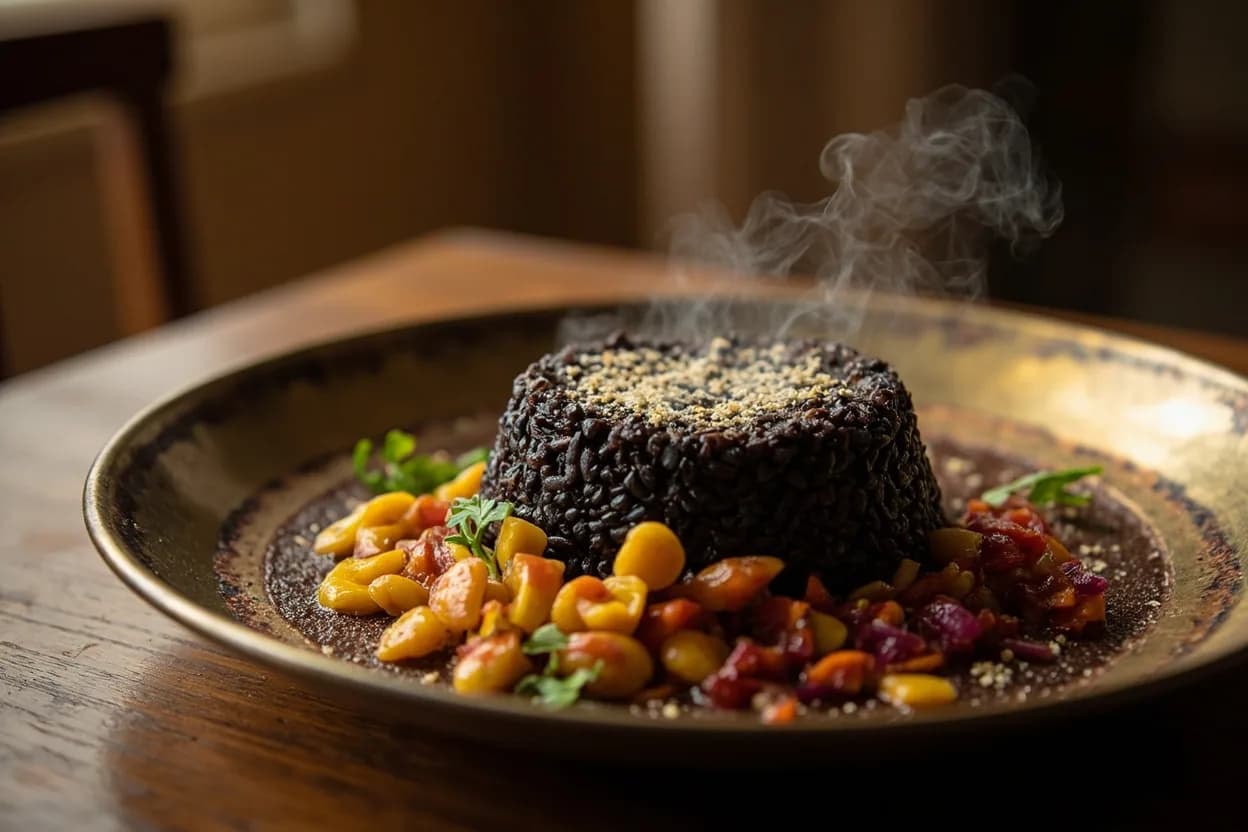
Chettinad cuisine is the cooking of the Nattukkotai Chettiar (Nagarathar) trading community of the Karaikudi region in the Sivaganga district of Tamil Nadu. These merchants, whose wealth derived from commerce across Southeast Asia, Burma, and Ceylon, returned from trading voyages with a spice vocabulary unmatched in India: kalpasi (dried lichen), marathi mokku (dried flower pods), star anise, and stone flower aromatics that appear nowhere else in Tamil cooking. The cuisine is meat-forward and aggressively spiced — pepper, dried chilli, and the Chettinad masala operate at a different amplitude than the Tamil mainstream. It is also distinguished by kavuni arisi (black sticky rice) desserts and elaborate kuzhambu gravy structures that demand hours of reduction.
The flavour base
Black pepper and dried red chilli double-heat base; shallots and garlic fried dark in sesame oil; fresh coconut and kalpasi-forward masala paste as the gravy body.
Pantry staples
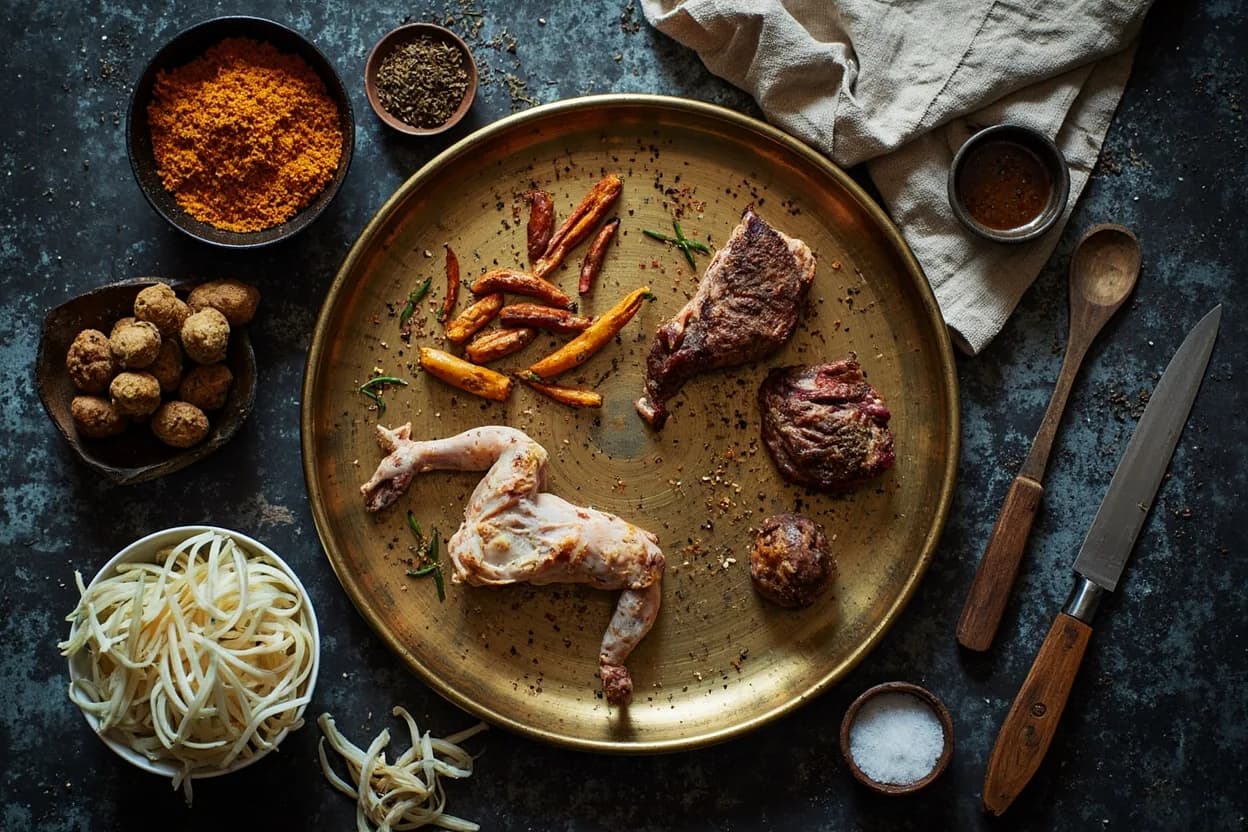
Key ingredients
Signature techniques
Signature dishes
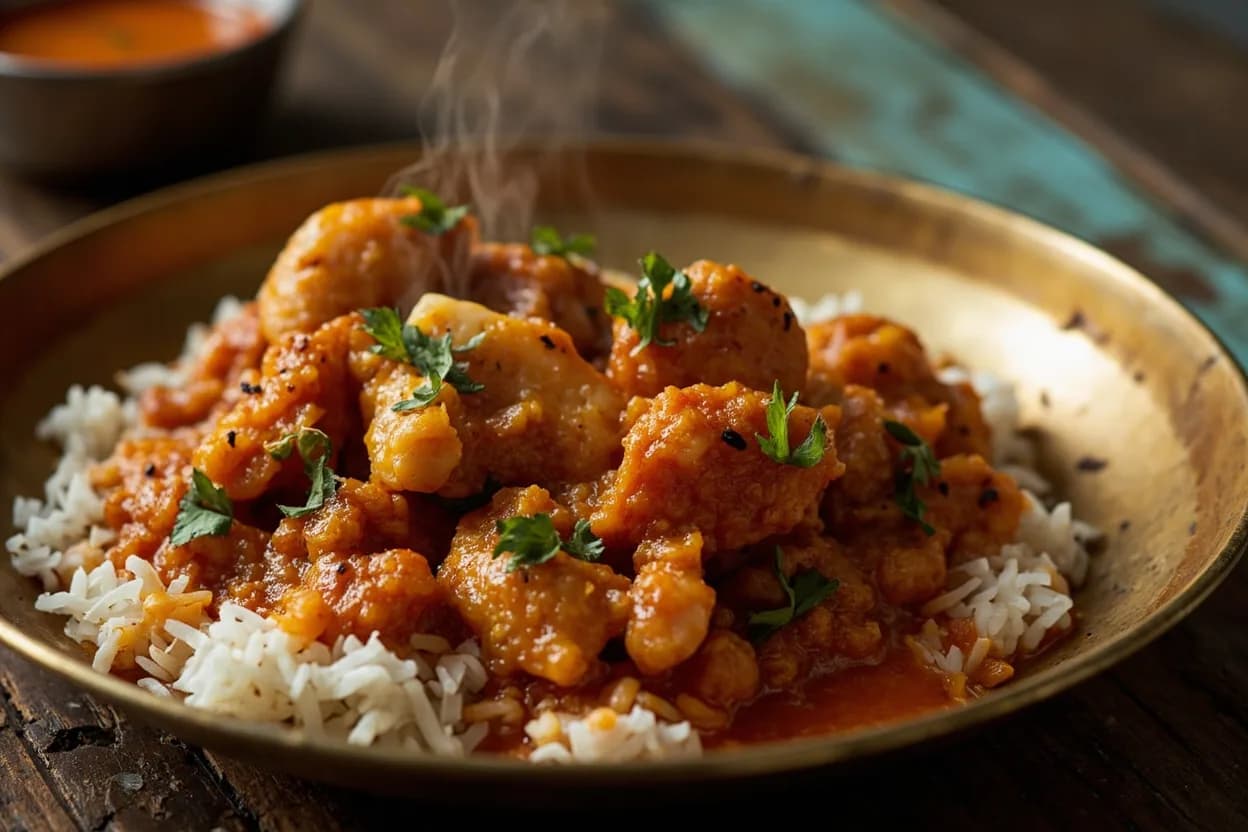
Chettinad on the table
At the table
A full Chettinad meal is served on banana leaf in the Tamil pattern — rice at center with kuzhambu, kootu, poriyal, rasam, and curd — but the kuzhambu is far richer and more pungent than mainstream Tamil fare. Non-vegetarian dishes appear alongside rice; kavuni arisi is a separate course, often at festivals. The community historically served elaborate multi-course meals at weddings in their grand Karaikudi mansions (chettinadu pillai maligai), each dish plated in a specific ceremonial order.
History & context
The Nattukkotai Chettiars were the pre-eminent merchant-bankers of South and Southeast Asia from the 9th to 19th centuries, financing trade from Burma to Malaya to Ceylon. Their trade routes brought them into direct contact with spice markets in Penang, Rangoon, and Colombo, and the unique spice vocabulary of Chettinad cooking — especially the lichen, dried flowers, and star anise — is a direct material trace of those mercantile connections. As British colonial rule reorganized banking, the community's commercial dominance declined in the 20th century, but their cuisine, preserved in the large bungalow homes of Karaikudi, became increasingly recognized as one of India's most sophisticated regional traditions. Food writers and chefs beginning in the 1990s brought Chettinad to national and international attention, particularly the pepper chicken.
Regional variations
- Karaikudi core
The most authentic expression; maximum spice complexity, full use of kalpasi and marathi mokku; kavuni arisi and kolukattai at every celebration.
- Chennai Chettinad restaurants
Slightly calibrated for urban palates; still distinctive but pepper heat and kalpasi use moderated; more accessible renditions of kuzhambu.
- Diaspora Chettinad (Malaysia, Singapore)
Southeast Asian influence reinforced: lemongrass and galangal appear in some gravies; the spice community's original trade links echo in the pantry.
Related cuisines
Parent culinary tradition sharing the tamarind-lentil-banana-leaf structure; Chettinad is a fiercely individuated sub-tradition within it.
- Kongu
Another Tamil Nadu farming community cuisine; less spice-complex, jaggery-forward, and vegetarian-leaning by contrast.
- Sri Lankan Tamil
Shares dried fish, coconut milk, and intense spicing, particularly in Jaffna; the two traditions have cross-influenced each other across Palk Strait trade.
References
- 1.Chettinad Kitchen — Meenakshi Meyyappan
- 2.The Penguin Food Guide to India — Charmaine O'Brien
- 3.Indian Food: A Historical Companion — K.T. Achaya
- 4.Feasts and Fasts: A History of Food in India — Colleen Taylor Sen
Confidence: high
Notes
Kalpasi: the lichen spice
Kalpasi (Parmotrema perlatum) is a dried lichen that imparts a deep, forest-floor musk to Chettinad masala. It has no close substitute and is the single most diagnostic ingredient separating authentic Chettinad from imitations. It is sold in Indian spice shops as 'black stone flower' or 'patthar ke phool' and used in other South Indian masalas, but Chettinad uses it in quantities that make it a primary aromatic rather than a background note.
The mansion context
Chettinad cooking was historically performed in the kitchens of the community's elaborate bungalow mansions, which featured dedicated wet-grinding rooms, large copper vessel stores, and separate fuel-storage areas. The architecture and the cuisine co-evolved — the scale of ceremonial cooking assumed a semi-professional kitchen infrastructure that home cooks outside the community rarely replicate.