Natural form
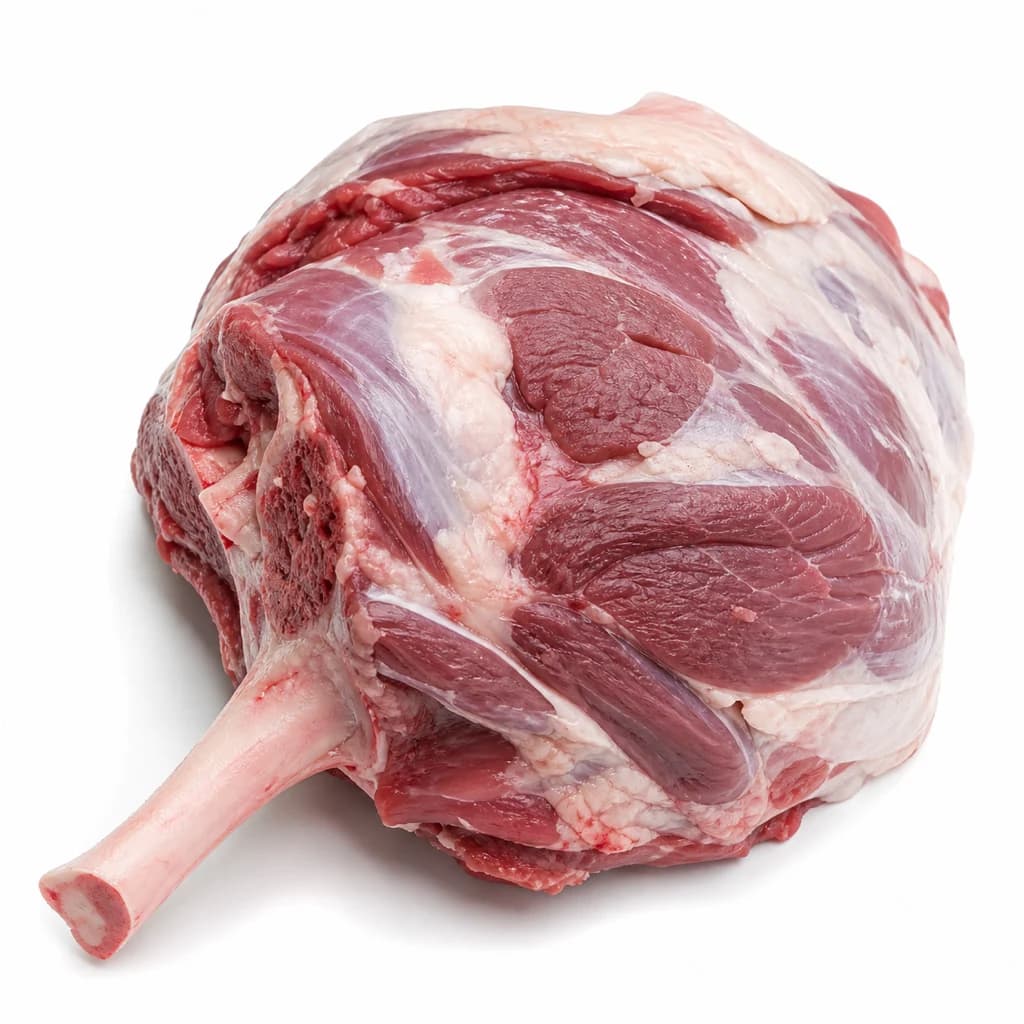
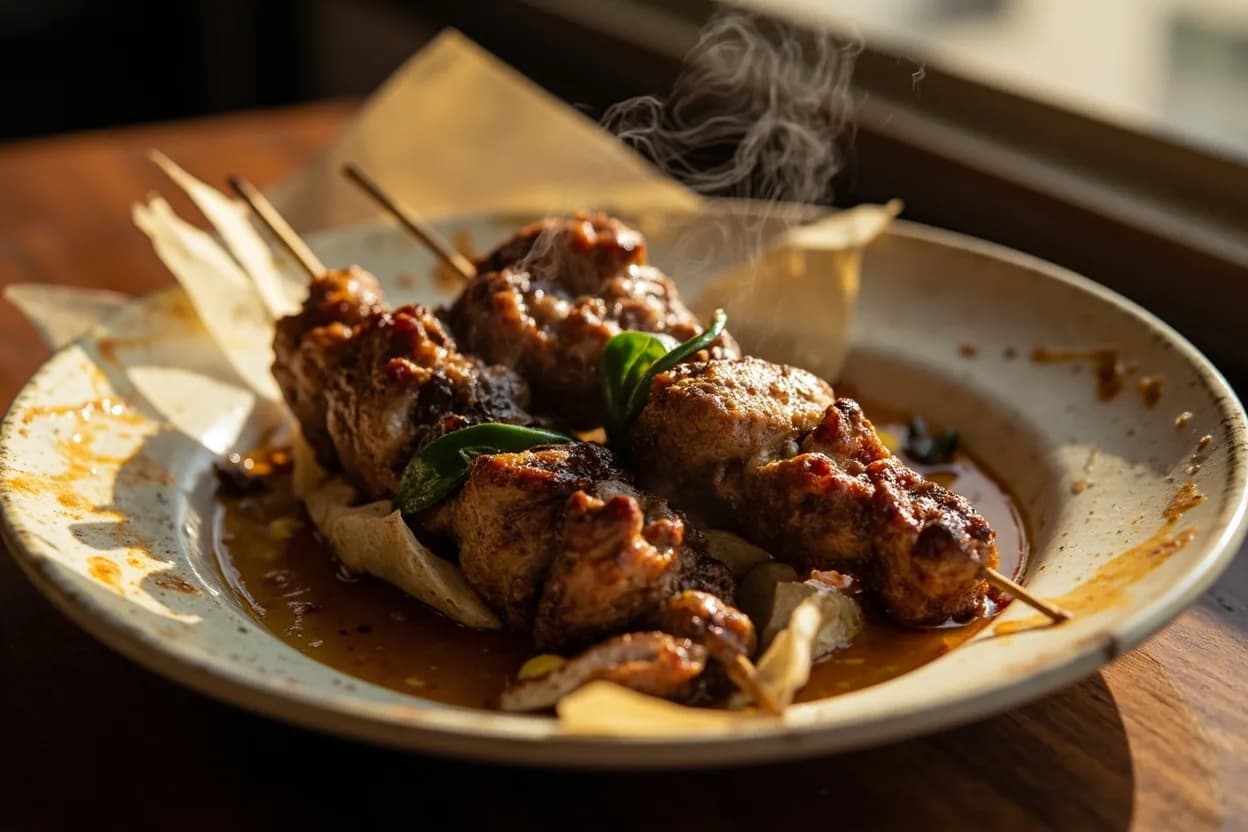
Bone-in mutton shoulder cut showing the deep red, mature sheep meat.
Shows the defining visual marker of mutton — dark red color and firm texture — distinguishing it from paler lamb.
Proteins
Mutton
Meat from mature sheep — stronger and chewier than lamb, ideal for long-simmered curries and stews.
Mutton is the meat of adult sheep, with a deeper, more pronounced flavor and firmer texture than lamb. Its leaner, tougher cuts are best suited to slow braising in curries, biryanis, and hearty stews where time tenderizes the meat. It is widely used across South Asia, the Middle East, and the British Isles.
Mutton is the meat of mature sheep (Ovis aries), typically two years or older at slaughter. Where lamb offers mild, milky sweetness, mutton delivers a bold, assertive sheepy flavor and a firm, coarse-grained texture that demands respect in the kitchen. The animal's longer life builds deeper marbling, thicker external fat, and substantial connective tissue — all of which make mutton a poor candidate for quick cooking but an exceptional one for the long, moist-heat preparations it has anchored for centuries across Britain, the Indian subcontinent, the Middle East, the Mediterranean, and the Caribbean.
The deep brick-red color of mutton signals its iron and myoglobin content, accumulated over years of grazing. Its fat is white to cream-colored and carries a pronounced, persistent character that many cooks regard as the soul of the dish. This is not a background fat; it is a flavor carrier. Older mutton develops a distinctive aroma sometimes described as 'sheepy' — completely normal and desirable in authentic preparations, though it can startle those accustomed only to commercially raised lamb. Because of its toughness, mutton requires extended cooking at low, wet temperatures to dissolve collagen into gelatin and to allow the fat to render and baste the meat from within. A proper mutton curry or braise improves with two to three hours of gentle heat; the result is succulent, fork-tender meat in a rich, deeply flavored sauce. Used boldly with assertive spices, preserved ingredients, and acidic elements, mutton transforms into dishes that are among the most flavorful in any culinary tradition that employs it.
- Measured in
- g
- Storage
- Fridge
Types & varieties
Sheep 1–2 years old; used in Australia and New Zealand; intermediate between lamb and mutton in flavor and tenderness
From Welsh Mountain breed; leaner, smaller carcasses; prized in Britain
From Scottish Blackface and other Highland breeds; strong flavor, good for slow braises
From Merino breed; finer-grained, slightly milder; common in South Africa and Australia
Traditional breed from Cornwall; protected status in UK; rich, clean flavor
Common uses
Tips & pitfalls
- Braise, stew, or slow-simmer for at least 1.5–2 hours — anything shorter leaves the meat chewy and the collagen unconverted to gelatin.
- Do not trim all the fat before cooking. Leave a full 1/4-inch fat cap on large cuts; it renders slowly, basting the meat and building sauce depth.
- Season and marinate at least overnight. Mutton benefits from a day in salt, spices, and acid (yogurt, lemon, or vinegar) before cooking.
- Brown the meat in batches over high heat before adding liquid — resist the urge to crowd the pan, which steams rather than sears.
- Use bone-in cuts for braises and stews; bones add body to the sauce and the meat adjacent to them stays more moist.
- Avoid quick-cooking methods (grilling, pan-searing, fast-roasting) unless you are working with hogget or a very young carcass — the results will be tough and stringy.
- Add acidic ingredients (tomatoes, tamarind, yogurt, wine, vinegar) in the last hour of cooking, not at the start, to prevent the meat from tightening before collagen begins to dissolve.
- Let braised and stewed mutton rest off the heat for 15–20 minutes before serving; the carryover continues cooking and the flavors settle.
Nutrition
Energy
979 kJ · per 100 g
Where the calories come from
Protein
33.4g
67% DV
Carbs
0.1g
0% DV
Fat
11.1g
14% DV
Sodium
135mg
6% DV
Source · USDA FoodData Central · approx. Mutton, cooked, roasted (Navajo)
View on FDC →In the shops
Matched grocery products
No matched grocery products for Mutton yet.
Good to know
- Source animal
- Mature sheep (Ovis aries), typically 2 years or older
- Age distinction
- Lamb (under 1 year), Hogget (1–2 years, Australia/NZ), Mutton (2+ years)
- Flavor profile
- Strong, pronounced sheepy aroma; rich, slightly gamey; more assertive than lamb
- Texture
- Firm, coarse-grained; tougher than lamb; requires long moist-heat cooking
- Fat content
- Higher in marbling and external fat than lamb; fat is pronounced and persistent
- Meat color
- Deep brick-red, darker than lamb; fat is white to cream-colored
- Shelf life
- Refrigerate 3–5 days; freeze up to 4–6 months at 0°F (-18°C)
- Cooking yield
- Bone-in cuts lose 25–30% weight during cooking; boneless cuts lose 20–25%
Substitutes
- Lamb shoulder or leg — Closest substitute; cook identically but expect milder flavor; reduce cooking time slightly
- Goat meat — Similar gamey intensity and texture; common substitute in Caribbean and South Asian cooking
- Beef chuck or stew meat — Acceptable for texture; flavor is different (beefy rather than sheepy); extend cooking time
- Hogget — Direct substitute with nearly identical results; slightly more tender
Pairs with
Appears in these dishes
Related

Egg
The kitchen's everything ingredient — bind, leaven, enrich, or fry

Chicken Breast
Lean, quick-cooking white meat for everyday dinners

Ground Beef
Versatile minced beef for burgers, ragù, tacos, and meatballs

Pork Loin
Lean, tender roasting cut that stays juicy with care

Salmon
Rich, rosy fish that roasts, grills, or cures beautifully

Egg White
Pure protein that whips to airy peaks for meringue and more

Egg Yolk
Rich, golden yolk for custards, mayonnaise, and pasta

Quail Egg
Tiny, speckled eggs for garnishing and elegant bites