East Asia
Yunnan
Also: Dian Cuisine, Yunnan Cuisine, Yun Cai
China's most ethnically diverse culinary frontier — a mountain-bordered crossroads where wild mushrooms, Yunnan ham, sour and spicy flavors, and the foodways of 26 ethnic minorities converge in a cuisine unlike anything else in China.
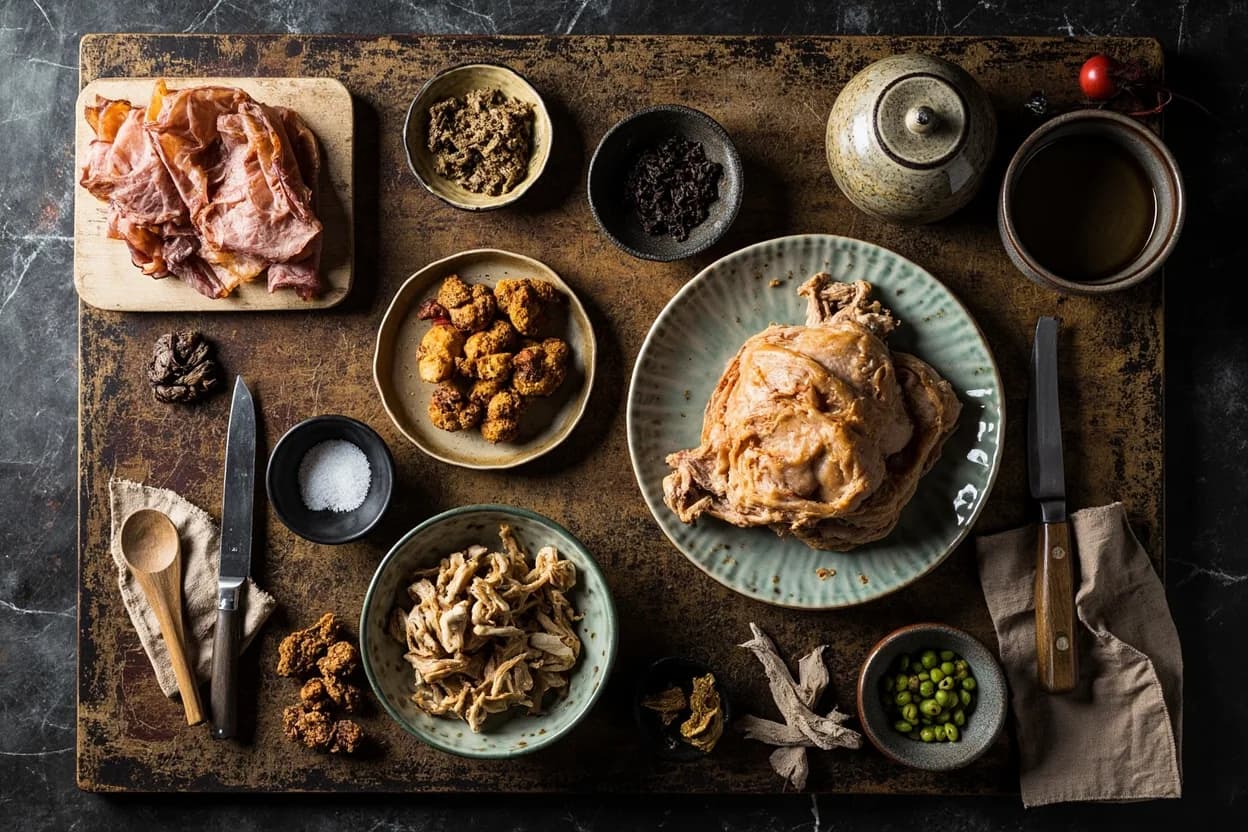
Yunnan cuisine stands apart from all other Chinese regional traditions by virtue of its extraordinary ethnic and ecological diversity. Bordering Myanmar, Laos, and Vietnam, and home to 26 officially recognized ethnic minorities (Yi, Bai, Dai, Naxi, Hani, and more), Yunnan is not a single cuisine but a convergence zone where high-altitude pastoral cultures, lowland tropical rice farmers, and Buddhist and animist food traditions intersect. Unifying threads include a use of wild ingredients — particularly wild mushrooms and wild herbs — that has no parallel in Chinese cooking; the celebrated Xuanwei and Nuodeng hams; a sour-spicy flavor profile inflected by fermented vegetables, mountain peppers, and lemon juice rather than soy sauce; and steam-pot (qi guo) cooking that captures the essence of altitude-raised poultry. The result is a cuisine that reads simultaneously as Chinese, Southeast Asian, and entirely its own.
The flavour base
No single flavorBase dominates; Dai and southern Yunnan cooking builds on lemongrass, galangal, and sour bamboo shoots in a manner more akin to Southeast Asia, while Han and Yi highland dishes rely on the Yunnan ham's deep umami and the steam-pot's reduction of pure poultry broth.
Pantry staples
Key ingredients
Signature techniques
Signature dishes
Yunnan on the table
At the table
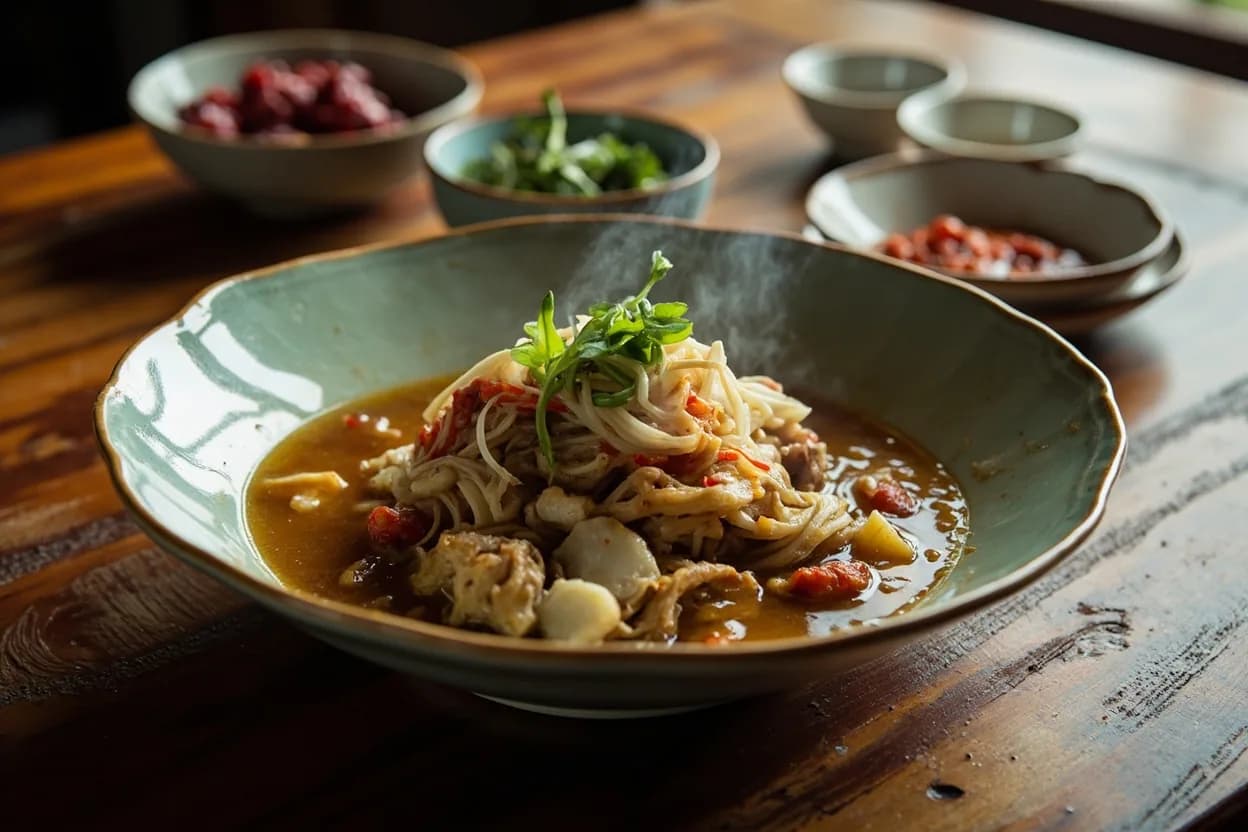
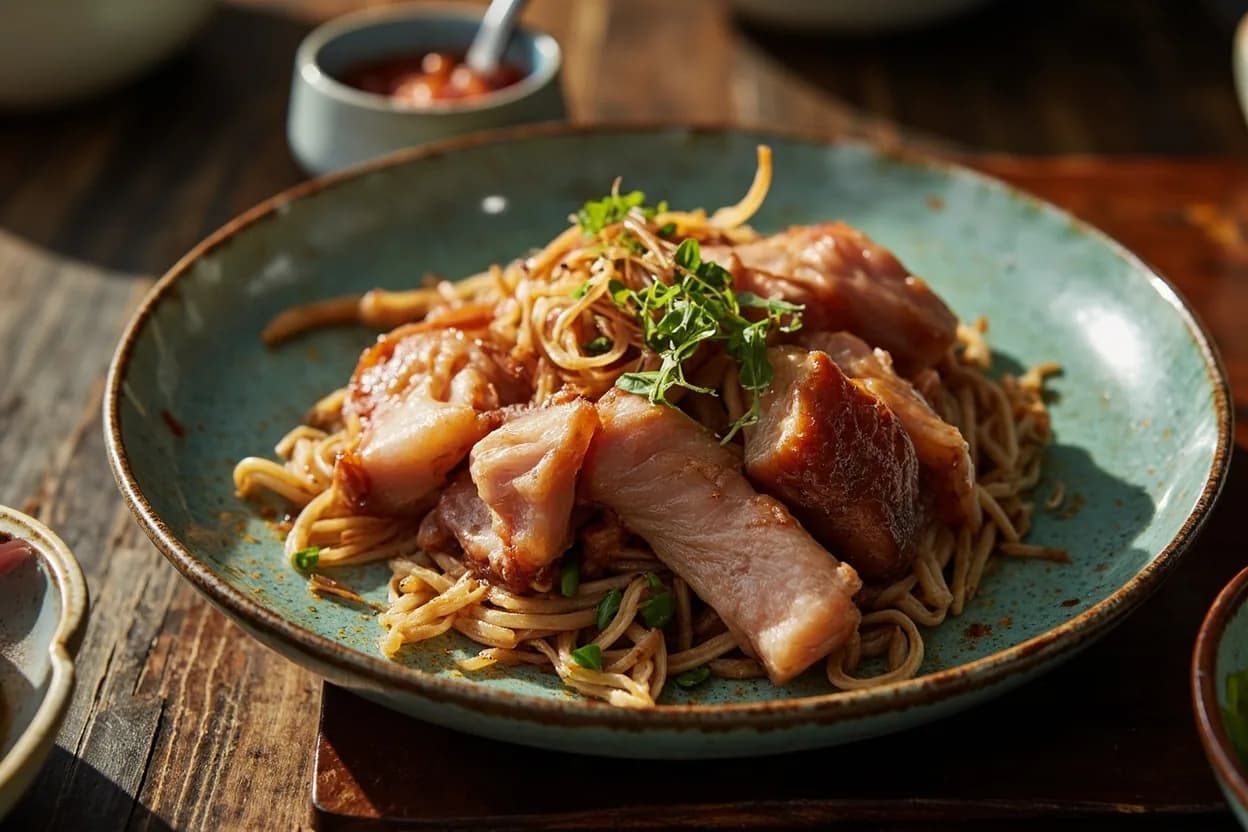
Meal structure varies profoundly by ethnic group. Han Yunnanese follow the standard shared-dish format with rice. Dai people in the south favor banana-leaf presentations, sour and spicy shared plates, and grilled meats. Yi and Naxi highland communities center meals on hearth-side cooking with thick breads and cured meats. The celebrated crossing-the-bridge noodle dish is consumed as a solo meal with an intensely hot broth into which the diner adds raw components in sequence.
History & context
Yunnan's culinary history is inseparable from its geography and its position on the Ancient Tea Horse Road (Cha Ma Gu Dao) — the trading routes connecting China, Tibet, and Southeast Asia across mountain passes. These routes brought spices, preservation techniques, and cultural exchange that diversified Yunnan's food culture over a millennium. The Nanzhao and Dali kingdoms (7th–13th centuries) produced a sophisticated courtly cuisine later absorbed into the local Han tradition. Chinese imperial control intensified Ming and Qing immigration that introduced northern techniques alongside existing minority foodways. The late 20th century brought international recognition of Yunnan cuisine's diversity and its wild-ingredient pantry — particularly wild mushrooms, which Yunnan supplies in significant quantity to European gourmet markets.
Regional variations
- Dai (Xishuangbanna)
Tropical southernmost zone bordering Laos and Myanmar; lemongrass, galangal, sour bamboo, banana-leaf grilling; culinarily closer to Thailand and Laos than to Beijing.
- Naxi (Lijiang)
Highland cuisine featuring hearth-braised meats, preserved pork fat used as a cooking medium, and the distinctive 'Naxi flavor' combining vinegar and mountain herbs.
- Dali (Bai people)
Lake Erhai fish preparations, rubing goat cheese, and an elaborate ceremony around Three-Course Tea (san dao cha) — bitter, sweet, and aftertaste — as a culinary-cultural ritual.
- Kunming (Han Yunnanese)
Most urbanized and codified; crossing-the-bridge noodles is the main signature; also the dominant market for fresh wild mushrooms each summer-monsoon season.
Related cuisines
- Thai
Southern Yunnan Dai cooking and northern Thai cuisine share the same ecology, many of the same aromatics, and direct ancestral cultural connections.
- Burmese
Yunnan's western border traditions share fermented tea-leaf salads, sour bamboo shoots, and pork fat cooking with Shan State Burmese cooking.
- Sichuan
Northeastern neighbor sharing the spice-forward palate but Yunnan's spice is more herb-driven and sour than Sichuan's mala compound.
The Tea Horse Road connected Yunnan with Tibet; Yunnan supplies Pu-erh tea to Tibet; highland yak-dairy and hearth-cooking traditions intersect in northern Yunnan.
References
- 1.Eating Yunnan — Naomi Duguid field notes; published in Saveur (2008–2011)
- 2.Burma: Rivers of Flavor — Naomi Duguid (Artisan Books, 2012) — documents the connected traditions
- 3.The Food of China — E.N. Anderson (Yale University Press, 1988)
- 4.Wild Flavor: An Account of the Seasonal Mushroom Culture of Yunnan — Yunnan People's Publishing House, 2015
Confidence: high
Notes
Wild mushroom capital of China
Yunnan produces and consumes more species of edible wild mushrooms than any other region on earth — over 800 species have been identified, of which approximately 250 are regularly eaten. Summer monsoon season (June–September) sees Kunming's markets flooded with fresh matsutake, porcini, morel, chanterelle, and dozens of local species with no English equivalent. The 'psychedelic' little yellow mushroom (jian shou qing) is a local delicacy requiring precise heat management to denature its toxins — improperly cooked, it induces vivid hallucinations.
Crossing-the-bridge noodles: origin myth
The dish's name comes from a legend: a scholar's wife crossed a bridge daily to bring him lunch while he studied on a lake island, and discovered that the thick layer of oil floating on the broth kept it hot enough to cook raw ingredients by the time she arrived. The modern restaurant preparation amplifies this: a stone bowl of nearly boiling broth arrives with a tray of raw-sliced meats, vegetables, and noodles to be added in sequence.