East Africa
Zanzibar Swahili
Also: Zanzibari cuisine, Spice Island cooking, Stone Town cuisine, Swahili Coast — Zanzibar
A fragrant, layered island cuisine born from the Indian Ocean trade — where Omani spice merchants, Indian traders, Persian aristocrats, and Bantu farmers built one of the world's great fusion kitchens on an archipelago of cloves.
Zanzibar Swahili cuisine is the edible record of the Indian Ocean world. The Zanzibar Archipelago (Unguja and Pemba islands, now part of Tanzania) sat at the center of the dhow trade routes connecting East Africa, the Arabian Peninsula, South Asia, and Persia. Every wave of settlement and commerce deposited ingredients, techniques, and flavor logic. The result is a cuisine simultaneously Arabian (pilau, biriani, kebabs), Indian (curry leaves, cardamom, turmeric, coconut milk), Persian (saffron, dried limes, aromatic rice), and Bantu African (cassava, plantain, octopus, coconut palm). Cloves, grown on the islands themselves, tie everything together. Zanzibar was once the world's largest clove producer, and clove fragrance permeates the kitchen, the market, and the air.
The flavour base
Coconut milk and freshly ground spice paste (a blend of fresh ginger, garlic, turmeric, black pepper, cumin, coriander, cloves, and cardamom) form the foundational cooking medium; tamarind provides souring; clove oil perfumes finished dishes
Pantry staples
Key ingredients
Signature techniques
Signature dishes
Zanzibar Swahili on the table
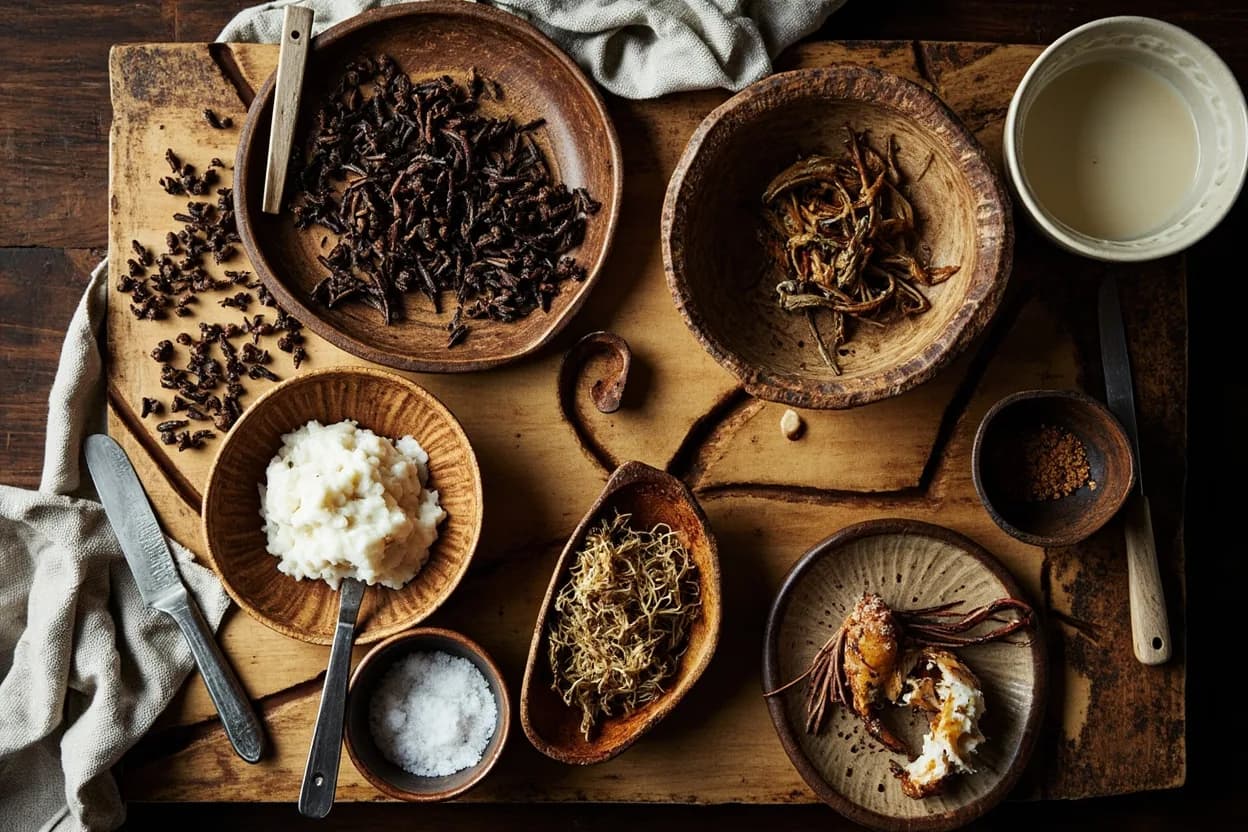
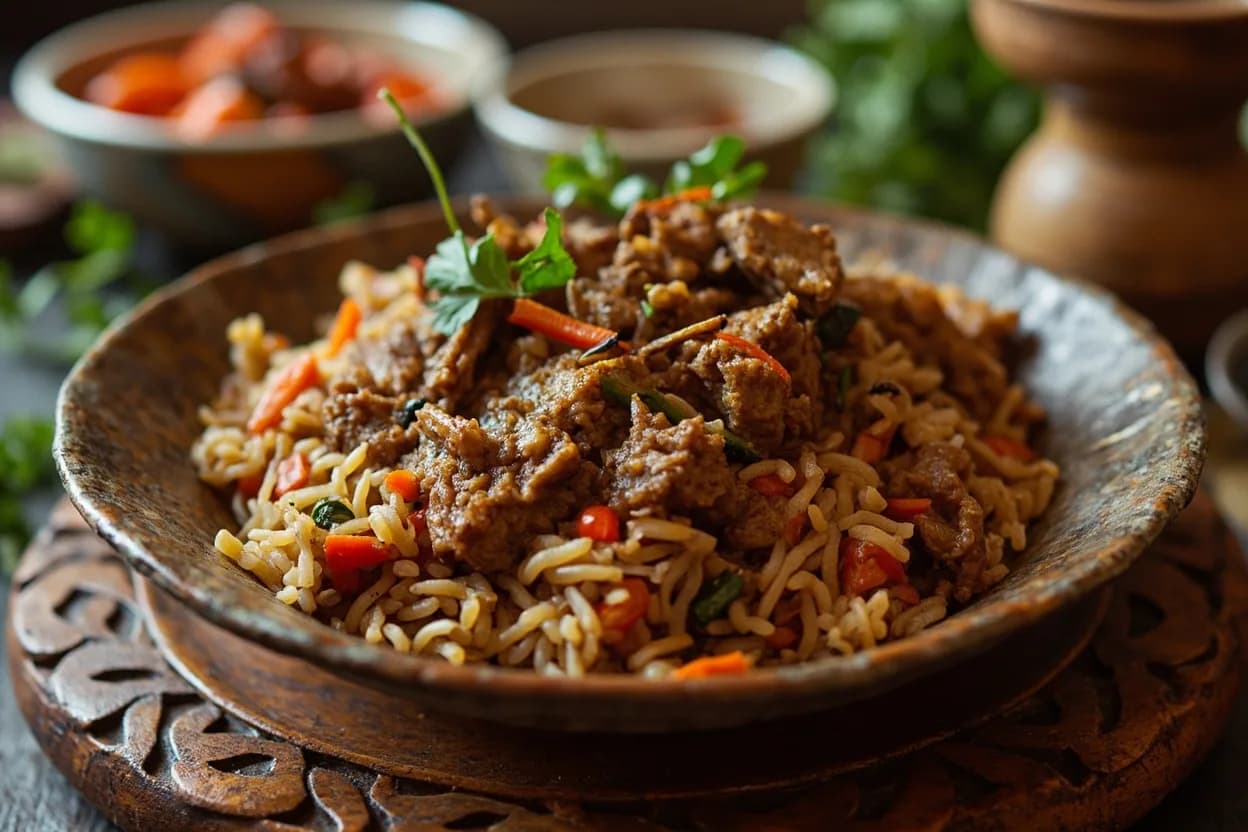
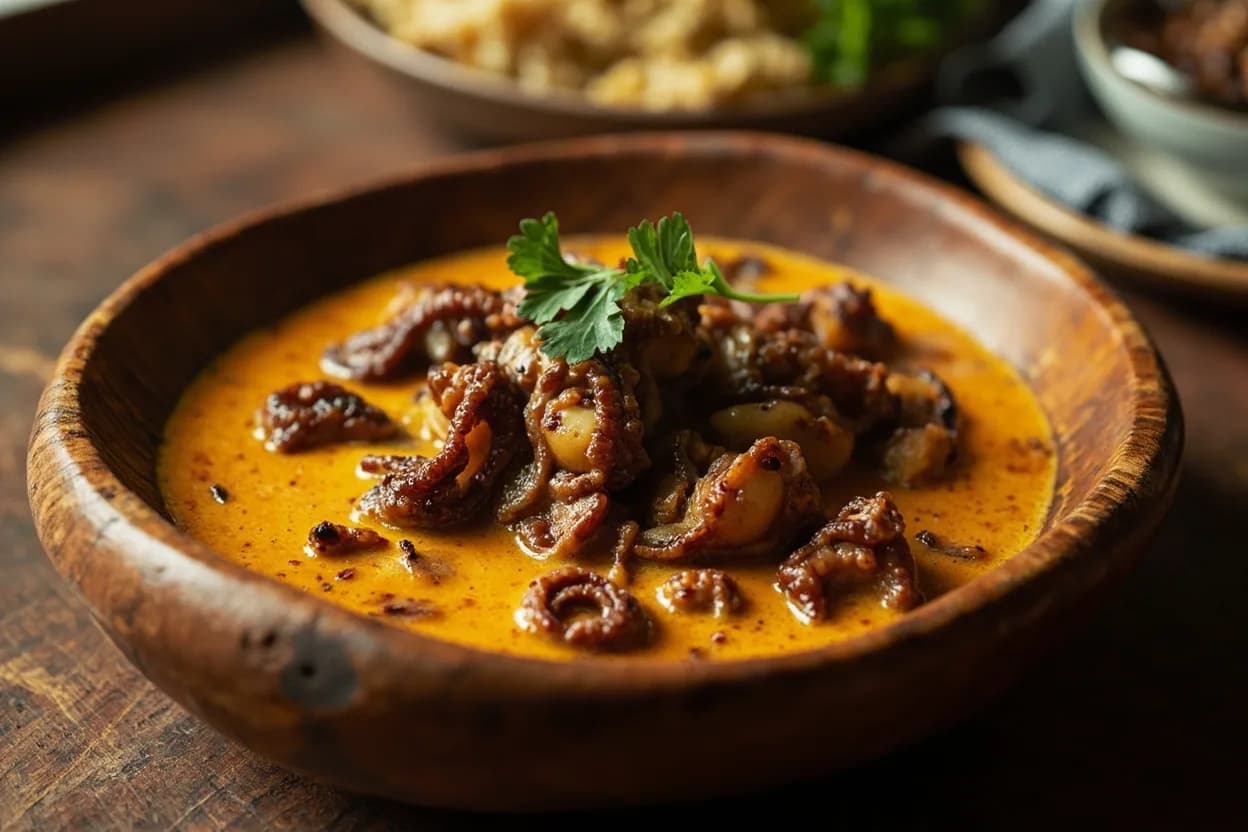
At the table
Meals in Zanzibar follow a loose Swahili pattern: a starch (rice, ugali, or cassava) as the center, surrounded by a spiced meat or fish curry (mchuzi), a relish, and often a raw kachumbari salad of tomato and onion. Rice is dominant over ugali compared to mainland Tanzania. Street food culture in Stone Town is extraordinary: the Forodhani night market is a national institution where vendors grill octopus, lobster, Zanzibari pizza (a stuffed flatbread folded on a griddle), sugar cane juice, and urojo soup from small stalls along the seafront. Iftar during Ramadan transforms the harbor into a communal feast.
History & context
Zanzibar's culinary identity formed over a millennium of Indian Ocean commerce. Arab and Persian traders established settlements along the Swahili Coast from the 7th century; by the 10th century, Zanzibar was integrated into a vast trading network. The Omani Sultanate relocated its capital from Muscat to Zanzibar in 1840 under Sultan Sayyid Said, bringing the full weight of Omani court cuisine, ingredients, and Persian culinary influence. Indian merchants — Gujarati Banias, Bohras, and later Goans — followed trade, bringing curry culture, lentils, and distinctive sweets. The slave trade, grotesquely, also brought continental African foodways from the mainland interior. Clove cultivation, introduced in the early 19th century, transformed the economy and dominated the food supply. British rule (from 1890) added another overlay without fundamentally changing the food culture. The result: a cuisine with more identifiable layers than almost any other in Africa.
Regional variations
- Pemba Island
More conservative and rural than Unguja; heavier cassava and coconut focus; less Indian influence; the most intact traditional Swahili cooking
- Stone Town (Zanzibar City)
The most cosmopolitan expression — highest density of Omani, Indian, and Persian elements; the street food of the Forodhani market is the public face of the cuisine
- Rural Unguja
Farmers' food built on cassava, plantain, and fresh coconut; more closely mirrors mainland Tanzanian Swahili cooking
Related cuisines
- Swahili Coast (general)
Zanzibar is the most refined expression of a coastal culinary tradition stretching from Lamu to Mozambique
- Omani
Direct ancestor of pilau, biryani, and many Zanzibari meat preparations; loomi (dried lime) and saffron use trace directly to Muscat
- Gujarati Indian
Indian merchants brought curry leaves, fenugreek, coconut cooking, lentil dal, and a family of sweets now considered Zanzibari heritage
- Tanzanian
The mainland Tanzanian kitchen shares ugali, mchuzi, and kachumbari with Zanzibar but lacks the island's spice complexity and Arab-Indian overlay
- Malabar / Keralan
Independent parallel development via the same Indian Ocean spice trade; coconut milk, cardamom, and fish curry structures are strikingly similar
Canonical recipes
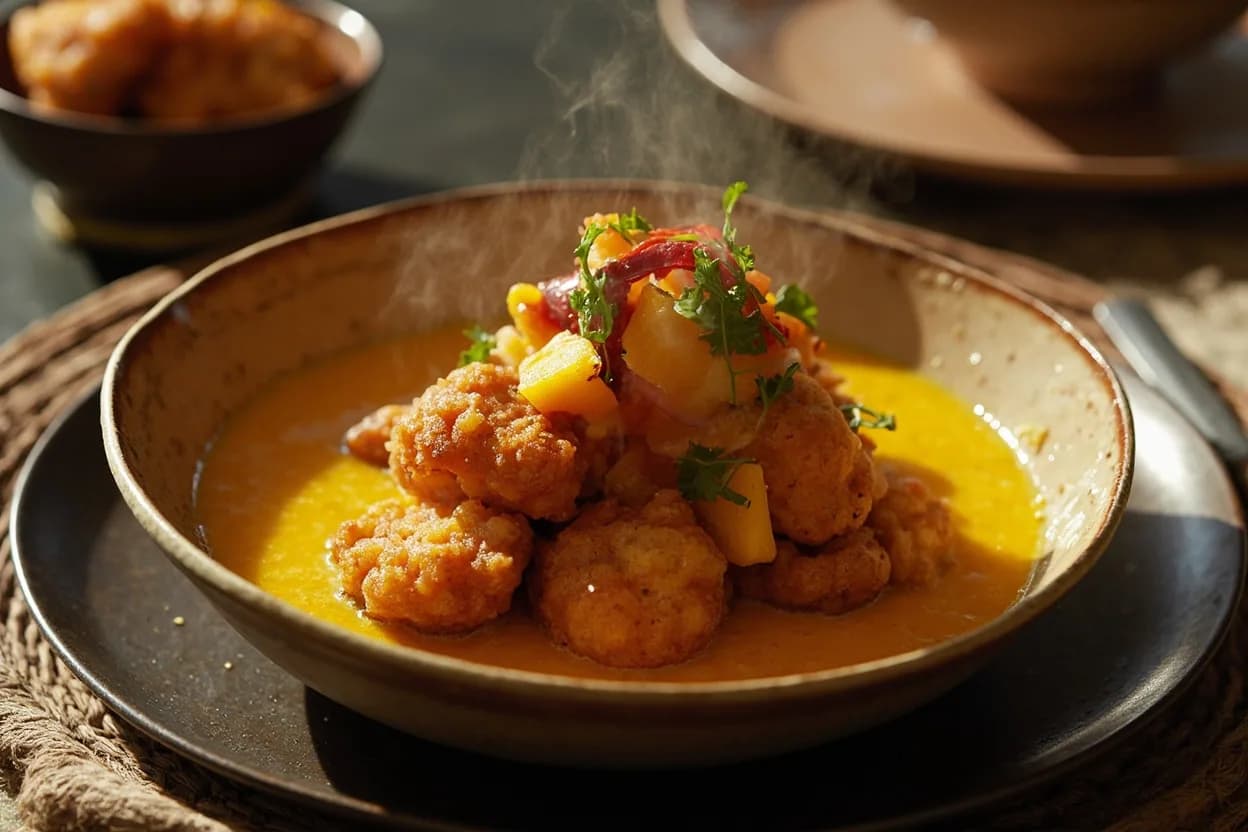
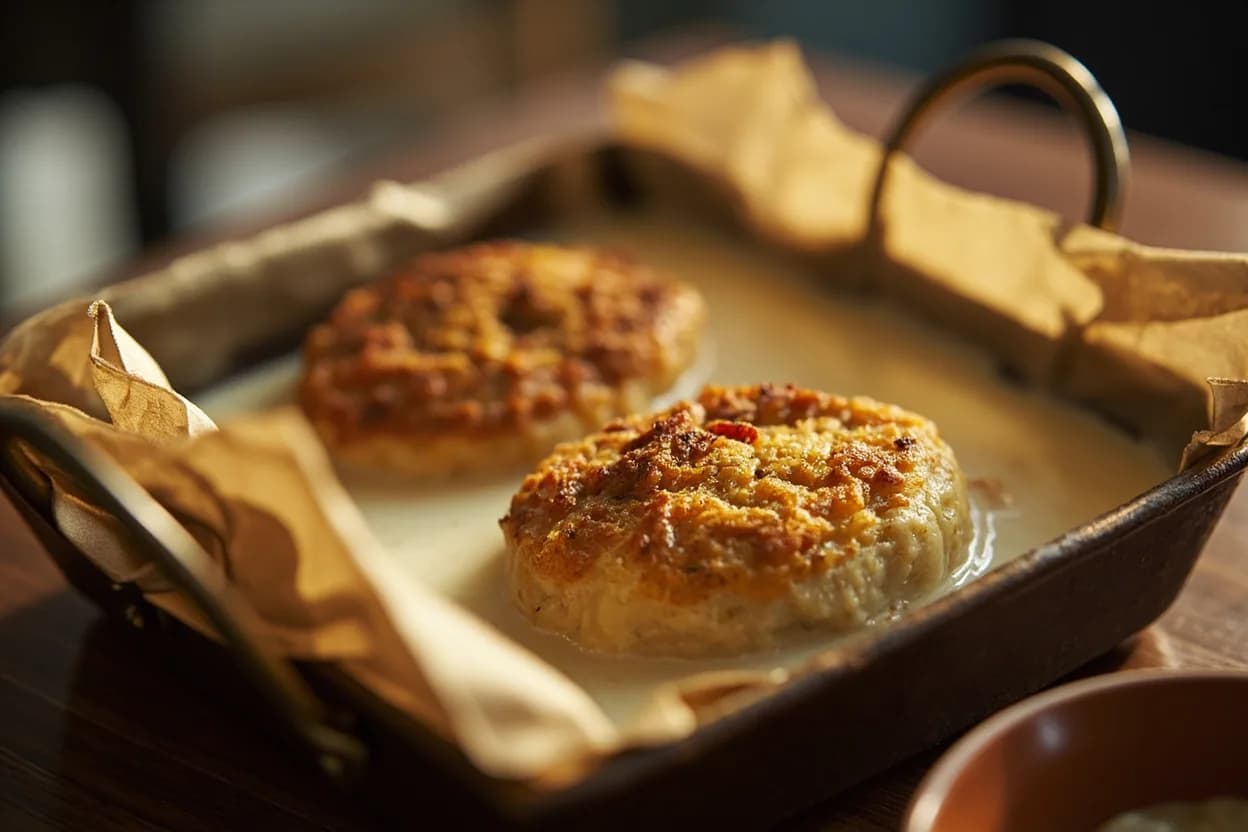
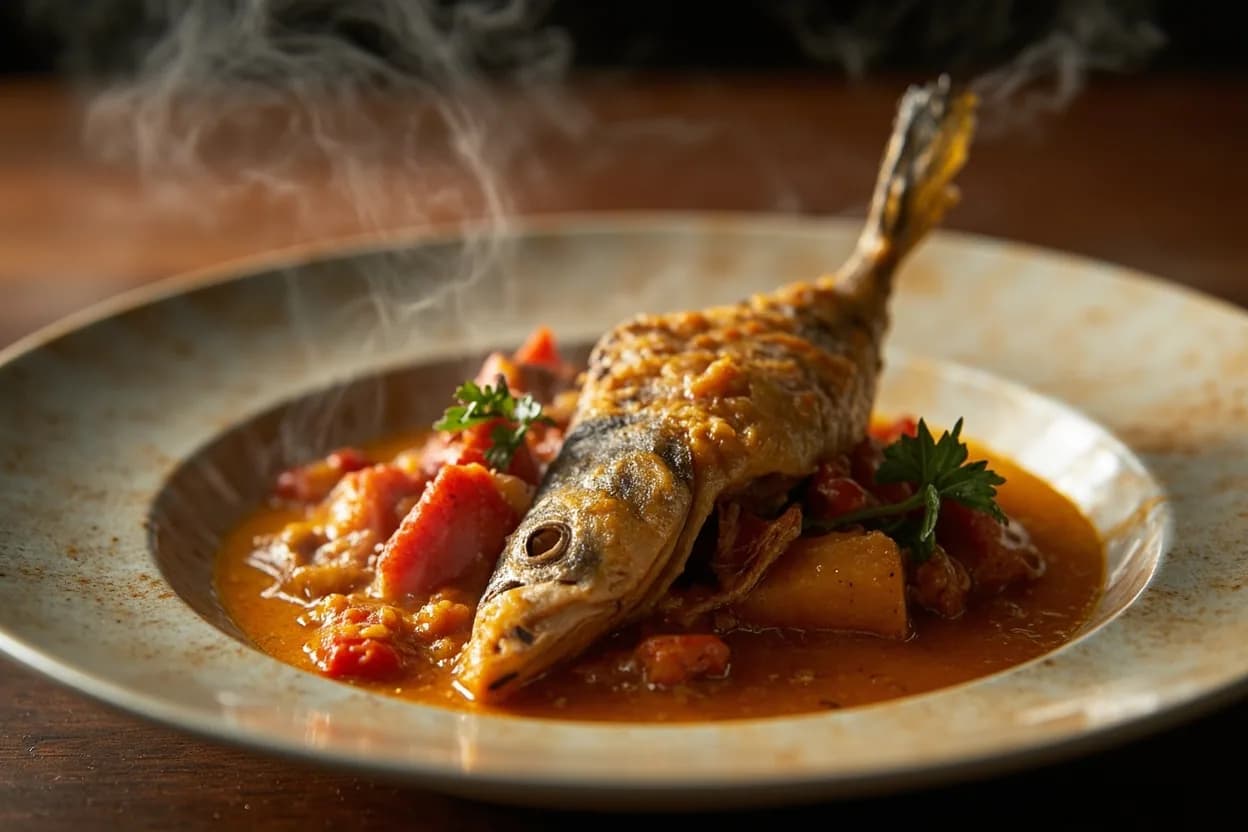
The dishes that define Zanzibar Swahili, documented in the Canon.
References
- 1.The Food of Zanzibar — Farouk Topan, Swahili Studies, 1990
- 2.Taste of Zanzibar — Various, Zanzibar International Film Festival culinary documentation
- 3.Swahili: The Pursuit of Beauty — Patricia Crane, Indian Ocean Trading World
- 4.Indian Ocean in World History — Edward Alpers, Oxford University Press, 2014
- 5.The Sprout of Cloves — historical botanical and culinary account, Pemba Island archives
Confidence: high
Notes
Cloves as cultural artifact
Zanzibar's status as the 'Spice Island' (specifically a clove island; nutmeg comes from Banda) is not merely agricultural. Cloves perfume the air of the islands, appear in savory dishes, tea, and sweets alike, and are threaded through weddings and social rituals. A clove-studded orange is a traditional gift. The economy of the islands and the flavor of the kitchen are inseparable from this single spice.
Urojo as an index of the cuisine
Urojo — Zanzibar mix soup — is arguably the best single artifact to understand the cuisine's layering: the broth is Swahili (turmeric, coconut), the bhajia (fried chickpea dumplings) are Indian, the cassava chips are African, the boiled egg is a Portuguese-era introduction, and the whole is assembled with tamarind-coconut chutney at a Stone Town street cart. No single origin owns it.