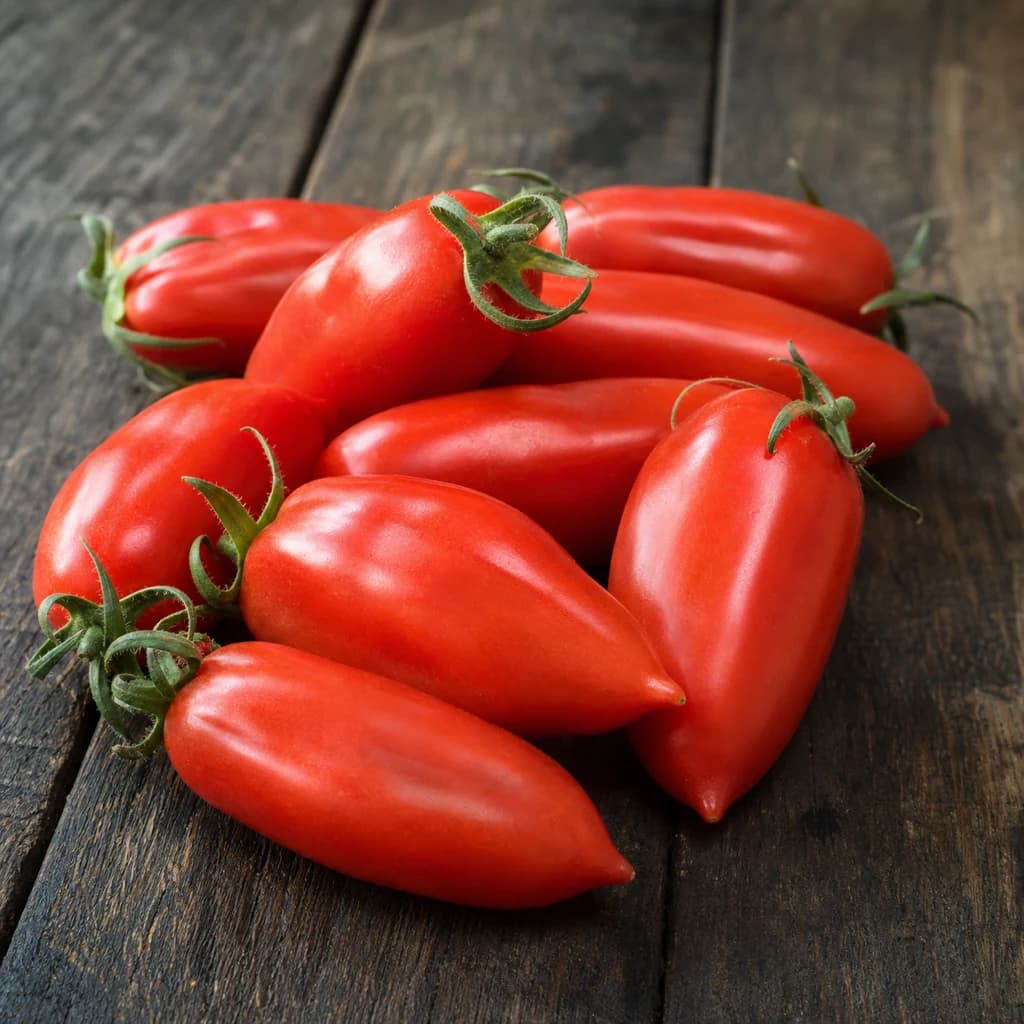
Natural form
Whole San Marzano tomatoes showing their signature slender, elongated plum shape and bright red skin.
Establishes the distinctive elongated form and deep red color that distinguishes San Marzanos from round or roma tomatoes.
Produce
San Marzano Tomato
Prized Italian plum tomato, sweet and low-acid, the classic for tomato sauce.
San Marzano is a slender Italian plum tomato grown in volcanic soil near Naples, famed for its sweet, low-acid flesh, thin skin and few seeds. It is the benchmark tomato for Neapolitan pizza sauce and slow-simmered Italian tomato sauces, usually sold whole and peeled in cans. The protected DOP version comes only from a specific region.
San Marzano tomatoes are the gold standard plum tomato grown in the volcanic soils surrounding the Sarno River valley in Campania, Italy. Their elongated shape, thick flesh, and notably low acidity make them the preferred choice for Italian tomato sauce, particularly Neapolitan pizza and pasta al pomodoro. Unlike many tomatoes bred for shelf stability, San Marzanos have a tender skin that slips easily when cooked and a meaty interior that breaks down into a silky, jammy consistency without becoming watery. The volcanic terroir contributes subtle mineral notes that distinguish authentic DOP specimens from imitations.
The DOP (Denominazione di Origine Protetta) designation is strictly enforced under EU law—only tomatoes grown in designated Campania provinces and canned within 48 hours of harvest earn the bright yellow DOP seal. This certification guarantees authenticity, but it also commands a significant price premium, often two to three times that of standard canned tomatoes. Many products sold as "San Marzano" in the United States are US-grown hybrids bred for domestic climates; while serviceable, they lack the characteristic sweetness and depth of true Italian DOP fruit.
What sets San Marzano apart in the kitchen is their behavior under heat. Their natural sugars concentrate beautifully during slow cooking, developing a sweetness that resists the bitter notes that plague higher-acid varieties when exposed to high pizza oven temperatures. The thick skin separates cleanly after brief cooking, making them ideal for smooth sauces—blanch whole tomatoes for 30 seconds if you want to peel them before crushing. Canned whole peeled in their own juice, they maintain superior texture compared to pre-crushed or pureed options.
- Measured in
- g
- Storage
- Pantry
Types & varieties
True heirloom variety grown in the designated Campania region; only this version carries EU protection. Must be canned within 48 hours of harvest.
Often labeled 'San Marzano' in catalogs but is a different cultivar bred for US climates. Less intense flavor, more acidic than Italian DOP.
A sub-variety with slightly larger fruit; same DOP designation applies.
Why DOP Certification Matters
The DOP seal is not mere marketing—it is a legally enforceable designation. Only tomatoes grown in the volcanic plains of the Campania region, harvested, and canned within 48 hours qualify. Many products labeled 'San Marzano style' or 'San Marzano' grown in California are legally distinct and lack the terroir-driven flavor that makes the genuine article exceptional. When the price difference seems too good to be true, it usually is. Authentic DOP cans consistently bear the yellow EU seal prominently on the label; look for it before trusting any brand claiming DOP status.
- Look for the yellow DOP shield on the can label, not just the name 'San Marzano'
- Italian import brands specializing in DOP products are the most reliable sources for authentic product
- US-grown hybrids may work in a pinch but will yield a tangier, less complex result
Choosing Between Fresh and Canned
Outside Italy, fresh San Marzano tomatoes are a rarity and often poor approximations of the canned product. Canning preserves the tomatoes at peak ripeness, which more than compensates for any theoretical freshness advantage. Professional cooks and serious home cooks universally prefer canned whole peeled San Marzanos. Avoid crushed, pureed, or diced varieties—these are often made from inferior tomatoes and lack the texture control that whole peeled provides.
- Never buy pre-crushed San Marzano; you lose the ability to control texture
- Fresh Roma or vine tomatoes cannot substitute in dishes requiring the characteristic sweetness under high heat
- If you find fresh San Marzano, use them the same day—they bruise easily and deteriorate rapidly
Common uses
Tips & pitfalls
- Buy whole peeled in juice, never pre-crushed. Crush by hand with a fork or your fingers for the characteristic uneven, rustic texture cooks expect.
- Do not rush the cooking. San Marzanos need 30–45 minutes of gentle simmering to caramelize their natural sugars and meld flavors. High heat short-circuits this process and produces a flat-tasting sauce.
- Season late. Salt too early draws out liquid before flavors concentrate, resulting in a thin, washed-out sauce that requires longer cooking to recover.
- For pizza sauce, reserve the tomato juice from the can—pour it through a fine sieve and reduce it separately before adding the crushed tomatoes. This prevents a watery pizza.
- Taste before adding acid (lemon, wine, or sugar). Authentic DOP San Marzanos often need none; adding acid to an already low-acid tomato overpowers the subtle sweetness.
- Do not discard the can juice. It contains concentrated tomato essence that many recipes overlook—reduce it separately for pasta dishes or freeze it for future use.
- Common mistake: using a food processor to crush San Marzanos. This aerates the tomatoes and produces a foamy, degraded texture. Hand-crushing preserves integrity and flavor.
Nutrition
Energy
63 kJ · per 100 g
Where the calories come from
Protein
1g
2% DV
Carbs
3g
1% DV
Fat
0.3g
0% DV
Fiber
0.7g
3% DV
Sodium
23mg
1% DV
Source · USDA FoodData Central · approx. Tomatoes, yellow, raw
View on FDC →In the shops
Matched grocery products
 €2.62
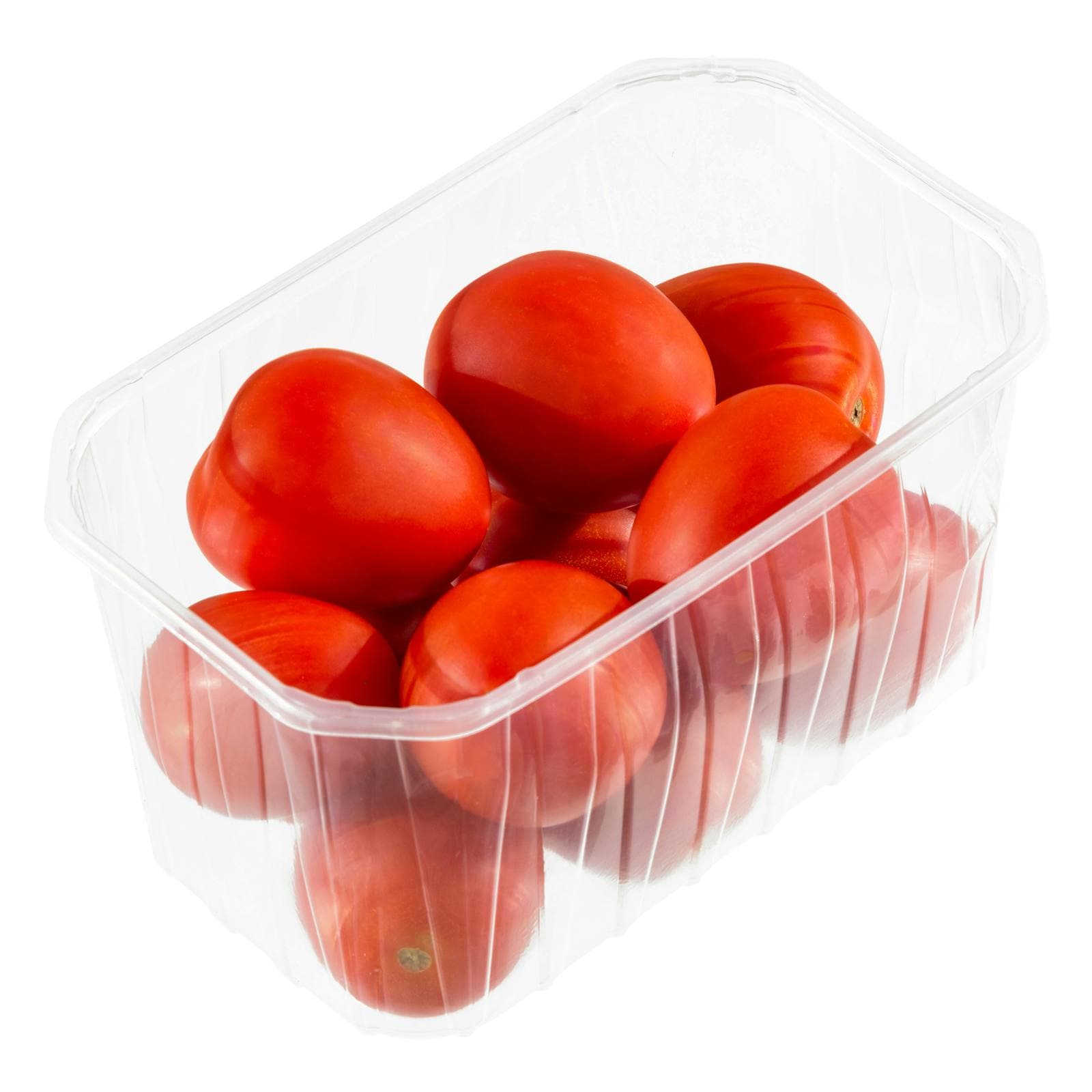
€2.62Pear Tomatoes
1.14 kg · Mercadona
 €1.49
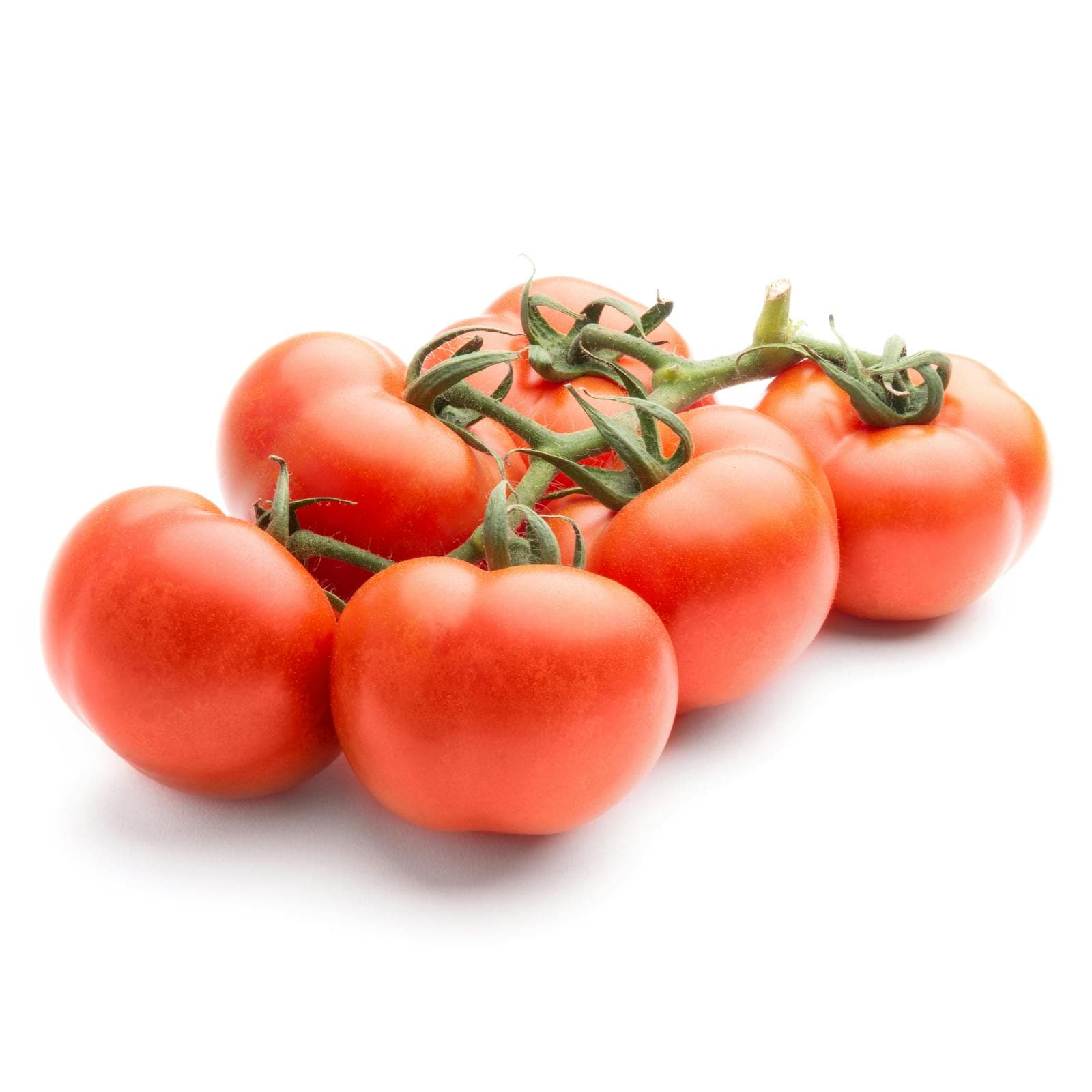
€1.49Truss Tomatoes
550 g · Mercadona
 €2.60
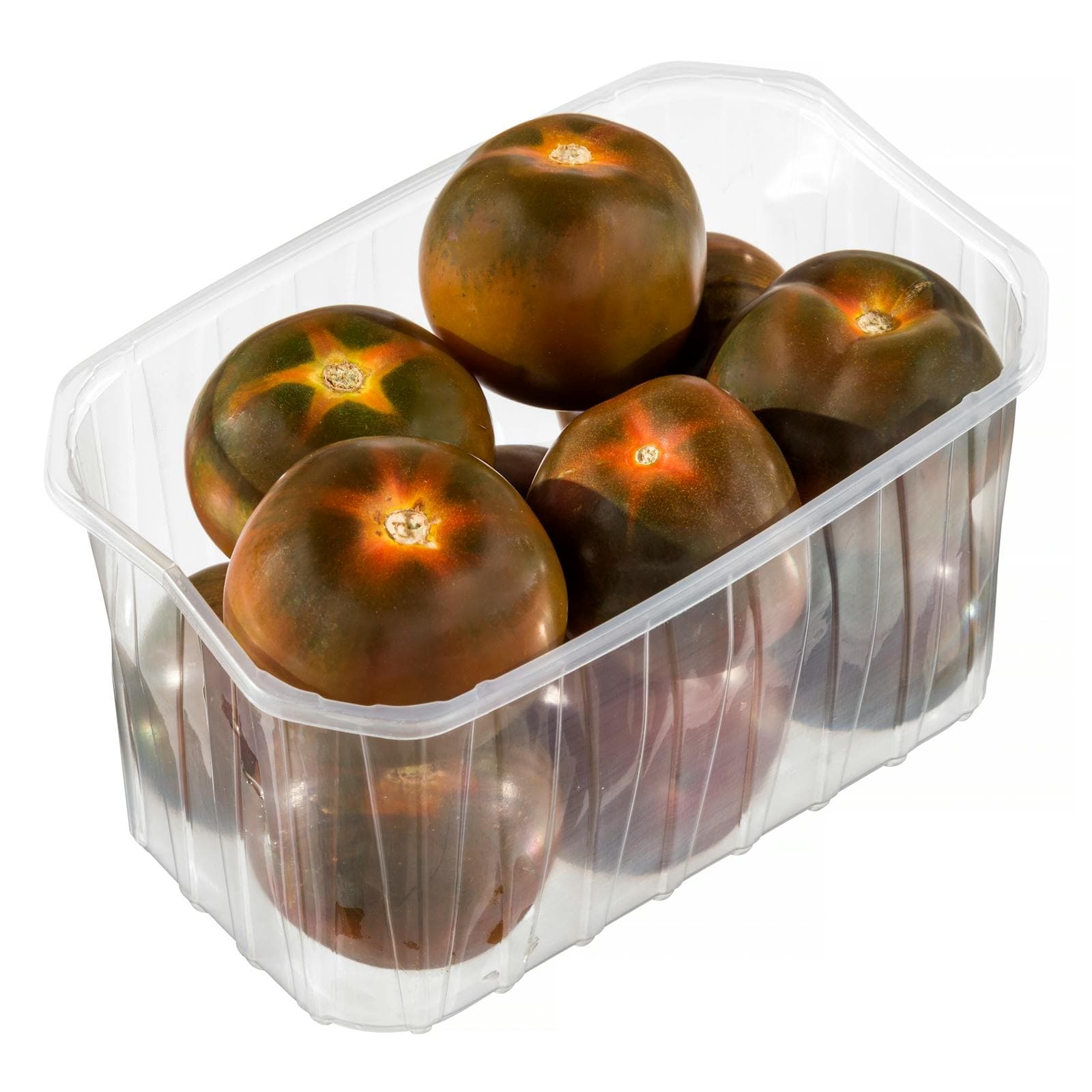
€2.60Black Tomatoes
1 kg · Mercadona
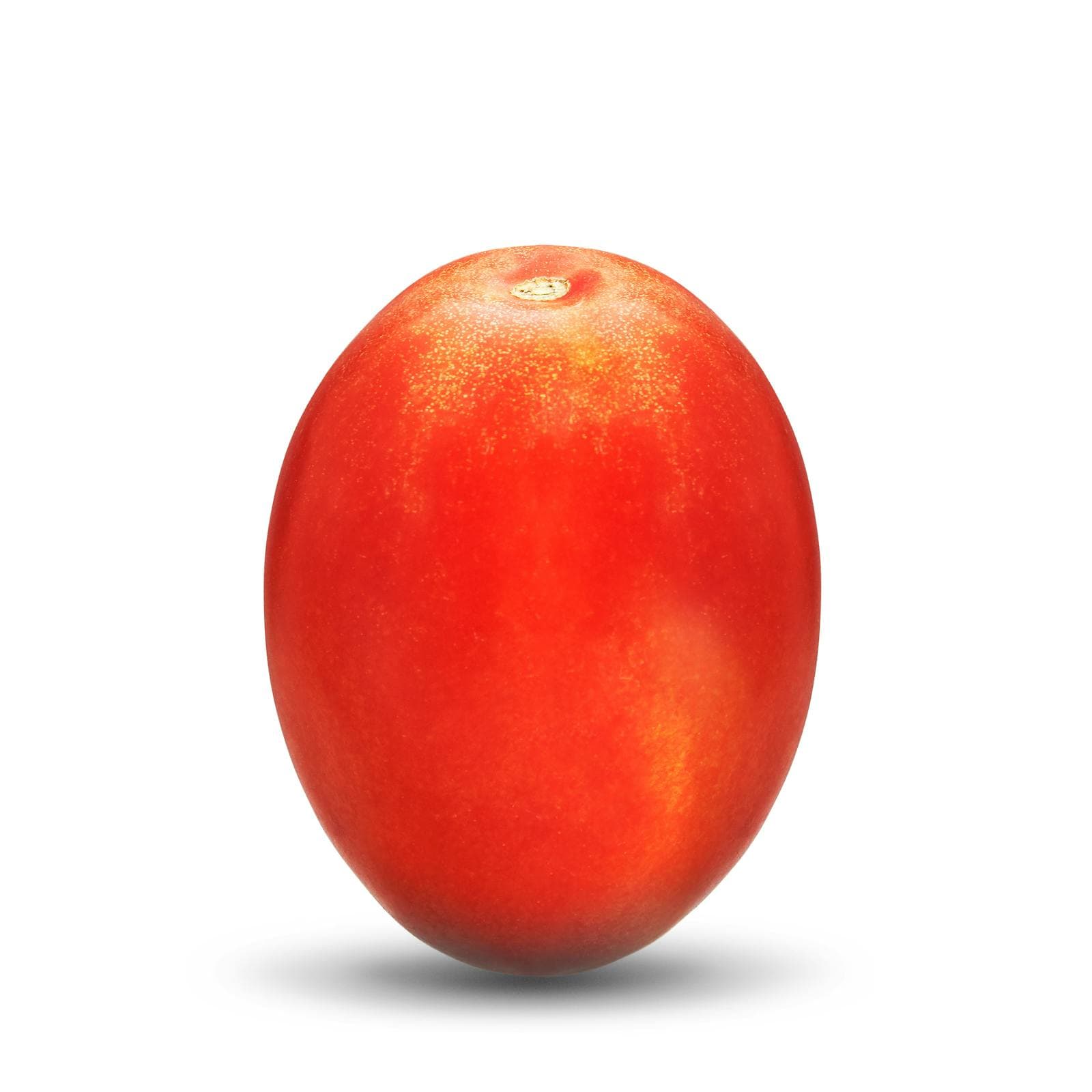 €0.29
€0.29Plum Tomato
130 g · Mercadona
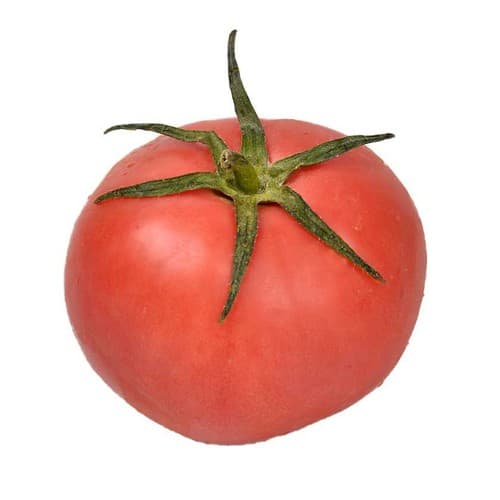 €1.07
€1.07Pink Tomato
ud · Bonpreu
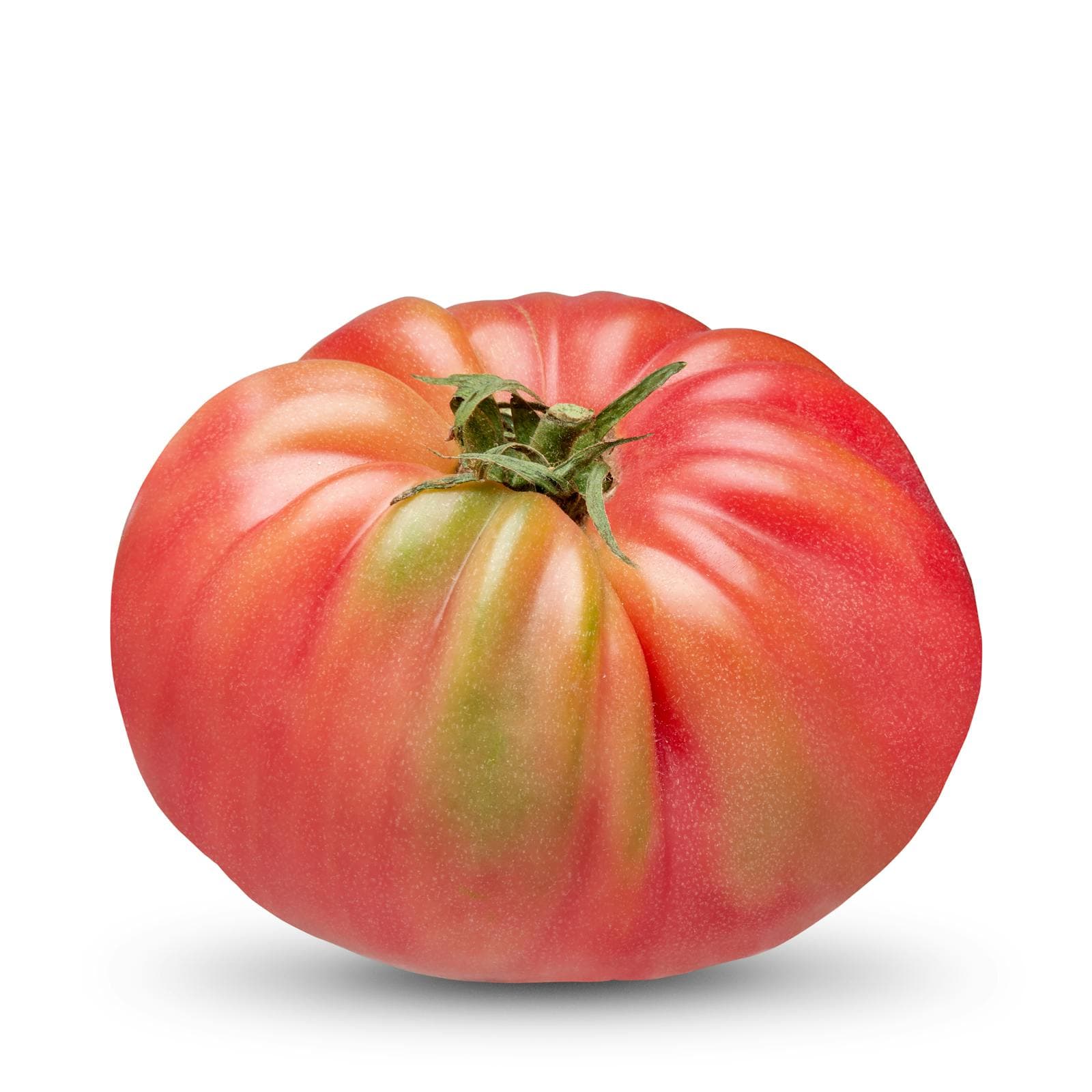 €1.16
€1.16Pink Tomato
340 g · Mercadona
Good to know
- Type
- Plum tomato (Solanum lycopersicum 'San Marzano')
- Origin
- San Marzano sul Sarno, Campania, Italy (volcanic Sarno River valley)
- Protected Status
- DOP (Denominazione di Origine Protetta) under EU law; authentic cans bear the bright yellow DOP seal from Campania provinces of Salerno and parts of Napoli
- Peak Season
- Late summer (August–September in Italy)
- Shape
- Elongated plum, tapered at ends, 5–8 cm long
- Flesh
- Thick, meaty, fewer seeds than other plum varieties; skin slips easily when cooked
- Flavor
- Sweet, mildly acidic, less tart than standard plum tomatoes; subtle mineral notes from volcanic soil
- pH
- Approximately 4.5–4.7 (lower acidity than Roma tomatoes)
- Typical Form
- Almost exclusively sold canned whole peeled in juice; fresh availability outside Italy is extremely rare
- Storage (canned)
- Unopened: cool, dark pantry up to 18 months. Opened: transfer to glass container, refrigerate, use within 5–7 days.
Substitutes
- Pomodoro Pelato (Italian whole peeled plum tomato) — A generic Italian plum tomato; acceptable when DOP San Marzano is unavailable or cost-prohibitive. Look for Italian brands like Mutti, De Rica, or Cirio.
- Datterini tomato — Small, sweet Italian cherry plum; excellent flavor but significantly more expensive. Crush and use 1:1.
- Roma (VF) tomato — Widely available fresh or canned; higher acidity and more seeds. Reduce with a pinch of sugar to approximate sweetness.
- San Marzano Hybrid (US-grown) — Acceptable in a pinch; will yield a tangier result. Adjust seasoning accordingly.
Pairs with
Also called
San Marzano
Appears in these dishes
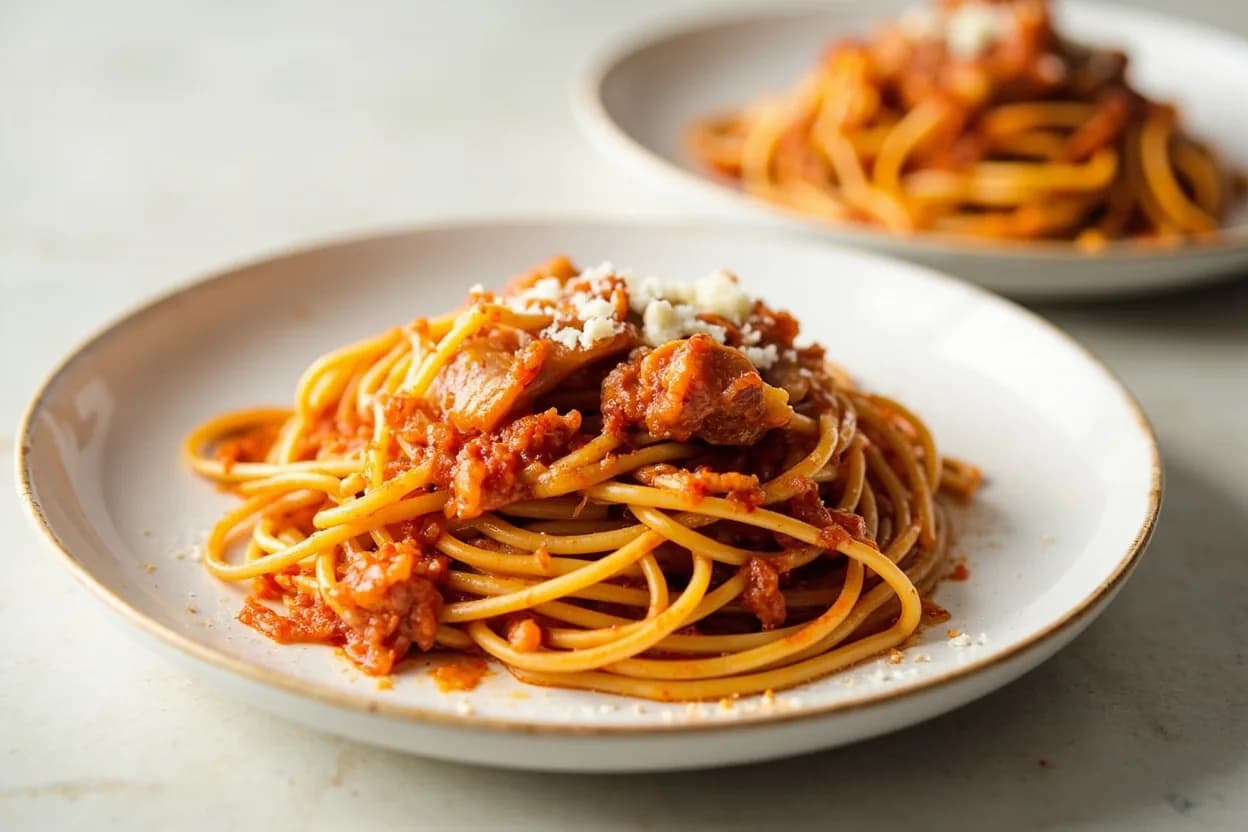
Related
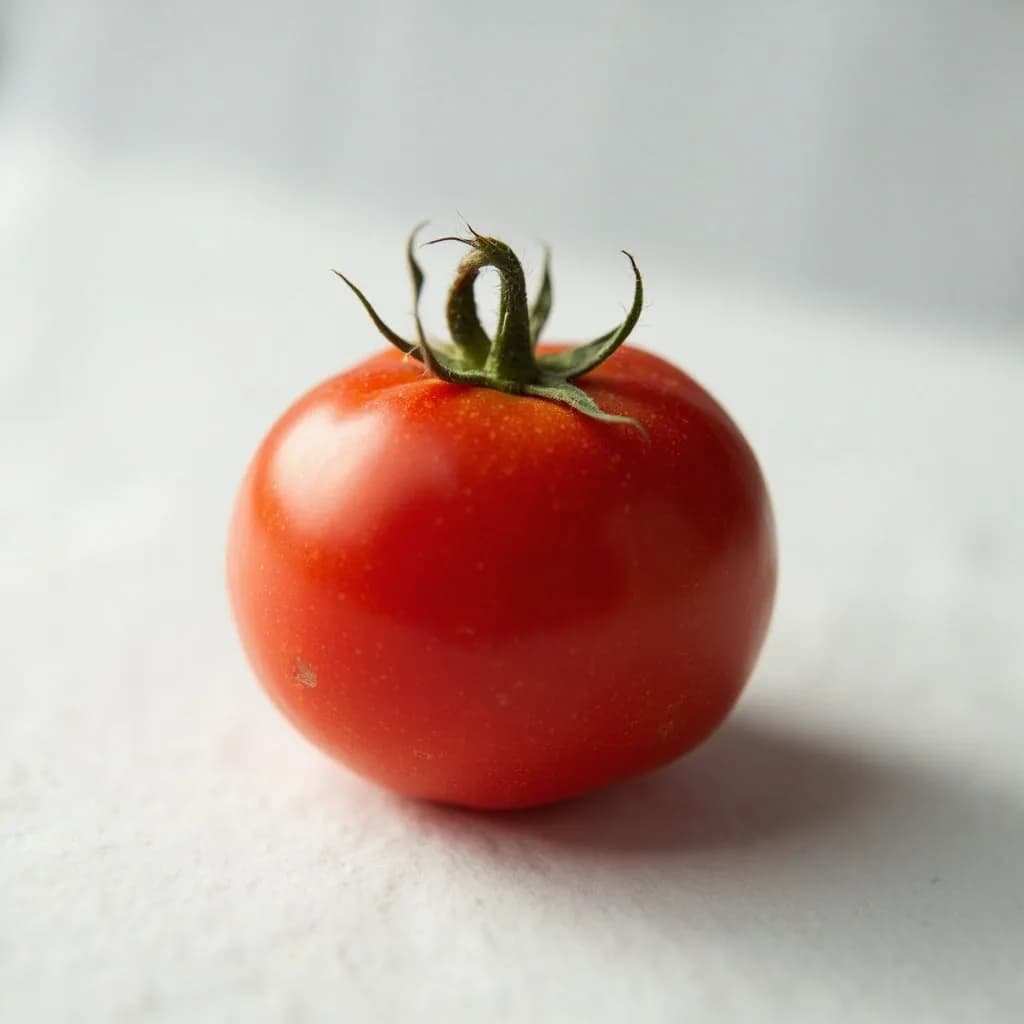
Tomato
Juicy, sun-sweet fruit for sauces, salads, and slow-cooked depth
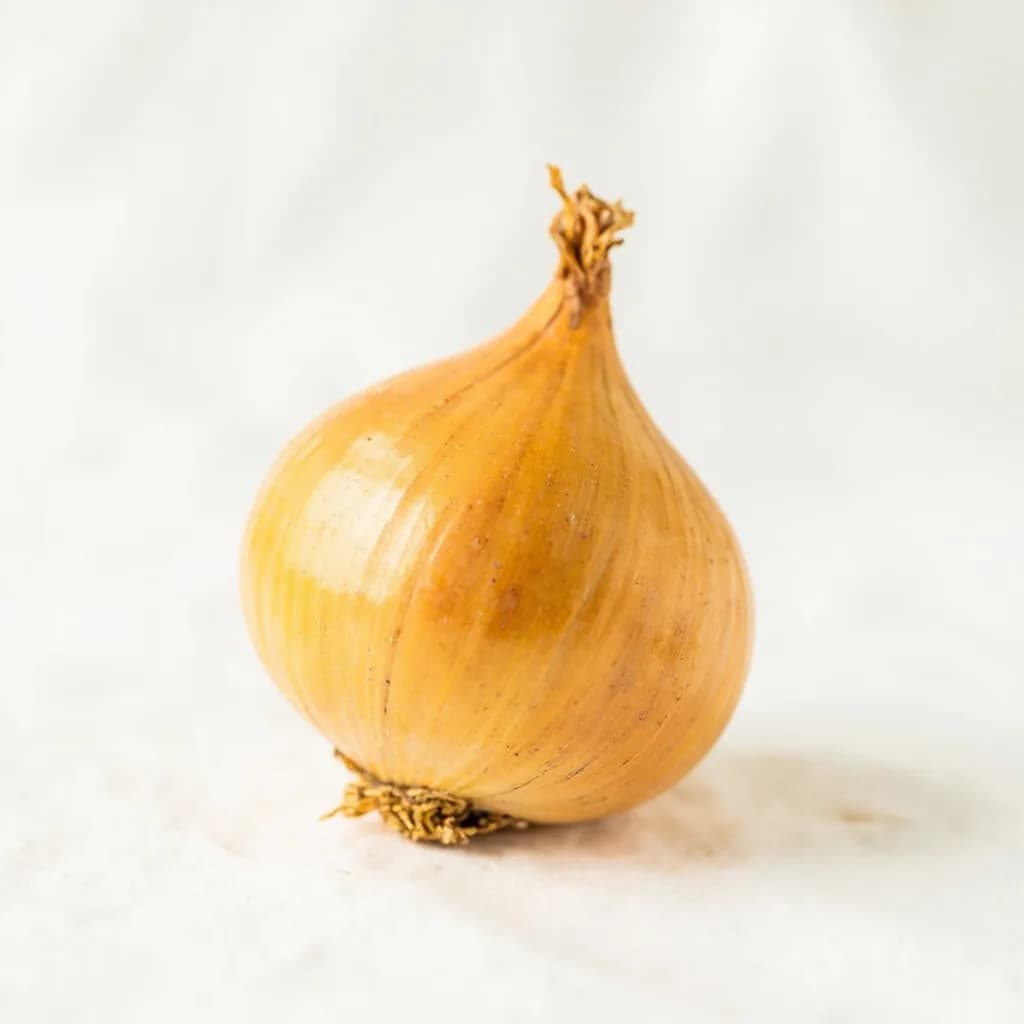
Yellow Onion
The aromatic backbone of soups, sofritos, and braises
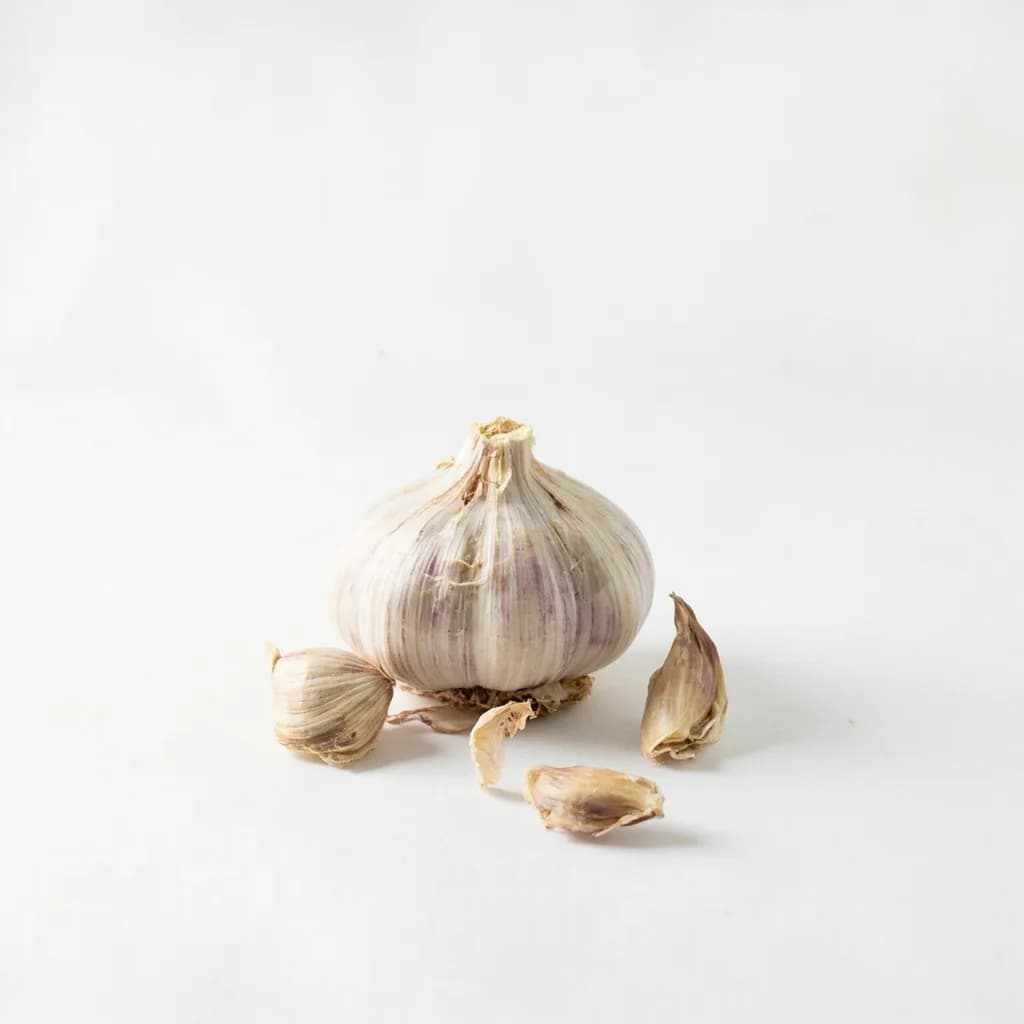
Garlic
Pungent cloves that perfume nearly every savory dish
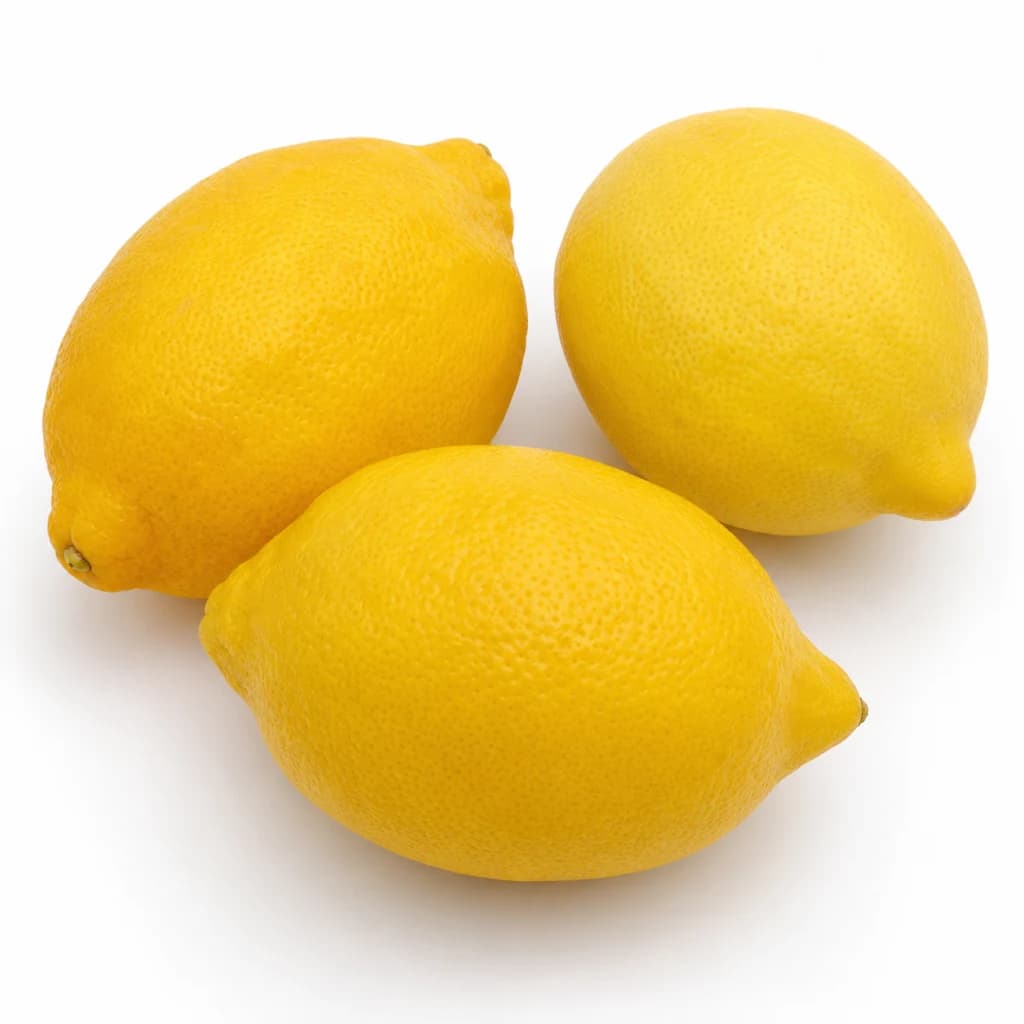
Lemon
Bright, acidic citrus that wakes up almost any dish
Potato
Humble, hearty staple — roast, mash, fry, or boil
Carrot
Sweet, crunchy root — raw, roasted, or the base of a sofrito
Cucumber
Cool, crisp, and watery — for salads, pickles, and tzatziki

Lettuce
Crisp leaves for salads, wraps, and a fresh crunch