Southern Europe
Castilian
Also: Cocina Castellana, Cuisine of Castile
The austere grandeur of Spain's high meseta, where wood-fired ovens turn suckling pig and milk-fed lamb into national icons, and the cocido pot anchors a cuisine of land, faith, and empire.
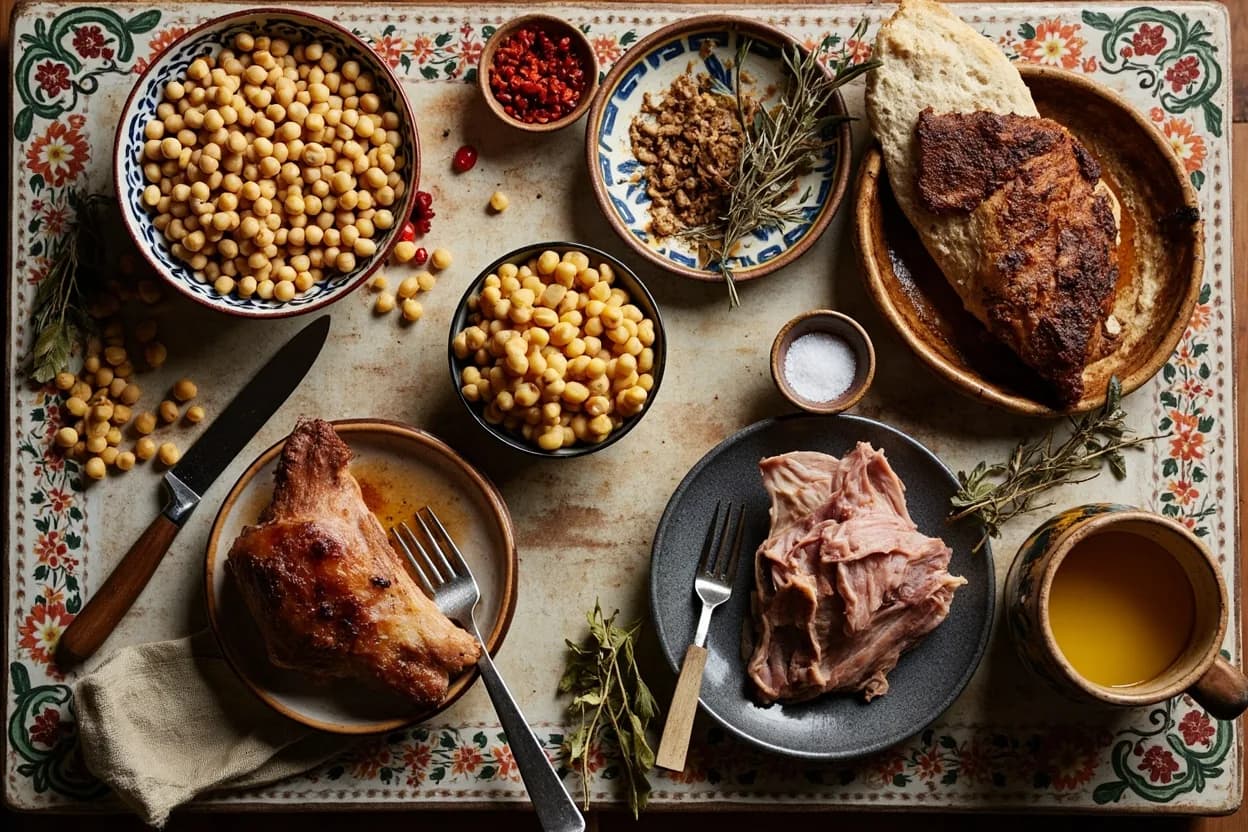
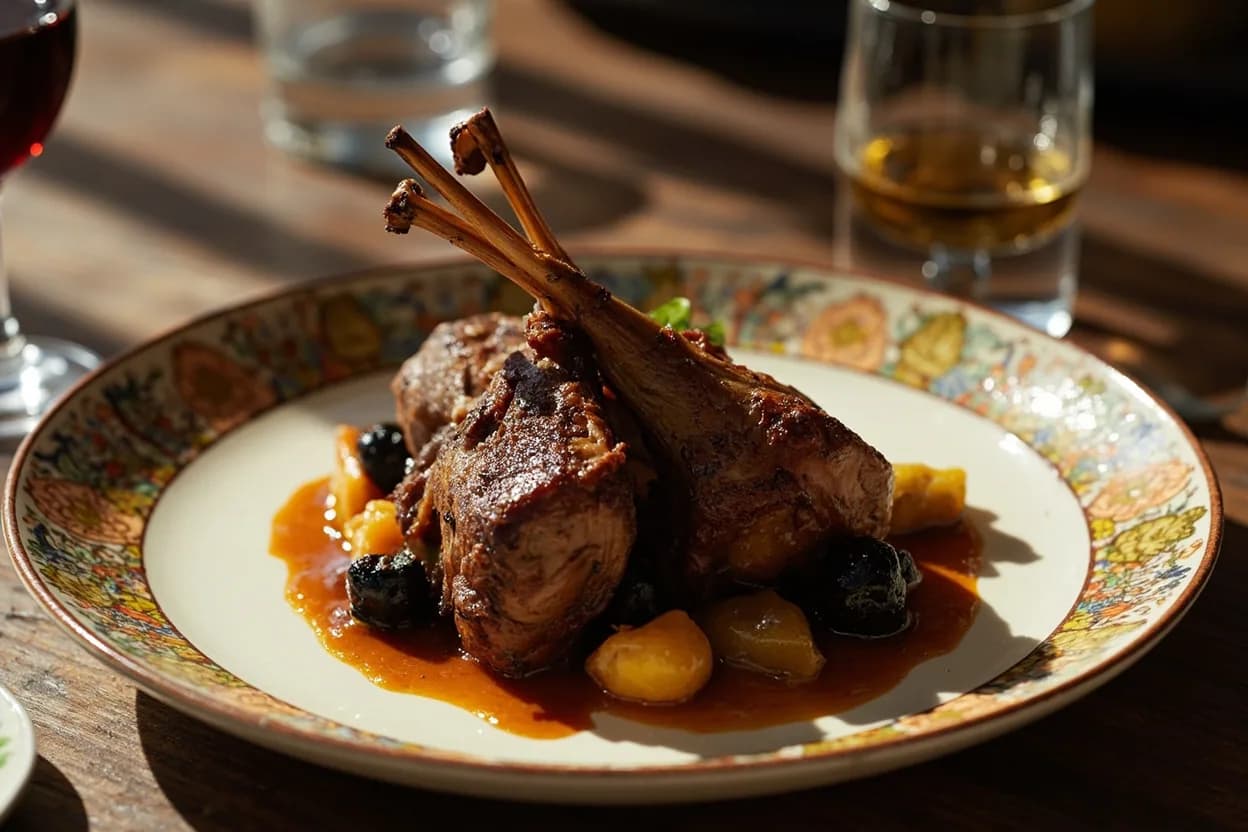
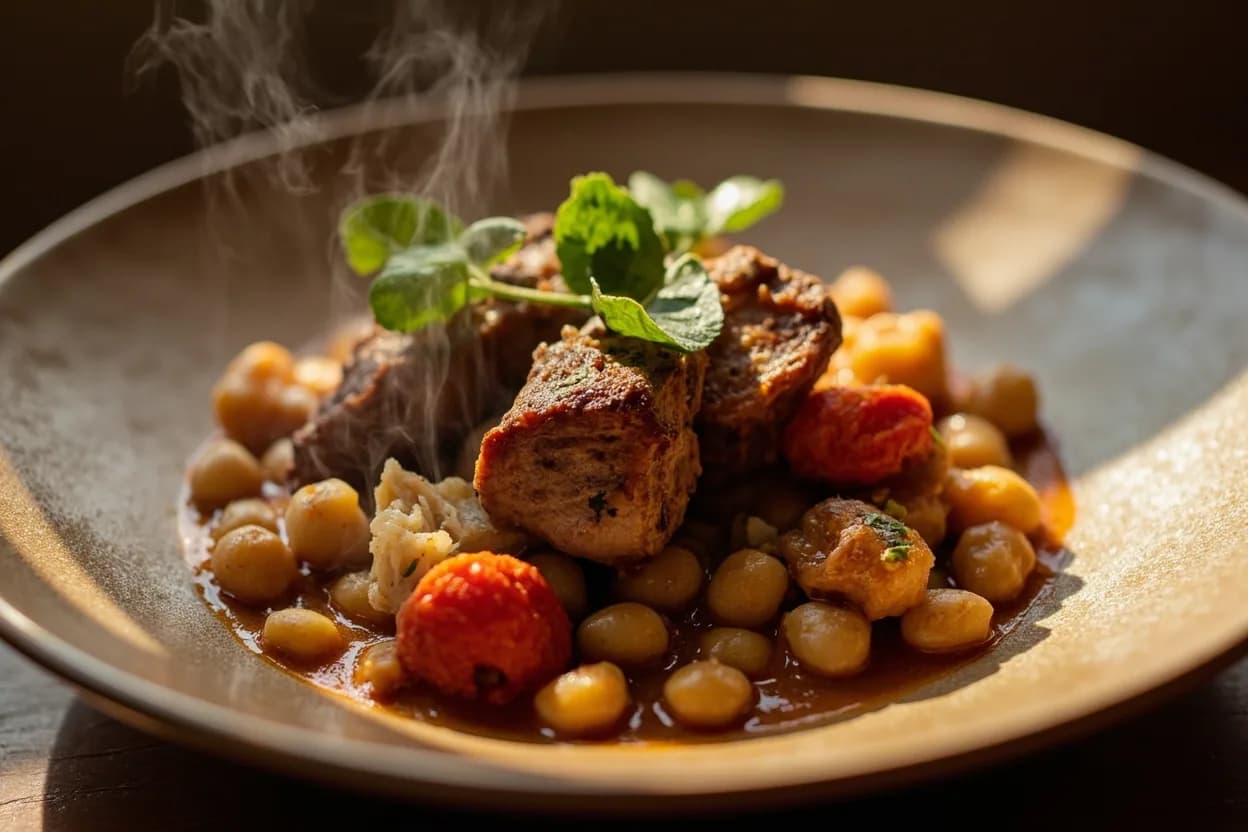
Castilian cuisine is the cooking of Spain's broad interior plateau (the Meseta Central), a landscape of extremes — scorching summers, frozen winters, scant rainfall — that imposed austerity and rewarded patience. Its defining gestures are the horno de leña (wood-fired stone oven) producing perfectly lacquered roasts of cochinillo (suckling pig) and cordero lechal (milk-fed lamb); the slow-simmered cocido of chickpeas and multiple meats; and the cold-cuts culture of an inland pig-raising economy. Where coastal Spain reaches for seafood and citrus, Castile reaches for roasted meat, dried legumes, and the dignified restraint of a land that once ruled an empire.
The flavour base
Rendered lard, garlic, and onion as the aromatic base; pimentón (both sweet and bittersweet) as the key flavour signal; meat drippings recycled back into soups and stews; very restrained use of fresh herbs (dried thyme, bay).
Pantry staples
Key ingredients
Signature techniques
Signature dishes
Castilian on the table
At the table
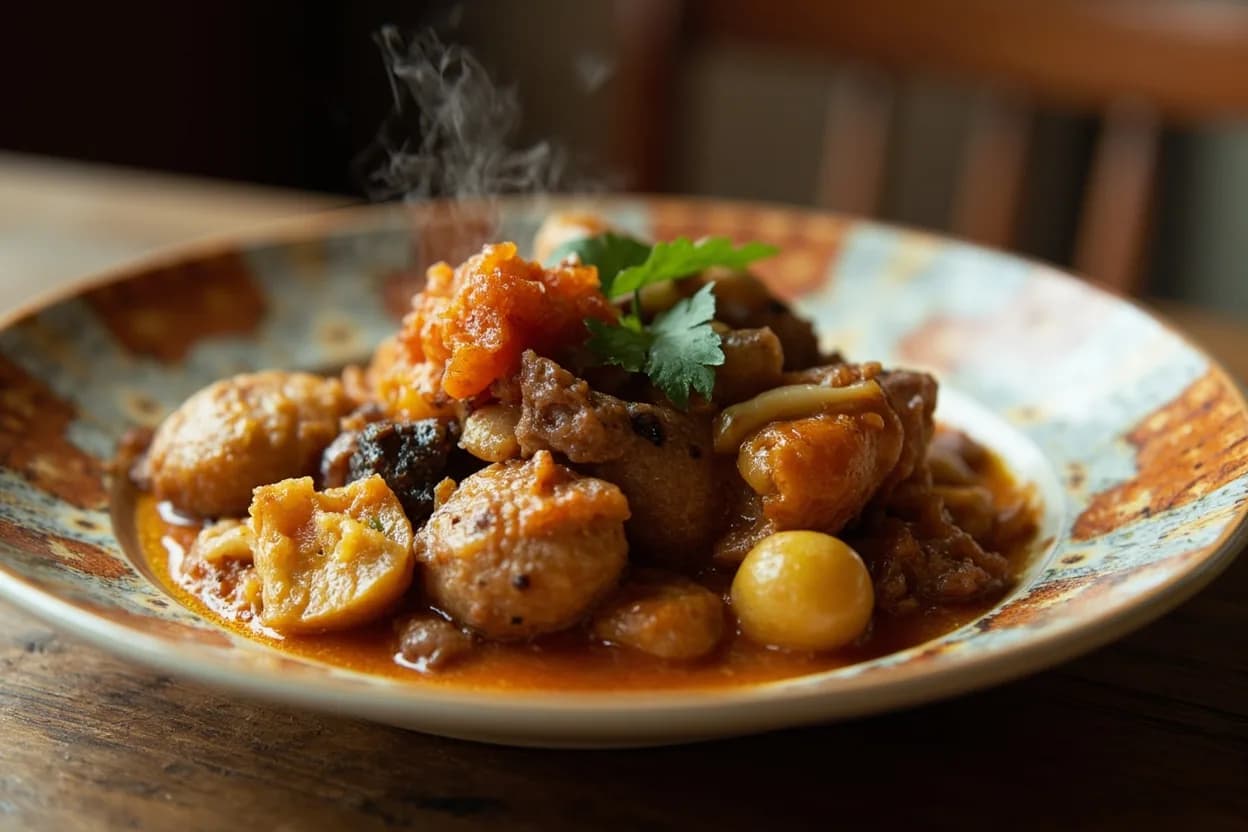
The midday meal is the social and caloric centre — often two or three courses centred on a roast or cocido. Workers' tabernas in Madrid historically served a three-course menú del día anchored by cocido or callos. Starters are light (bread, cheese, charcuterie); the main roast dominates; dessert is modest (flan, rice pudding, fruit). Supper is a reheat of lunch or very simple egg dishes.
History & context
Castile — the kingdoms of Castile and León merged in 1230 — became the political and linguistic heart of Spain. Its cattle and sheep ranching culture (the Mesta transhumance routes moved millions of animals north–south across the meseta) gave the cuisine its livestock bias. The Royal Court settled in Madrid (1561) and drew the peninsula's culinary ambitions to the capital. Castile was also deeply shaped by Jewish and Morisco cooking before the expulsions of 1492 and 1609 — the cocido descends from Sephardic adafina; the integration of pork became a marker of Christian identity, which explains the ostentatious use of pig in Castilian feasting culture. Segovia's suckling-pig tradition was already famed by the 18th century; the Mesón de Cándido, operating since 1786, remains its flagship address.
Regional variations
- Segovia
Epicentre of cochinillo asado; lighter, crisper skin technique in smaller ovens; judiones de La Granja as a great bean dish.
- Burgos
Home of morcilla de Burgos (rice-stuffed blood sausage) and a cow-milk cheese tradition; colder highland climate drives heavier broths.
- Madrid (Cocina Madrileña)
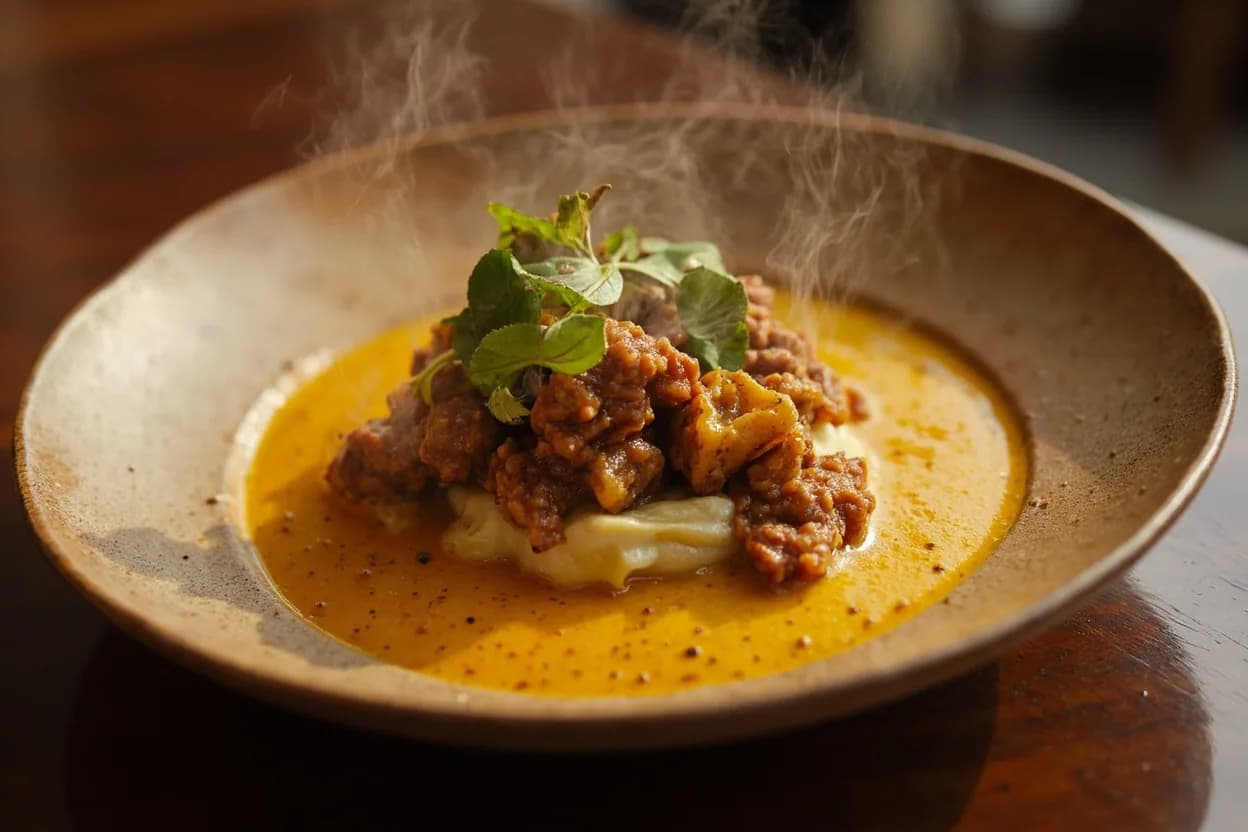
Draws from all Castilian streams plus 19th-century mass migration; cocido madrileño and callos a la madrileña are the city's culinary cornerstones.
- La Mancha
Saffron-growing heartland; pisto manchego (vegetable ragout), Manchego cheese, morteruelo game pâté, and gazpacho manchego (a dry-land game stew, not the cold soup).
- Aranda de Duero corridor
Ribera del Duero wine country; cordero asado in underground hornos is the ritual Sunday meal; lamb here is milk-fed and slaughtered at 25 days.
Related cuisines
- Extremaduran
Shares the Iberian pig economy and lard-heavy cooking; Extremadura contributes Ibérico pork and pimentón de La Vera.
- Leonese
Often grouped with Castilian; botillo del Bierzo (cured ribs sausage) and empanada culture are distinct León contributions.
- Sephardic (Judeo-Spanish)
The cocido lineage traces directly to adafina, the Sabbath slow-pot of Castilian Jews expelled in 1492.
Canonical recipes
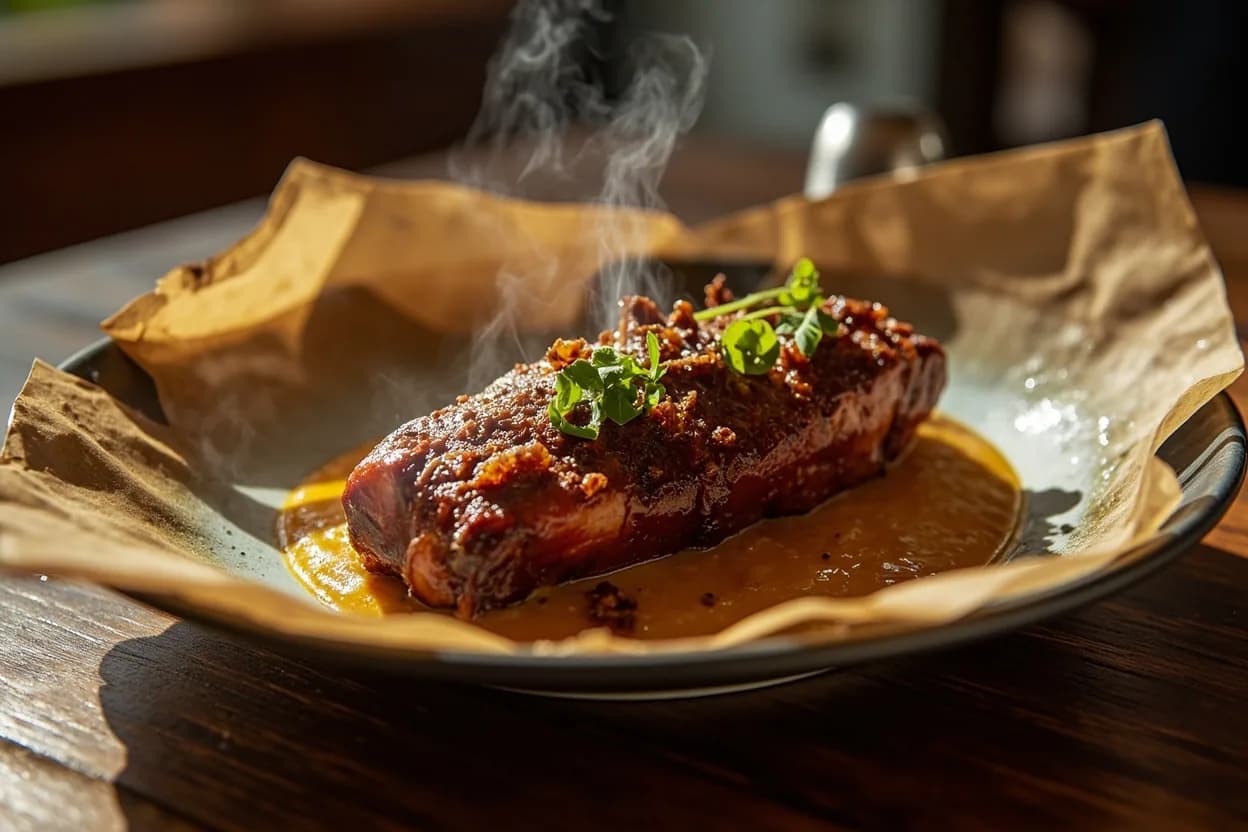
The dishes that define Castilian, documented in the Canon.
References
- 1.Penelope Casas, The Foods and Wines of Spain (1982)
- 2.Claudia Roden, The Food of Spain (2011)
- 3.Dionisio Pérez ('Post-Thebussem'), Guía del buen comer español (1929)
- 4.Mesón de Cándido, Segovia — institutional historical documentation
Confidence: high
Notes
The plate-break ritual
At Mesón de Cándido in Segovia, the cochinillo is traditionally carved with the edge of a ceramic dinner plate — the pig is so tender that a plate suffices, and the plate is then smashed for luck. This is not theatre invented for tourists; Cándido López canonised it in the mid-20th century as a demonstration of precise oven technique. The animal is roasted in an unglazed earthenware dish (tartera) at around 200°C for roughly two hours, basted only with water and lard.
Austerity as aesthetic
Castilian food is sometimes dismissed as plain, but its plainness is a philosophy: the quality of the animal, the exactness of the fire, the restraint of seasoning. A great Castilian roast uses almost no spices — just good lard, salt, a smear of garlic, and time. This connects to a regional pride that frames simplicity as honesty, in deliberate contrast to the complex saucing traditions of France or the spice-layering of Andalusia.